2 Crónicas 10
Paipel · Toca un versículo para ver sus referencias cruzadas.
Chon Israel ra ü ngeni Rehopoam
1Iwe, Rehopoam a feila Sikem, pun chon Israel meinisin ra mwichefengen ikenan, pwe repwe seikätä Rehopoam lon wisen king. 2Nge lupwen Jeropoam nöün Nepat we mwän mi nom Isip, ewe ia a süla ie seni ewe king Salomon, a rong usun, a liwinto seni Isip. 3Pun ekewe chon Israel ra titi i. Mürin, Jeropoam me ekewe chon Israel meinisin ra feito ren Rehopoam o üreni, 4“Semom we a achouu ngenikem chomong angang. Iei mine kopwe apäna ngenikem ewe angang mi chou, semom we a achouu ngenikem, o amecheresikem, mürin äm aipwe angang ngonuk.” 5Iwe, Rehopoam a üreniir, “Oupwe mwüt ngeniei ükükün ülüngat rän pwe üpwe ekieki usun ämi tüngor, mürin oupwe liwinsefälito. Iei mine ekewe aramas ra feila.
6Mürin, ewe king Rehopoam a angei öüröüran me ren ekewe chinlap mwän, ätekewe mi angang ngeni saman we, lupwen a chüen manau. Iwe, a aisiniir, “Met ämi öüröür ngeniei, pwe üpwe pälüeni ngeni ekei aramas?” 7Iwe, ra üreni, “Are kopwe kirikiröch ngeni ekei aramas o apwapwaar ren om fosöch ngeniir, mürin ir repwe noum chon angang fansoun meinisin.” 8Nge Rehopoam a pöütala ewe öüröür a angei seni ekewe chinlap mwän o angei öüröüran me ren pilon kewe alüal mi angang ngeni. 9Iwe, a aisiniir, “Met ämi öüröür, pwe sipwe pälüeni ngeni ekei aramas mi üreniei, pwe üpwe apäna ngeniir ewe angang mi chou semei we a achouu ngeniir?” 10Iwe, pilon kewe alüal ra üreni, “Iei usun mine kopwe pälüeni ngeni ewe tüngor seni ekewe aramas: Aütüngini a öümong seni lukalapen semei we. 11Are mi pwüng pwe semei we a achouu ngenikemi chomong angang, ngang üpwe föri pwe epwe chou seni. Semei we a apwüngükemi fän wok, nge ngang üpwe apwüngükemi fän och wichiwich seni silin man mi ken.”
12Mürin ülüngat rän Jeropoam me ekewe aramas meinisin ra feito ren ewe king Rehopoam, usun i a fen apasa. 13Iwe, ewe king a kapas ngeni ekewe aramas fän pöchökül o pöütala öüröüran me ren ekewe chinlap mwän. 14A kapas ngeniir fän öüröüran me ren ekewe alüal o üreniir, “Semei we a achouu ngenikemi chomong angang, nge ngang üpwe föri pwe epwe chou seni. Semei we a apwüngükemi fän wok, nge ngang üpwe apwüngükemi fän och wichiwch seni silin man mi ken.” 15Iei usun ewe king esap aüselinga än ekewe aramas tüngor. Ei a fis me ren Kot, ewe Samol mi Lapalap, pwe epwe apwönüetä an kapas a eäni ngeni Ahia ewe re Silo fän iten Jeropoam nöün Nepat we mwän.
16Iwe, lupwen chon Israel meinisin ra küna pwe ewe king esap aüselinga ar tüngor, ra pälüeni ewe king, “Pwota sipwe chiechi ngeni Tafit me an famili. Met sokun feiöch sa angei seniir? Ämi chon Israel, oupwe liwiniti en me lenian. Rehopoam, kopwe tümwünü püsin chon leimwom.” Iei mine chon Israel meinisin ra liwiniti en me lenian. 17Nge Rehopoam a chök nemeni ekewe chon Israel mi imweimw lon ekewe telinimwen Juta. 18Mürin, ewe king Rehopoam a tinala Atoniram ewe meilapen ewe mwichen chon angangen kinroosi ren ekewe chon Israel, nge ir ra monei ngeni fau, iwe, a mäla. Mürin, ewe king Rehopoam a müttir tötä won wan woken o süla Jerusalem. 19Seni ewe ränin tori ikenai ekewe chon Israel ra ü ngeni ewe mwün Tafit me mwirimwirin.
¿Sabías que…?
La división del reino
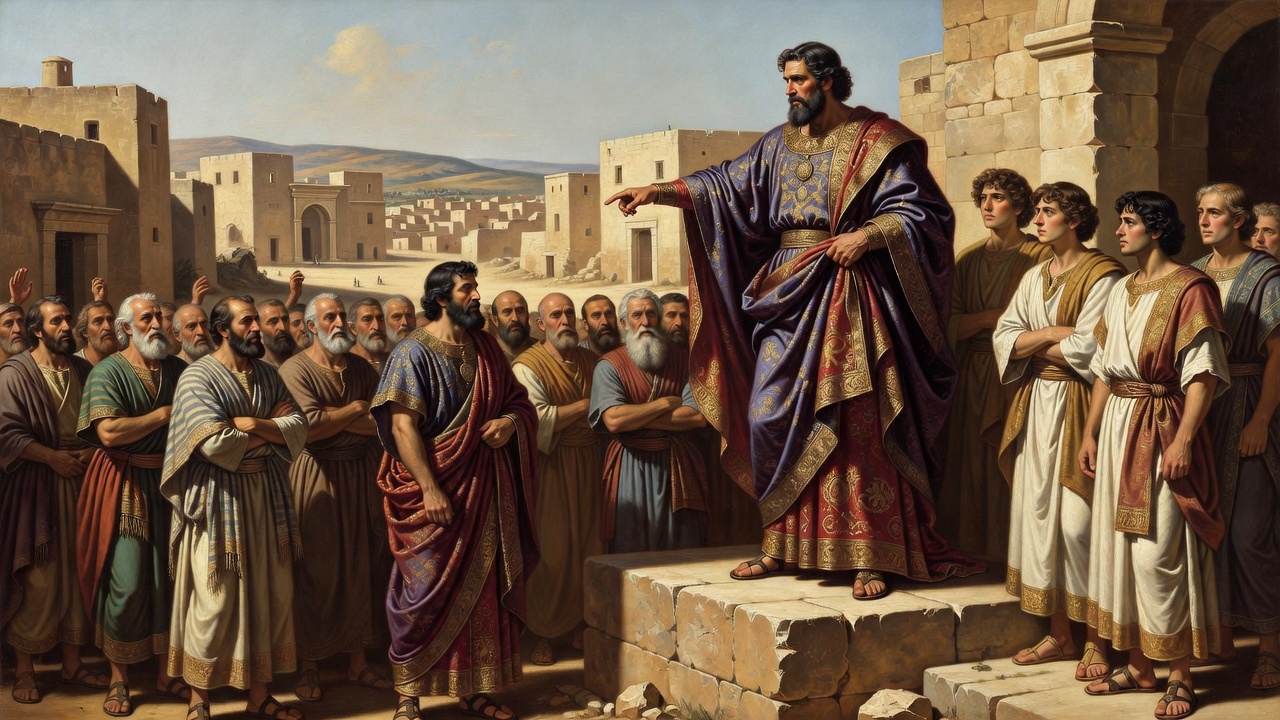
- Roboán fue a Siquén para ser confirmado como rey, donde la asamblea exigió alivio de los pesados tributos y trabajos forzados impuestos bajo Salomón. Jeroboán, un antiguo supervisor del trabajo forzado que había huido a Egipto, regresó para representar la petición del pueblo.Fuentes: el propio texto bíblico · Rehoboam · Jeroboam
- Roboán rechazó el consejo de los ancianos veteranos de su padre de hablar con bondad al pueblo, eligiendo la dura respuesta sugerida por los jóvenes que habían crecido con él. La narrativa bíblica señala que este desenlace cumplió la profecía dada por Ahías el silonita.Fuentes: el propio texto bíblico · Ahijah
- Cuando las tribus del norte se rebelaron contra la casa de David, Roboán envió a Hadorán, su supervisor de los trabajos forzados, para hablar con ellos. Los israelitas apedrearon a Hadorán hasta matarlo, obligando a Roboán a huir en su carro hacia Jerusalén.Fuentes: el propio texto bíblico · Adoniram
Notas escritas con ayuda de IA a partir de fuentes abiertas (Theographic Bible Metadata, CC BY-SA 4.0; Easton’s Bible Dictionary, dominio público) y revisadas antes de publicarse.
Lugares de este capítulo
- Shechem · Hoy: Tell Balatah · 32.214, 35.282 · versículo 1
- Egypt · 30.129, 31.308 · versículo 2
- Shiloh · Hoy: Khirbet Seilun · 32.056, 35.290 · versículo 15
- Jerusalem · 31.777, 35.234 · versículo 18
Solo aparecen lugares identificados con alta confianza (90 % o más según las fuentes académicas reunidas por OpenBible). Mapa de la época: DARE (Digital Atlas of the Roman Empire), CC BY 4.0; mapa actual: © colaboradores de OpenStreetMap; lugares: OpenBible.info (CC BY 4.0).
Créditos y licencia de esta traducción
Paipel
The Holy Bible in the Chuukese language of the Federated States of Micronesia
copyright © 1984, 1989, 1991, 2001 Liebenzel Mission
Language: Chuukese
Translation by: Liebenzell Mission
Old Testament © 1989, 2001 Liebenzel Mission
New Testament © 1984, 1991 Liebenzel Mission
This translation is made available to you under the terms of the
Creative Commons Attribution-No Derivatives license 4.0.
You may share and redistribute this Bible translation or extracts from it in any format, provided that:
You include the above copyright and source information.
You do not make any derivative works that change any of the actual words or punctuation of the Scriptures.
Pictures included with Scriptures and other documents on this site are licensed just for use with those Scriptures and documents.
For other uses, please contact the respective copyright owners.
2024-01-24
Fuente: http://ebible.org/chk/ · eBible.org