Salmos 149
Balaan nga Bibliya · Toca un versículo para ver sus referencias cruzadas.
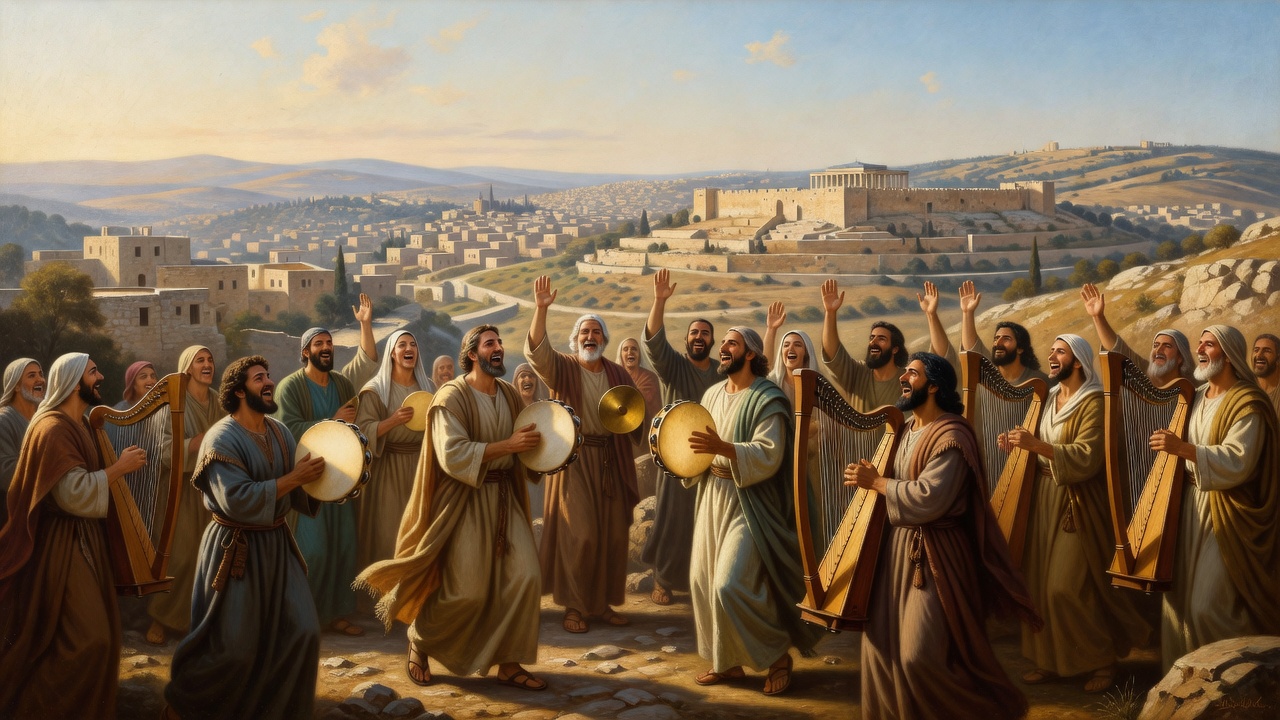
1Dayega si Yahweh. Awiti si Yahweh ug bag-ong awit; dayega siya sa pag-awit diha sa panagtigom sa mga nagmatinud-anon. 2Tugoti nga magmaya ang Israel diha sa nagbuhat kanila; tugoti nga magmaya ang katawhan sa Zion sa ilang hari. 3Padayega sila sa iyang ngalan uban sa panagsayaw; paawita sila sa mga pagdayeg ngadto kaniya dinuyogan sa tambor ug alpa. 4Kay mahimuot si Yahweh sa iyang katawhan; himayaon niya ang mga mapainubsanon uban ang kaluwasan. 5Tugoti nga magmaya ang mga diosnon sa kadaogan; tugoti sila nga mag-awit sa kalipay diha sa ilang mga higdaanan. 6Hinaot nga ang mga pagdayeg ngadto sa Dios maanaa sa ilang mga baba ug ang espada nga duhay sulab maanaa sa ilang kamot 7aron mapatuman ang pagpanimalos sa kanasoran ug mga buhat sa pagsilot sa katawhan. 8Gapuson nila ang ilang mga hari pinaagi sa mga kadena ug ang ilang mga pangulo pinaagi sa puthaw nga mga posas. 9Ipatuman nila ang paghukom nga nahisulat. Mapasidunggan ang tanan nga nagmatinud-anon kaniya. Dayega si Yahweh.
¿Sabías que…?
Alabanza y victoria en Sión
- La mención de los hijos de Sión hace referencia a los habitantes de Jerusalén. Sión era la colina fortificada que el rey David tomó de los jebuseos para construir su ciudadela y palacio, convirtiéndose en la Ciudad de David.Fuentes: Zion · el propio texto bíblico
- El Salmo 149 combina la alabanza festiva y comunitaria —que incluye danzas, panderos y arpas— con imágenes guerreras, describiendo a los fieles con cánticos de exaltación en sus bocas y espadas de dos filos en sus manos.Fuentes: el propio texto bíblico
Notas escritas con ayuda de IA a partir de fuentes abiertas (Theographic Bible Metadata, CC BY-SA 4.0; Easton’s Bible Dictionary, dominio público) y revisadas antes de publicarse.
Lugares de este capítulo
- Zion · Hoy: Jerusalem · 31.777, 35.234 · versículo 2
Solo aparecen lugares identificados con alta confianza (90 % o más según las fuentes académicas reunidas por OpenBible). Mapa de la época: DARE (Digital Atlas of the Roman Empire), CC BY 4.0; mapa actual: © colaboradores de OpenStreetMap; lugares: OpenBible.info (CC BY 4.0).
Créditos y licencia de esta traducción
Balaan nga Bibliya
Unlocked Literal Bible in the Cebuano language of the Republic of the Philippines
copyright © 2019 Door43 World Missions Community
Language: Cebuano
Translation by: Door43 World Missions Community
Contributor: Aida Espelita, Aira Amaran, Alma Mae Llorca, Amelina Emboc, Analine Tanog, Bernaly Mansiwagan, Carwelene Amper, Chally Lou Lacaran, Charity Guinita, Dan Bongcalas, Darryl Lasquite, Divine Grace Leparto, Elsie Lacubay, Ernilyn Balindong, Gem Lalaan, Helen Thundas, Jerome Resomadero, Jeryl Tumundog, Johnny Ray Lumawan, Loreto Socias Jr., Luthero Pulao Jr., Lymae Belle Ednalgan, Marilyn Lay-um, Mark Kevin Atab, Marth Anthony Atab, Miracle Marcojos, Molly, Noel Dalumatao, Rico Barrios, Ricky Mansabid, Romeo Lumasay, Roselle Lay-um, Steven Lubosan, Jeffrey, Johanna, Junette, Benny, and Racquel
This translation is made available to you under the terms of the
Creative Commons Attribution Share-Alike license 4.0.
You have permission to share and redistribute this Bible translation in any format and to make reasonable revisions and adaptations of this translation, provided that:
You include the above copyright and source information.
If you make any changes to the text, you must indicate that you did so in a way that makes it clear that the original licensor is not necessarily endorsing your changes.
If you redistribute this text, you must distribute your contributions under the same license as the original.
Pictures included with Scriptures and other documents on this site are licensed just for use with those Scriptures and documents.
For other uses, please contact the respective copyright owners.
Note that in addition to the rules above, revising and adapting God's Word involves a great responsibility to be true to God's Word. See Revelation 22:18-19.
2020-06-08
Fuente: http://ebible.org/cebulb/ · eBible.org