Hechos 4
Dios ã jáap naáwát tólih · Toca un versículo para ver sus referencias cruzadas.
Pedrowãdih judíowã ĩ maáta ĩ jʉ̃ihñat
1Páant cã́acwãdih Pedro Juanjĩh ĩ naáwáchah, sacerdotewã, Dioíh mʉʉdíh wapnit soldadowã ĩ maáh, saduceowãbʉt Pedrowã pebhna jʉibínit, ĩt joyóp wʉt jĩ. Páant ĩ joyóchah, Pedrowã nin pah cã́acwãdih ĩt niíj naáwáp wʉt jĩ: “Jesús ã wʉnat tʉ́ttimah, ãt jwʉ́ʉb boo pʉd jʉ̃ʉ́wʉ́p be. Ã boo pʉd jʉ̃ʉ́wátdih jéihna, ã́ihwã jʉmna, jwiítbʉt jwĩ boo pʉd jʉ̃ʉ́wát pínahdih jwĩ jéihna caá”, ĩt niijíp wʉt jĩ. Páant ĩ niijíchah joí íijnit, maátaboó cã́acwãdih tóo pãa bejnit, Dioíh mʉʉdíh wapnit soldadowãdih Pedrowãdih ĩt jʉibí tewat tʉ́ʉtʉp wʉt jĩ. Cheyeh jʉmʉchah, tʉ́ttimah bóo yeó jáapdih queétdih ʉʉ́bh joííhna, nemat mʉʉ́boó ĩt nemat tʉ́ʉtʉp wʉt jĩ. 4Judíowã ĩ maáta Jesúsdih ĩ náahcah yʉhna, ã́ih doonádih joinít, “Yoobópdih tigaá”, dawá ĩt niíj jenah joyóp wʉt jĩ. Pánihna, Jesúíhwã chah dawá jʉmna, cinco mil neoná ĩt jʉmʉp wʉt jĩ. Yaádhjeéh ĩ wehjeéhbʉt chah ĩt jʉmʉp wʉt jĩ.
5Tʉ́ttimah bóo yeó jáapdih sacerdotewã ĩ maáta, bita judíowãdih waóhnit, Moisés ã wʉtatjidih bohénit biícdih ĩt míic wáacap wʉt jĩ. 6Sacerdotewã ĩ maáh, Anás wʉ̃t jʉmni, ã déewãbʉt Caifás, Juan, Alejandro, bita biícdih ĩt míic wáacap wʉt jĩ. 7Pánihna, queét Pedrowãdih ĩ bid bojochah, soldadowã queétdih ĩt ʉb jʉibínap wʉt jĩ. Páant ĩ ʉb jʉibínachah, maáta nin pah ĩt niíj ʉʉ́bh joyóp wʉt jĩ:
—¿Deíh wẽpatjĩh tibeé yeéb caandíh ñi booa? ¿Déhe tibeé yeebdíh páant chãjat tʉ́ʉtni? ĩt niijíp wʉt jĩ.
8Páant ĩ niijíchah joinít, Tʉ́ini Espíritu ã wẽpatjĩh Pedro nin pah ãt niíj jepahap wʉt jĩ:
—¿Yeéb maáta, yeéb waóhnit, 9jéih jibcannijidih jwĩ tʉ́i chãjatdih ʉʉ́bh joí en niít ñi chãjap? 10Yeebdíh, nihat judíowãdihbʉt nindih jéihyat caá náahap: Jesucristo ã wẽpat beé nindih ã booanap be. Jesús Nazaret tʉ́tchidih bóo, yeéb cruzboó ñi mawat tʉ́ʉtni, Dios ã booani, caán ã wẽpatjĩh nindih jwĩ booanap be. Pánihna, bʉʉ nin ã jibichah, ñi enna caá. 11Dios naáwátdih naóh yapanit jon jã́tih Jesucristodih naóhna, ‘Cã́acwã ĩ náahcannidih Dios ã ñíobipna caá’, ĩt niíj daacáp tajĩ. Pánihna, Jesucristodih yeéb ñi náahcah yʉhna, Diosboó caandíh jwĩ maáh pínah ãt waadánap wʉt be. 12Caán Cristojeh tigaá cã́acwã iiguípna bejnit déjidih tʉ́i ʉbni. Nin baácboó biíh tʉ́i ʉbni pínah wihcan caá. Caanjéh caá yéejat yohni ã jʉmʉp, Pedro ãt niijíp wʉt jĩ.
13Páant niíj naóhna, Pedrowã bohécannit yʉhna, ʉ́ʉmcanjeh, ĩ wẽp bohénachah ennit, ĩt joí wʉ́hi bejep wʉt jĩ. Jesús ã bohéát pah ĩ wẽp bohénachah enna, “Pedro, Juanjĩh yoobópdih Jesúsjeéh jʉmnit tigaá”, ĩt niíj jéihyep wʉt jĩ. 14Jéih jibcanniji boonit, Pedrowãjeéh ã jʉmʉchah, queét maáta Pedrowãdih “Yeejép ĩ chãjna caá”, ĩt jéih niíj naóh yaccap wʉt jĩ. 15Pánih jéih naóh yaccan, maáta ĩ míic wáacat tólihmant Pedrowãdih ĩt bac bej jwʉhat tʉ́ʉtʉp wʉt jĩ. 16Páant ĩ bac bejat tʉ́ttimah, queétjeh nin pah ĩt niíj míic wéhenap wʉt jĩ:
—¿Queétdih ded pah tigaá jwĩ chãjbi? Dios ã wẽpatjĩh jéih jibcannijidih ĩt booanap taga. Nihat Jerusalén tʉ́tchidih moón páant ĩ chãjatjidih ĩ jéihna caá. Pánihna, jwiítboó ‘Páant ĩ chãjcan beé’, jwĩ jéih niijcán caá. 17Pánihna, Jesúíh doonádih bitadih jwĩ bohéát tʉ́ʉtca boj jĩíh, queét maátajeh ĩt míic niijíp wʉt jĩ.
18Páant niíj péanit, Pedrowãdih jwʉ́ʉb bid bojnit,
—Jesúíh doonádih bitadih ñi jwʉ́ʉb naóhca bojoó, ĩt niijíp wʉt yʉh jĩ.
19Páant ĩ niijíchah joinít, Pedro Juanjĩh nin pah ĩt niíj jepahap wʉt jĩ:
—Páant ñi wʉtʉchah, jepahna nihna, Diosboodíh yap yohna caá jwĩta chãjap. ¿Pánihna, dedboodíh tigaá jwĩ jepahbi, Dios ã weñat pínah niijná? 20Obohjeéhtih, jwiítboó jwĩ ennidih, jwĩ joinídihbʉt jwĩ jéih jweéhcan caá, ĩt niijíp wʉt jĩ.
21Páant ĩ niijíchah joinít, maátaboó nin pah Pedrowãdih ĩt jwʉ́ʉb niijíp wʉt yʉh jĩ:
—Jesúíh doonádih ñi jwʉ́ʉb bohénachah, yeebdíh yeejép jwĩ peéh chãjbipna caá, ĩt niijíp wʉt jĩ.
Pánihna, cã́acwãboó jéih bejcanniji ã tʉ́i bejatdih ennit, “Dios wẽpni yoobát ã jʉmna caá”, ĩ niijíchah joinít, maátaboó Pedrowãdih jéih peéh chãjcanjeh, queétdih ĩt bacanap wʉt jĩ. 22Jéih jibcanniji cuarenta jópchi bíbohni wʉt jĩ.
Jesúíhwã ĩ ʉ́ʉmcat pínahdih ĩ ʉʉ́bát
23Pedro Juanjĩh bac bejnit, ĩ chéenwã pebhna jwʉ́ʉb jʉibínit, judíowã ĩ maáta ded pah ĩ niijátjidih queétdih ĩt naáwáp wʉt jĩ. 24Páant ĩ niijíchah joinít, queét nihat biícdih Diosdih nin pah ĩt niíj ʉʉ́bʉ́p wʉt jĩ: “Maá, meém jeádih chãjni, nin baácdihbʉt chãjni, bʉ́dí mʉjdihbʉt chãjni, nihat báadhnitdihbʉt chãjni caá. 25Tʉ́ini Espíritu ã wẽpatjĩh jwĩ nʉo Davidji, meemdíh teo wʉ̃hni, nin pah ãt niíj daacáp tajĩ:
‘Judíowã nihcannitboó jenah joicánjeh, Diosdih íijnit, ĩ jʉ̃ihna yʉh caá. Cristo ã chãjat pínahdih ĩ jãhíhmina yʉh caá.
26Dawá nin baácdih moón maáta míic wáacnit, jwĩ Maáh Diosdih, ã wahni Cristodihbʉt en jʉ̃ihna, Dios ã jenah joyátjidih ĩ yéejaíhmi na yʉh caá’, ãt niíj daacáp tajĩ. (Sal 2.1-2)
27“Páant tigaá nin tʉ́tchiboó Herodes, Poncio Pilato, judíowã nihcannit, judíowã biícdih ma wahni Jesúsdih mawat tʉ́ʉtna, ĩ míic wáacap be. Caán Jesús tʉ́i yoobópdih jʉmni, meemdíh tʉ́i jepahni ã jʉmʉchah yʉhna, caandíh ĩ mawíh jenah joyóp be. 28‘Páant caá ã nihbip’, ma niijátji pah queét ĩ chãjap be. Meém ma jéihyatjĩh páant mat niíj naáwáp tajĩ. 29Pánihna, Maá, queét jwiítdih ‘Yeéb ñi jwʉ́ʉb bohéát peéh yeejép jwĩ chãjbipna caá’, ĩ niijátjidih joinít, jwiítdih ma teo wáacá, jwiít meemdíh teo wʉ̃hnit ʉ́ʉmcanjeh, míih tʉ́ini doonádih jwĩ wẽp naáwát pínah niijná. 30Jwiítdih ma teo wáacá, tʉbʉ́p chʉ̃ʉ́hnitdih jwĩ booanachah, cã́acwã ĩ jéih chãjca naáhdih Jesús ã wẽpatjĩh jwĩ chãjat pínah niijná”, ĩt niíj ʉʉ́bʉ́p wʉt jĩ.
31Páant ĩ niíj ʉʉ́bʉ́chahjeh, ĩ míic wáacni mʉʉ́ bʉ́dí ãt méménap wʉt jĩ. Páant ã méménachah, Tʉ́ini Espíritu ã wẽpat queétdih bʉ́dí ã wʉ̃hʉchah, ʉ́ʉmcanjeh Dios naáwátdih ĩt jwʉ́ʉb naáwáp wʉt jĩ.
Jesúíhwã ĩ míic pãáát
32Dios ã wẽpatjĩh queét Jesús ã naáwát tʉ́ʉtnit nin pah cã́acwãdih ĩpĩ́ niíj naáwáp wʉt jĩ: “Jesús ã boo pʉd jʉ̃ʉ́wát tʉ́ttimah caandíh jwĩ enep jĩ”, ĩt niijíp wʉt jĩ. Queét nihatdih Dios bʉ́dí ã teo wáacachah, chah dawá Jesúsdih ĩt jepahap wʉt jĩ. Biíc yoobó jenah joinít, ĩ́ih bií déedih “Wĩ́ih míicjeh caá”, ĩt niijcáp wʉt jĩ. Queét nihat ĩ bíbohat yoobó míic pãáhnit, ĩjeéh jʉmnitdih ĩpĩ́ tʉ́i teo wáacap wʉt jĩ. 34Pánihna, ded moh yéejnit ĩjeéh ĩt wihcap wʉt jĩ. Det wápchi pínah baácdih bíbohnit, mʉʉdíhbʉt bíbohnit, ĩ́ihdih ĩpĩ́ jíib chãj wʉ̃hʉp wʉt jĩ. Caán jíibdih ʉb bejnit, 35Jesús ã naáwát tʉ́ʉtnitdih ĩpĩ́ jʉibí wʉ̃hʉp wʉt jĩ. Páant ĩ ʉb jʉibí wʉ̃hʉchah, teonit, queétboó ĩjeéh jʉmnit moh yéejnitdih ĩpĩ́ jwʉ́ʉb pãááp wʉt jĩ. 36Biíc ĩjeéh José wʉ̃t jʉmni ãt jʉmʉp wʉt jĩ. Jesús ã naáwát tʉ́ʉtnit Josédih Bernabé wʉ̃t ĩt bʉ́ʉdhdʉp wʉt jĩ. Ã wʉ̃t Bernabé “Cã́acwãdih tʉ́i weña teo wáacni”, Griego wéheatjĩh niijná ĩt chãjap wʉt jĩ. Caán Leví jʉima, Chipre quewadih bóo wʉt jĩ. 37Pánihna, caanbʉ́t ã́ih wápchidih ãt jíib chãjap wʉ̃hʉp wʉt jĩ. Pánih jíib chãj wʉ̃hnit, caán jíibdih Jesús ã naáwát tʉ́ʉtnitdih wʉ̃hnit, bitadih ãt pãáát tʉ́ʉtʉp wʉt jĩ.
¿Sabías que…?
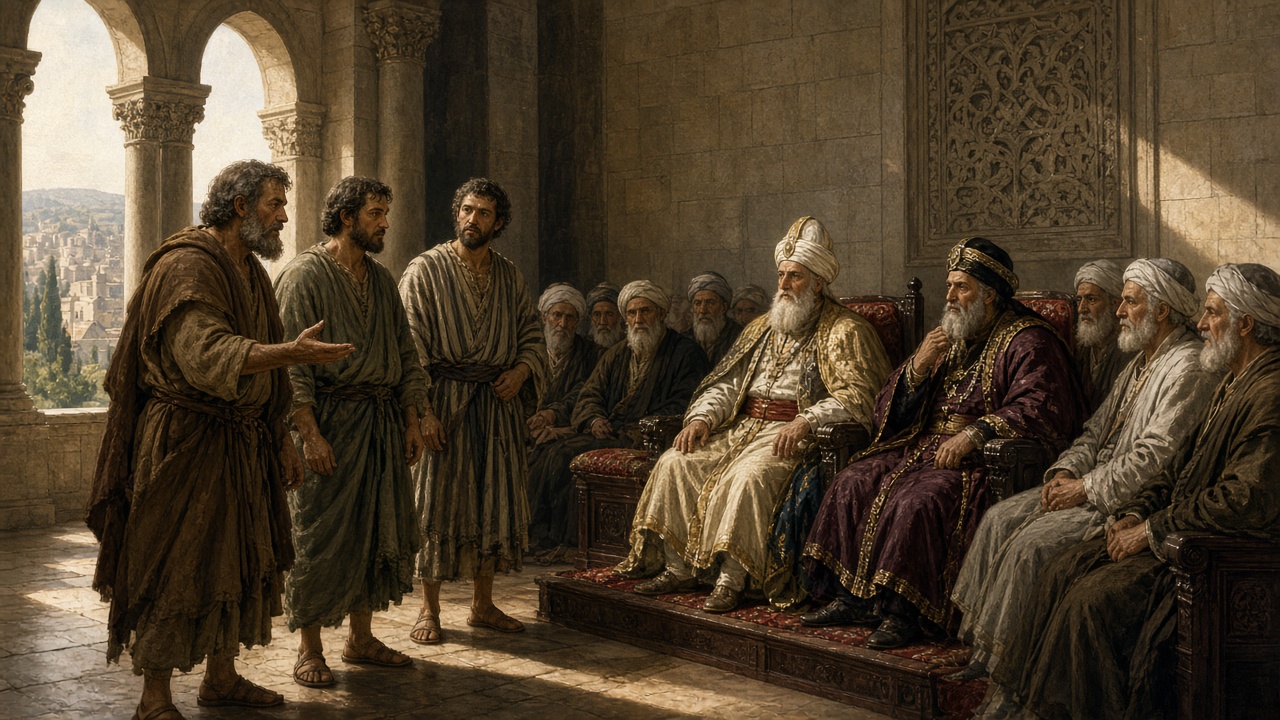
Pedro y Juan ante el Sanedrín
- Los sacerdotes, el capitán de la guardia del templo y los saduceos prendieron a Pedro y a Juan porque enseñaban al pueblo y proclamaban en Jesús la resurrección de los muertos. Caifás, que participó en la asamblea al día siguiente, pertenecía a los saduceos.Fuentes: el propio texto bíblico · Caiaphas
- Anás, llamado aquí sumo sacerdote, ocupó ese cargo del año 7 al 14 d.C., hasta que un procurador romano lo depuso. Caifás, que se había casado con la hija de Anás, fue elevado al cargo en el año 25 d.C.; aun así, algunos judíos podían seguir considerando a Anás el sumo sacerdote legal, pues la ley mosaica trataba el oficio como vitalicio, y Anás probablemente era presidente o auxiliar del Sanedrín. Juan y Alejandro, parientes del sumo sacerdote y por lo demás desconocidos, estaban sentados con ellos.Fuentes: el propio texto bíblico · Annas · John (Relative of the High Priest) · Alexander (Son of Simon)
- Pedro, pescador de Betsaida, y Juan, también pescador e hijo de Zebedeo, fueron llevados ante los gobernantes, los ancianos y los escribas. El concilio se maravilló de su valentía al darse cuenta de que eran hombres sin estudios y comunes, y notó que habían estado con Jesús.Fuentes: el propio texto bíblico · Simon Peter · John the Apostle
Notas escritas con ayuda de IA a partir de fuentes abiertas (Theographic Bible Metadata, CC BY-SA 4.0; Easton’s Bible Dictionary, dominio público) y revisadas antes de publicarse.
Lugares de este capítulo
- Jerusalem · 31.777, 35.234 · versículos 5, 16
- Nazareth · 32.702, 35.298 · versículo 10
- Cyprus · 35.000, 33.000 · versículo 36
Solo aparecen lugares identificados con alta confianza (90 % o más según las fuentes académicas reunidas por OpenBible). Mapa de la época: DARE (Digital Atlas of the Roman Empire), CC BY 4.0; mapa actual: © colaboradores de OpenStreetMap; lugares: OpenBible.info (CC BY 4.0).
Créditos y licencia de esta traducción
Dios ã jáap naáwát tólih
New Testament in Cacua
copyright © 2008 Wycliffe Bible Translators, Inc.
Language: Cacua
Translation by: Wycliffe Bible Translators, Inc.
Copyright Information
© 2008, Wycliffe Bible Translators, Inc. All rights reserved.
This translation text is made available to you under the
terms of the Creative Commons License: Attribution-Noncommercial-No Derivative Works.
( http://creativecommons.org/licenses/by-nc-nd/3.0/ )
In addition, you have permission to port the text to different file formats, as long as you
do not change any of the text or punctuation of the Bible.
You may share, copy, distribute, transmit, and extract portions
or quotations from this work, provided that you include the above copyright
information:
You must give Attribution to the work.
You do not sell this work for a profit.
You do not make any derivative works that change any of the actual words or punctuation of the Scriptures.
Permissions beyond the scope of this license may be
available if you contact
us with your request.
The New Testament
in Cacua
© 2008, Wycliffe Bible Translators, Inc. All rights reserved.
This translation is made available to you under the terms of the
Creative Commons Attribution-Noncommercial-No Derivatives license 4.0.
You may share and redistribute this Bible translation or extracts from it in any format, provided that:
You include the above copyright and source information.
You do not sell this work for a profit.
You do not change any of the words or punctuation of the Scriptures.
Pictures included with Scriptures and other documents on this site are licensed just for use with those Scriptures and documents.
For other uses, please contact the respective copyright owners.
2014-08-06
Fuente: http://ebible.org/cbv/ · eBible.org