Jueces 2
Candoshi-Shapra · Toca un versículo para ver sus referencias cruzadas.

Acerca de este libro
Sobre Jueces
- El libro se llama Jueces porque contiene la historia de la liberación y del gobierno de Israel por los hombres que llevaban ese título. El diccionario bíblico de Easton (1897) sitúa esa historia en repetidos tiempos de servidumbre bajo pueblos vecinos y de liberación por los jueces, y afirma que la cronología de todo el período es incierta.Fuentes: Easton: Judges, Book of
- El diccionario bíblico de Easton (1897) sostiene que el autor fue muy probablemente Samuel y que el libro se compuso probablemente durante el reinado de Saúl o al comienzo mismo del reinado de David. Easton señala que las palabras de Jueces 18:30–31 implican una fecha posterior a la toma del arca por los filisteos y a su colocación en Nob, mientras que en el reinado de David el arca estaba en Gabaón.Fuentes: Easton: Judges, Book of
- Según el esquema de Easton, el libro tiene una introducción (1–3:6) que lo enlaza con el relato de Josué, la historia de trece jueces (3:7–16:31) en cuatro períodos y un apéndice (capítulos 17–21) sin conexión formal con lo anterior. Si se incluyen Elí y Samuel, Easton cuenta quince jueces.Fuentes: Easton: Judges, Book of
- El esquema de Easton presenta el marco histórico como una sucesión de servidumbres: bajo Cusan-risataim de Mesopotamia, bajo Eglón de Moab, bajo Jabín de Hazor en Canaán, bajo Madián con Amalec y los hijos del oriente, bajo los amonitas junto con los filisteos, y de nuevo bajo los filisteos. Gedeón, llamado también Jerobaal, abre lo que Easton llama el segundo período; Jefté, traído de Tob por los ancianos de Galaad, juzgó a Israel seis años después de librar al pueblo de los amonitas; Sansón, hijo de Manoa, de Zora, fue nazareo de Dios desde su nacimiento.Fuentes: Easton: Judges, Book of · Gideon · Jephthah · Samson
- El apéndice registra la conquista de Lais por una parte de la tribu de Dan y la casi extinción de Benjamín a manos de las demás tribus, porque Benjamín había ayudado a los hombres de Gabaa. Easton sitúa estos hechos apenas unos años después de la muerte de Josué y dice que muestran la degeneración religiosa y moral del pueblo. Easton también señala que Rut formaba originalmente parte de Jueces y fue separada hacia el año 450 d.C., para quedar en las Escrituras hebreas inmediatamente después del Cantar de los Cantares.Fuentes: Easton: Judges, Book of · Gibeah
Notas escritas con ayuda de IA a partir de fuentes abiertas (Theographic Bible Metadata, CC BY-SA 4.0; Easton’s Bible Dictionary, dominio público) y revisadas antes de publicarse.
Ashiriya, na kamanchintspa yuwaa Apanll wasundurur Bokimap naatarangu anootsi
1Apanll wasundururee kamachtayaru, Guilgaalamand tsap káyaranllu, Bokimapsha Israelchichee kamankatu naatarangiya. Anushsha Apanll wasundurur kuseeramchu, Nuw siyaa Ijiptosh tsap tashitungarangina. Ashiri yuwaa sirútama siyaam tsap panachima tárangi, anoo na tatsamchima. 2Itaru, siy anshuchpa tputs tsiyatintspa. Yuwaa muchimaam wayarangana anootstam pátangantsa, táranginawa. Itaru, siysa anoo ¿tamarangsa? Yuwaa nuw siyaa kamachtarangi anoo nda payurangsa. 3Ashirucha, na in siyaa istacheezi. Anshuch tputs siyaa uru yutarit ínachapantsa. Mishat, waashchee apanllputsirini siysa tachitarus taatssa. Ndusha mapiyrush taatssa, 4ántaru, Apanll wasundurur tsiyatssee iwatsparamchu, Israelchichsha tputs anoo tsiyatsis mazinarangusin, kapung tanuranganaya. Ashirucha, anootssha tsap yásamaranganaya Bokima atusina. Anshutam Apanllee ungirtamaam wayaranganaya.
Ashiriya, na kamaneena yuwaa Apanll Israelchichee waneerangu anootsi.
Ashiriya, na kamanchintspa yuwaa Josueyarinee tsipayaru, waanshutari watsapun mapurangana anootsi
7Josueyarini kchitama ichingarusin kurakawtamsin, misha Israelchich tputs ashparitin Apanllee kuk zurmamshee Apanllee wanasirimshirini yuwaa Israelchichee tputs istarangu anoo payuranganaya.
8Josueyarini tsiparangu, 110 masachirini tatsamoochu. 9Waanpeetam watsapuni Josueyarinee mapuranganaya. Watsapun sur Timnat-seraj anush wayaranganaya, yapeem zar charapungaratu puku ambi tsap sura Gasa yásamarangana anshu. 10Wachinawshitisin Israelchich tputs yuw Josueypa ipuntarana anshitisin tsiparangitamsinanaya. Ashirucha, yuw mang kaneesichsha nlluranur nllurtarangana anshitisin nda yasaranganaya Apanllee zuramapaneetsi. Mishat, nduntam yasaranganaya yuwaa Apanll Israelchichee istarangu anootsi.
Ashiriya, na kamaneena yuwaa Josueyarini tsipayaru waanshutari watsapun mapurangana anootsi.
Ashiriya, na minootssha kamanchinllpa yuwaa Israelchich Apanllee ungirtamaam kasarangana anootsi
11Israelchich tputs Apanllee ungirtamaam kasaranganaya yuwaa sirútama zitaminarini ungirtarangana anootsi. Yuwaatsitam waanaatsi Ijiptosh tsap ishitungarangu, anootstaa kasayarusin, minootssha apanllputs yuwaa anshuchiri tputs ungirtakana anootssha uwshtisin ungirtarangitamanaya, yuwaatssha tputs patumbich tinayarusin ungirtakana anootssha. In watacha Apanlliya, táranganaya. Anoo patumbchee sur Baalaa, misha sur Astartee anootseewsha ungirtaranganaya. Anoo ashirangsin, kapung yutaritshishish pshturanganaya. Anumandsha Apanll kapung tsiyantarangiya. 14Ashirucha, Apanll kapung tsiyantayaru, Watsta. Waani undarar pshtuyaru, pachanll. Maachiritawaatstam waani yachinllinaya. Mishat, waani taarashee undarar tayutaritchiya. Waamun nda pakchiyam taxaramaam waritachinllinaya, Apanll wasundurur tárangiya.
15Ashirucha, waratamaam shitungatssin, Apanllsha anoo tputs nda kis naparangiya. Ichingarusin Israelchich yutarit shitungarangiya. Apanll waana kamanirangu anuritam tatsamoorangiya. Ashirangu, anootsshat Israelchich parangusin, kizpur kapung mang' mantsaranganaya. 16Apanllshat, waana yuwaa kiyung kachiykana anoo parangu, minum kurak wayarangiya tapachindamaama Israelchicheetsi.
17Itaru ashirangitaa, uwshtisin anoo kurakaa kuk nda payuranganaya. Apanlleetstam kuk nduntam payuranganaya. Sirútama zitaminarini Apanllee kuk payurangitaatssin, kamachtamarineetstam tuminurangtaatssin, itaru uwshtisin nllurnur anoo kapeetaranganaya. Apanllputseetsimsha ungirtaranganaya; Apanllee kuk nda tuminaranganaya. 18Itaru, Apanllsha waana kurakaam wayarangu, anoom istarangiya. An kurak kchitama Apanll Israelchichee tapachindatariya undarar anshuchee kiyung nda yachamaama, watam kizpur nayniranguwa. Yuwaa kiyung kachiykana anoo parangu istarangiya. 19Itaru ashirangitaa, kurak yuw ksutamapan taarangu an tsiparamchu, yusursha Israelchich yutaritshishee chinaranganaya. Taárash aranginasha waparimand kasiru yutarit taaranganaya. Zapan apanllputseetstam ungirtaranganaya. Taarshee sirapchee kasamaam nda zandaranganaya, yuwaa mantsir ashkana anootsi. 20Ashirucha, Apanllsha Israelchichee: Siy nuwaa kuki nda payurangsa. Yuwaa sirútama kamachtarangi anoo kapeetarangsa. 21Anumand naturitana Kanaanshuchee tputs kapeetcheezi, yuwaa Josueyarini kasarangu anootsi, tárangiya. 22Táyaru, Na nuwsha anoo tsapurunas ksutchima. ¿Tamapari Israelchich nuwaa kuki payuchinllinaya? Sirútama zitaminarni tamarangpasinaya ashtachinllinaya; izuuru nuwaa kuki payuchinllinaya, Apanll tárangiya.
23Ashirucha, Apanll Kanaanshuchee nda kapeetarangiya, yuwaa tsap Josueyarini kapeetamaam xapoorangu anootsi. Itaru, Apanllsha waana zandeeru, anoo tsapu waani taachpa tárangiya.
Ashiriya, na kamaneena yuwaa Israelchich tputs Apanllee kuk kapeetarangana anootsi.
¿Sabías que…?
El ciclo de desobediencia de Israel y los jueces
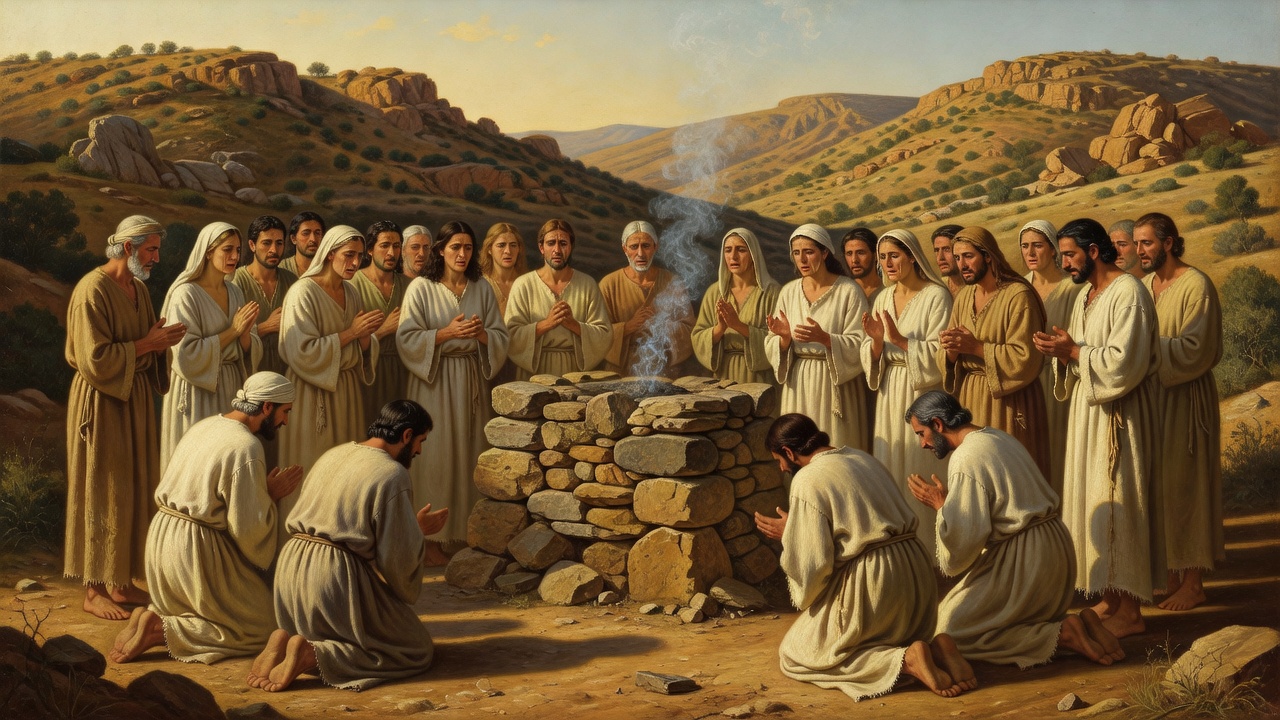
- El nombre Boquim significa "los que lloran". El lugar, probablemente situado entre Gilgal y Silo, recibió este nombre después de que los israelitas lloraron en voz alta cuando el ángel del Señor los reprendió por pactar con los habitantes de la tierra.Fuentes: Bochim · el propio texto bíblico
- Josué fue sepultado en Timnat-serah (o Timnat-heres, "porción del sol"), al norte del monte Gaas, en la región montañosa de Efraín. Había liderado a los israelitas tras la muerte de Moisés y murió a la edad de 110 años.Fuentes: Timnath-heres · Gaash · Joshua · el propio texto bíblico
- El término baales es la forma plural que alude a las diversas manifestaciones locales de Baal, la principal deidad masculina de los fenicios. Jueces 2 establece el ciclo recurrente del libro: Israel abandona al Señor por dioses ajenos, cae ante sus enemigos y es librado cuando Dios levanta un juez.Fuentes: Baal · el propio texto bíblico
Notas escritas con ayuda de IA a partir de fuentes abiertas (Theographic Bible Metadata, CC BY-SA 4.0; Easton’s Bible Dictionary, dominio público) y revisadas antes de publicarse.
Lugares de este capítulo
Solo aparecen lugares identificados con alta confianza (90 % o más según las fuentes académicas reunidas por OpenBible). Mapa de la época: DARE (Digital Atlas of the Roman Empire), CC BY 4.0; mapa actual: © colaboradores de OpenStreetMap; lugares: OpenBible.info (CC BY 4.0).
Créditos y licencia de esta traducción
Candoshi-Shapra
New Testament in Candoshi-Shapra (PE:cbu:Candoshi-Shapra)
copyright © 2010 Wycliffe Bible Translators, Inc.
Language: Candoshi-Shapra
Translation by: Wycliffe Bible Translators, Inc.
Candoshi-Shapra
cbu
Peru
Copyright Information
© 2010, Wycliffe Bible Translators, Inc. All rights reserved.
This translation text is made available to you under the
terms of the Creative Commons License: Attribution-Noncommercial-No Derivative Works.
( http://creativecommons.org/licenses/by-nc-nd/3.0/ )
In addition, you have permission to port the text to different file formats, as long as you
do not change any of the text or punctuation of the Bible.
You may share, copy, distribute, transmit, and extract portions
or quotations from this work, provided that you include the above copyright
information:
You must give Attribution to the work.
You do not sell this work for a profit.
You do not make any derivative works that change any of the actual words or punctuation of the Scriptures.
Permissions beyond the scope of this license may be
available if you contact
us with your request.
The New Testament
in Candoshi-Shapra
© 2010, Wycliffe Bible Translators, Inc. All rights reserved.
This translation is made available to you under the terms of the
Creative Commons Attribution-Noncommercial-No Derivatives license 4.0.
You may share and redistribute this Bible translation or extracts from it in any format, provided that:
You include the above copyright and source information.
You do not sell this work for a profit.
You do not change any of the words or punctuation of the Scriptures.
Pictures included with Scriptures and other documents on this site are licensed just for use with those Scriptures and documents.
For other uses, please contact the respective copyright owners.
2025-04-30
Fuente: http://ebible.org/cbuNT/ · eBible.org