Éxodo 3
Candoshi-Shapra · Toca un versículo para ver sus referencias cruzadas.
Ashiriya, na kamanchintspa yuwaa Apanll Móysispa tsiyatarangu anootsi
1Ashiriya, Móysis Madiyanush tsap ungsiree Jetronaa opeejarini ksutku taarangiya. Jetronsha apanllpanimuncha. Ashiriya, minushsha zar Móysis mach Orebap ipusap ungsiree opeejarini machtarangiya. 2Anushsha kusarangu, yuw yasin pakich xiyaru an kizpur kurarangu, Móysissha anoo parangu, napuxtarangiya. Yasin puch sumasush ipusinand xiyá ashirangtaa, itaru yasin nda muchirangiya. 3Ashiriya, Móysissha, ¿Maya ashtar? átu, anush napkatu, 4Apanllsha: Móysisee, musá ningeem kusinllpa, tárangu, Móysissha: ¿Mayaamshita? átu, 5Apanllsha: Anootsiri xiyeerush, spaturish yushungi, watam nuwash wanasirimshish kusarangshawa, tárangu, Móysissha anootsirisha wasapturee yushirangiya. 6Apanllsha: Nuw waatatana Apanlli. Sirútama shiy zitaminarish nuwaa chinaranganaya: Aprahamarini, misha Isaakarini, misha Akoparini aship nuwaa kizpur chinaranganaya, Apanll tárangiya. Móysissha anoo mazinarangu, puniku, Apanllee patareema, átu, wachoo pachtampat kámanarangiya. 7Itaru, Apanllsha wandari Móysisee tsiyatstar ashirangiya. Nuw Israelchichee izuuru yasaktana, yuwaa Ijiptoshuch tputs kiyung yachaksin, tanukana anootsi. Nuwaatssha: Apaa, tpachindangandama, atanaya. 8Ashirucha, nuwsha istapi aturi, shiyash kusarangina. Shiysha Israelchichee maachiritaatsish shaana istangcha. Nuw siyaa minup tsap kapungup maachchintspa. An tsap kizpur wanasiri, misha katungats zapantam taariya, misha kungutam wanasirimash taaritamta. Ansha tsap sur Kanaana yap tputs nda nuwaa kuki mangoonkana ambi. 10Ashiriya, nuw shiyaa Ijiptoshchipa kurak tsiyatamaam zanganchinllpa. Shiy nuwaa tputsireetsi kurakpa tsiyateerush, ishitungangcha, Apanll Móysisee tárangiya.
11Itaru, Móysissha: Nuw kurakaa tsiyatkuri, ¿antaati nuw waritareezi? ¿Ameereezi Israelchichee tputs minupsha tsap tashitungangcha, táyachee? tárangu, 12Apanllsha: Nduni, punirinllpa. Nuw shiyaam kapung istachinllpa. Shiysha Israelchichee tashitungayarush, nichchitam tsap mach Orebush kuskachus, anush ichingurusin tputs nuwaatsimari ungirtaksin taachinllinpa. Anumun tputs nuwaa ichingurusin yasachinllinaya. Zurukuparee Apanll Taarashipan Móysisee ningeem zanganirangiya, nuwaa táchpasinaya, tárangiya.
13Ashiriya, Móysissha: Nuw Israelchichee: Iy zitaminarini Apanllirini nuwaa kamachtarangiya. Siyaa nish Ijiptosh tsap tashitungamaama, táchima. Itaru, wapaz nuwaa; ¿Tamamshita Apanllee? tákchusin, ¿nuwsha anoo amcheezi? Móysis Apanllee tárangiya.
14Apanllsha: Nuw Apanlli Taarashipantana. Nuw urutari sirútamastaatiya taaranguri, natsha urutamaritam taakina. Nuw waatatana Taarashipani. Siy zitaminarnis nuwaatsimari ichingurusin, Aprahamarini, misha Isaakarini, misha Akoparini kizpur chinarangana. Nuw waatatana. Min, nllitarit Apanll nuwamand wanindaja. Ashirucha, nuwaa ningeem zanganirangiya siyaa istamaama, Apanll átcha, tángcha, tárangiya. 16Ashiriya, Ijiptosh tsap Israelchichpat urkar shaniykachus, anush nuwaa kuki kamaningcha. Apanll Taarashipan watacha yuw zitaminaris Aprahamarini, misha Isaakarini, misha Akoparini chinarangana. An nuwaa tsiyatarangiya, tángcha. Mishat, siyaa ateeja; Nuw paktana yuwaa siy Ijiptosh tsap kiyung kachiykis anootsi, Apanll átcha. 17Ashiriya, nuw siyaa Ijiptosh tsap tashitungachintspa nda arangeem siy kiyung kachiymaama. Siyaa tsap Kanaanap machintspa, yap tputs nllitari Hititshuch, mishat Amorrewshuch, mishat Feresewshuch, mishat Hebewshuch, mishat Jebusewshuch taakana ambi. Anush tsap kizpur wanasiri; katungats zapan taariya, misha kung wanasirimash taaritamta. Izuuru siy anoo tsap urutamari payutssa, Apanll átcha, tángcha. 18Ashiri shiysha Israelchichpa kurak tsiyatkachush, kuraksha shiyaa kukish uru payuchiya. Mishat, Ijiptoshchee kurak tsiyatangtamcha. Ashiri Israelchich tputs shitungeersin, anumand tuchip zar naayarusin, ipusap anush nuwaa ungirtaksin, chinoowaa nuwaam muchchinllinaya, Apanll átcha, Ijiptoshchee kuraka tángcha. 19Itaru, nuw wasina yasaktana. Amb atitaateesha, siyaa zangancheeja, ndambari. 20Itaru, nuwsha ashiritaa, kurakaa kizpur kiyung yachachima. Nuwaanaatsi wizpurireetsi yuwamshee nda patarana anumashee yámandachima. Ashkachuri, Ijiptoshchee tputs tsipatspa wanichima. Ashkachuri, anoo kurak Ijiptoshuch pakchu, Israelchichee tputs zanganichparee.
21Mishat, nuw Israelchichee istachima. Ashkachuri, Ijiptoshuch tputs maachiritaa mangutari zapan panachinllinaya. Israelchichsha anoo maacheetsi zapan yáyandsin naachinllinaya. 22Ndatuma Ijiptoo tsap shitungarusin, Israelchich kizanur Ijiptoshchee wizanur maachiritaa yuwaa payukana anoo mashkatssin, uwshtisin nda pachindchinlliniya. Kurikee, misha orootstam, misha wayarangasheetstam, misha wamareetstam ichinguru maacheetsi panachinllinaya. Ashiri Israelchichsha anpa wipaam túmartachinllinaya. Ashkatssin, Ijiptoshcheetssha izuuru ixunayarusin kasachinllinaya, Apanll Móysisee tárangiya.
Ashiriya, na kamaneena yuwaa Apanll Móysispa tsiyatarangu anootsi.
¿Sabías que…?
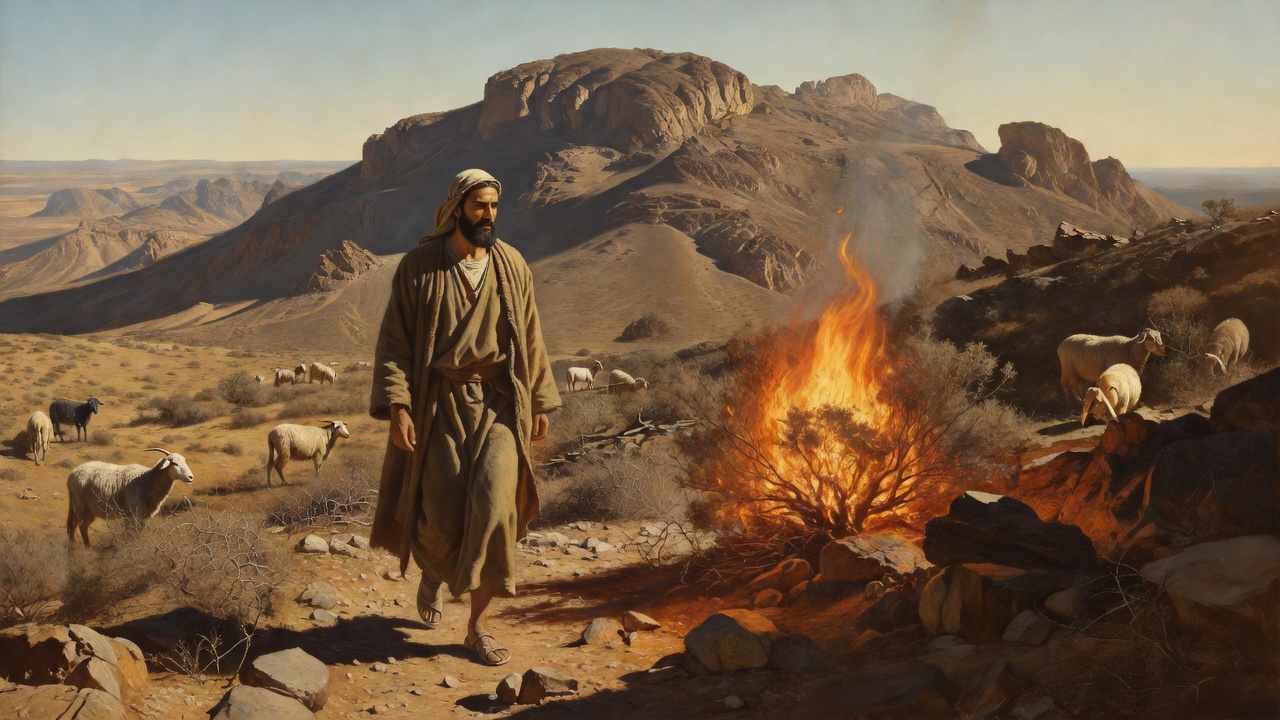
El llamado de Moisés en la zarza ardente
- Moisés está pastoreando en Madián cuando comienza este capítulo. Los madianitas eran una tribu árabe nómada, descendiente de Madián, el cuarto hijo de Abraham con Cetura, cuyo nombre se explica como contienda. Vivían sobre todo en el desierto al norte de Arabia, y la península del Sinaí era tierra de pastoreo para sus rebaños; allí, tras huir de Egipto, Moisés llegó a ser siervo y luego yerno del sacerdote.Fuentes: el propio texto bíblico · Midian · Midian
- Su suegro es Jetro, llamado sacerdote de Madián. El Diccionario Bíblico de Easton (1897) identifica a ese sacerdote con Raguel y dice que, si los dos nombres corresponden a un mismo hombre, Raguel puede considerarse su nombre personal y Jetro, que significa excelencia, un título oficial.Fuentes: el propio texto bíblico · Jethro
- Moisés lleva el rebaño hasta Horeb, el monte de Dios. El nombre se explica como desierto, o monte, del suelo reseco, un término general para toda la cordillera de la cual el Sinaí era una de las cumbres; el Diccionario Bíblico de Easton (1897) da a la cordillera el nombre moderno de Jebel Musa y la describe como un enorme bloque de unas dos millas de largo por cerca de una milla de ancho, con una llanura muy espaciosa llamada Er Rahah en su extremo noreste, donde los israelitas acamparon después durante casi un año.Fuentes: el propio texto bíblico · Horeb
Notas escritas con ayuda de IA a partir de fuentes abiertas (Theographic Bible Metadata, CC BY-SA 4.0; Easton’s Bible Dictionary, dominio público) y revisadas antes de publicarse.
Lugares de este capítulo
- Midian · 28.495, 35.012 · versículo 1
- Mount Horeb · Hoy: Jebel Musa · 28.540, 33.973 · versículo 1
- Egypt · 30.129, 31.308 · versículos 7, 8, 10, 11, 12, 16, 17, 18, 19, 20, 22
Solo aparecen lugares identificados con alta confianza (90 % o más según las fuentes académicas reunidas por OpenBible). Mapa de la época: DARE (Digital Atlas of the Roman Empire), CC BY 4.0; mapa actual: © colaboradores de OpenStreetMap; lugares: OpenBible.info (CC BY 4.0).
Créditos y licencia de esta traducción
Candoshi-Shapra
New Testament in Candoshi-Shapra (PE:cbu:Candoshi-Shapra)
copyright © 2010 Wycliffe Bible Translators, Inc.
Language: Candoshi-Shapra
Translation by: Wycliffe Bible Translators, Inc.
Candoshi-Shapra
cbu
Peru
Copyright Information
© 2010, Wycliffe Bible Translators, Inc. All rights reserved.
This translation text is made available to you under the
terms of the Creative Commons License: Attribution-Noncommercial-No Derivative Works.
( http://creativecommons.org/licenses/by-nc-nd/3.0/ )
In addition, you have permission to port the text to different file formats, as long as you
do not change any of the text or punctuation of the Bible.
You may share, copy, distribute, transmit, and extract portions
or quotations from this work, provided that you include the above copyright
information:
You must give Attribution to the work.
You do not sell this work for a profit.
You do not make any derivative works that change any of the actual words or punctuation of the Scriptures.
Permissions beyond the scope of this license may be
available if you contact
us with your request.
The New Testament
in Candoshi-Shapra
© 2010, Wycliffe Bible Translators, Inc. All rights reserved.
This translation is made available to you under the terms of the
Creative Commons Attribution-Noncommercial-No Derivatives license 4.0.
You may share and redistribute this Bible translation or extracts from it in any format, provided that:
You include the above copyright and source information.
You do not sell this work for a profit.
You do not change any of the words or punctuation of the Scriptures.
Pictures included with Scriptures and other documents on this site are licensed just for use with those Scriptures and documents.
For other uses, please contact the respective copyright owners.
2025-04-30
Fuente: http://ebible.org/cbuNT/ · eBible.org