Éxodo 5
Diosa' kiika; Génesis, Éxodo y El Nuevo Testamento · Toca un versículo para ver sus referencias cruzadas.
Moisés AarónbaEgipto reiba kuinda kila.
1Tsejtu yala pallu, Moisés Aarónba, faraón' junga jitu tsandila: Israel chachilla' Dios Yavé entsandive: In chachillanu tiba den chutyuin tenasha eede, tsenmala yala junbi fandangu ke', inu aawa kure' keewaanudetsu, tive, tila.
2Tsenñuren faraón pakatu: Tsen, ¿Yavé maa juñaa, iya yanu meengue' Israel chachillanu me-eenu juwa? Juntsa Yavénu naa keraba jui'yu, tsenmin Israel chachillanu bain me-eren jui'yu, timi.
3Tsenñu yala tsandila: Hebreo chachilla' Dios lalanu fale' katawave, tsenñu' mitya lalanu tiba den chutyuin tenasha, pen malunainsha neepachi jikaasa tenve, lala' Dios Yavénu animaa tute' keewaanudetsu; tsangui'shu juntsaa lalanu naa peyacheeba, naa peeniyacheeba ke' tuten jutyuumiñu, tila.
4Tsenñu Egipto rei tsandimi: Moisés, Aarón, ¿ñulla nenñaa chachilla taawasha kendetsuba bulla kes nendudeiyu? ¡Miji', ñulla' taawasha mandei! timi.
5Tsejtu faraón entsa bain tsandimi: Challa entsa tusha Israel chachilla puredenanmalaa, ¿ñulla yalanu taawasha ken jutyu tirenu dejuu? timi.
6Tsanditu juntsa malunun faraón, naa taawasha kikare' keenamu rukulanu bain, naa kaa balelanu bain entsandimi: 7Israel chachillanu kaspeleya yala tu lepa kenudetsu ejke jaki kuwa kuwakemu deju'ba, umaa mangutyudei. ¡Yalaren ejke jaki demi'kiisa! 8¡Tsenmin kaspele naake tu lepa kiikemuwa deeñuba tsa tsangue kikaantsu', maliba faata kikaatyudei! Yala yuj landyamu de' mitya detive: ¡Lala' Diosnu animaa tute' keewaajisai! tiitila. 9Tsaañu' mitya juntsa chachillanu kayu daran taawasha ne kikaakidei; tsenmalaa naa-uwanuba taawasha kidyatyu', juntsa anbuda palaanu meedi'nudetsu, timi.
10Tsenñu taawasha kikare' keenamu rukula bain, naa kaa balela bain defale' ji' kumuinchi chachillanu entsandita jila: Faraón ñullanu ejke tape mangutyudei, tive. 11Tsa' mitya challa ñullaren nuka juntsa tape tsuñuba ji' mi'ke' ka' taanu dejuve. Tsaaren ñulla tsanguenu deju' mityaa jayun kikenu dejutyu', kaspele naakemuwa deju' bain juntsangue tu lepa kentsunu dejuve, tila.
12Tsenñu Israel chachilla kumuinchi Egipto tusha na'baasa devela' jiila, buikiya ejke tape mi'kenu. 13Tsaaren, taawasha kekare' keenamu rukula entsandiitila: Kaspele ñullanu ejke tape dekuñu, naake tu lepa kiikemu deju' bain, malumere juntsangue kiikidei, tiitila.
14Tsejtu faraónchi taawasha kikare' keenamu rukula, kaa bale tira' washna' keekeenamu Israel chachillanu bandentsula entsa entsanditu: ¿Nejtaa uma bain, naa kishi bain ñulla kaspele tu lepa naake kiikemu deju'ba juntsangue mantyu juju deeyu? tiitila.
15Tsenñu kaa bale pumu Israel chachilla faraón' junga ajaa ti' wainnu jitu tsandila: ¿Nenñaa ñuchi manda-imu chachillanuba entsanguendunguiyu? 16Lalanu naa ejke tapeba mangutyumujchiren, kaspele tu lepa naake seran kiikemu deeñu bain juntsangue manbake manbake dekive, tsenmin lalanu naa ta'kenchi bain kiidekive. Tsaju' ejke tape mangutyu' mitya entsaya ñu' chachilla' kuipave, tsaanuren lalanaa kuipa pu' ta'kindetsuve, tila.
17Tsenñuren faraón entsandi pakami: Ñulla yuj landyamu de' mitya detive: ¡Yavénu animaa tute' keewaajisai! tiitila. 18¡Tsa' mitya jei taawasha manjidei! Naa ejke tape demangutyuñu bain, kaspele tu lepa naake seran kemu deju'ba juntsangue kiikenu dejuve, timi.
19Tsenñu Israel chachi kaa bale pumula naaken tsandyala, kaspele tu lepa naake seran kemu deju'ba chai bain juntsangue seran kentsunu dejuve tiñu. 20Tsejtu yala faraónba dekuindake' malutu, Moisésnu bain Aarónnu bain katala, yalanu washidena. 21Tsejtu tsandila: Ñulla tyee dekiñuba Yavé juntsan mitya taaju puitesa, matyu naa lalanu faraón bain, naa bale chachilla bain na'baasa dekiñuba ñullaa kuipa de' mitya. Ñullaren yala' tyaapanu peeniya chungaapukeñuu dekive lalanu tu'nudetsu, tila.
Moisés Diosba kuinda kemi.
22Tsenñu Moisés, Yavéba kuinda ketu tsandimi: Bale Ruku, ¿nenñaa entsa chachillanu firu' taaju kekaandunguiyu? ¿Tyeenguenaa inu jakaatunguiyu? 23Naamaa iya, ñu' mitya ti' faraónnu pañuba, juntsa ajkeshaya ñu' chachillanu kayu firu' ke' ne jiintsuve, tsenñuren ñuya tibanguindyuve yalanu livee kenu, timi.
¿Sabías que…?
Trabajo más duro tras la negativa del faraón
- El Easton's Bible Dictionary (1897) dice que el faraón del Éxodo fue probablemente Menephtah I, el decimocuarto y mayor hijo sobreviviente de Ramsés II, pero trata la identificación como una cuestión aún abierta: algunos eruditos, señala la obra, se inclinan por Seti II, cuyo reinado describe como iniciado en paz y terminado en un desastre repentino. La entrada dice que residía en Zoán, donde recibió a Moisés y a Aarón en las audiencias registradas en Éxodo.Fuentes: Pharaoh (of the Exodus) · el propio texto bíblico
- El Easton's Bible Dictionary (1897) sitúa la llegada de Jacob a Egipto probablemente unos 350 años antes del nacimiento de Moisés. Dice que un rey hicso, de un pueblo semita pastoril de Asia y llamado rey pastor, recibió a la familia con favor y les asignó Gosén, la mejor tierra; en este capítulo el faraón trata al pueblo de Israel, ya numeroso, como trabajadores a los que no dejará ir.Fuentes: Moses · el propio texto bíblico
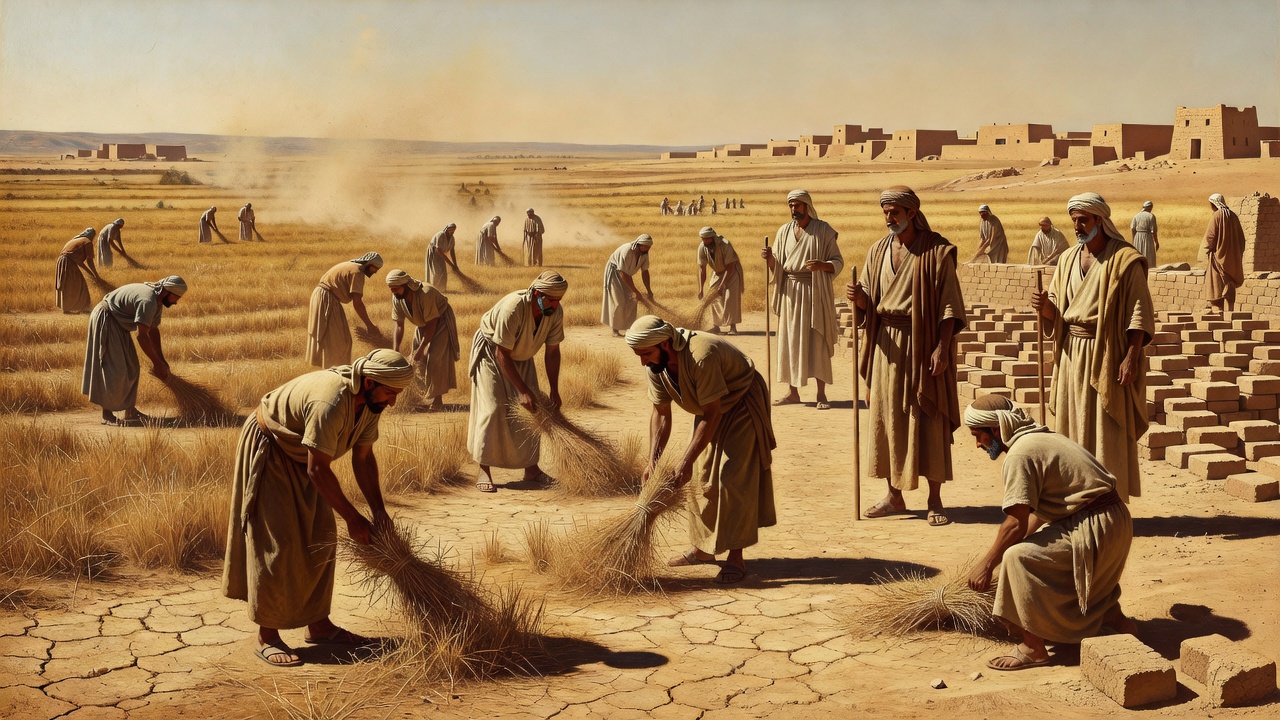
- El faraón responde a la petición de celebrar una fiesta en el desierto dejando de suministrar la paja para los ladrillos, pero exigiendo todavía la misma cuota diaria. El pueblo se dispersa por toda la tierra de Egipto para recoger rastrojo, y los oficiales israelitas que los capataces del faraón habían puesto sobre ellos son golpeados cuando esa cuota no se cumple.Fuentes: el propio texto bíblico
Notas escritas con ayuda de IA a partir de fuentes abiertas (Theographic Bible Metadata, CC BY-SA 4.0; Easton’s Bible Dictionary, dominio público) y revisadas antes de publicarse.
Lugares de este capítulo
Solo aparecen lugares identificados con alta confianza (90 % o más según las fuentes académicas reunidas por OpenBible). Mapa de la época: DARE (Digital Atlas of the Roman Empire), CC BY 4.0; mapa actual: © colaboradores de OpenStreetMap; lugares: OpenBible.info (CC BY 4.0).
Créditos y licencia de esta traducción
Diosa' kiika; Génesis, Éxodo y El Nuevo Testamento
New Testament + Genesis and Exodus in Chachi (EC:cbi:Chachi)
Génesis, Éxodo y El Nuevo Testamento en Chachi
copyright © 2008 Wycliffe Bible Translators, Inc.
Language: Chachi
Translation by: Wycliffe Bible Translators, Inc.
Chachi
cbi
Ecuador
Copyright Information
© 2008, Wycliffe Bible Translators, Inc. All rights reserved.
This translation text is made available to you under the
terms of the Creative Commons License: Attribution-Noncommercial-No Derivative Works.
( http://creativecommons.org/licenses/by-nc-nd/3.0/ )
In addition, you have permission to port the text to different file formats, as long as you
do not change any of the text or punctuation of the Bible.
You may share, copy, distribute, transmit, and extract portions
or quotations from this work, provided that you include the above copyright
information:
You must give Attribution to the work.
You do not sell this work for a profit.
You do not make any derivative works that change any of the actual words or punctuation of the Scriptures.
Permissions beyond the scope of this license may be
available if you contact
us with your request.
The New Testament
in Chachi
© 2008, Wycliffe Bible Translators, Inc. All rights reserved.
This translation is made available to you under the terms of the
Creative Commons Attribution-Noncommercial-No Derivatives license 4.0.
You may share and redistribute this Bible translation or extracts from it in any format, provided that:
You include the above copyright and source information.
You do not sell this work for a profit.
You do not change any of the words or punctuation of the Scriptures.
Pictures included with Scriptures and other documents on this site are licensed just for use with those Scriptures and documents.
For other uses, please contact the respective copyright owners.
2014-12-03
Fuente: http://ebible.org/cbiNTpo/ · eBible.org