Juan 8
Di Nyoo Testiment eena Bileez Kriol · Toca un versículo para ver sus referencias cruzadas.
Di laydi weh dehn kech // di komit adolchri
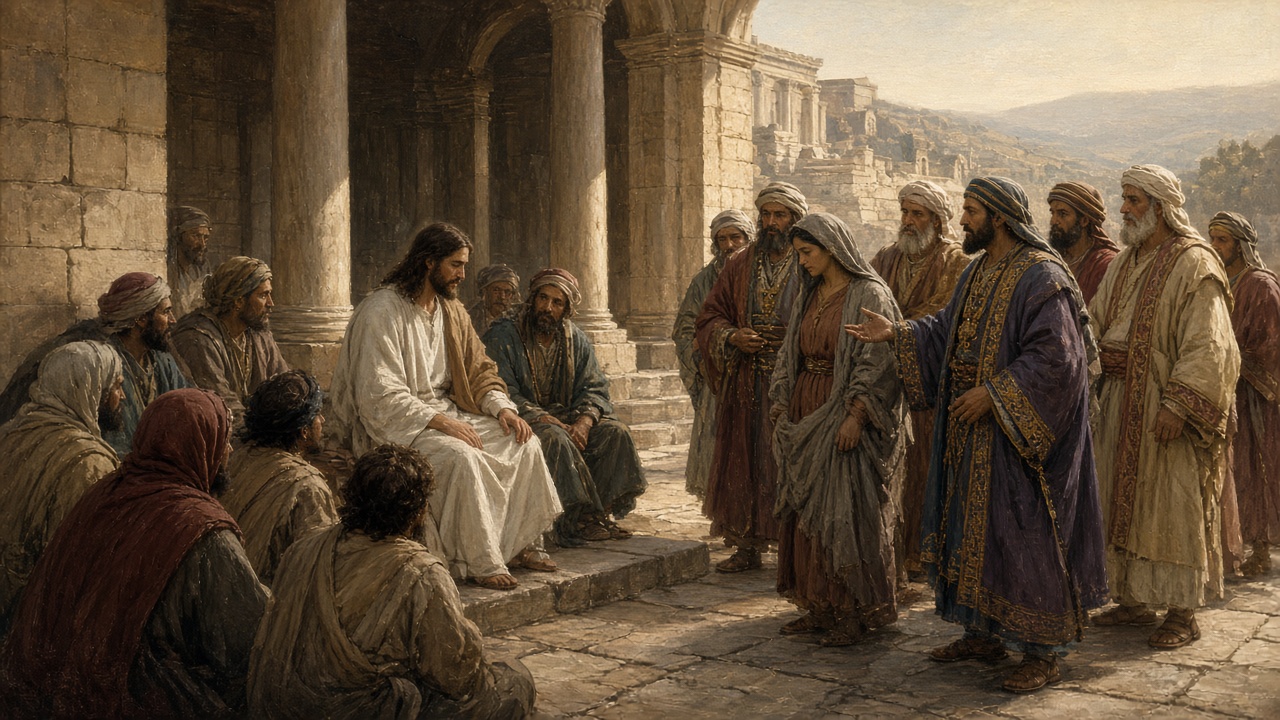
1Jeezas gaahn da di hil weh nayhn di Mongt a Alivz, 2bot soon di neks maanin ih gaahn bak da di templ. Aala di peepl dehn gyada rong ahn, ahn ih sidong ahn staat tu teech dehn. 3Dehn wan weh teech di Jooish Laa ahn di Farisee dehn bring een wahn uman weh dehn kech eena di ak di cheet pahn ih hozban. Dehn put ahn fi stan op rait fronta evribadi ahn seh tu Jeezas, “Teecha, dehn kech dis uman eena di ak di cheet pahn ih hozban. 5Now Moaziz Laa seh dat wi fi stoan uman laik dis tu det. Now da weh yoo ga fi seh tu dat?” 6Dehn aks Jeezas dat jos fi pik ih mowt fi si if ih mi wahn seh eniting rang weh dehn kuda ares ahn fa.
Wel, Jeezas ben dong ahn staat tu rait pahn di grong wid ih finga. 7Wen dehn stodi mi-di kweschan ahn, ih schraytn op ahn tel dehn seh, “Mek eni wan a unu weh noh ga no sin chroa di fos stoan aata dis laydi.” 8Den ih ben dong agen ahn staat tu rait pahn di grong.
9Wen dehn yehr dat, dehn staat tu lef wan bai wan, fahn di oaldis wan goh dong; afta dat oanli Jeezas wan mi lef deh wid di laydi di stan op fronta ahn. 10Jeezas stan op ahn aks ahn seh, “Mis, da weh evribadi deh? Nobadi noh kandem yu?”
11Di laydi seh, “Nobadi, Sa.”
Ahn Jeezas tel ahn seh, “Wel, Ai noh kandem yu needa. Goh hoahn, ahn fahn ya goh bak, noh sin nohmoh.”]
Jeezas da di lait a di werl
12Jeezas staat tu taak tu di Farisee dehn agen ahn seh, “Ai da di Wan weh gi di peepl dehn eena di werl lait. Enibadi weh fala mi wahn ga di lait weh shoa dehn how fi liv, ahn den dehn wahn neva deh eena daak.”
13Di Farisee dehn tel ahn seh, “Da yoo di taak fi fi yoo oanself, soh weh yoo seh noh wot notn.”
14Jeezas ansa dehn seh, “Eevn if Ai di taak fi mai oanself, weh Ai seh da chroo kaa Ai noa wehpaa Ai kohn fram, an Ai noa wehpaa Ai gwehn. Bot unu noh noa wehpaa Ai kohn fram er wehpaa Ai gwehn. 15Unu joj peepl jos bai weh unu ku si az hyooman. Mee, Ai noh joj nobadi. 16Ahn eevn if Ai joj, mai jojment da di chroo kaina jojment kaa da noh oanli mee wan joj, bot da mee ahn di Faada weh sen mi. 17Fi unu Laa seh dat if too witnis goh da koat di seh di sayhn ting, den weh dehn di seh da chroo. 18Ai taak fi mai oanself, ahn di Faada weh sen mi taak fi mee tu.”
19Den di Farisee dehn aks ahn seh, “Wehpaa fi yoo Faada deh?”
Jeezas ansa dehn seh, “Unu noh noa mee ner mi Faada. If unu mi noa mee, unu wuda noa mi Faada tu.”
20Jeezas seh dehn ting wen ih mi-di teech eena di room da di templ weh di kalekshan baks kip. Bot nobadi neva ares ahn kaa ih taim neva kohn yet.
Jeezas taak bowt wehpaa ih gwehn
21Jeezas tel dehn agen, “Ai gwehn weh, ahn unu wahn luk fi mi, bot unu wahn ded ahn unu sin stil noh wahn geh fagiv. Unu kyaahn goh wehpaa Ai gwehn.”
22Den di Jooish leeda dehn seh, “Weh hapm? Ih wahn kil ihself er sohnting? Da dat ih meen wen ih seh, ‘Unu kyaahn goh wehpaa Ai gwehn?’”
23Jeezas tel dehn seh, “Unu da fahn dong ya; Ai da fahn op da hevn. Unu da fahn dis werl; Ai da noh fahn dis werl. 24Ahn if unu noh bileev dat Ai da hoo Ai seh da mee, den unu wahn ded, ahn unu sin stil noh wahn geh fagiv.”
25Den dehn seh tu Jeezas, “Da hoo yoo?”
Jeezas tel dehn seh, “Ai da hoo Ah di seh fahn di staat. Ah ga lata ting fi seh bowt unu, ahn lata ting fi kandem unu fa. Bot di Wan weh sen mi noh tel lai, an Ai di tel di hoal werl weh Ai yehr fahn hihn.”
27Dehn neva noa seh dat Jeezas mi-di taak tu dehn bowt di Faada. 28Soh Jeezas seh, “Wen unu lif op di Son a Man pahn di kraas, den unu wahn riyalaiz dat Ai da hoo Ai seh da mee, ahn dat Ai noh du notn pahn mi oan, bot Ai oanli seh weh di Faada mi teech mi. 29Di wan weh sen mee deh wid mi. Hihn noh lef mi bai miself, kaa Ai aalwayz du di ting dehn weh hihn laik.”
30Wail Jeezas mi-di seh dehn ting deh, lata peepl bileev eena ahn.
Di chroot bowt Gaad // wahn mek unu free
31Den Jeezas tel di Jooz dehn weh mi bileev eena ahn, “Unu da mi chroo chroo falowa dehn if unu kip aan obay aal weh Ah tel unu. 32Unu wahn noa di chroot bowt Gaad, ahn da sayhn chroot wahn mek unu free fi chroo.”
33Di peepl dehn ansa Jeezas seh, “Wee kohn fahn Aybraham famili lain, ahn wee da neva nobadi slayv yet. Soh da weh yoo meen wen yu seh, ‘Unu wahn bee free?’”
34Jeezas ansa dehn seh, “Ah di tel unu di chroot, if enibadi stay di sin, den sin ga dehn laik slayv. 35Wahn slayv da noh wahn reel memba a di famili weh ih werk fa; bot wahn son wahn aalwayz bilangz tu fi hihn famili. 36Soh den, if Gaad Son mek unu geh free fahn sin, den unu wahn free fi chroo. 37Ai noa dat unu kohn fahn Aybraham famili lain; stil, unu di luk fi wahn chaans fi kil mi kaa unu rifyooz fi aksep di ting dehn weh Ah teech unu. 38Ai di tel unu di ting dehn weh mai Faada mi shoa mi wen Ai mi deh wid hihn; bot unu du weh fi unu pa tel unu fi du.”
39Dehn ansa Jeezas seh, “Aybraham da fi wee pa.”
Jeezas tel dehn seh, “If unu da-mi Aybraham pikni dehn, den unu wuda di du weh Aybraham mi du, bot insteda dat, unu di chrai kil mee, weh di tel unu di chroot weh Ah yehr fahn Gaad. Aybraham neva du notn laik dat. 41Unu di du egzakli weh fi unu pa du fi chroo.”
Dehn seh tu Jeezas, “Wee da noh no owtsaid pikni; wee ga wan Faada, ahn dat da Gaad ihself.”
42Jeezas tel dehn seh, “If Gaad da-mi reeli fi unu Faada, den unu wuda lov mee kaa Ai kohn fahn Gaad, ahn now Ai deh ya. Ai neva kohn pahn mi oan, bot da hihn sen mi. 43Wai unu noh andastan weh Ah di seh? Da kaa unu rifyooz fi aksep di ting dehn weh Ah di teech unu. 44Unu da fahn fi unu pa weh da di devl, ahn unu waahn du weh hihn seh. Hihn da-mi wahn merdara fahn di staat, ahn hihn neva yet mi waahn ga notn fi du wid di chroot, kaa nat wan pees a chroot noh deh eena hihn. Wen hihn di tel lai, ih di du it kaa da ih naycha fi tel lai, ahn hihn da di pa a aala di lai dehn. 45Bot unu si, now dat Ai di tel unu di chroot, unu noh bileev mi. 46Wich wan a unu ku paint finga pahn mee ahn akyooz mi seh Ai sin? Laik how Ai di tel di chroot, wai unu noh bileev mi? 47Enibadi weh da Gaad pikni lisn tu weh Gaad seh. Di reezn wai unu noh yehr weh Gaad seh, da bikaa unu da noh fi hihn pikni.”
Jeezas taak bowt Aybraham
48Di Jooish leeda dehn ansa Jeezas seh, “Yoo noh tink seh wee rait wen wee seh dat yoo da fahn Samayrya ahn yoo ga deeman?”
49Jeezas ansa dehn seh, “Ai noh ga no deeman, bot Ai aana mai Faada, ahn unu noh di shoa no rispek fi mee. 50Stil, Ah noh waahn aana fi miself, bot da Gaad waahn aana mee, ahn da hihn da di joj. 51Ah di tel unu di chroot, enibadi weh du weh Ah tel dehn wahn neva ded.”
52Wen dehn yehr dat, dehn tel Jeezas seh, “Now wi noa fi chroo dat yoo ga deeman! Now Aybraham don ded, ahn di prafit dehn ded tu, ahn stil yoo seh, ‘Enibadi weh du weh Ai tel dehn wahn neva ded’? 53Yoo grayta dan fi wee ansesta Aybraham den? Wel, hihn ahn di prafit dehn ded. Soh da hoo yoo tink yoo soh?”
54Jeezas ansa dehn seh, “If Ai prayz op mai oanself, dat noh meen notn. Da mai Faada da di Wan weh prayz mee. Da hihn sayhn wan weh unu seh da unu Gaad, eevn doa unu noh reeli noa ahn. Bot Ai noa hihn. If Ai wuda seh dat Ai noh noa ahn, den Ai wuda laiyad jos laik unu. Bot unu si, Ai doo noa hihn, an Ai du weh hihn seh. 56Fi unu ansesta Aybraham mi oanli glad wen ih si dat di taim mi kohn fi mek Ai kohn.”
57Den di Jooz dehn seh tu Jeezas, “Yoo noh eevn fifti yet. How yoo ku seh yoo si Aybraham?”
58Jeezas tel dehn seh, “Ah di tel unu di chroot, bifoa Aybraham mi eevn baan, Ai deh!”
59Soh dehn pik op sohn stoan fi stoan ahn, bot Jeezas slip weh fahn dehn widowt dehn eevn noa, ahn ih lef di templ.
¿Sabías que…?
Luz, ley y Abraham
- Juan 8 comienza cuando Jesús va al monte de los Olivos y regresa temprano por la mañana a los atrios del templo, donde se sienta y enseña a la gente que se reúne. El monte de los Olivos es una sierra al este de Jerusalén, separada de la ciudad por el valle del Cedrón, y debe su nombre a los olivos que cubren sus laderas.Fuentes: el propio texto bíblico · Mount of Olives
- Los escribas y fariseos traen a una mujer sorprendida en adulterio y preguntan a Jesús qué dice sobre el mandato de Moisés, en la Ley, de apedrear a tal mujer, buscando ponerlo a prueba y tener base para acusarlo. Todavía en los atrios del templo, cerca del tesoro, Jesús dice más tarde: "Yo soy la luz del mundo". Una lista fechada de eventos sitúa ambos episodios en el año 29 d. C., y cada uno dura un día.Fuentes: el propio texto bíblico · Woman Caught in Adultery · Light of the World/I am discourse
- Cuando Jesús dice que la verdad los hará libres, sus oyentes responden que son descendientes de Abraham y que nunca han sido esclavos de nadie. A Abraham se le llama "padre de una multitud"; era hijo de Taré y heredero de las promesas. Después de que Jesús declara "antes de que Abraham naciera, yo soy", recogen piedras para arrojarlas contra él.Fuentes: el propio texto bíblico · Abraham
Notas escritas con ayuda de IA a partir de fuentes abiertas (Theographic Bible Metadata, CC BY-SA 4.0; Easton’s Bible Dictionary, dominio público) y revisadas antes de publicarse.
Lugares de este capítulo
- Mount of Olives · 31.778, 35.246 · versículo 1
Solo aparecen lugares identificados con alta confianza (90 % o más según las fuentes académicas reunidas por OpenBible). Mapa de la época: DARE (Digital Atlas of the Roman Empire), CC BY 4.0; mapa actual: © colaboradores de OpenStreetMap; lugares: OpenBible.info (CC BY 4.0).
Créditos y licencia de esta traducción
Di Nyoo Testiment eena Bileez Kriol
New Testament in Belize Kriol English (BH:bzj:Belize Kriol English)
copyright © 2012 Wycliffe Bible Translators, Inc.
Language: Bileez Kriol (Belize Kriol English)
Translation by: Wycliffe Bible Translators, Inc.
Copyright Information
© 2012, Wycliffe Bible Translators, Inc. All rights reserved.
This translation text is made available to you under the
terms of the Creative Commons License: Attribution-Noncommercial-No Derivative Works.
( http://creativecommons.org/licenses/by-nc-nd/3.0/ )
In addition, you have permission to port the text to different file formats, as long as you
do not change any of the text or punctuation of the Bible.
You may share, copy, distribute, transmit, and extract portions
or quotations from this work, provided that you include the above copyright
information:
You must give Attribution to the work.
You do not sell this work for a profit.
You do not make any derivative works that change any of the actual words or punctuation of the Scriptures.
Permissions beyond the scope of this license may be
available if you contact
us with your request.
The New Testament
in Belize Kriol English
© 2012, Wycliffe Bible Translators, Inc. All rights reserved.
This translation is made available to you under the terms of the
Creative Commons Attribution-Noncommercial-No Derivatives license 4.0.
You may share and redistribute this Bible translation or extracts from it in any format, provided that:
You include the above copyright and source information.
You do not sell this work for a profit.
You do not change any of the words or punctuation of the Scriptures.
Pictures included with Scriptures and other documents on this site are licensed just for use with those Scriptures and documents.
For other uses, please contact the respective copyright owners.
2022-12-21
Fuente: http://ebible.org/bzj/ · eBible.org