2 Corintios 3
Di Nyoo Testiment eena Bileez Kriol · Toca un versículo para ver sus referencias cruzadas.
Di nyoo agreement // bitween Gaad ahn man
1Ih mait song laik wi di staat tu prayz op wiself agen, noh chroo? Bot wee da noh laik sohn peepl weh hafu bring rekomendayshan leta tu unu, er aks unu fi eni. 2Kaa unu unuself da fi wee rekomendayshan leta. Fi unu laif da wahn leta weh rait dong pahn fi wee haat, ahn evribadi ku noa ahn si di gud werk weh wi du monks unu. 3Evribadi ku si dat Krais rait dis leta ihself ahn sen it wid wee. Dis leta neva rait wid ink, bot wid di Spirit a di livin Gaad. Ih neva kaav owt eena stoan, bot pahn peepl haat.
4Wi ku seh aala dehnya ting kaa wi noa fi chroo dat wi ku chros Gaad sayka Krais. 5Da noh dat wee tink seh wee ku du eniting bai wiself; da Gaad gi wi di powa fi du aal weh wi du. 6Da Gaad mek wee fit fi bee fi hihn servant dehn fi di nyoo agreement weh hihn mek wid fi hihn peepl. Dis nyoo agreement da fahn di Hoali Spirit; da noh fahn no laa weh rait dong. Kaa da Laa deh bring det, bot di Spirit gi laif.
7Now, di Laa weh mi kaav owt eena stoan mi kandem wi tu det. Wen Gaad mi gi Moaziz da Laa deh, Moaziz fays mi-di shain soh moch wid di braitnis a Gaad dat di peepl dehn kudn eevn luk pahn it fi tu lang, eevn doa di braitnis don mi-di fayd weh. 8Soh, if di Laa weh bring det kohn wid soh moch gloari, den weh yu tink a di nyoo agreement weh di Spirit bring? 9If di oal agreement weh bring det mi ga soh moch gloari, den di nyoo wan weh mek wi bee rait wid Gaad ga eevn moa! 10In fak, di fos gloari weh di oal agreement mi ga da noh notn tu di gloari weh di nyoo wan ga. 11Soh, if di oal agreement, weh geh put wan said, mi ga soh moch gloari, den di nyoo wan, weh wahn laas fareva, ga moch moa. Di ting weh neva mi sopoas tu laas lang, ga gloari. Soh den da wan weh wahn laas fareva ful op wid eevn moa gloari.
12Now den, sayka weh wi ga dat fi luk faawod tu, wi noh hafu frayd fi taak owt playn fi Gaad ataal. 13Wee da noh laik Moaziz weh mi kova ih fays soh dat di peepl a Izrel dehn kudn si dat di gloari pahn ih fays mi-di fayd weh. 14Bot jos laik how Moaziz fays mi kova op, sayhn way, da jos laik di peepl a Izrel dehn main mi kova oava wid wahn vayl, soh dat dehn noh andastan di chroot bowt di Laa wen dehn reed it. Oanli wen dehn bileev eena Krais da vayl ku geh tek weh fahn aafa dehn main. 15Eevn op tu tudeh day, wen dehn di reed di Laa weh Gaad gi Moaziz, dehn stil noh andastan. 16Bot wen enibadi ton tu di Laad, Gaad mek di vayl kom aafa fi dehn main. 17Now di Laad da di Spirit, ahn eniway wichpaa di Spirit a di Laad deh, peepl geh free. 18Soh now dat Gaad don moov di vayl fahn aafa fi wee fays, di gloari a di Laad di shain owt fahn wee laik wahn miro; ahn da sayhn gloari weh kohn fahn di Laad, weh da di Spirit, wahn chaynj wi, mek wee bee moa laik hihn, ahn da gloari wahn geh moa ahn moa.
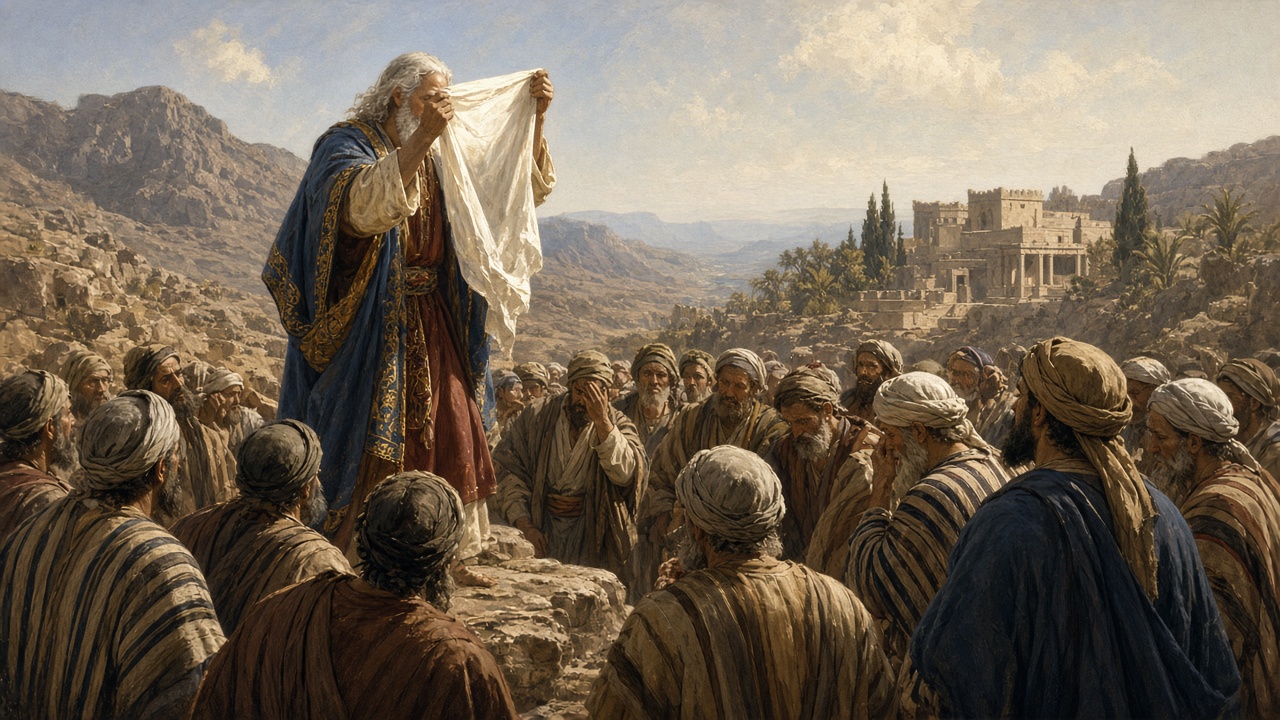
¿Sabías que…?
Un pacto más glorioso
- El capítulo pregunta si hacen falta cartas de recomendación para los creyentes o de parte de ellos, como algunas personas exigen. Responde que los propios creyentes son una carta de Cristo, fruto de este ministerio, inscrita en los corazones de los ministros y conocida y leída por todos.Fuentes: el propio texto bíblico
- El capítulo contrasta la tinta y las tablas de piedra con el Espíritu del Dios vivo escribiendo en corazones humanos. Llama ministerio de muerte y de condenación al ministerio grabado con letras en piedra, y describe un nuevo pacto del Espíritu, porque la letra mata, pero el Espíritu da vida.Fuentes: el propio texto bíblico
- Los israelitas no podían mirar fijamente el rostro de Moisés a causa de una gloria que se desvanecía, y Moisés se puso un velo sobre el rostro para que no contemplaran el fin de lo que iba pasando. El capítulo dice que un velo aún cubre sus corazones cuando se lee a Moisés, y que se quita siempre que alguien se vuelve al Señor.Fuentes: el propio texto bíblico
Notas escritas con ayuda de IA a partir de fuentes abiertas (Theographic Bible Metadata, CC BY-SA 4.0; Easton’s Bible Dictionary, dominio público) y revisadas antes de publicarse.
Créditos y licencia de esta traducción
Di Nyoo Testiment eena Bileez Kriol
New Testament in Belize Kriol English (BH:bzj:Belize Kriol English)
copyright © 2012 Wycliffe Bible Translators, Inc.
Language: Bileez Kriol (Belize Kriol English)
Translation by: Wycliffe Bible Translators, Inc.
Copyright Information
© 2012, Wycliffe Bible Translators, Inc. All rights reserved.
This translation text is made available to you under the
terms of the Creative Commons License: Attribution-Noncommercial-No Derivative Works.
( http://creativecommons.org/licenses/by-nc-nd/3.0/ )
In addition, you have permission to port the text to different file formats, as long as you
do not change any of the text or punctuation of the Bible.
You may share, copy, distribute, transmit, and extract portions
or quotations from this work, provided that you include the above copyright
information:
You must give Attribution to the work.
You do not sell this work for a profit.
You do not make any derivative works that change any of the actual words or punctuation of the Scriptures.
Permissions beyond the scope of this license may be
available if you contact
us with your request.
The New Testament
in Belize Kriol English
© 2012, Wycliffe Bible Translators, Inc. All rights reserved.
This translation is made available to you under the terms of the
Creative Commons Attribution-Noncommercial-No Derivatives license 4.0.
You may share and redistribute this Bible translation or extracts from it in any format, provided that:
You include the above copyright and source information.
You do not sell this work for a profit.
You do not change any of the words or punctuation of the Scriptures.
Pictures included with Scriptures and other documents on this site are licensed just for use with those Scriptures and documents.
For other uses, please contact the respective copyright owners.
2022-12-21
Fuente: http://ebible.org/bzj/ · eBible.org