1 Corintios 7
Di Nyoo Testiment eena Bileez Kriol · Toca un versículo para ver sus referencias cruzadas.
Paal taak bowt marij
1Now, Ah wahn deel wid dehn ting weh unu mi rait tu mi bowt eena unu leta. Yes, ih gud if wahn man noh marid. 2Bot sayka weh soh moch loos livin deh rong, evri man shuda ga ih oan waif ahn evri uman shuda ga ih oan hozban. 3Di man weh marid shuda satisfai ih waif. Sayhn way, di marid uman shuda satisfai ih hozban. 4Di waif noh ga no rait fi seh no tu ih hozban. Ih badi bilangz tu ih hozban. Sayhn way, di hozban noh ga no rait fi seh no tu ih waif. Fi hihn badi bilangz tu ih waif. 5Unu noh fi hoal unuself bak fahn wan anada, eksep wen unu agree tugeda fi du dat jos fi wahn lee wail, soh dat unu ku spen taim fi pray. Az soon az da taim oava, goh bak ahn bee wid wan anada. Da way deh, unu noh wahn gi Saytan no room fi temp unu sayka weh unu kyaahn kanchroal unuself. 6Ai noh di seh dat dat da weh unu hafu du. Ah jos di tel unu weh Ai tink gud fi mek unu du. 7Ah wish aala unu kuda bee jos laik mee. Bot evribadi ga dehn oan speshal gif fahn Gaad. Sohn ga di gif fi geh marid, ahn sohn ga di gif fi stay singl.
8Now dis da weh Ah di seh tu unu weh noh marid, ahn tu dehn laydi weh dehn hozban ded: Ih gud if unu noh geh marid, jos laik mee. 9Bot if unu kyaahn kanchroal unuself, den ih beta unu marid, kaa ih beta fi unu geh marid dan fi bon wid los.
10Now dis da weh Ah di seh tu unu weh marid. (Dis da noh jos mee di taak; dis da wahn koman fahn di Laad.) Wahn waif noh sopoas tu lef ih hozban. 11Bot if ih doo lef ahn, ih noh fi geh marid agen. Eeda ih stay singl, er goh bak tu ih hozban. Ahn wahn hozban noh fi divoas ih waif.
12Now Ah di seh dis tu di res a unu (dis da fahn mee; da noh fahn di Laad.) If wahn man weh bileev eena di Laad ga wahn waif weh noh bileev eena di Laad, ahn di waif agree fi kip aan di liv wid ahn, di man noh fi divoas ih waif. 13Sayhn way soh, if wahn uman weh bileev ga wahn hozban weh noh bileev, ahn di hozban agree fi kip aan di liv wid ahn, di uman noh fi divoas ih hozban. 14Kaa di hozban weh noh bileev don kohn fi bee wan wid ih waif, soh Gaad wahn aksep di hozban laik wan a ih oan. Ahn kaa di waif weh noh bileev don kohn fi bee wan wid ih hozban, Gaad wahn aksep di waif laik wan a ih oan. If dat da neva soh, den dehn pikni neva mi wahn bee hoali fi Gaad. Bot da way deh, dehn hoali fi Gaad.
15Bot if di hozban er di waif weh noh bileev waahn goh, mek dehn goh. Wen dat hapm, di hozban er waif weh bileev free fi goh dehn oan way. Gaad waahn wi liv eena pees. 16Unu waif, unu neva noa if unu hozban weh noh bileev wuda bileev eena di Laad sayka unu. Ahn unu hozban, how unu noa if unu waif weh noh bileev wudn bileev eena di Laad sayka unu?
Di way unu shuda // waak wid Gaad
17Now, evribadi shuda stay sayhn way how dehn mi deh wen di Laad Jeezas kaal dehn fi fala ahn. Dis da di koman weh Ah di gi aal di cherch dehn. 18If wahn man mi don serkomsaiz wen Gaad kaal ahn, mek ih stay how ih mi deh. Ahn If wahn man neva serkomsaiz wen Gaad kaal ahn, ih noh fi ron goh goh geh serkomsaiz. 19If wahn man serkomsaiz er if ih noh serkomsaiz, dat noh meen notn. Wen yu di du weh Gaad seh, dat da weh konk moa dahn eniting els. 20Evribadi shuda kip aan di sayhn way how dehn mi deh wen Gaad kaal dehn. 21If yu da-mi slayv wen Gaad kaal yu, noh mek dat bada yu. Bot if yu geh di chaans fi bee free, tek it. 22Kaa enibadi weh da-mi slayv wen di Laad kaal dehn, di Laad free dehn fahn di powa a sin. Sayhn way, if yu mi free wen di Laad kaal yu, den now yu da wahn slayv fi Jeezas Krais. 23Gaad don pay wahn hai prais fi unu, soh noh goh bee slayv fi nobadi els. 24Mi bradaz ahn sistaz, eech a unu shuda waak wid Gaad eena di sayhn kandishan weh unu mi deh eena wen ih kaal unu.
Wahn werd fi dehn wan // weh noh marid
25Now Ah di seh dis bowt dehn wan weh noh marid yet: Gaad neva gi mi no koman bowt it, bot Ah di tel unu weh Ai joj fi bee rait. Ahn Gaad weh shoa mersi gi mi wizdom, soh dat wen Ah di taak, peepl ku bileev weh Ah di tel dehn.
26Now sayka weh wi di goh chroo sohn haad taim, Ah tink ih beta fi evribadi fi stay sayhn laik how dehn deh. 27If yu marid, stay marid. Ahn if yu noh marid, noh goh geh marid. 28Bot if wahn man weh noh marid goh goh geh marid, ih noh di sin. Ahn if wahn verjin geh marid, ih noh di sin needa. Ah jos di chrai sayv unu fahn aala di prablem dehn weh yu wahn ga wen yu marid.
29Mi bradaz ahn sistaz, dis da weh Ah meen: Di taim shaat ahn di Laad soon kohn bak. Soh eevn if yu marid, noh oanli ga yu main set pahn yu marij, bot pahn di Laad. 30Mek dehn wan weh di baal goh aan laik dehn noh sad. Mek dehn wan weh di rijais goh aan laik dehn noh di rijais. Ahn mek dehn weh di bai ting liv laik dehn noh ga notn. 31Dehn wan weh ga bizniz wid di ting dehn eena dis werl noh shuda spen aal dehn taim pahn dehn ting. Kaa dis werl laik how wi noa it now, wahn soon paas weh.
32Ah noh waahn unu wori bowt notn. Wahn man weh noh marid oanli kansaan bowt di Laad werk, ahn how ih ku pleez di Laad. 33Bot wahn man weh marid kansaan ihself wid di ting dehn a dis werl, ahn how ih ku pleez ih waif. 34Soh ih ga too ting weh di haal ahn eena too difrent dairekshan aal di taim. Rait soh, wahn laydi weh ih hozban ded, er wahn laydi weh da verjin, oanli kansaan bowt di Laad werk aal di taim, kaa dehn waahn gi dehn hoal self tu di Laad. Bot wahn marid uman kansaan bowt di ting dehn a dis werl, ahn how ih ku pleez ih hozban.
35Ah di tel unu dis fi help unu. Ah noh di chrai stap unu fahn du weh unu waahn du. Ah waahn unu liv eena di rait way ahn noh mek notn stap unu fahn serv di Laad wid aala unu haat.
36Now if wahn man ingayj tu wahn laydi, ahn ih ga chrobl fi kanchroal ihself, ahn taim di paas, den dehn shuda geh marid. Notn noh rang wid dat. 37Bot if ih ku kanchroal ihself ahn ih don mek op ih main dat ih noh waahn geh marid tu di yong laydi, den dis man di du di rait ting tu. 38Soh den, di man weh geh marid tu ih yong laydi di du di rait ting. Bot di man weh noh geh marid di du eevn beta.
39Wahn laydi weh marid noh free fahn ih hozban az lang az ih stil livin. Bot if ih hozban ded, di uman free fi geh marid tu eni man ih waahn, az lang az da man bilangz tu di Laad. 40Bot Ai tink dat da laydi wahn bee hapiya if ih stay singl. An Ah bileev dat Gaad Spirit di gaid mi wen Ah seh dis.
¿Sabías que…?
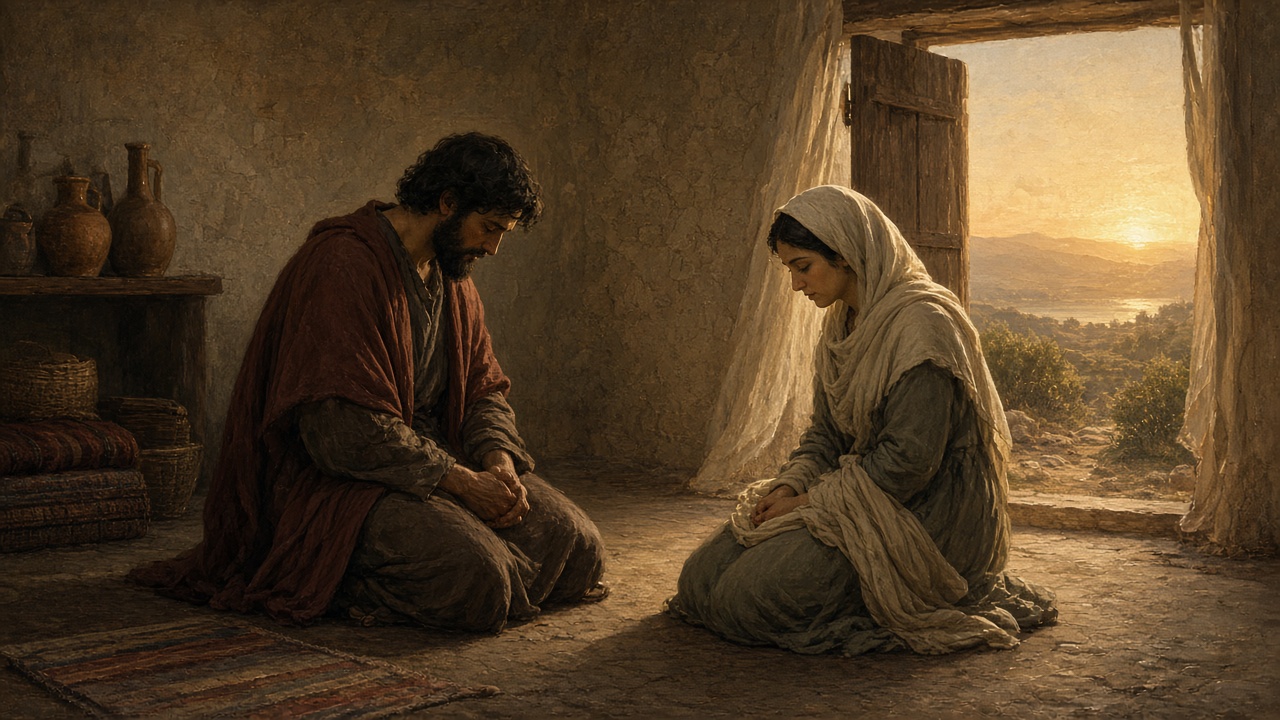
Consejos sobre el matrimonio y la crisis presente
- El capítulo comienza como respuesta a asuntos sobre los que los lectores habían escrito. El autor dice que es bueno abstenerse de las relaciones sexuales, pero, porque hay tanta inmoralidad sexual, cada hombre debe tener su propia esposa y cada mujer su propio esposo. Presenta esto como una concesión, no como un mandamiento, y dice que cada persona tiene su propio don de parte de Dios.Fuentes: el propio texto bíblico
- En el matrimonio, el autor dice que la esposa no tiene autoridad sobre su propio cuerpo, sino el esposo, y del mismo modo el esposo no tiene autoridad sobre su propio cuerpo, sino la esposa. No deben privarse el uno del otro, excepto de común acuerdo y por un tiempo, para dedicarse a la oración, y luego volver a unirse, a fin de que Satanás no los tiente por su falta de dominio propio. El diccionario bíblico de Easton (1897) presenta el nombre Satanás como “adversario” o “acusador”, y señala que tentó a Jesús en el desierto.Fuentes: el propio texto bíblico · Satan
- El autor distingue un mandamiento que atribuye al Señor —la esposa no debe separarse de su esposo, y el esposo no debe divorciarse de su esposa— de su propio juicio, en los casos en que dice que habla él, y no el Señor, incluidos los matrimonios con una persona no creyente y las cuestiones sobre las vírgenes. A causa de lo que llama la crisis presente, y porque dice que el tiempo es corto y que este mundo, en su forma actual, está pasando, considera bueno permanecer como se está. Añade que casarse no es pecar, aunque quienes se casan enfrentarán dificultades en esta vida.Fuentes: el propio texto bíblico
Notas escritas con ayuda de IA a partir de fuentes abiertas (Theographic Bible Metadata, CC BY-SA 4.0; Easton’s Bible Dictionary, dominio público) y revisadas antes de publicarse.
Créditos y licencia de esta traducción
Di Nyoo Testiment eena Bileez Kriol
New Testament in Belize Kriol English (BH:bzj:Belize Kriol English)
copyright © 2012 Wycliffe Bible Translators, Inc.
Language: Bileez Kriol (Belize Kriol English)
Translation by: Wycliffe Bible Translators, Inc.
Copyright Information
© 2012, Wycliffe Bible Translators, Inc. All rights reserved.
This translation text is made available to you under the
terms of the Creative Commons License: Attribution-Noncommercial-No Derivative Works.
( http://creativecommons.org/licenses/by-nc-nd/3.0/ )
In addition, you have permission to port the text to different file formats, as long as you
do not change any of the text or punctuation of the Bible.
You may share, copy, distribute, transmit, and extract portions
or quotations from this work, provided that you include the above copyright
information:
You must give Attribution to the work.
You do not sell this work for a profit.
You do not make any derivative works that change any of the actual words or punctuation of the Scriptures.
Permissions beyond the scope of this license may be
available if you contact
us with your request.
The New Testament
in Belize Kriol English
© 2012, Wycliffe Bible Translators, Inc. All rights reserved.
This translation is made available to you under the terms of the
Creative Commons Attribution-Noncommercial-No Derivatives license 4.0.
You may share and redistribute this Bible translation or extracts from it in any format, provided that:
You include the above copyright and source information.
You do not sell this work for a profit.
You do not change any of the words or punctuation of the Scriptures.
Pictures included with Scriptures and other documents on this site are licensed just for use with those Scriptures and documents.
For other uses, please contact the respective copyright owners.
2022-12-21
Fuente: http://ebible.org/bzj/ · eBible.org