Lucas 22
Tte Pa̱'a̱li̱ Me' Skëköl tö Se' a̱ · Toca un versículo para ver sus referencias cruzadas.
Judas ena judiowak kue̱blupa tö Jesús aleritsé klö'wè̱wa̱
1Judiowak Yë́pa Yërulune Egipto, e' ké̱wö tkö'we̱kerakitö, e' dökewa̱tke tsi̱net, ese ké̱wö ska' ta̱ judiowak wöblar pan kë̀ yöule iwölöwo̱ka̱ wa ese ñuk. 2Sacerdotepa wökirpa ena s'wöbla'u̱k ttè dalöiëno wa wakpa suane pë' yöki̱, e' kue̱ki̱ ie'pa tso' iké̱wö yulök Jesús ttowa̱.
3Eta̱ Satanás tkawa̱ Judas e̱r a̱. Judas e' kiè ñies Iscariote. Ie' dör Jesús ttökatapa dabom eyök kí̱ böl e' eköl. 4Ie' mía̱ ttök sacerdotepa wökirpa ta̱ ena Skëköl wé shkëkipa wökirpa ta̱. We̱s ie' tö Jesús mèttsa̱mi ie'pa ulà a̱ e' chéitö ie'pa a̱. 5E' tö ie'pa ttsë'wé̱rak buaë ta̱ ikablé ie' a̱ inuköl muk. 6E' dör buaë ie' a̱. E' kue̱ki̱ ie' tö ka̱wö yulémi iwömottsa̱ mik kë̀ yi ku̱' tai̱ë Jesús ta̱ e' dalewa.
Judiowak Yë́pa Yërulune Egipto e' ké̱wö tkö'wé̱ Jesús tö ittökatapa ta̱
7Eta̱ Pan Kë̀ Yöule Iwölöwo̱ka̱ Wa e' ké̱wö tsá̱ de. E' diwö a̱ judiowak tö obeja pupula jcheke Ie'pa Yë́pa Yërulune Egipto, e' ké̱wö tkö'wo̱ie. 8Jesús tö Pedro ena Juan kié, ta̱ iché ie'pa a̱:
—A' yú ka̱wö tkö'we̱kesö, e' chké kanéu̱k.
9Ie'pa ie' a̱ ichaké:
—¿Wé̱ be' ki̱ ikiane tö sa' mi' ikaneu̱k?
10Ie' iiu̱té:
—Mik a' de Jerusalén, eta̱ ee̱ wëm kue̱raë a' tö eköl, e' wa̱ di' dami ska̱u̱ña a̱. E' itöki̱ a' yú dö̀ u wé̱ a̱ ie' demi ee̱. 11U e' wák a̱ ichö́: ‘S'wöbla'u̱kwak be' chakök ké: ¿Úshu̱ wé̱ a̱ ie' tö ka̱wö tkö'we̱kesö e' chké ñèmi ie' ttökatapa ta̱?’ 12Ie' tö a' a̱ úshu̱ bërie tso' ká̱kke̱, kaneo̱uletke buaë, e' kkacheraë. Ee̱ ichké kaneú̱ se' a̱.
13Eta̱ ie'pa mía̱ ta̱ íyi ulitane kué̱rakitö we̱s ie' tö iché es. Ee̱ chkè kanewé̱rakitö ka̱wö tkö'wo̱ie.
14Mik ichköketke e' diwö de, eta̱ ie' e̱' tkése̱r chkök mesa o̱'mik ittekölpa tsá̱ e'pa ta̱. 15Ie' tö iché ie'pa a̱:
—Ye' tö a' a̱ ichè tö ka̱wö i' kë̀ tkö'we̱paia̱yö a' ta̱ dö̀ mik iwà tka mik ì blúie Skëköl tso' e' ké̱wö de eta̱. E' kue̱ki̱ suluë ye' é̱na iké̱wö bata tkö'wa̱kia̱ a' ta̱ ka̱m ye' ttö̀wa̱ ie'pa tö e' yöki̱.
17Eta̱ tka̱' klö'wé̱itö, ta̱ wëstela chéitö Skëköl a̱, ta̱ ichéitö ie'pa a̱:
—Íkë, a' itsá̱ yö́ eköl eköl. 18Ye' a' a̱ ichè tö vino kë̀ yepaia̱yö dö̀ mik ì blúie Skëköl tso' e' ké̱wö de eta̱.
19E' ukuöki̱ ta̱ pan klö'wé̱itö, ta̱ wëstela chéitö Skëköl a̱ ta̱ iblatéitö wà tié ie'pa a̱ ta̱ ichéitö:
—Pan se̱ dör ye' chkà wömeulettsa̱ ttèwa̱ a' skéie e'. A' tö iñú ke̱kraë a̱s a' e̱r a̱rne ye' ska'.
20Es ñies mik ie'pa chké o̱ne, eta̱ tka̱' klö'wé̱itö ta̱ ichéitö:
—Vino i' dör ye' pë́. Ye' tterawa̱ e' pë́ tërdaë a' tsa̱tkoie. E' wa ttè pa̱'a̱li̱ me' Skëköl tö, e' wà de. 21Erë yi ye' wömekettsa̱, e' tkër ye' ta̱ mesa i' o̱'mik. 22Ye' dör S'ditsö Alà, e' ta̱ itköraë we̱s isuletënea̱tbak es, erë ¡wëstela i̱na yi ye' wömekettsa̱, e' ta̱!
23Eta̱ ie'pa ñì chakémitke: “A' ichè, ¿yi ie' wömekettsa̱?”
¿Yi dör këkëpa tai̱ë Skëköl a̱?
24Jesús ttökatapa ñì iu̱téka̱ tö ie'pa wé̱ ë́k dör këkëpa tai̱ë imale̱pa tsa̱ta̱. 25Jesús tö iché ie'pa a̱: “Pë' kë̀ tö Skëköl dalöiè, esepa blúpa e̱' alö̀ka̱ ie'pa ki̱ ke̱kraë, erë ie'pa e̱' chö̀ tö ie'pa dör imale̱pa ki̱mukwakpa buaë. 26Erë e' kë̀ dör es a' ta̱. E' skéie yi dör këkëpa tai̱ë imale̱pa tsa̱ta̱ a' shu̱a̱, ese ka̱wöta̱ e̱' ökwa se' ëselaie. Ñies a' wökir ka̱wöta̱ e̱' ökwa we̱s kanè méso es. 27E̱'ma ¿yi dör këkëpa tai̱ë? ¿Itkër chkök mesa o̱'mik ese ö wé̱ tso' chkè watiök ese? Tö́, itkër mesa o̱'mik ese dör këkëpa tai̱ë. Erë ye' tso' a' shu̱a̱ we̱s kanè méso tso' chkè watiök es.
28“Ko̱s ye' weirke e' a̱ a' tso' ye' ta̱ ye' wapie. 29E' kue̱ki̱ ye' tö a' tkekeka̱ blu'paie, we̱s ye' Yë́ tö ye' tkë'ka̱ blu'ie es. 30Aishkuö ta̱ ì blúie ye' tso' e' a̱ a' e̱' tulörase̱r chkök di'yök buaë ye' ta̱. Ñies a' e̱' tulörase̱r blu' kulé ki̱, Israel ditséwöpa döka̱ dabom eyök kí̱ böl (12), e'pa wëttsu̱k.”
Pedro tö icheraë tö ie' kë̀ wa̱ Jesús su̱ule
31Ñies Skëkëpa Jesús tö iché:
—A Simón, a Simón, ¡ye' ttö̀ ttsö́! Satanás tö a' ké̱wö kié ma'wè̱. Ie' tö a' ulitane wöpperaë darërëë we̱s iyiwö wöppè es. 32Erë ye' ikiétke Skëköl a̱ a̱s be' e̱rblö̀ ye' mik e' kë̀ olo'yö̀bö. Mik be' e̱rbléne buaë ye' mik, eta̱ ye' ttökatapa male̱pa ki̱mú a̱s ie'pa e̱' tkö̀wa̱ darërëë ye' mik.
33Simón tö ie' a̱ iché:
—A Skëkëpa, ye' e̱' chétke wötënukwa̱ be' ta̱ s'wöto wé a̱ dö̀ ttèwa̱ be' ta̱.
34Ie' iiu̱té:
—A Pedro, ye' ichè be' a̱ tö i̱'ñe ka̱m dakro a̱r, e' yöki̱ be' icheraë mañatökicha tö be' kë̀ wa̱ ye' su̱ule.
Jesús weirketke e' ké̱wö dökewa̱tke
35E' ukuöki̱ ta̱ Jesús tö ittökatapa a̱ ichaké:
—Mik ye' tö a' patkë'mi Skëköl ttè pakök inuköl kë̀ ta̱', chkewö kë̀ ta̱', klökkuö kë̀ ta̱', eta̱ ¿ì kianeia̱ a' ki̱?
Ie'pa tö iiu̱té:
—Kë̀ ì kianeia̱ sa' ki̱.
36Ie' tö iché ie'pa a̱:
—E' skéie, i̱'ñe ta̱, ye' tö a' a̱ ichè tö a' wé̱ wa̱ inuköl ta̱', e' tsú̱mi; a' wé̱ wa̱ chkewö ta̱', e' tsú̱mi; a' wé̱ kë̀ wa̱ tabè ta̱' e̱' tsa̱tkoie, eta̱ a' paio wataú̱ttsa̱ ta̱ e' ské wa tabè ta̱ú̱ttsa̱. 37Ye' tté ko̱s tso' kitule Skëköl yëkkuö ki̱, e' wà tköraë we̱s itso' kitule es, e' tö ichè: ‘Ie'pa tö ye' we'iké we̱s pë' sulusi we'ikè es.’ Ttè e' wà tköketke i' ta̱, e' kue̱ki̱ a' tö iú̱ we̱s ye' tö a' a̱ ichè es.
38Ie'pa tö iché ie' a̱:
—A Skëkëpa, í̱e̱ tabè tso' böt.
Ie' tö ie'pa iu̱té:
—Wë' idir, ¡kë̀ a' ttökia̱!
Jesús tté S'yë́ ta̱ Getsemaní
39E' ukuöki̱ ta̱ Jesús mía̱ Olivo ké̱bata a̱ we̱s iwöblar es, eta̱ ittökatapa míyal ie' ta̱. 40Mik ie'pa demi wé̱ ie'pa mírö ee̱, eta̱ ie' iché ie'pa a̱:
—A' ikiö́ Skëköl a̱ a̱s ì sulu tö a' e̱rkiöwe̱ke e' kë̀ e̱' alö̀ka̱ a' ki̱.
41Ie' mía̱ bánet ie'pa yöki̱ dö̀ ko̱s ák u̱yèmisö ekkë, ee̱ ie' e̱' tkése̱r kuchë ki̱ ta̱ itté S'yë́ ta̱ i' es: 42“A yë́wö, ì tköraë ye' ta̱, e' dör we̱s íyi bacha'bachaë yèwasö es. Be' ki̱ ikiane, e̱'ma be' ye' yö́ttsa̱ e' ulà a̱. Erë kë̀ iwa̱r we̱s ye' ki̱ ikiane es, iú̱ we̱s be' ki̱ ikiane es.”
43[E' wösha̱ ta̱ Skëköl biyöchökwak de eköl ie' ska' idiché kí̱ iök. 44Ie' e̱riane tai̱ë, e' shu̱a̱ ie' ttémitke S'yë́ ta̱ taninië, ta̱ ipaali wër s'pë́ es e' yërke tai̱ë darke íyök ki̱.] |src="11 CNT5615 b.tif" size="col" ref="Lc 22.44"
45Mik ie' tté o̱ne, eta̱ idene ittökatapa ska' ta̱ ie'pa kué̱itö kapö̀tulur. Ie'pa shtrinewa̱ e̱riar ë̀ wa̱, e' kue̱ki̱ ie'pa kapolur. 46Ie' tö ie'pa a̱ ichaké:
—¿Iö́k a' kapö̀tulur? A' e̱' kö́ka̱, a' ikiö́ Skëköl a̱ a̱s ì sulu tö a' e̱rkiöwe̱ke e' kë̀ e̱' alö̀ka̱ a' ki̱.
Jesús klö'wé̱wa̱ ibolökpa tö
47Jesús tso'ia̱ ttök e' dalewa tai̱ë pë' de. Ie' ttökatapa dabom eyök kí̱ böl, e' eköl kiè Judas e' debitu̱ ie'pa wëttsë. Ie' dewa̱ Jesús ska' ishke̱'u̱k wöalattsè wa. 48Erë Jesús tö ie' a̱ iché:
—A Judas, ¿wöalattsè wa be' tö ye' dör S'ditsö Alà, e' wömekettsa̱?
49Mik Jesús ttökatapa tso' ie' ta̱, e'pa tö isué̱ tö ie' klörkewa̱tke, eta̱ ie'pa tö ie' a̱ ichaké:
—A Skëkëpa, ¿tabè yèttsa̱ sa' tö ie'pa ki̱?
50Eta̱ ie'pa eköl tö sacerdote kibi, e' kanè méso eköl kuköña ulà bua'kka téttsa̱. 51Jesús tö iché:
—Imúa̱t; wë' idir.
Eta̱ ie' tö kanè méso kukuöña kéwa̱ ta̱ ibua'wé̱neitö. 52E' ukuöki̱ ta̱ sacerdotepa wökirpa ena Skëköl wé shkëkipa wökirpa ena judiowak kue̱blupa debitu̱ ie' tsu̱kmi, e'pa a̱ ie' iché:
—¿Ì kue̱ki̱ a' bite̱ ye' ñalé̱ ki̱ tabè ki̱ kal wölö ki̱ ye' klö'u̱kwa̱ we̱s akblökwakpa klö'wè̱wa̱ es? 53Ke̱kraë ye' bak a' shu̱a̱ Skëköl wé a̱, erë a' kë̀ wa̱ ye' klöo̱newa̱. Erë i' ta̱ a' a̱ iké̱wö de ye' klö'wo̱wa̱ie. Ñies bë́ a̱ iké̱wö de ì sulu wamblak ie' é̱na e' wambloie.
Pedro tö iblé tö kë̀ ie' wa̱ Jesús su̱ule
54Eta̱ ie'pa tö Jesús klö'wé̱wa̱ tsé̱mi sacerdote kibi, e' u a̱. Pedro dami ie' itöki̱ ka̱mië. 55Eta̱ ee̱ pë' we̱lepa tö bö' batséka̱ upa shu̱sha̱ë baiklè, eta̱ Pedro e̱' tkése̱r ie'pa ta̱. 56Eta̱ alaköl eköl dör kanè méso, e' tö Pedro sué̱ bö' kkö̀ a̱ ta̱ isué̱wa̱ krereë ta̱ ichéitö:
—Ñies ie' wí̱ dör Jesús klé.
57Erë Pedro tö iblé. Ie' tö iché:
—A tayë, ye' kë̀ wa̱ wëm e' su̱ule.
58E' ukuöki̱ kukuie ta̱ wëm eköl tö Pedro sué̱ ñies ta̱ ichéitö:
—Be' ñies dör Jesús klépa eköl.
Erë Pedro tö iiu̱té:
—A wëm, kë̀ ye' dör ie'pa eköl.
59E' ukuöki̱ hora de et ta̱ iskà tö iché:
—Wëm se̱ dör Galilea wak e' kue̱ki̱ moki̱ ie' dör Jesús klé eköl.
60Pedro tö iché:
—A wëm, ì cheke be' ye' a̱, e' kë̀ jche̱r ye' wa̱.
Pedro ttökeia̱ e' wösha̱ ta̱ dakro a̱ne. 61Eta̱ Skëkëpa Jesús wötrée, ta̱ Pedro sué̱itö ë́k. Eta̱ Pedro é̱na ia̱newa̱ tö ttè i' yë' Jesús tö ye' a̱: “I̱'ñe ka̱m dakro a̱r, e' yöki̱ be' tö icheraë mañatökicha tö be' kë̀ wa̱ ye' su̱ule.” 62Eta̱ Pedro e̱' yéttsa̱ kañika̱ ta̱ ii̱é̱ sia̱rë.
Jesús wayué ie'pa tö
63Wëpa ulà a̱ Jesús tso' klöulewa̱, e'pa tö ie' wayué suluë, ippé tai̱ë. 64Ñies ie'pa tö iwöbla pamué̱wa̱ datsi'tak wa, eta̱ ie'pa tso' ippök, e' dalewa ie'pa tö ie' a̱ ichakeke:
—Be' dör Skëköl tteköl, e̱'ma sa' a̱ ichö́ka̱ ¿yi tö be' ppé?
65Eta̱ ie'pa tö ie' skà cheke suluë ttè ulitane wa kua̱'ki̱ kua̱'ki̱.
Jesús mítse̱r ie'pa wa̱ judiowak kue̱blupa wörki̱
66Mik ká̱ ñine, eta̱ judiowak kue̱blupa ena sacerdotepa wökirpa ena s'wöbla'u̱k ttè dalöiëno wa wakpa tö Jesús tsé̱mi wé̱ judiowak wökir kibipa ñì dapa'u̱ke ee̱. Ta̱ ie'pa tö ie' a̱ ichaké:
67—Ichö́ sa' a̱ ¿moki̱ be' dör wé̱ pairine'bitu̱ idi' wa s'blúie e' ö au?
Ie' tö ie'pa iu̱té:
—Ye' tö ichèmi tö́, erë kë̀ a' tö ye' ttö̀ klö'we̱pa. 68Ñies ye' tö a' a̱ ilè chakèmi, e' ta̱ a' kë̀ tö ye' iu̱tepa. 69Erë ye' dör S'ditsö Alà, i' ukuöki̱ ta̱ ye' e̱' tkörase̱r Skëköl diché dör íyi ulitane tsa̱ta̱, e' ulà bua'kka dalöiërta̱' tai̱ë.
70Ie'pa ulitane tö ie' a̱ ichaké:
—¿E̱'ma be' e̱' chö̀ tö be' dör Skëköl Alà?
Jesús tö ie'pa iu̱té:
—Tö́, we̱s a' tö iché es idir.
71Eta̱ ie'pa iché:
—¿Ìie se' ki̱ ikkatökwakpa kí̱ kiarmiia̱? Ì ché ie' tö, e' ttsé se' wákpa tö.
¿Sabías que…?
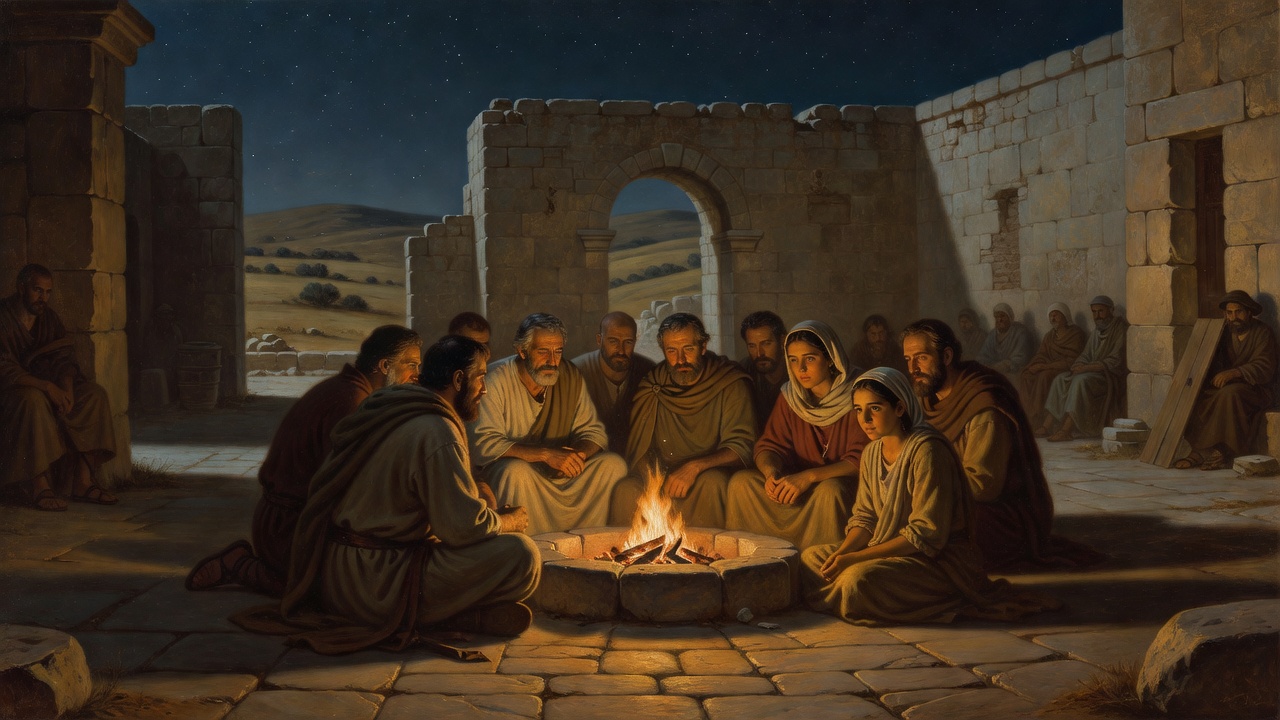
La cena de la Pascua y el arresto
- El capítulo llama Pascua a la Fiesta de los Panes sin Levadura, que se acercaba, y sitúa la comida en el día en que debía sacrificarse el cordero de la Pascua. Jesús envió a Pedro y a Juan, ambos de Betsaida y ambos pescadores, a prepararla; encontraron una gran sala amueblada en el piso superior y, llegada la hora, él se reclinó a la mesa con los apóstoles.Fuentes: el propio texto bíblico · Simon Peter · John the Apostle
- Judas, uno de los Doce, es llamado Iscariote, un sobrenombre que se explica como hombre de Queriot, y se lo identifica como hijo de Simón. El capítulo dice que Satanás —nombre que significa adversario o acusador— entró en él; Judas entonces acordó con los principales sacerdotes y los oficiales del templo entregar a Jesús por dinero, lejos de la multitud.Fuentes: el propio texto bíblico · Judas Iscariot · Satan
- Después de la comida, Jesús fue, como de costumbre, al Monte de los Olivos, una sierra al este de Jerusalén, llamada así por los olivos que cubren sus laderas y separada de la ciudad por el valle del Cedrón. Se apartó como un tiro de piedra más allá de los discípulos, se arrodilló y oró; entonces llegó una multitud guiada por Judas, y llevaron a Jesús a la casa del sumo sacerdote.Fuentes: el propio texto bíblico · Mount of Olives
Notas escritas con ayuda de IA a partir de fuentes abiertas (Theographic Bible Metadata, CC BY-SA 4.0; Easton’s Bible Dictionary, dominio público) y revisadas antes de publicarse.
Lugares de este capítulo
Solo aparecen lugares identificados con alta confianza (90 % o más según las fuentes académicas reunidas por OpenBible). Mapa de la época: DARE (Digital Atlas of the Roman Empire), CC BY 4.0; mapa actual: © colaboradores de OpenStreetMap; lugares: OpenBible.info (CC BY 4.0).
Créditos y licencia de esta traducción
Tte Pa̱'a̱li̱ Me' Skëköl tö Se' a̱
New Testament and Shorter Old Testament in Bribri (CS:bzd:Bribri)
copyright © 2010 Wycliffe Bible Translators, Inc.
Language: Bribri
Translation by: Wycliffe Bible Translators, Inc.
Bribri
bzd
Costa Rica
Copyright Information
© 2010, Wycliffe Bible Translators, Inc. All rights reserved.
This translation text is made available to you under the
terms of the Creative Commons License: Attribution-Noncommercial-No Derivative Works.
( http://creativecommons.org/licenses/by-nc-nd/3.0/ )
In addition, you have permission to port the text to different file formats, as long as you
do not change any of the text or punctuation of the Bible.
You may share, copy, distribute, transmit, and extract portions
or quotations from this work, provided that you include the above copyright
information:
You must give Attribution to the work.
You do not sell this work for a profit.
You do not make any derivative works that change any of the actual words or punctuation of the Scriptures.
Permissions beyond the scope of this license may be
available if you contact
us with your request.
The New Testament and Shorter Old Testament
in Bribri
© 2010, Wycliffe Bible Translators, Inc. All rights reserved.
This translation is made available to you under the terms of the
Creative Commons Attribution-Noncommercial-No Derivatives license 4.0.
You may share and redistribute this Bible translation or extracts from it in any format, provided that:
You include the above copyright and source information.
You do not sell this work for a profit.
You do not change any of the words or punctuation of the Scriptures.
Pictures included with Scriptures and other documents on this site are licensed just for use with those Scriptures and documents.
For other uses, please contact the respective copyright owners.
2014-04-22
Fuente: http://ebible.org/bzdNTpo/ · eBible.org