Génesis 32
Tte Pa̱'a̱li̱ Me' Skëköl tö Se' a̱ · Toca un versículo para ver sus referencias cruzadas.
Jacob tö Esaú ma'wé̱ e̱r bua'wè̱
1E' ukuöki̱ ta̱ Jacob mir ë̀ wé̱ imírö ee̱. Ñala̱ ki̱ Skëköl biyöchökwakpa de ie' ska'. 2Mik e'pa sué̱itö, eta̱ ichéitö: “I'pa dör Skëköl ñippökwakpa.” E' kue̱ki̱ ie' tö ká̱ e' kiè méka̱ Mahanaim.
3Eta̱ ie' tö ikanè mésopa patkémi biyö̀ muk ie' ël Esaú a̱ tö ie' datse̱. Ie' ël se̱rke ká̱ kiè Seír a̱te̱ Edom ee̱. 4Ie' tö ichémi ikanè mésopa a̱: “A' tö ichö́ ye' ël a̱: ‘Be' ël Jacob datse̱ be' wöki̱ be' kanè mésoie. Ie' tö ichébitu̱ be' a̱: Duas ikkë ko̱s ye' se̱né Labán ska'. 5Ye' wa̱ baka tso' ena obeja tso' ena burro tso' tai̱ë. Ñies kanè mésopa tso' ye' wa̱ tai̱ë wëpa ena alakölpa. Be' dör ye' këkëpa. Be' a̱ ttè i' patkémiyö a̱s be' tö ye' kiö̀wa̱ e̱r bua' wa.’ ”
6Mik ibiyö̀ wakpa dene, eta̱ ie' a̱ ichéitö:
—Sa' dare be' ël ska', e' wák datse̱ bet be' shke̱'u̱k. Eta̱ ie' wa̱ wëpa datse̱ e̱' ta̱ döka̱ cien tkëyök (400).
7Mik e' ttséitö, eta̱ tai̱ë ie' suane. Tai̱ë ie' ka̱bikeitséka̱ we̱s ye' e̱' ù̱mi. E' kue̱ki̱ ie' tö iyamipa ena ikanè mésopa ena iobeja ena ibaka ena ikameio e' ko̱s blabatsélor böl tsi̱ní. 8Ie' ibikeitsé tö isalema ye' ël ñippö̀mi ek tsi̱ní ta̱, e' dalewa iëk tsi̱ní tköshkarmirak. E' kue̱ki̱ ie' iblabatsélor es. 9E' ukuöki̱ ta̱ ie' tö iché Skëköl a̱: “A Jehová, be' dör ye' talà Abraham ena ye' yë́ Isaac e'pa Këköl. Be' ye' a̱ iyë': ‘be' yúne be' yamipa ska', eta̱ ye' tö be' ki̱meraë a̱s be' ka̱wö tkö̀ buaë.’ 10Be' e̱r bua' ché ye' a̱. Be' kë̀ wa̱ ye' mea̱tule bërbër ë̀. Warma e' kë̀ dör ye' sia̱rla e' a̱. Ye' bakmi di' Jordán wì̱ a̱ kë̀ wa̱ ì ta̱', e' ké̱wö ska' ta̱ ye' wa̱ shko kéli ë̀ dami. Erë i̱'ñe ta̱ ye' wöché tai̱ë iyiwakie ena se'ie blabutsule böl tsi̱ní. 11Be' we'ikèyö, ye' tsa̱tkö́ ye' ël Esaú e' ulà a̱. Ye' suane ie' yöki̱ dö' ie' datse̱ ñippök ye' ta̱; ñies dö' ye' alakölpa ena ye' ala'rla e'pa ko̱s e̱wè̱wa ie' tö. 12Be' tö ye' a̱ iyë'a̱tbak yësyësë tö be' tö ye' ki̱meraë a̱s ye' ka̱wö tkö̀ buaë. Ñies be' tö iyë' tö ye' aleripa alördaë tai̱ë we̱s dayë tsé̱wö kë̀ shta̱rta̱' es.”
13E' nañewe ie' kapére ee̱. Iyiwak tso' ie' ta̱ ee̱ e' shu̱shté ie' tö kakmè ie' ël a̱. 14Ikkë shu̱tshté ie' tö: chibo alaki döka̱ cien böyök (200); chibo wë'ñe döka̱ dabom böyök (20); obeja alaki döka̱ cien böyök (200); obeja wë'ñe döka̱ dabom böyök (20); 15kameio alaki pa̱ne ñiköl ilà ta̱, ese döka̱ dabom mañayök (30); baka alaki döka̱ dabom tkëyök (40); baka wë'ñe pupula döka̱ dabop (10); burro alaki döka̱ dabom böyök (20); burro wë'ñe döka̱ dabop (10). 16E' ukuöki̱ ta̱ iyiwak ekkë ko̱s tuléitö ikanè mésopa a̱ iwakmik iwakmik ulawa ulawa ta̱ ichéitö ia̱rak:
—A' yú ye' yöki̱ ke̱we. Ká̱ ulat múa̱t iyiwak a̱ ulat ulat a̱s kë̀ iwöiërwa̱ ñita̱.
17Eta̱ kanè méso ke̱we patkémiitö e' a̱ ichéitö:
—Mik be' tö ye' ël kué̱ ta̱ ie' tö be' chaké: “¿Yi be' wökir? ¿Wé̱ be' micho? ¿Se̱kkë dör yi iyiwak?”, 18eta̱ iiu̱tö́: “A këkëpa, iyiwak i' ko̱s e' kak patké be' kanè méso Jacob tö be' a̱. Ie' wák datse̱ sa' itöki̱.”
19E' sù̱ ikanè mésopa male̱pa patkémiitö iyiwak wëttsë, e'pa a̱ ichémiitö ñies:
—Mik a' tö Esaú kué̱, eta̱ ichö́ ia̱ es ë̀. 20Kë̀ a' é̱na ichökwa chè ia̱: “A këkëpa, be' kanè méso Jacob e' datse̱ sa' itöki̱.”
Ie' tö ibikeitsé: “Iyiwak patkémiyö ke̱weie ye' ël a̱ e' dör a̱s ie' e̱r buarne ye' ki̱. E' ukuöki̱ ta̱ ye' wák tö isuè̱mi. Es ie' tö ye' kièwa̱mi e̱r bua' wa.” 21Es iyiwak kak patkémiitö ke̱weie ie' yöki̱. Erë ie' wák e̱' tsé̱a̱t kapökrö ie' úla a̱.
Jacob ñippé kapa wa Skëköl ta̱
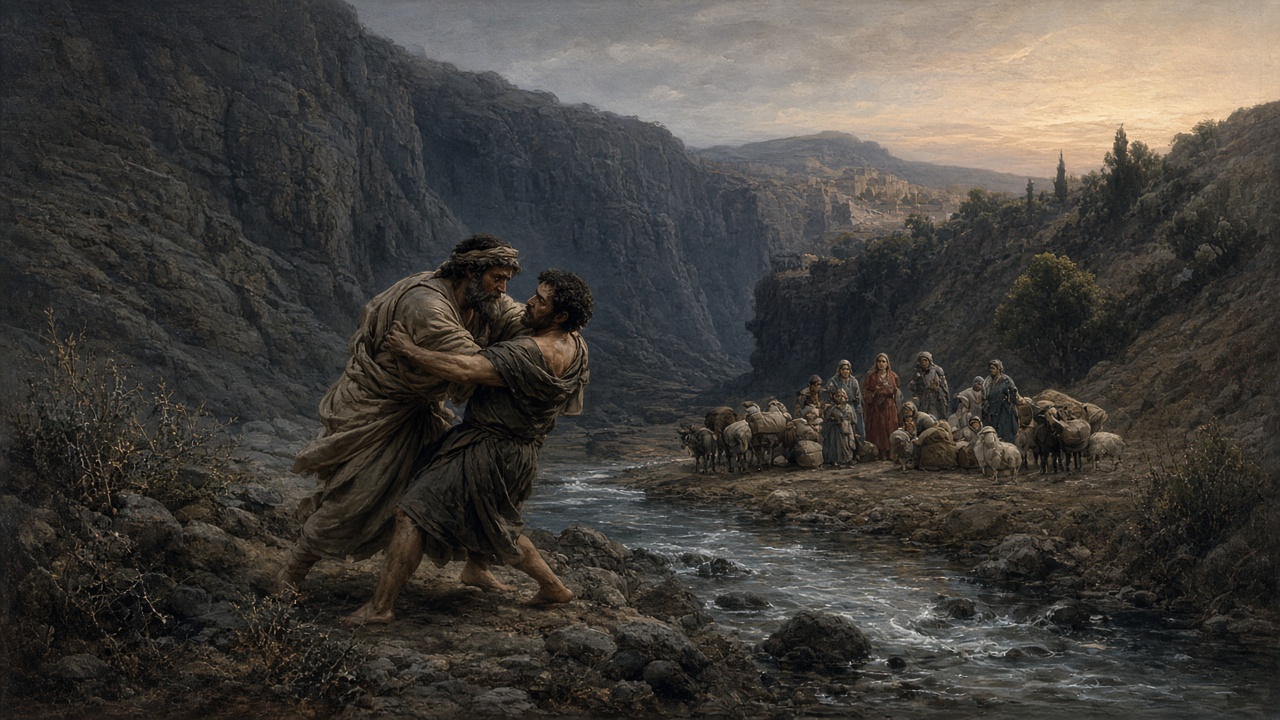
22E' nañewe Jacob e̱' kéka̱. Ie' tö ilakölpa böl ena e'pa kanè mésopa böl ena ila'r döka̱ dabom eyök ki̱ eköl e'pa ko̱s dapa'wé̱itö ta̱ iu̱yöktsa̱ ké di' Jaboc wi̱she̱t ñies ì ko̱s tso' iwa̱ ekkë u̱yéttsa̱itö. 24Ie' e̱' tsé̱a̱t eköl. Ee̱ ta̱ wëm de eköl ie' ska' ta̱ ie'pa ñippé kapa wa darërë dö̀ ká̱ ñine eta̱. 25Erë wëm e' tö isué̱ tö kë̀ ie' e̱' alö̀paka̱ Jacob ki̱. E' kue̱ki̱ ie' tö itéwa̱ itu' wöiërkewa̱ e' ki̱ ta̱ itu' wöyënettsa̱. 26Eta̱ wëm ñe' tö iché ie' a̱:
—Ká̱ ñirkewa̱tke e' kue̱ki̱ ye' ö́wa.
Ie' tö iiu̱té:
—Kë̀ be' tö ye' a̱ ka̱wö bua' mè, eta̱ kë̀ ye' tö be' epamine.
27Wëm tö ie' a̱ ichaké:
—¿I̱ma be' kiè?
Ie' tö iiu̱té:
—Ye' kiè Jacob.
28Wëm tö iché ia̱:
—Kë̀ be' kièia̱ Jacob. Be' kirdaë Israel. Be' ñippé Skëköl ta̱ ñies s'ditsö ta̱ eta̱ ì kiane be' ki̱ e' de be' ulà a̱, e' kue̱ki̱ be' kiè méka̱yö es.
29Jacob tö ie' a̱ ichaké:
—Ichö́ ña, ¿i̱ma be' kiè?
Ie' iiu̱té:
—¿Iö́k be' ki̱ ye' kiè kiane jche̱nuk?
Ee̱ ta̱ wëm ñe' e̱r bua' ché ie' a̱. 30Ie' tö ká̱ e' kiè méka̱ Penuel. Ie' tö iché: “Erë́ ye' tö Skëköl wák sué̱wa̱ ye' wöbla wa, erë kë̀ ye' du'wa̱.” E' kue̱ki̱ ká̱ e' kiè méka̱itö es.
31Mik ie' tkökemitke Penuel, eta̱ diwö tskine. Erë ie' tu' wöyënettsa̱, e' kue̱ki̱ ie' shkörami shaotshaot. 32Ie' tënewa̱ itu'kicha ki̱, e' kue̱ki̱ dö̀ ikkë ta̱ ie' aleripa ko̱s kë̀ tö iyiwak tu'kicha kateta̱'.
¿Sabías que…?
En el Jaboc, camino de Esaú
- Mahanaim significa “dos campamentos”. Jacob le dio ese nombre al lugar cerca del Jaboc, más allá del Jordán, cuando los ángeles de Dios salieron a su encuentro y él dijo: “Este es el campamento de Dios”. Allí también dividió a su gente, los rebaños, los ganados y los camellos en dos campamentos, con la esperanza de que uno escapara si Esaú atacaba al otro.Fuentes: Mahanaim · el propio texto bíblico
- El Jaboc, cuyo nombre se explica como “un derramamiento, o una lucha”, es un arroyo al este del Jordán. Desemboca en el Jordán más o menos a mitad de camino entre el mar de Galilea y el mar Muerto, tras un recorrido de unas 65 millas por un barranco agreste y profundo. En el vado, Jacob hizo cruzar a sus dos esposas, sus dos siervas, sus once hijos y todo lo que poseía, y quedó solo, luchando con un hombre hasta el amanecer.Fuentes: Jabbok · el propio texto bíblico
- Jacob envió mensajeros a Esaú en la tierra de Seir, el país de Edom, llamándolo señor y a sí mismo siervo. Seir es una región montañosa a lo largo del lado oriental del Arabah, desde el extremo sureste del mar Muerto hasta cerca de Akabah, el brazo oriental del mar Rojo; la ocupaban los edomitas, y fue asignada a los descendientes de Esaú. Esaú, el gemelo primogénito y cazador, había vendido la primogenitura por un guiso de lentejas rojas y también se llamaba Edom, “rojo”, mientras que Jacob —cuyo nombre significa “el que sigue los talones de otro”, o “suplantador”— había conspirado con su madre para engañar a Isaac.Fuentes: el propio texto bíblico · Seir · Esau (Edom) · Jacob (Israel)
Notas escritas con ayuda de IA a partir de fuentes abiertas (Theographic Bible Metadata, CC BY-SA 4.0; Easton’s Bible Dictionary, dominio público) y revisadas antes de publicarse.
Lugares de este capítulo
- Edom · 30.746, 35.604 · versículo 3
- Jordan · Hoy: Jordan River · 31.761, 35.558 · versículo 10
- Jabbok · Hoy: Zarqa River · 32.115, 35.543 · versículo 22
Solo aparecen lugares identificados con alta confianza (90 % o más según las fuentes académicas reunidas por OpenBible). Mapa de la época: DARE (Digital Atlas of the Roman Empire), CC BY 4.0; mapa actual: © colaboradores de OpenStreetMap; lugares: OpenBible.info (CC BY 4.0).
Créditos y licencia de esta traducción
Tte Pa̱'a̱li̱ Me' Skëköl tö Se' a̱
New Testament and Shorter Old Testament in Bribri (CS:bzd:Bribri)
copyright © 2010 Wycliffe Bible Translators, Inc.
Language: Bribri
Translation by: Wycliffe Bible Translators, Inc.
Bribri
bzd
Costa Rica
Copyright Information
© 2010, Wycliffe Bible Translators, Inc. All rights reserved.
This translation text is made available to you under the
terms of the Creative Commons License: Attribution-Noncommercial-No Derivative Works.
( http://creativecommons.org/licenses/by-nc-nd/3.0/ )
In addition, you have permission to port the text to different file formats, as long as you
do not change any of the text or punctuation of the Bible.
You may share, copy, distribute, transmit, and extract portions
or quotations from this work, provided that you include the above copyright
information:
You must give Attribution to the work.
You do not sell this work for a profit.
You do not make any derivative works that change any of the actual words or punctuation of the Scriptures.
Permissions beyond the scope of this license may be
available if you contact
us with your request.
The New Testament and Shorter Old Testament
in Bribri
© 2010, Wycliffe Bible Translators, Inc. All rights reserved.
This translation is made available to you under the terms of the
Creative Commons Attribution-Noncommercial-No Derivatives license 4.0.
You may share and redistribute this Bible translation or extracts from it in any format, provided that:
You include the above copyright and source information.
You do not sell this work for a profit.
You do not change any of the words or punctuation of the Scriptures.
Pictures included with Scriptures and other documents on this site are licensed just for use with those Scriptures and documents.
For other uses, please contact the respective copyright owners.
2014-04-22
Fuente: http://ebible.org/bzdNTpo/ · eBible.org