Génesis 16
Tte Pa̱'a̱li̱ Me' Skëköl tö Se' a̱ · Toca un versículo para ver sus referencias cruzadas.
Abram alà ku̱ne kiè Ismael
1Abram alaköl Sarai, e' kë̀ döta̱' alàë. Ie' wa̱ alaköl tkër eköl kanè mésoie kiè Agar. E' dör egiptowak. 2Eta̱ Sarai tö iché Abram a̱:
—Isa̱ú̱ tö Jehová kë̀ wa̱ ye' a̱ alà mène. E' kue̱ki̱ be' se̱nú ye' kanè méso Agar ta̱. Eta̱ isalema ie' batamik alà dö̀mi ye' ulà a̱.
Eta̱ Abram tö Sarai ttö̀ iu̱té. 3Eta̱ Sarai tö egiptowak tso' ie' wa̱ kanè mésoie, e' tsé̱bitu̱, mé iwëm a̱ alakölie. E' ké̱wö ska' ta̱ ie'pa se̱né Canaán e' ki̱ duas de dabop. 4Eta̱ Abram se̱néwa̱ Agar ta̱, eta̱ Agar duneka̱. Mik ie' isué̱ tö ie' duneka̱, eta̱ ie' tö iwökir Sarai sué̱mi suluë. 5Eta̱ Sarai tö iché Abram a̱:
—¡Be' iane iwiie tö Agar tö ye' sue̱ke suluë! Ye' wák tö be' a̱ Agar me' alakölie i' ta̱ idurtke e' wà ku̱rdaë, eta̱ ie' e̱' ttsöke jaishe̱t ye' tsa̱ta̱. ¡A̱s Jehová tö se' a̱ ichö̀ tö yi iane iwiie, ye' ö be'!
6Eta̱ Abram tö iiu̱té:
—Ye' ttö̀ ttsö́, be' kanè méso tso' be' ulà a̱. Be' iú̱ we̱s be' é̱na iwa̱k es.
E' ukuöki̱ ta̱ Sarai tö ikanè méso we'ikémi tai̱ë. E' kue̱ki̱ Agar tkashkar. 7Eta̱ Jehová biyöchökwak bua'ie, e' tö ikué̱ di' tum o̱'mik ká̱ wé̱ kë̀ yi ku̱' ese ska'. Di' tum e' tso' ñala̱ micho ká̱ kiè Sur e' kkömik. 8Eta̱ Jehová biyöchökwak bua'ie tö ie' a̱ ichaké:
—A Agar, Sarai kanè méso, ¿Wé̱ be' bite̱? ¿Wé̱ be' micho?
Ie' iiu̱té:
—Ye' tkashkar ye' wökir Sarai yöki̱.
9Eta̱ ie' iché ia̱:
—Be' dakö́ne be' wökir ska' ta̱ idalöiö́ bë̀rë.
10Ie' tö ikí̱ ché ia̱:
“Ye' be' aleripa alöwe̱raë tai̱ë. Kë̀ yi a̱ ishta̱nuk ekkë.
11Be' e̱riarke, e' ttsé Jehová tö,
e' kue̱ki̱ se̱ be' dur, e' wà ku̱ne,
ta̱ ikiè múka̱bö Ismael.
12Be' alà döraë we̱s burro pupula kë̀ urutërta̱' es.
Ie' ñippöraë darërë sulitane ta̱. Ñies sulitane ñippöraë ie' ta̱.”
Ie' se̱rdaë ke̱kraë ñippök iëlpa ta̱.
13Jehová tté Agar ta̱, e' ukuöki̱ ta̱ Agar tö iché: “Skëköl ye' sué̱, e' wák sué̱wa̱yö.” E' kue̱ki̱ ie' tö Skëköl kié i' es: “Skëköl tö ye' sué̱ e'.” 14E' kue̱ki̱ ñies di' tum e' kiè méka̱itö: “Skëköl tso' e' ye' sue̱ke”. Di' tum e' tso' Cadés ena Béred e' shu̱sha̱ë.
15E' ukuöki̱ ta̱ Abram alà kéka̱ Agar ta̱ e' wà ku̱ne wák wëm. Abram tö ikiè méka̱ Ismael. 16Ismael ku̱ne, e' ké̱wö ska' ta̱ Abram ki̱ duas tso' dabom paryök kí̱ teröl (86).
¿Sabías que…?
La huida de Agar y el nacimiento de Ismael
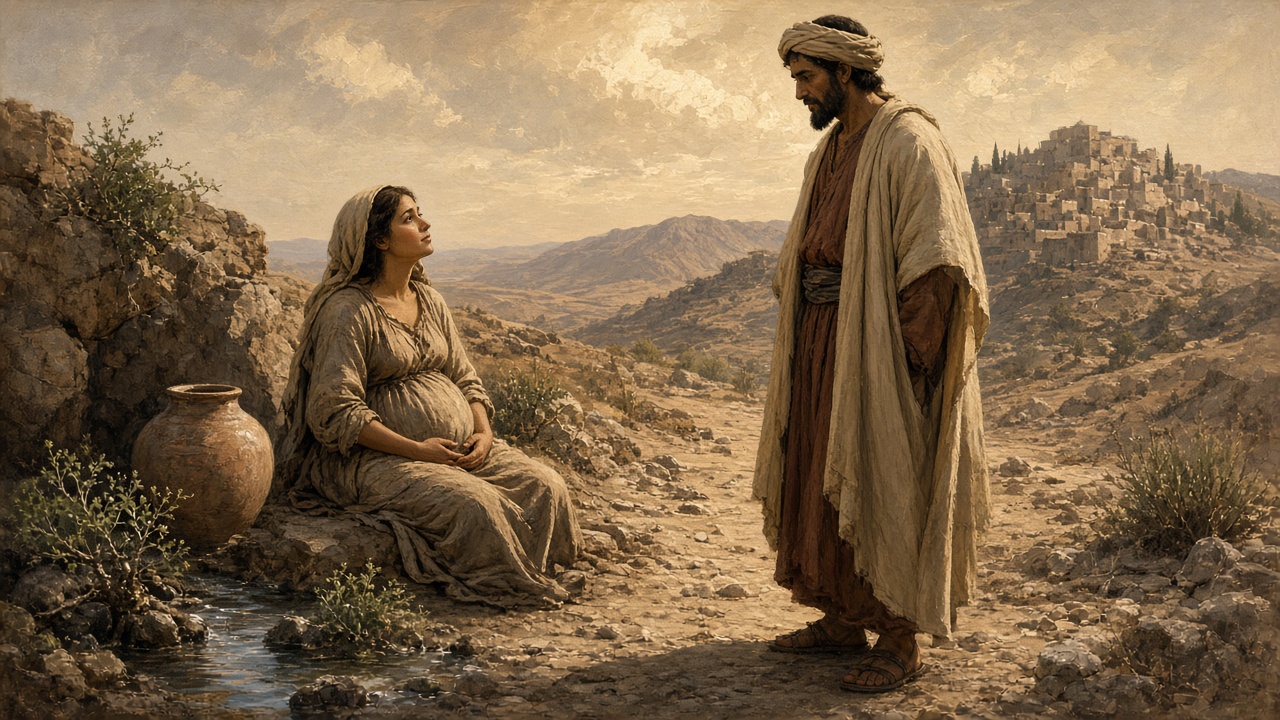
- Agar, sierva egipcia de Sarai, lleva un nombre que se entiende como “huida” o, según otros, “extranjera”. Después de que Abram vivió diez años en Canaán, Sarai se la entregó como esposa secundaria, con la esperanza de formar una familia por medio de ella.Fuentes: Hagar · el propio texto bíblico
- Cuando Sarai la trató con dureza, Agar huyó por el camino de Shur, a través del desierto que quedaba entre ella y Egipto, al parecer con la intención de volver con sus parientes. El ángel del Señor la encontró junto a un manantial. Shur, que significa “muro”, era un desierto en la frontera noreste de Egipto, probablemente llamado así por unas fortificaciones fronterizas que iban de Pelusio a Heliópolis.Fuentes: el propio texto bíblico · Hagar · Shur
- Agar llamó al Señor que le habló “el Dios que me ve”, y el pozo recibió el nombre de Beer-lahai-roi, “el pozo del Dios visible”, entre Cades y Bered, una ciudad en el sur de Palestina, en el desierto de Shur. Ella regresó a la tienda de Abram, e Ismael, su hijo mayor, nació en Mamre cuando Abram tenía ochenta y seis años; Abram le puso el nombre que el ángel había anunciado, porque el Señor había oído su aflicción.Fuentes: el propio texto bíblico · Hagar · Bered · Ishmael (Son of Hagar)
Notas escritas con ayuda de IA a partir de fuentes abiertas (Theographic Bible Metadata, CC BY-SA 4.0; Easton’s Bible Dictionary, dominio público) y revisadas antes de publicarse.
Lugares de este capítulo
- Canaan · 32.767, 35.333 · versículo 3
Solo aparecen lugares identificados con alta confianza (90 % o más según las fuentes académicas reunidas por OpenBible). Mapa de la época: DARE (Digital Atlas of the Roman Empire), CC BY 4.0; mapa actual: © colaboradores de OpenStreetMap; lugares: OpenBible.info (CC BY 4.0).
Créditos y licencia de esta traducción
Tte Pa̱'a̱li̱ Me' Skëköl tö Se' a̱
New Testament and Shorter Old Testament in Bribri (CS:bzd:Bribri)
copyright © 2010 Wycliffe Bible Translators, Inc.
Language: Bribri
Translation by: Wycliffe Bible Translators, Inc.
Bribri
bzd
Costa Rica
Copyright Information
© 2010, Wycliffe Bible Translators, Inc. All rights reserved.
This translation text is made available to you under the
terms of the Creative Commons License: Attribution-Noncommercial-No Derivative Works.
( http://creativecommons.org/licenses/by-nc-nd/3.0/ )
In addition, you have permission to port the text to different file formats, as long as you
do not change any of the text or punctuation of the Bible.
You may share, copy, distribute, transmit, and extract portions
or quotations from this work, provided that you include the above copyright
information:
You must give Attribution to the work.
You do not sell this work for a profit.
You do not make any derivative works that change any of the actual words or punctuation of the Scriptures.
Permissions beyond the scope of this license may be
available if you contact
us with your request.
The New Testament and Shorter Old Testament
in Bribri
© 2010, Wycliffe Bible Translators, Inc. All rights reserved.
This translation is made available to you under the terms of the
Creative Commons Attribution-Noncommercial-No Derivatives license 4.0.
You may share and redistribute this Bible translation or extracts from it in any format, provided that:
You include the above copyright and source information.
You do not sell this work for a profit.
You do not change any of the words or punctuation of the Scriptures.
Pictures included with Scriptures and other documents on this site are licensed just for use with those Scriptures and documents.
For other uses, please contact the respective copyright owners.
2014-04-22
Fuente: http://ebible.org/bzdNTpo/ · eBible.org