Gálatas 2
Tte Pa̱'a̱li̱ Me' Skëköl tö Se' a̱ · Toca un versículo para ver sus referencias cruzadas.
1Duas de dabom eyök kí̱ tkël (14), e' ukuöki̱ ta̱ ye' skà mía̱ne Bernabé ta̱ Jerusalén. Ñies Tito mía̱ ye' ta̱. 2Skëköl tö ye' a̱ ikkayë' tö ye' ka̱wöta̱ shkök Jerusalén ttök Skëkëpa Jesús icha ko̱s e'pa wökirpa ta̱, e' kue̱ki̱ ye' mía̱. Se' ulitane wa̱ ie'pa su̱ule tö ie'pa dör se' wökirpa. Mik ye' de Jerusalén, eta̱ ttè buaë pakekeyö pë' kë̀ dör judiowak esepa a̱, e' wa pakéneyö se' wökirpa ulitane e'pa ë̀ a̱ bánet isuo̱ie tö iyëne ö kë̀ iyëne. Ye' kë̀ ki̱ ikiane tö yi tö ichè tö Jesús kanè ko̱s o̱'bitu̱yö, e' dör ë́.
3Ie'pa tö iché tö ttè pakekeyö, e' dör buaë yësyësë, kë̀ ì skà kianeia̱. Tito mirwa̱ ye' ta̱, e' dör griegowak, e' kue̱ki̱ ie' tottola kë̀ kkuölit tëule tsir we̱s judiowak wöblar es. Erë ie'pa kë̀ wa̱ ie' kàne itóttola kkuölit tök tsir. 4Erë pë' we̱lepa tso' ee̱ e̱' chö̀ tö ie'pa dör Jesús mik e̱rblökwakpa, erë kë̀ idör es. Ie'pa kë̀ ichö́pa tö Tito tottola ka̱wöta̱ kkuölit tèe tsir, e̱'ma s'wökirpa kë̀ wa̱ ì yëne. Pë' esepa tso' se' shu̱a̱ se' weblök bër tö we̱s se' se̱r buaë, ttsë'r buaë Cristo Jesús ttè a̱. Ie'pa a̱ ta̱ kë̀ idör buaë tö kë̀ se' tö judiowak ttè dalöiëno e' iu̱tèia̱. Ie'pa ki̱ ikiane tö se' klörwa̱ne ttè ñe' ulà a̱. 5Sa' ki̱ ikiane tö Jesús tté buaë moki̱ë, e' ë̀ klö'ù̱ a' tö ke̱kraë. E' kue̱ki̱ sa' kë̀ wa̱ ie'pa ttè iu̱tëne yës.
6Se' wökirpa kièsö skëkëpa tai̱ë, e'pa iché tö ttè pakekeyö e' dör buaë. Ie'pa kë̀ wa̱ ikí̱ kuötkëne yës. (Skëköl a̱ ta̱ se' ulitane dör ñies ë̀me, e' kue̱ki̱ ë́ yö ichè tö ie'pa dör këkëpa tai̱ë ö kë̀ idör es, e' kë̀ ki̱ ye' tkine.) 7Ie'pa é̱na ia̱ne tö Skëköl tö kanè me'a̱t ye' ulà a̱ Jesús tté buaë pakök, pë' kë̀ dör judiowak, esepa a̱, we̱s ie' tö kanè me'a̱t Pedro ulà a̱ ipakök judiowak a̱ es. 8Skëköl tö Pedro patkë' Jesús tté buaë pakök judiowak a̱, e' ë̀ tö ye' patkë' ipakök pë' kë̀ dör judiowak esepa a̱. 9Santiago ena Pedro ena Juan, e'pa su̱ule se' ulitane wa̱ tö ie'pa dör se' wökirpa kibiie. Ie'pa é̱na ia̱ne tö Skëköl e̱r buaë yë' ye' a̱ kanè i' wa. E' kue̱ki̱ ie'pa ulà mé ye' a̱ ena Bernabé a̱ iwà kkachoie tö ie'pa tö sa' klö'wé̱ ie'pa kí̱ie. Ie'pa é̱na ia̱ne tö Skëköl tö sa' patkë' Jesús tté buaë pakök pë' kë̀ dör judiowak esepa a̱, erë ie'pa patkë'itö ipakök judiowak a̱. Es buaë idir ie'pa a̱. 10Íyi etkë̀ kié ie'pa tö sa' a̱, e' dör tö s'yamipa sia̱rëpa se̱rke Jerusalén, esepa ki̱mè sa' tö. E' wawe̱keyö ke̱kraë e̱r bua' wa.
Pedro uñé Pablo tö Antioquía
11Erë e' ukuöki̱ ta̱ mik Pedro demi Antioquía sa' pakök, eta̱ ke̱we ie' chköke buaë Jesús mik e̱rblökwakpa kë̀ dör judiowak, esepa ta̱. Erë s'yamipa dör judiowak datse̱ Jerusalén, patkë' Santiago tö, e'pa de. E'pa tö iklö'wé̱ tö s'yamipa kë̀ dör judiowak, esepa ka̱wöta̱ itóttola kkuölit tök tsir. Ñies ie'pa tö iklö'wé̱ tö esepa ka̱wöta̱ se̱nuk we̱s judiowak se̱r es. Pedro suane ie'pa yöki̱, e' kue̱ki̱ mik ie'pa de, eta̱ ie' e̱' batséttsa̱ wé̱pa kë̀ dör judiowak, esepa yöki̱. Ie' kë̀ chköia̱ ie'pa ta̱ ñita̱. 13Ñies judiowak male̱pa tö Pedro e̱' a' ñe' es, e' wambléñak dö̀ Bernabéë. 14E' kue̱ki̱, mik ye' isué̱ tö Pedro kë̀ ku̱' iwà iu̱tök yësyësë we̱s Jesús tté buaë moki̱ tö ichè es, eta̱ ye' tö ie' a̱ iché sulitane kukua: “Be' tso' e̱' ök. Be' dör judiowak, erë be' kë̀ se̱rku̱' we̱s judiowak se̱r es. ¿Iö́k be' tö, pë' kë̀ dör judiowak, esepa keke se̱nuk we̱s judiowak se̱r es? 15Se' böl dör judiowak se' ditséwö wa. Se' kë̀ dör pë' sulusipa kë̀ tö Skëköl dalöiè esepa. 16Erë se' wa̱ ijche̱r tö Skëköl kë̀ tö se' klö'we̱pa we̱s pë' buaë yësyësë es, Moisés ttè dalöiëno e' iu̱tèsö e' batamik. Se' wa̱ ijche̱r tö se' e̱rblé Jesucristo mik, e' kue̱ki̱ ie' tö se' klö'wé̱ we̱s pë' buaë yësyësë es. Ie' ichè tö ie' kë̀ tö se' klö'we̱pa we̱s pë' buaë yësyësë es, ttè dalöiëno e' iu̱tèsö e' batamik. E' kue̱ki̱ se' böl e̱rblétke Jesucristo mik a̱s Skëköl tö se' klö'ù̱ we̱s pë' buaë yësyësë es. E' kë̀ dör tö Moisés ttè dalöiëno, e' iu̱tèsö buaë e' batamik.” Es ye' tö iché Pedro a̱.
17E' ukuöki̱ ta̱ ye' tö ie'pa ulitane a̱ iché: “Se' e̱rblöke Cristo mik, e' batamik Skëköl tö se' klöo̱' we̱s pë' buaë yësyësë es, e' wà paneke se' tö. Es se' kë̀ e̱rblöku̱'ia̱ Moisés ttè dalöiëno e' mik. E' kue̱ki̱ judiowak tö se' chèmi tö se' dör ì sulu wamblökwakpa we̱s pë' kë̀ dör judiowak es. E' kue̱ki̱ ¿sö ichèmi tö Cristo tö se' ké ì sulu wamblök? Au, kë̀ idör es. 18Se' é̱na ia̱ne tö Skëköl kë̀ tö se' tsa̱tkepa ttè dalöiëno e' batamik. E' kue̱ki̱ se' kë̀ e̱rblëneia̱ ttè e' mik e̱' tsa̱tkoie. Erë se' e̱rbléne ttè dalöiëno e' mik e̱' tsa̱tkoie, e' ta̱ e' je' tö se' a̱ ikkacheraë tö moki̱ se' dör ì sulu wamblökwakpa, se' kë̀ a̱ iwà iu̱tënuk se̱raa̱ e' kue̱ki̱. 19Mik ye' bak e̱rblök Moisés ttè dalöiëno e' mik e̱' tsa̱tkoie, eta̱ ye' é̱na ia̱ne tö ye' kë̀ a̱ ttè e' iu̱tënuk yësyësë we̱s s'ka̱wöta̱ iiu̱tök es. E' kue̱ki̱ ye' é̱na ia̱ne tö nuì̱ tso' ye' ki̱, e' ki̱ Skëköl tö ye' kichaterattsa̱. E' kue̱ki̱ i̱'ñe ta̱ ye' kë̀ e̱rblöia̱ ttè dalöiëno e' mik e̱' tsa̱tkoie. Ye' a̱ ta̱ e' dör we̱s ye' du'wa̱ ttè dalöiëno e' yöki̱ es. I̱'ñe ta̱ ye' e̱rblöke Cristo ë̀ mik a̱s ye' se̱r yësyësë Skëköl a̱. Cristo köte̱wa̱ krus mik ye' skéie ye' nuì̱ patuo̱ie, 20e' kue̱ki̱ e' dör we̱s ye' köte̱wa̱ ie' ta̱ krus mik es. I̱'ñe ta̱ e' dör we̱s kë̀ ye' se̱rku̱'ia̱ es, erë Cristo se̱rke ye' e̱r a̱ iWiköl wa. Ie' tö ye' dalëritsé, ie' e̱' mettsa̱ ttèwa̱ ye' skéie. E' ë̀ mik ye' e̱rblöke, e' mik ye' se̱rke ká̱ i' ki̱. 21Es Skëköl e̱r buaë ché ye' a̱, e' kë̀ watepa ye' tö yës. Erë se̱ne yësyësë mú dö̀ se' ulà a̱ ttè dalöiëno e' iu̱tè wa, e̱'ma e' wà kiane chè tö Cristo köte̱wa̱ ë́me, kë̀ wà ta̱'.” Es ye' tö iché Jesús mik e̱rblökwakpa tso' Antioquía, e'pa a̱.
¿Sabías que…?
Gentiles, comunión y un enfrentamiento en Antioquía
- Tito fue con Pablo y Bernabé a Jerusalén. El Easton's Bible Dictionary (1897) dice que parece haber sido gentil y que su nombre no aparece en Hechos. Pablo escribe que Tito, aunque era griego, no fue obligado a circuncidarse.Fuentes: Titus · el propio texto bíblico
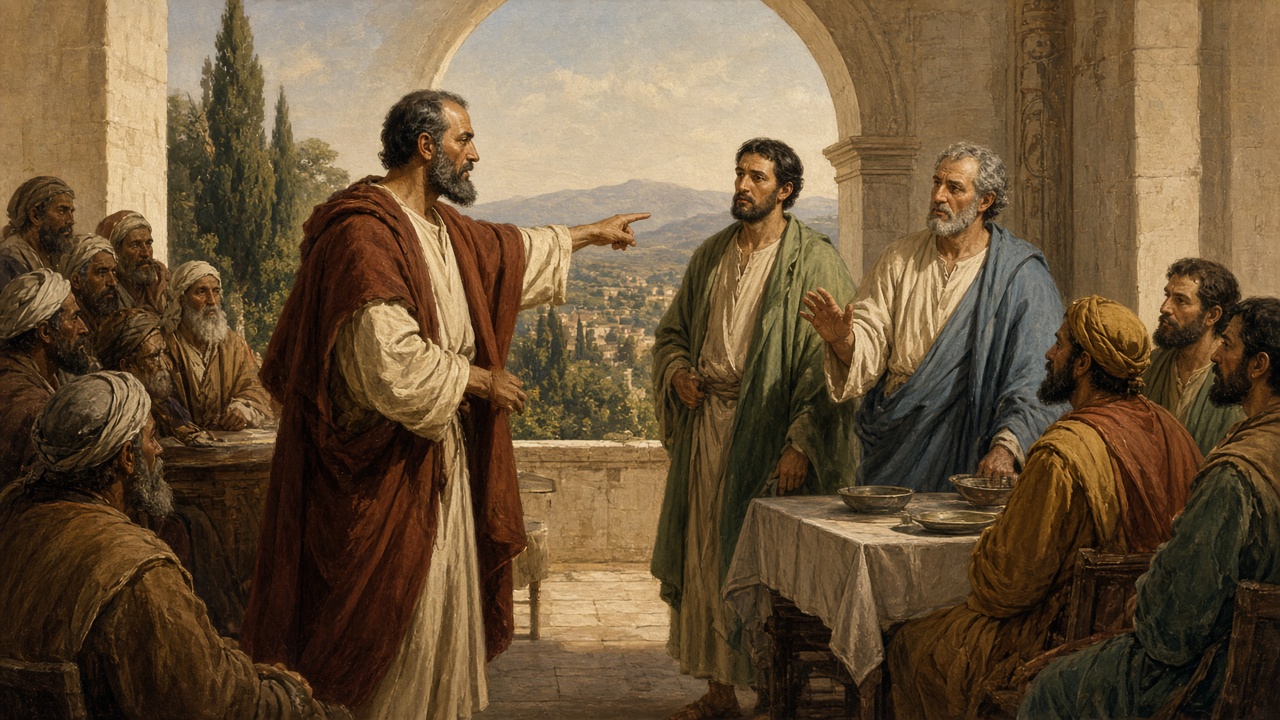
- El enfrentamiento posterior tuvo lugar en Antioquía de Siria, a orillas del Orontes, a unas trescientas millas al norte de Jerusalén. La ciudad ocupaba el tercer lugar entre las ciudades del Imperio romano, después de Roma y Alejandría, y fue allí donde a los creyentes se les llamó cristianos por primera vez.Fuentes: Antioch (Syria) · el propio texto bíblico
- El Easton's Bible Dictionary (1897) describe a Santiago, nombrado con Cefas y Juan como uno de los pilares, como cabeza de la iglesia en Jerusalén, donde presidió el concilio sobre los gentiles. Pablo dice que, antes de que llegaran ciertos hombres de parte de Santiago, Cefas solía comer con los gentiles, pero luego se apartó por temor al grupo de la circuncisión.Fuentes: James (Brother of Jesus) · el propio texto bíblico
Notas escritas con ayuda de IA a partir de fuentes abiertas (Theographic Bible Metadata, CC BY-SA 4.0; Easton’s Bible Dictionary, dominio público) y revisadas antes de publicarse.
Lugares de este capítulo
- Jerusalem · 31.777, 35.234 · versículo 1
- Antioch · Hoy: Antioch on the Orontes · 36.227, 36.172 · versículo 11
Solo aparecen lugares identificados con alta confianza (90 % o más según las fuentes académicas reunidas por OpenBible). Mapa de la época: DARE (Digital Atlas of the Roman Empire), CC BY 4.0; mapa actual: © colaboradores de OpenStreetMap; lugares: OpenBible.info (CC BY 4.0).
Créditos y licencia de esta traducción
Tte Pa̱'a̱li̱ Me' Skëköl tö Se' a̱
New Testament and Shorter Old Testament in Bribri (CS:bzd:Bribri)
copyright © 2010 Wycliffe Bible Translators, Inc.
Language: Bribri
Translation by: Wycliffe Bible Translators, Inc.
Bribri
bzd
Costa Rica
Copyright Information
© 2010, Wycliffe Bible Translators, Inc. All rights reserved.
This translation text is made available to you under the
terms of the Creative Commons License: Attribution-Noncommercial-No Derivative Works.
( http://creativecommons.org/licenses/by-nc-nd/3.0/ )
In addition, you have permission to port the text to different file formats, as long as you
do not change any of the text or punctuation of the Bible.
You may share, copy, distribute, transmit, and extract portions
or quotations from this work, provided that you include the above copyright
information:
You must give Attribution to the work.
You do not sell this work for a profit.
You do not make any derivative works that change any of the actual words or punctuation of the Scriptures.
Permissions beyond the scope of this license may be
available if you contact
us with your request.
The New Testament and Shorter Old Testament
in Bribri
© 2010, Wycliffe Bible Translators, Inc. All rights reserved.
This translation is made available to you under the terms of the
Creative Commons Attribution-Noncommercial-No Derivatives license 4.0.
You may share and redistribute this Bible translation or extracts from it in any format, provided that:
You include the above copyright and source information.
You do not sell this work for a profit.
You do not change any of the words or punctuation of the Scriptures.
Pictures included with Scriptures and other documents on this site are licensed just for use with those Scriptures and documents.
For other uses, please contact the respective copyright owners.
2014-04-22
Fuente: http://ebible.org/bzdNTpo/ · eBible.org