Lucas 15
Handr Taara · Toca un versículo para ver sus referencias cruzadas.
T'aft daatsets mereero ariyetso
1T'ilish koiruwotsnat morrets jamwotsn b́ daniyman shishosh Iyesusok waatni botesh. 2Ferisawiwotsnat Muse nemo danifuwotsn man bek't «Hanuwo morretsúwotsi b́ t'itsiri, bontonu ikoke b́ meyiri» ett Iyesus ats bo mumundi. 3Mansh Iyesus ariyets keewuman hank'o ett boosh b́ keewi.
4«Ititse bal mereer detstso baluwotsitse ik mereero b́ shirotse b́t'afiyal bal bodosh ik shapo bodootse k'ay k'raŕ t'aftsman b́ datsfetso gee amawo kone? 5Daats b́dek'oro gene'úwefetsr b́mangrats kurde'er aani b́weti. 6B́mook waa b́bodtsok'on b́ jaguwotsnat b́ giyuwotsn iknon s'ede'er ‹T mereer t'aftso daats t dek'tsotse geneúwere itwere geneúwore!› etetuwe. 7Naandre eto boosh geyiraw balosh ik shap ash shengwotsiyere naandre etetu moorrfints ash iko jangosh darotse gene'úwo wotituwe etiruwe.»
T'afat daatsets ambari santimu
8Manats dabt Iyesus hank'owa bíet, «Tats ambari santimuwotsi detsts máátsu tats santim manotsitse iku b́shirotse bt'afiyal c'eesho c'eeshde'er, b́ moo fohde b́ shirotse t'afts santimu b́datsfetso kup'sh de geyiyalkneya? 9Datsbdek'tsok'on b shuntswotsnat b giyotsi ikn s'eede'er ‹T'afts t santimu dats t dek'tsosh geneúwere, gene'ore!› etee tuwaniye. 10Naandre etet́ moorrets ash iko jangosh darotse Ik'o melakiwotsoke mank'o geneúwo wotituwe etiruwe itsha.»
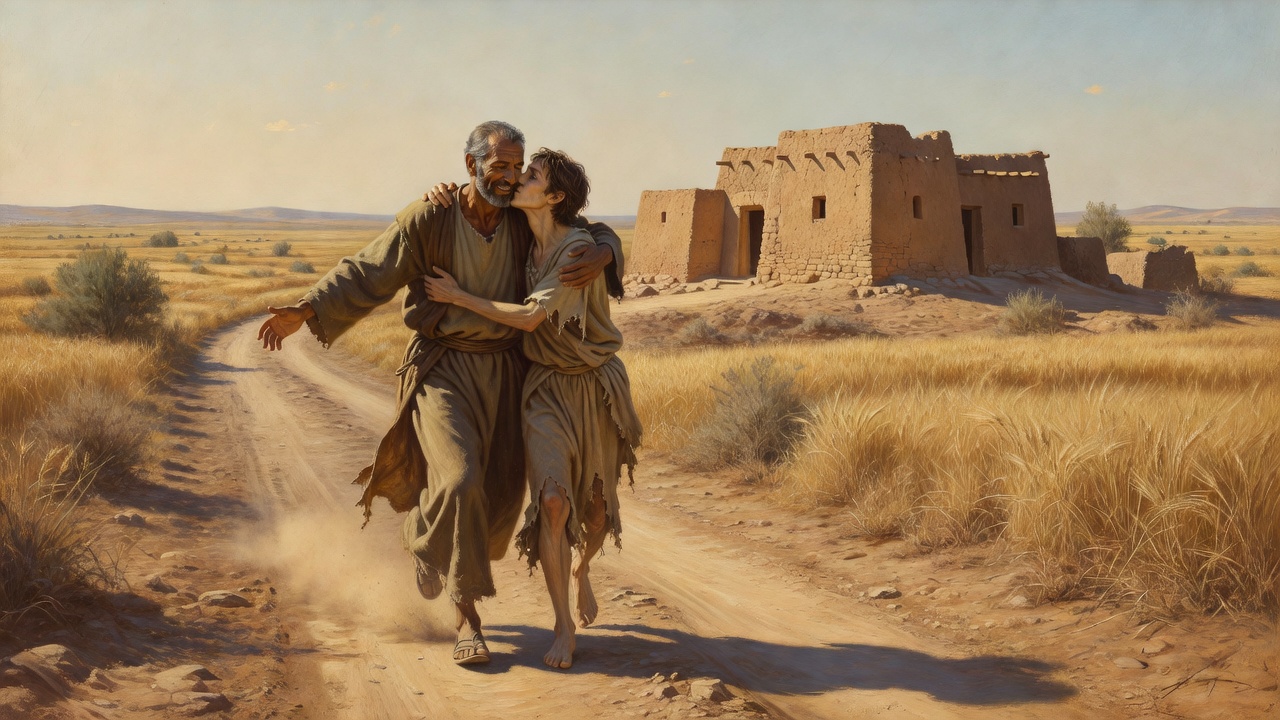
T'aft daatsets na'o
11Manats dabt Iyesus hank'owa bíet, «Ash iko git nanauwotsi detsfe b́tesh, 12Muk'efo b́ nihsh ‹Tniho, n gaalotse kayide'er t bano taash ime› bí et. Mann niho b́gaalo b́ nana' gituwotssh kayibk'r. 13Muk' aawoniye okoon muk'efo b́ gizo ko'idek't wok datso k'azbimi, dats manatsnowere b́ giz jamo dats mec'ron bad'i b́k'ri. 14B́giz jamono ishb́bazihakon datsmanatse kup' wotts k'ak'o b́kindtsotse kic'ats dihbutsi. 15Mansh datsmanatsi ashuwotsitse ikok t'iin b́ de'e ashmanwere gúrits jinosh bín gedb́dek'i. 16Gúritswots bomeyiruwatse k'oro maar bín b́ maac'o s'entsdek'osh b́tewunfo b́teshi, ernmó manoor bish imetuwo aali. 17Manoor na'man dartsi b́ woto t'iwintsdek't hank'o bíet, ‹T nih gale keeweyat finiru guutsuwots misho boworfetsosh maarr booe're orefuwots ambtsno! taa eshe hanoke k'ak'one t k'iriri, 18Tuur t nihok amŕ, tnih ababo, Ik'onat neen shinatse naandre, 19Haniye hakon n naayi err segeyosh boratse, ernmó guutsuwotsitsi ikok'o taash k'aluwe erna.› 20Mansh tuut niho maants bíami. B́nihuwere wokoon b́befere b́ naayi bek'b́k'ri, maac'o k'ewatnuwere b́maants b́wos'i matdek'tnuwere b́ joobi. 21Na'onuwere, ‹T nih ababo, Ik'onat nshinatse naandre, haniye hakon nnaayi eteyar segeyosh bodk taanaliye› bí eti. 22B́nihmó b́ guutsuwotsi s'eegdek't hank'o bíeti, ‹Káári amr jamotse k'ants taho de'ewaar bísh takuwere! b́ jabotso k'ubelo, b́ tufotso c'aamo gerere! 23K'otsts minz úro de'ewar shuhere! móóne! gene'one! 24T naayhań k'irtniye b́teshi, hamb́ and kashon fa'ee, t'aftniye b́teshi, daatsere› geneonowere dek'et bo tuwi. 25Manoor na'a eenfo tarots amtni b́tesh, aanat b́waafere mook b́t'intsok'on duubonat k'afi k'aro shish b́k'ri, 26B́guutsuwotsitsi iko s'eegdek't Eebi b́naroni? Ett bíaati. 27B́ guutsonuwere ‹Ni eshuye aanat b́ watsotsne, nnih jeenon b́ datstsosh k'otsts minz wúro bísh b́shuki› bí et.
28«Eshu eenonuwere ay dek't fayat, ‹Moots kindratse› bí eti. Mansh niho úratse kesht b́kindituwok'o b́ k'oni, 29B́naymo nihosh hank'o ett bíaaniy, ‹Hamb ambts dúrosh neesh finere, ni'aalotse hank'o borawu shapi danaktane, ernmo taa ttohuwotsnton bín t geneúwituwok'o eyish buk'ul iko dab im danakne! 30N na'anmó n gizo Woteraw máátsuwotsnton bad'ik'rat bíaanor k'otsts minzi úro bísh nshuki.› 31B́ nihwere hank'wa bíet, ‹T naayo, neye úni aawo taantoniye n fa'oniye, t detsts jamoniye nike. 32Nieshu hanmo k'irtni b́ teshi, and aaniy kashon b́ daatseyi, t'aft b́ teshtsotse, and daatsere, mansh ayide'er gene'o noosh geyife.› »
¿Sabías que…?
Perdido y encontrado
- Los recaudadores de impuestos y los pecadores se estaban reuniendo para escuchar a Jesús, y los fariseos y los escribas comenzaron a murmurar que él acoge a los pecadores y come con ellos. Jesús entonces les contó parábolas sobre una oveja perdida, una moneda de plata perdida y un hijo perdido.Fuentes: el propio texto bíblico
- La enseñanza y la sanidad en Perea hacia Jerusalén se registran como comenzando en el año 30 d.C. con una duración de un día.Fuentes: Teaching and Healing in Perea to Jerusalem
Notas escritas con ayuda de IA a partir de fuentes abiertas (Theographic Bible Metadata, CC BY-SA 4.0; Easton’s Bible Dictionary, dominio público) y revisadas antes de publicarse.
Créditos y licencia de esta traducción
Handr Taara
The New Testament in the Borna Language of Ethiopia (Handr Taara)
copyright © 2018 The Word for the World International
Language: Borni (Borna)
Contributor: The Word for the World Southern Africa
Handr Taara
The New Testament in Borna in Latin version
The Word for the World
This translation is made available to you under the terms of the
Creative Commons Attribution license 4.0.
You may share and redistribute this Bible translation or extracts from it in any format, provided that:
You include the above copyright and source information.
If you make any changes to the text, you must indicate that you did so in a way that makes it clear that the original licensor is not necessarily endorsing your changes.
Pictures included with Scriptures and other documents on this site are licensed just for use with those Scriptures and documents.
For other uses, please contact the respective copyright owners.
Note that in addition to the rules above, revising and adapting God's Word involves a great responsibility to be true to God's Word. See Revelation 22:18-19.
2023-04-08
Fuente: http://ebible.org/bwo/ · eBible.org