Lucas 11
Handr Taara · Toca un versículo para ver sus referencias cruzadas.
Ik' K'oni Jango b́ danitsok'o
1Ik aaw Iyesus beyok ikoke Ik'o b́ k'onfere b́tesh, Ik' k'ononowere b́ ishtsok'on b́ danifwotsitse iko, «Doonzono! Yohans b́ danifwotssh Ik' k'ono b́ danitsok'o neewor Ik'o k'ono noosh daniwe!» bí et.
2Iyesuswere, «Ik'o itk'onor hank'o erere bí'et,
‹Darotse beyiruwo no Nihono!
Nshútso S'aynee!
N mengstu wowiye!
3Aaw aawon noosh nomeet misho ime!
4Noon dadtswotssh oorowe noettsok'o,
No morro noosh orowa eree,
Fadeyotsowere noon kindshk'aye› gondatse noon oriwe bakona.»
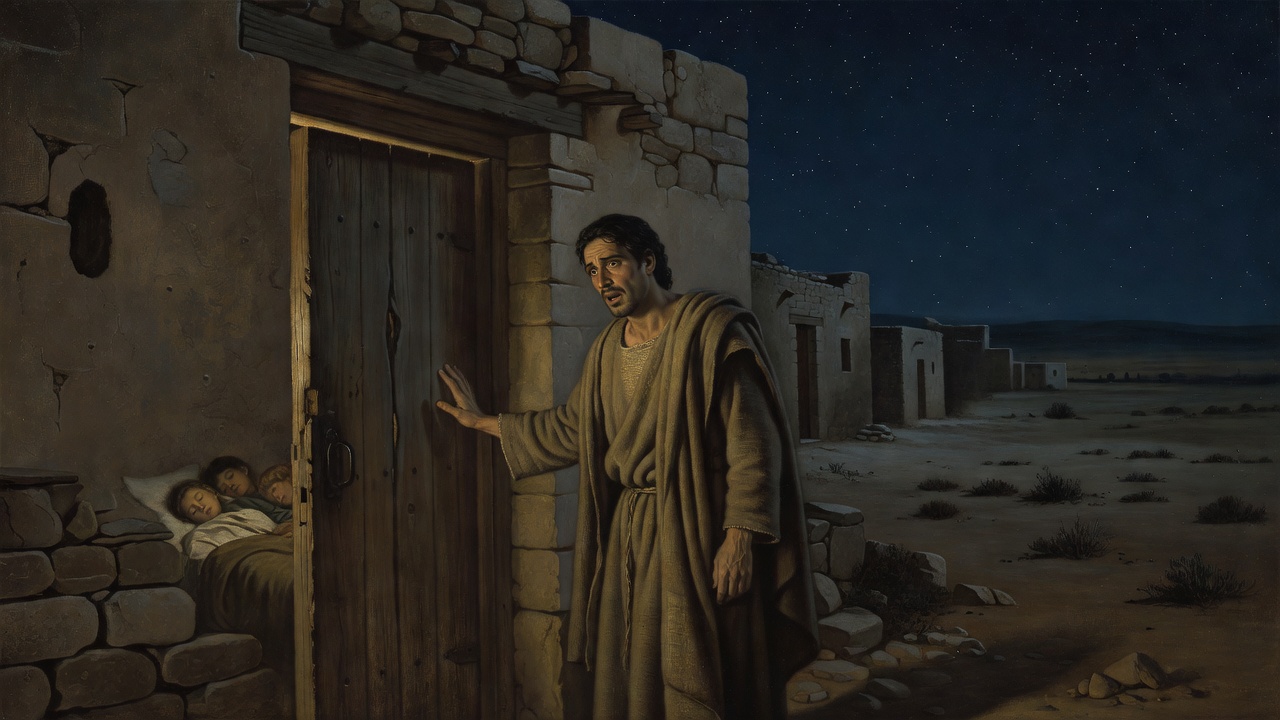
5Manats dabt Iyesus b́ danifwotssh hank'owa bí'eti, «Aab ititse b́ shunts tooh detstso fa'e erone, b́ toohman t'ú talititson b́ toohman galok amr, ‹T masho, oona neesha keez misho taash gushiwe, 6T mash ikoniye wokdatson weeron waat b́ eree t t'intsituu misho tt'ut'i!› bí etal 7Eshe, b́ mootse bede'er, ‹Oona neesha taan kic'ik'aye! fengesho is'k'reke, t nana'uwotswere taantoniye es'atse bok'eyiri, manshe tuur n geyiru misho neeash imosh falratse,› etetwá? 8B́ mashi b́ wottsosh dab tuur imo b́k'azalor b́ kasho b́ k'uushirwosha err bísh geyits jamo tuurni b́ imetiye etirwe itsha. 9Manshe taawor itsh t keewirwo haniye, k'onwere itsh imetwe, maa fengesho k'ofore itsh k'eshetwe, 10K'onitw jamo dek'etwe, geyirwonwere daatsitwe, fengesho k'ofirwosho k'eshetwe. 11Ititsnmó nih wotefetst, b́ na'o tusho b́ k'onor shúts imetuwo kone? Mus'o b́ k'oniyal mus'i shegro dawnzo imetwá? 12Himó keetso b́ k'oniyal ok'olsho imetwa? 13It gondwotsi wotefetsat it na'osh sheeng keewo imo it daniyakon, darotse fa'o itnihmó bíyoke k'onirwotssh S'ayin shayiro bogshde aak'owe imob́k'azeti!»
Iyesusnat Beel zebul
14Ik aaw Iyesus noon keewo faliraw fo'erawo gidik' ash iko atsotse b́ kishfera b́ tesh, Fo'rawonwere b́ keshtsok'on gdik'o noon keewo dek't b́ tuwi, ash ashonwere keewhanatse tuutso ayi dek't bo adi. 15Ik ikuwotsmó, «Fo'erawo b́kishiriye Fo'erawi naash wottso Beel Zebulnee,» bo eti.
16K'oshwotswere bín fadbek'o geyat́ darotse milikit iko boosh b́ kitsitwok'o bo aati. 17Iyesusmó bo gitsotse bo gawirwo dank'rat boosh hank'o bíet, «Ik mengsto hake bak kayeyar bí'atsatsewo b́k'aleyetka wotiyal, mengstman t'afa b́t'afiti, mank'o ik maá asho bí atsatsewo b́ k'aleyal dihe b́dihiti. 18Mansha shed'ano bí atsatseyo b́ k'aletka wotiyal b́ mengsto ak'ok'alrniya kup'ar need'o b́ faliti? Itiyere ‹Bíhe Fo'erawo b́kishiriye Beelzebulne,› etfte taasha. 19Taa bére, Fo'erawo t kishir Belzebulna wotiyal it nana'úwots bokishir konneya? Manshe it took nana'o dab itats angshitúne. 20Eshe Fo'erawo tkishir taa Ik'i angona wotiyalmó Ik'i mengstu itmaants bwatsok'o dande'ere.
21«Ash kup' iko t'eesho deshde'er b́ moo b́ kotetka wotiyal b́ gizo sheengshde kotetwe, 22Ernmó bíyere bog asho wáár bín da'abdek'al detsfe bí etts kes'i gino bíatse k'aa'úni b́dek'eti, b́ giz jamonowere bi' de'er kayini b́k'riti.
23«T maants woteraw jamó taana b́ k'efiti, tiyok kakuraw jamo bad'iye b́ bad'iyiri.
Kim shayiro ashots aani b́kindo
24«Kim shayiro ashotse b́ keshor b́ k'ot'okoo geyoke aats aalok dats shuk' jamok b́ guriti, b́ k'ot'it beyoko b́ t'ut'almó ‹T keshts moots aanar amna› bíeteti. 25Aanar b́ waáfere s'ayintsdek't k'aniyetso datsb́dek'eti. 26Maniyere il amr biyere gondwotsi k'osh Fo'eraw shawatwotsi de'er b́ weeti, bali biitse b́ beef mootse kind de b́ beeti, ash man il b́wotitwo shintsoniyere iki gonde b́ wotiti.»
Ar wotts geneúo
27Iyesus man keewoke b́befere mááts iku ash ash taalotse b́ k'aaro eenshdek'at «Neen shuwat s'atstsu deerekiye,» bi eti.
28Iyesusmó, «Deretswotsiyere Ik'i aap'tso k'ewde'er finats jitsitwotsiye,» bí et.
Milikiti jango aatetso
29Ay asho b́maand waat bo kakwetsok'on Iyesus hank'owa ett b́keewu, «S'oot'ahan gonde, milikit bek'e bogeyiri, ernmó nebiyo Yonaskoniye okoon k'osh milikito boosh imeratse. 30Nebiyiyo Yonas Nenewe kititsi ashuwotssh milikit wotat b́ teshtsok'o mank'o ash na'o and duranatsi s'oot'osh milikit wotitwe. 31Muur Nugusu angshi aawots and duranatsi s'oot'wotsnton tuur boats angshitwane, bi Selemon dani telefo k'ebosh dats daaratse tuwat waarane, ernmó hambe, Selomoniyere bogo hanoke fa'ee. 32Mank'owoŕe Nenewe kiti ashuwots angshi aawots and duri s'oot'anotsnton tuur angshitwane, Nenewe ashuwots Yonas nabtso boshishtsok'on bo fints morrosh goynatt naandrone etrne, ernmó hambe, Yonasiyere bogo hanoke b́ fa'oni.»
Ash atsatsi c'eesho
33Manats dabt Iyesus hank'o bí eti, «C'eesho c'eeshde'er dats ashok gedfo, wee oosho bí'ats gúp'shfo konwor aaliye, maniyere dab ashuwotssh máá gitso maants bo kindór b́ shanetwok'o dambaan s'ogatsa bogedfoni. 34Ni atsatsi c'eesho ni ááwoniye. Niááwo jeen b́wotiyal niats jamo sháánon s'eenke b́wotiti, ni ááwo shodk b́wotiyalmó ni ats jamo t'aluwotse b́wotiti. 35Manb́wottsosh eshe ni atse fa'a c'eesho t'alu b́woterawok'o niatso korde'e. 36Eshe ni ats jamo bíatse t'aluwo b́ deshawo sháánon s'eentso b́wotiyal, c'eesho ayider golor neesh b́shaanifok'o iki golr sháán wotitwe.»
Ferisawiwotsnat Muse nemo danifuwots Iyesus b́ bak'ntsok'o
37Iyesus han b́ keewufere ferisawi wotsitse iko aawu misho moowe bí eti, Frisawiwo moots kindt aawu misho moosh mishimarasts t'inbdek'i. 38Iyesus misho b́maftsere shino kisho masho b́k'aztsosh ferisawimań bí adi. 39Mansh doonzo Iyesus bísh hank'o bíeti, «It ferisawiwots brc'uk'onat saniy abo s'ayintsatniy it mashiri, it gitsonmó gondonat bík'on ititse s'eengutsi. 40It dartsuwotso! úratstso azts Ik'o gitsitstsonmó azratsa? 41It brc'k'onat it s'awotse fa'o t'owwotssh imere maniye hakon it keewu jamo s'ayino itsh wotituwe.
42«It ferisawiwotso indowe itsha! ik weeron ak'arshudona, c'ilatamikonat ay k'ac'n maay naruwotsatse tatslo kishirute, k'osh weerono ariko angshonat Ik'i shunonowere k'az it k'riri, ekeewi it k'alor hanowere k'azo itsh geyiratse b́ teshi.
43«It ferisawi etetsanots indowe itna, Ayhudi Ik' k'oni mootse beyoki sheengats beyo shunfte, mankoo jebonat gawiyotse ashjamo itn jamo bíatituwok'o it geyiri. 44Ash ashuwots bo danawo bíabatse boshaíru doowo it artsotse indowe itsha!»
45Muse nemo danifuwtsitse iko Iyesussh, «Danifono, han eto nonor c'ashrne etee!» bí et.
46Iyesuswere hank'o bíet, «Indowe itsha, it nemo danifuwotssha! ashaats kurimango it kurfoni, itmó kurman dab it kishi jabon t'awiratste.
47«It nihots bo úd'ts nebiyiwots doowo it sheengsh dek'at it doziruwotse, indowe itna! 48Eshe it nihots bo úd'ts nebiyiwotssh bo doowo it finiruwotse itwere bo gond fino tep'iruwotsnat gawuwots itne. 49Manatse tuutson Ik'i dan telefu hank'o etfane, ‹Nebiyiwotsnat woshetswotsi bo maants woshituwe, ik ikuwotsi úd'itúne, ortsuwotsno gondo bek'shitunee, 50Datso bí'azeron tuut kud'ts nebiywotś s'atso, and dúranatsi s'oot'anots angshon aatetúne.› 51Ariko itsh keewna, Abeelatse tuut wosh t'intseyiru t'arap'ezonat Ik' maa taalotse úd'etso Zekariyaskok b́ borfetso kud'ts s'atsosh and dúrantsi s'oot'anots aatetúne.
52«It nemo danifuwots indowe itsha! Dani fengesho bín k'eshet k'ulfiwo it kishatse detsfte, ernmó it it tookosh bíts kindratste, kind geyiruwotsno bo kindrawok'owa it baziri.»
53Iyesus manoke k'ay amoosh b́tuutsok'on nemo danifuwotsnat feriswiwotsn b́keewo k'efat ando ay aato t'intso dek't botuwi. 54Hań bo k'alirwe b́keewiru keewon bín detsosh geyatni boteshi.
¿Sabías que…?
Oración, señales y ayes
- Jesús habla de la sangre de todos los profetas, desde la sangre de Abel hasta la sangre de Zacarías, muerto entre el altar y el santuario. Abel era el segundo hijo de Adán y Eva y fue muerto por su hermano Caín. El Diccionario Bíblico de Easton (1897) identifica a este Zacarías como hijo o nieto del sumo sacerdote Joiada, apedreado por orden del rey en el atrio de la casa del Señor después de condenar al rey y al pueblo, y señala que Jesús alude a ese asesinato en este capítulo.Fuentes: el propio texto bíblico · Abel · Zacharias
- Jesús dice que a esta generación no se le dará ninguna señal, excepto la señal de Jonás: así como Jonás fue una señal para los ninivitas, el Hijo del Hombre será una señal para esta generación, y los hombres de Nínive, que se arrepintieron ante su predicación, la condenarán en el juicio, porque aquí está alguien mayor que Jonás. El Diccionario Bíblico de Easton (1897) describe a Jonás, hijo de Amitai, de Gat-hefer, como profeta de Israel y misionero en Nínive, y lo llama tipo del Hijo del Hombre. Describe a Nínive como una ciudad grande y populosa, la floreciente capital del imperio asirio.Fuentes: el propio texto bíblico · Jonah · Nineveh
- Después de que Jesús expulsa un demonio que era mudo, algunos dicen que lo hace por Beelzebú, príncipe de los demonios. El Diccionario Bíblico de Easton (1897) explica el nombre Satanás como adversario o acusador, dice que el Nuevo Testamento lo usa de manera intercambiable con el diablo y enumera a Beelzebub entre sus títulos. Jesús responde que todo reino dividido contra sí mismo quedará asolado y pregunta cómo puede permanecer el reino de Satanás si Satanás está dividido contra sí mismo.Fuentes: el propio texto bíblico · Satan
Notas escritas con ayuda de IA a partir de fuentes abiertas (Theographic Bible Metadata, CC BY-SA 4.0; Easton’s Bible Dictionary, dominio público) y revisadas antes de publicarse.
Lugares de este capítulo
Solo aparecen lugares identificados con alta confianza (90 % o más según las fuentes académicas reunidas por OpenBible). Mapa de la época: DARE (Digital Atlas of the Roman Empire), CC BY 4.0; mapa actual: © colaboradores de OpenStreetMap; lugares: OpenBible.info (CC BY 4.0).
Créditos y licencia de esta traducción
Handr Taara
The New Testament in the Borna Language of Ethiopia (Handr Taara)
copyright © 2018 The Word for the World International
Language: Borni (Borna)
Contributor: The Word for the World Southern Africa
Handr Taara
The New Testament in Borna in Latin version
The Word for the World
This translation is made available to you under the terms of the
Creative Commons Attribution license 4.0.
You may share and redistribute this Bible translation or extracts from it in any format, provided that:
You include the above copyright and source information.
If you make any changes to the text, you must indicate that you did so in a way that makes it clear that the original licensor is not necessarily endorsing your changes.
Pictures included with Scriptures and other documents on this site are licensed just for use with those Scriptures and documents.
For other uses, please contact the respective copyright owners.
Note that in addition to the rules above, revising and adapting God's Word involves a great responsibility to be true to God's Word. See Revelation 22:18-19.
2023-04-08
Fuente: http://ebible.org/bwo/ · eBible.org