Juan 4
Handr Taara · Toca un versículo para ver sus referencias cruzadas.
Iyesusnat Semari datsatsi mááts ikún
1Manoor Iyesus Yohansiyere bogo ay ashuwotsi b́ danifwotsi b́ woshirwok'onat b́ gupirwok'o ferisawino etfwots shishbok'ri, 2Wotowaere gupirwots b́ danifuwotsi bako bí b́tookon gufatse. 3B́ jango keewetso ferisawiwots boshishtsok'o danb́k'rtsok'on Iyesus Yhud datso k'azt Gelil maants aani k'az bíam. 4Manokowere bíamor Semari weeron besho bín geyika b́tesh.
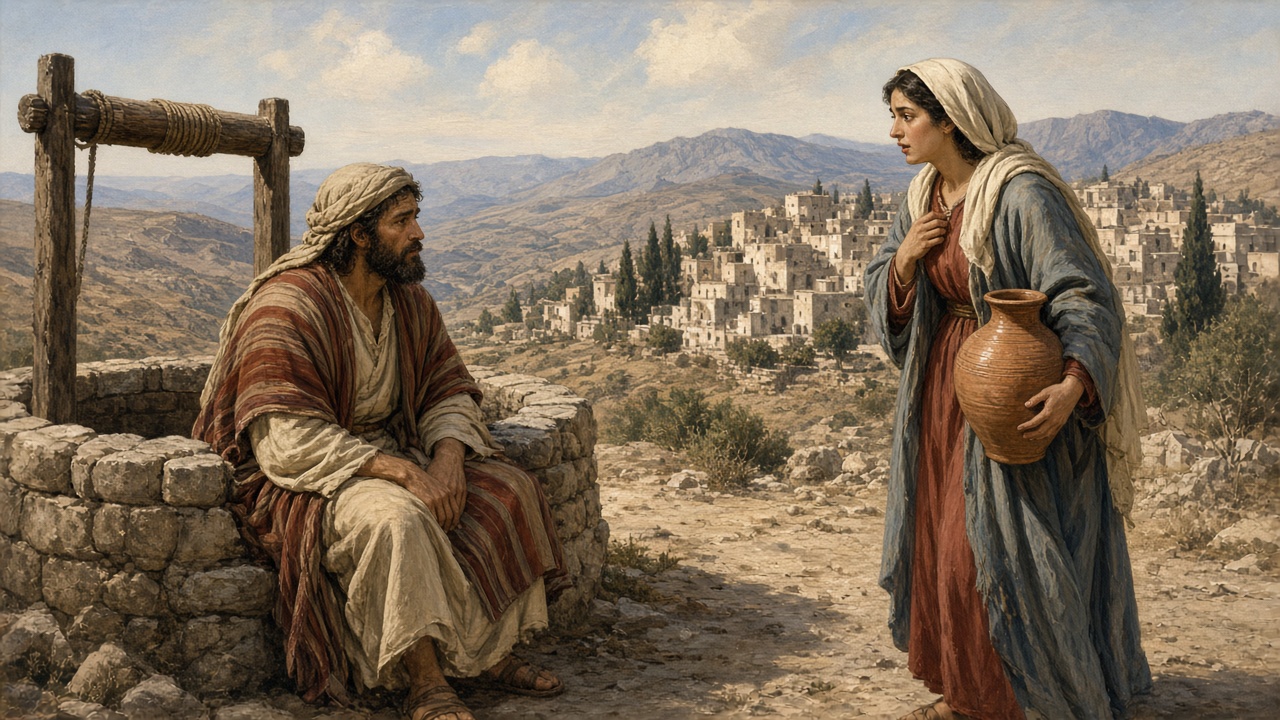
5Mansh Ya'ak'ob b́naaysh Yosefsh b́ imts beyoku ganoke fa'u, Sikari ett s'egefu Semariy kituts b́weyi. 6Manoknowere Yak'ob aats gop'o fa'e b́tesh, Iyesus werind sha'oke b́ mááwtsotse gop'man ganok beeb́dek'i, manoor gizewonwere shrt sa'atok'owi b́tesh. 7Manoor Semariy datsatsik wotts mááts iku aats kito gop'ok bweyi, Iyesuswere, «Úshet aatso taash ime!» bí eti 8Manoor b́ danifwots mish keewosh kito maand amtnibofa'o. 9Semari dats ash wotts ashmanwere Iyesussh, «Nee n naaro ayhudi wotefetsat aawk'oneya tnaaro Semari wottsush ‹Úshi aatso taash ime!› etaat niatiri?» bí et, man bíetwere ayhudiwots Samrawino etefwotsnton ik woto bodeshawotsna.
10Iyesuswere, «Ik'i imonat ‹Úshet aatso taash ime!› neesh etirwo koni b́wotstsok'o ndanink'e, bín k'oniyank'u neene bteshi, bíwere kash aatso neesh imank'e» bíet.
11Biwere hank'o etaat biaaniyi, «Doonzono! neewo bín kitet k'ac'o deshatsnere, gop'onuwere ayi dashan woke, eshe kash aatso eewkneya n datsiti? 12Nee gop'an imtso nonih Yak'obiyere bogfiya? Bína ett b́ nana'on, b́ minzwotswere gop'anitse úshrnee.»
13Iyesus hank'o ettni bish bíaaniy, «Aatshan úshetu jamo ando aaniy shashwitwee, 14Taa timet aatso úshetwonmo dúre dúrosh b́ jamon shashweratse, taa ti imet aatso dúre dúrosh kasho bítse t'up'et aatse b́ wotiti.»
15Máátsmanwere, «Doonzono! haniye hakon aatso taan b́shashwirawok'o aaninwere kitosh hanok twarawok'o oona neesha man naari aatso taash ime!» bí et.
16Iyesuswere, «Amr n kenihi s'eede aniwowe» bíet.
17Ashmanwere, «Keniho deshatse» etaat bíaaniy.
Manoor Iyesus hank'owa bish bíet, «Keniho deshatse niettsoniye arikee, 18Uts kenihwotsi detsfne b́teshi, and neenton fa'a ashonwere n kenihiyaliye, manshe ariko keewurne» bí eti.
19Máátsmanwe hank'o bísh bíet, «Doonzono! nee nebiyiyo nwottsok'o andee t dani, 20Nonihots guranatsene Ik'o bok'ofoni, itmó ‹Ashuwots Ik'o k'ono boosh b́ geyitiye Iyerusalemitsne› etfte.»
21Iyesuswere hank'wa bish bíet, «Nee ashune! Guranatse wee Iyerusalemitse Ik'o nihosh sagado it k'azet aawo b́ weetwok'oyish taan amanowe, 22It it daanawoshe it sagadiri, noomo kashet weero b́weet ayhudiwotsoke b́wottsotse no dants Ik'oshe nosagadiri. 23Ernmó arikon Ik'osh sagadirwots, Ik'o nihosh arikonat Shayirn bosagadit aawo weetwe, dab andoor waare, Ik'o nihonwere b́geyirwo hank'on bísh sagaditwotsiye. 24Ik'o shayire, bísh sagadirwotswere shayironat arikon sagado boosh geyife.»
25Máátsmanwere «Krstosi eteetso Mesihiyo b́weetuwok'o danfee, bí b́ woor jam keewo noosh keewitwe» bi et.
26Iyesuswere «Hamb! and neenton keeweyirwo taahe bíne» bí et.
27Manoor b́ danifwots bo amtsoke aanat boweyi, Iyesus máátsunton b́ keeweyirwotse bo adi, wotowa bako, «Eege ngeyiri? Wee binton eegishe n keeweyiri?» ett bín attso konwor aali b́ tesh.
28Maniye hakon máátsman b koro k'azk'rat́ kito maants amat́ ash ashosh hank'o bieti, 29«T k'alts jamó taash keewts asho waar s'iilere! daneraka biye Krstosi wotifek'úna?» 30Ashuwotswere kitotse kesht Iyesus maants boami.
31Manoor b́ danifwots Iyesussh, «Danifonó! ik jago mishok'o moowe» ett bok'oni.
32Bimó, «It danawo taa t meyiru móó detsfe» bíet.
33Mansh b́ danifwots, «Asho bísh misho dek'waatso fa'ak'úna?» bo eti. 34Iyesuswere boosh hank'owo bí et, «Tiko mishoniye taan woshtso ettso k'alona ett b́ finono s'eentsone. 35It ‹Haniyak awd shasho orere, maniye hakone maay k'ees'o b́bodeti› etirutosha? Taamó ‹Aab kaaw de'er mááykatswots k'es'osh bobodtsok'o s'iilere› etirwe itsha. 36K'es'irwo bí angi k'awntso dek'etwe, dúre dúri bewosh wotit shuwo ko'itwe, mansha shokirwonat, k'es'irwonton tohar gene'uwitúne. 37Hnk'o b́ wottsotse ‹Iko shoketwe, k'osho k'es'etwe› eteetso arikee. 38Taawere it bíats it shamberawo it k'es'etwok'o itn woshere, k'oshwots finon bomaawi, itmo bomawtsatse shuwo it meyi.» 39Máátsunwere «T k'alts jamo taash keewure» etaat b gawtsok'on kit manitsere ankat Samari dats ashuwots bín bo amani. 40Samari datsatsi ashuwots Iyesusok bo waatsok'on bonton b́ beetuewk'o bok'oni, bíwere git aawo manoke b́ teshi. 41Bí aap'atse tuutsatse k'osh ankat ashonwere bín bo amani. 42Ashmanshowere «Hniye hakon bín no amanitiye nee noosh n keewtsoshaliye no notookon noshishtsonat arikon datsani kashitwo bín b́wottsok'o no dantsotsne.» boeti.
Iyesus naasho na'o b́kashitsok'o
43Iyesus Semariy datsatse git aawo b́ teshihakon Gelil datso maantsan bíami. 44Bí b́ tookon «Nebiyiwo b́ took datsatse mangiyerakee» ett keewre b́tesh. 45Gelil maants b́bodtsok'onmó Gelil dats ashuwots mangon bín bodek'i, han b́wotwere Fazig baliwots Iyerusalem maants amt boteshor bi manoke b́ k'alts jamo bek't boteshtsotsná.
46Maniye hakon Iyesus aatso weyini biro maants b́wonits datsu Gelil datsatse fa'a K'aan kitu maants aani aanat b́weyi, manoor K'frnahomn b́ na'o b́shirotse shodtso mengsti mootse naash iko fa'e b́ tesh. 47Bíwere Iyesus Yihud datsatse Gelil datsats b́wowo shisht b́ maants bíam, K'frnahom maants ood'r ayidek't shodt k'irosh etirwo b́ na'o bísh b́kashiytwok'o Iyesusi b́k'oni. 48Iyesuswere «It adits keewonat milikito it bek'ala bako eegonor amaneratste!» bíet. 49Naashmanúwere «Doonzono! t na'o b́ k'irftsre oona neesha kaari ood'e» bíet.
50Iyesuswere «N moo maants amee! n na'o kashon fa'e» bíet.
Ashmanwere Iyesus aap'tso amanat b́ moo maants bíami. 51Bíamfere b́guutswots weerindatse daatsdek't «N na'o kashwtsere» ett bísh keew bok'ri.
52Bíwere b́ na'o b́ shamp'ts sa'ato boon bíaati. Bowere «Oots shawat sa'atatse atsik'es'o bínfakshb́k'riye» boet. 53Nihonwere, Iyesus «N na'o kashon fa'e» bíettso manoori sa'aton b́wottsok'owo danb́k'r, mansh manots aawon detst bínat b́maa ashon Iyesusi aman bok'ri.
54Aditshan Iyesus Yhud datsatse Gelil datsomants waat b́k'alts gitloniye.
¿Sabías que…?
Agua viva en Samaria
- Jesús dejó Judea para regresar a Galilea, y el Evangelio dice que tenía que pasar por Samaria. Bajo los romanos, en tiempos de Jesús, Judea era la más meridional de las tres divisiones de Palestina, distinta de Samaria y de Galilea, y el relato señala que los judíos no se trataban con los samaritanos.Fuentes: el propio texto bíblico · Judea
- Llegó a Sicar, cerca del terreno que Jacob había dado a su hijo José y, cansado del camino, se sentó junto al pozo de Jacob. El diccionario bíblico de Easton (1897) registra que, desde la época de las Cruzadas, Sicar solía identificarse con Siquem, pero que unas exploraciones la identificaron con 'Askar, un pequeño pueblo samaritano en la base sur de Ebal, aproximadamente una milla al norte del pozo.Fuentes: el propio texto bíblico · Sychar
- La mujer contrastó la adoración en este monte con la afirmación judía de que había que adorar en Jerusalén, y habló de un Mesías que había de venir, llamado Cristo. Cuando los discípulos volvieron de comprar comida en el pueblo, se sorprendieron de que Jesús estuviera hablando con una mujer.Fuentes: el propio texto bíblico
Notas escritas con ayuda de IA a partir de fuentes abiertas (Theographic Bible Metadata, CC BY-SA 4.0; Easton’s Bible Dictionary, dominio público) y revisadas antes de publicarse.
Lugares de este capítulo
- Galilee · 32.760, 35.527 · versículos 3, 43, 45, 46, 47, 54
- Judea · Hoy: Judea 1 · 31.777, 35.234 · versículos 3, 47, 54
- Samaria · Hoy: Samaria 2 · 32.276, 35.195 · versículos 4, 5, 7, 9
- Jerusalem · 31.777, 35.234 · versículos 20, 21, 45
- Mount Gerizim · 32.199, 35.273 · versículo 20
Solo aparecen lugares identificados con alta confianza (90 % o más según las fuentes académicas reunidas por OpenBible). Mapa de la época: DARE (Digital Atlas of the Roman Empire), CC BY 4.0; mapa actual: © colaboradores de OpenStreetMap; lugares: OpenBible.info (CC BY 4.0).
Créditos y licencia de esta traducción
Handr Taara
The New Testament in the Borna Language of Ethiopia (Handr Taara)
copyright © 2018 The Word for the World International
Language: Borni (Borna)
Contributor: The Word for the World Southern Africa
Handr Taara
The New Testament in Borna in Latin version
The Word for the World
This translation is made available to you under the terms of the
Creative Commons Attribution license 4.0.
You may share and redistribute this Bible translation or extracts from it in any format, provided that:
You include the above copyright and source information.
If you make any changes to the text, you must indicate that you did so in a way that makes it clear that the original licensor is not necessarily endorsing your changes.
Pictures included with Scriptures and other documents on this site are licensed just for use with those Scriptures and documents.
For other uses, please contact the respective copyright owners.
Note that in addition to the rules above, revising and adapting God's Word involves a great responsibility to be true to God's Word. See Revelation 22:18-19.
2023-04-08
Fuente: http://ebible.org/bwo/ · eBible.org