Juan 10
Handr Taara · Toca un versículo para ver sus referencias cruzadas.
Iyesus jints sheeng b́wottsok'o
1Manatse tuut Iyesus hank'o bíeti, «Ariko arikone etirwe itsha, mererwots kúrots fengeshon kindraawo k'osh weeron kinditwo ump'etsonat wombedewotsne. 2Fengeshon kinditwonmó mererwotsi jintsoniye. 3Bíshe fengesh kotirwo k'eshitwe, mererwotswere b́ k'aaro shishetune, bi were b́ took mererwotsi boshutson s'eegetwe, jishde'ernwere ametuwee. 4B́took mereer jamwotsi b́ kishihakon bo shin shinatse sha'itwe, b́ mererwotswere b́ k'aaro bo dantsotse b́ shuutso shoydeniye bo sha'iti. 5K'osho k'aaronmó bodanawotse bíyatse oka bowos'eti bako b́jámon b́ shuutso amatsne.»
6Iyesuswere jewraan boosh b́keewi, bomo boosh b́keewetso t'iwintsratsno.
7Mansh Iyesus ando aani hank'o boosh bíet, «Arikon arikoniye itsh ti etiriye taa mererwots fengesh taane, 8Taayere shin waats jametswots úmp'etswotsnat bik'knee, mererwotsu bon shiyatsne. 9Fengesho taane, tweeron kinditwo kashitwe, kinditwe, keshetwe, jinokono daatsitwe. 10Úmp'etsonmo b́ weyiŕ úmp'isha, shukonat t'afiyon s'uzsha, taamo t waa boowere kasho daatsr s'eent s'eenk kasho bodetsetwok'owe.
11«Jints sheengo taane, jints sheengo b́ kasho b́ mererwotssha err beshide imetwe. 12Btokk woteraw mereer jintso b́ jinish keeweka bako ari jints woterawonu lawuwo b́ waare b́bek'or mereruwotsi k'ak'rarni b́wos'eti, lawuwonwere mererwotsi bi'ide bad'ib́k'riti. 13Jintsman k'az b́wos'irwe keewek b́wottsonat mererwotssh kis'odeshawo b́wottsone. 14Jints sheengo taane, taa t mererwotsi danfee, t mererwotswere taan danfnee. 15Taa boon t daniru niho taan b́dantsok'o dani naaronat taawere niho t dantsi naaronee, taa t mererwotssh t kasho beshide imetwe. 16Mereer s'eenanitse woterawo k'oshuwotsitse wotts mererwotsi detsfe, bonowere jisho taash geyife, boowere t k'ááro shishetune, ikoki mereer s'eene bowotiti, jinirwonwere ike b́ wotiti.
17«Aani tdek'et kashú ti ímetwotse t nih taan shunfee. 18Taa t kashu tshunon imetuwe bako tiatse konwor bin dek'etwo aaliye, t kashu imr aninuwe dek'osh alo detsfe, tzaziman tdek'were t nihoknee.»
19B́ keewtsmanatse tuutson ayhudiwots dagotse k'osh k'oshewo wotbwtsi. 20Boyitsnowere ayuwots, «Bí bíatse fo'erawoniye fa'oni, geewtsere, eegishe bín itk'ebiri?» boeti.
21K'oshuwotsuwere, «B́keew keewan fo'erawo detsts ash nonotse keshetkaliye, fo'erawo bo ááwu dogwots aawo k'eshosh falituwa?» bo eti.
Ayhudiyots aman k'azi jango
22Iyerusalemitse Ik' maa nato bíhandrtsi worwoti bali aawo b́bodi, manoronwe joosha b́tesh. 23Iyesus Ik' mootse Solomon bí anaanef werindatsna bí ananefer b́tesh. 24Manoor ayhudiwots b́ ganok ko'edek't, «Awurish b́ borfetsone git nibon noon nja'iti? Nee Krsttosi n wotok'o danide noosh keewwe» boeti.
25Iyesusu hank'o ett boosh bíaaniy, «Taa itsh keewre, itmó amaneratste, t nih shútson tfiniru fino t jangosh gawitwe. 26Itmó t mererwotsitse woto itk'aztsosh amaneratste. 27T mererwots t k'aaro shishetune, taawere boon danfee, boowere t shuutso sha'itúne. 28Taa dúre dúri kashone boosh imetwe, manshe b́jamon t'afratsne, t kishotse konwor boon kishdeatse. 29Boon taash imtso t nih jamoniyere bogfe. Tnih kishotse boon bi'dek'o falitwo konwor aaliye. 30Taana ett Aabn ik noone.»
31Ayhudiwotś manoor ando aani bín togosh shútso k'a'ubodek'i. 32Iyesuswere, «T nihoke sheeng fin ayuwotsi itsh kitsre, eshe it taan it togir t fints hanotsitse aawsha etatniya?» bí eti.
33Bowere, «Noo neen notogir Ik'o nc'ashirwosha bako n fints sheeng finoshaliye, manwere nee ash wotefetsat́ n tooko Ik' n woshtsoshee» ett bísh boaaniyi.
34Iyesuswere hank'o boosh bíet, «It nemotse ‹Itiye ik'wots it nee, eteere› ett guut'etso aalneya? 35Eshe S'ayin mas'aafo sharosh faleratse, boosh waats Ik'i aap'o S'ayin mas'afo Izar Izewerotsi ett s'eegere. 36Eshe, Niho S'ayntst datso maantsan b́ doyitso ‹Ik' na'o taane› bí ettsosh eegoshe ‹Ik'o c'ashre› it etiri? 37Taa t nih fino fineratse wotiyal taan amank'ayere. 38T nih finirwoni t finiri wotiyalmo taan dab́ amano it k'azalor t finiru finon amanore, hank'on niho taanton b́ wottsok'onat taawe nihonton twottsok'o shengshde danetute.»
39Bowere ando aani bín detsosh bogeyi, bímó bo kishotse kesht k'az bí'ami.
40Iyesus ando aani Yordanos fokoniye kimt Yohanis bali b́ gupfok bíami, manoknowere b́ teshi. 41Ay ashuwots bíyok wáát́, «Yohanis adits fino egoŕ fineratse, ernmó Yohanis ashaan jango b́ keewts jamo aree b́ teshi» bo et. 42Manoknowere ay ashuwots bín bo amani.
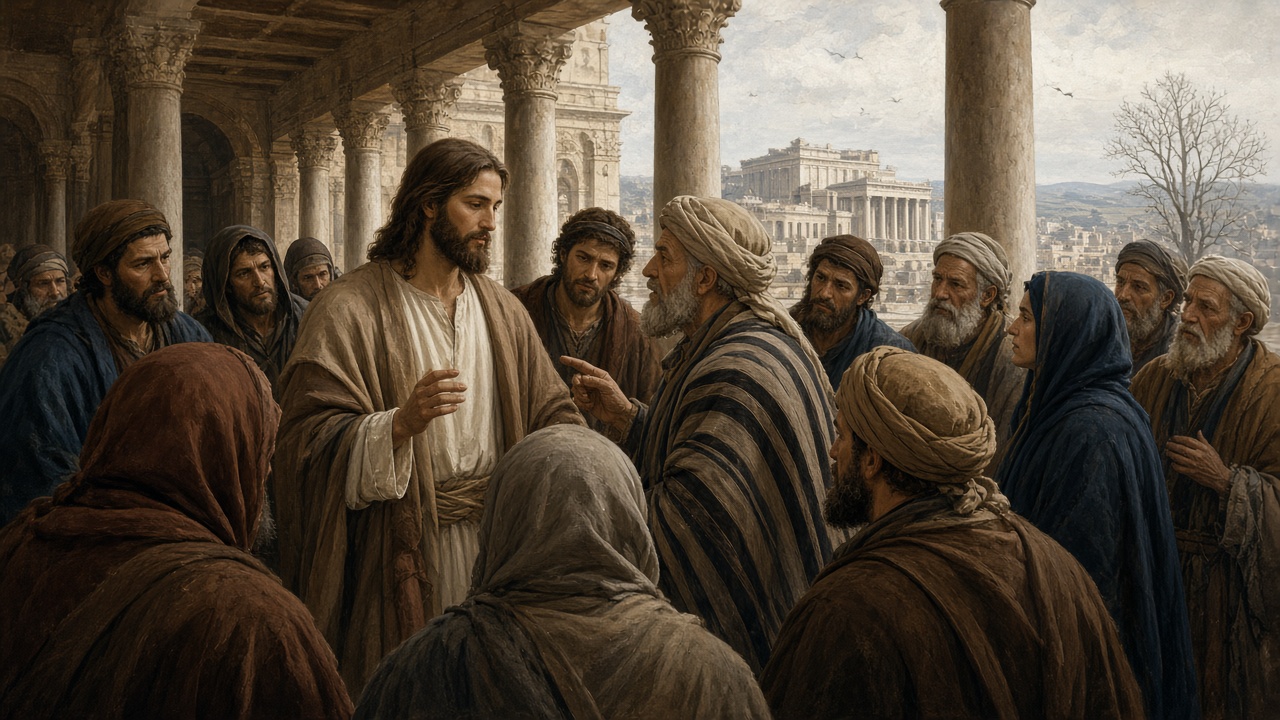
¿Sabías que…?
El Buen Pastor
- En la Fiesta de la Dedicación, en Jerusalén, era invierno, y Jesús caminaba por los atrios del templo, en el Pórtico de Salomón. El nombre Jerusalén, en forma dual, significa "posesión de la paz" o "fundación de la paz"; esa forma probablemente se refiere a los montes Sión y Moriah o, como algunos suponen, a la ciudad alta y la ciudad baja. El nombre hebreo de Salomón, Shelomoh, significa "pacífico".Fuentes: el propio texto bíblico · Jerusalem · Solomon
- Una cronología de los episodios evangélicos sitúa la enseñanza del Buen Pastor en el año 29 d.C. y un tiempo de enseñanza y curación, de Perea a Jerusalén, en el año 30 d.C.Fuentes: The Good Shepherd Teaching · Teaching and Healing in Perea to Jerusalem
- Jesús volvió entonces al otro lado del Jordán, al lugar donde Juan había comenzado a bautizar, y muchas personas allí creyeron en él. Juan era de linaje sacerdotal: su padre, Zacarías, era sacerdote del turno de Abías, y su madre, Elisabet, era de las hijas de Aarón. Su nacimiento, seis meses antes que el de Jesús, fue anunciado por un ángel; quienes acudían decían que Juan nunca hizo ninguna señal, pero que todo lo que había dicho acerca de Jesús era verdad.Fuentes: el propio texto bíblico · John the Baptist
Notas escritas con ayuda de IA a partir de fuentes abiertas (Theographic Bible Metadata, CC BY-SA 4.0; Easton’s Bible Dictionary, dominio público) y revisadas antes de publicarse.
Lugares de este capítulo
- Jerusalem · 31.777, 35.234 · versículo 22
- Solomon’s Portico · Hoy: in Jerusalem · 31.777, 35.234 · versículo 23
- Jordan · Hoy: Jordan River · 31.761, 35.558 · versículo 40
Solo aparecen lugares identificados con alta confianza (90 % o más según las fuentes académicas reunidas por OpenBible). Mapa de la época: DARE (Digital Atlas of the Roman Empire), CC BY 4.0; mapa actual: © colaboradores de OpenStreetMap; lugares: OpenBible.info (CC BY 4.0).
Créditos y licencia de esta traducción
Handr Taara
The New Testament in the Borna Language of Ethiopia (Handr Taara)
copyright © 2018 The Word for the World International
Language: Borni (Borna)
Contributor: The Word for the World Southern Africa
Handr Taara
The New Testament in Borna in Latin version
The Word for the World
This translation is made available to you under the terms of the
Creative Commons Attribution license 4.0.
You may share and redistribute this Bible translation or extracts from it in any format, provided that:
You include the above copyright and source information.
If you make any changes to the text, you must indicate that you did so in a way that makes it clear that the original licensor is not necessarily endorsing your changes.
Pictures included with Scriptures and other documents on this site are licensed just for use with those Scriptures and documents.
For other uses, please contact the respective copyright owners.
Note that in addition to the rules above, revising and adapting God's Word involves a great responsibility to be true to God's Word. See Revelation 22:18-19.
2023-04-08
Fuente: http://ebible.org/bwo/ · eBible.org