Gálatas 5
Handr Taara · Toca un versículo para ver sus referencias cruzadas.
Krstosn daatset nas' kesho
1Krstos nas'o noon b́kish nas'on nobeyishe. Mansh eshe kup'arr need'ore, aaninwere guutsmi k'ambariyots tipek'ayere.
2Hambe! taa P'awlos itsh tietetwo haniye, gofo it amal Krstos itsh eegor k'alratse, 3Gof ametu jamo «Nem jam s'eentso bín geyife» err aani bísh keewitwe, 4It nem koton kááw wotosh geyiru jamwots Krstosatse k'alewtserte, b́ s'aatotsnowere keshrtee. 5Noomó Ik' shayiron kááwi wotosh jángiyetso imnetiyone nokotiri. 6Iyesus Krstosn beetwosh shunon finitwo imnetiya boko gof amaa wee amk'azo eegoru oot'o imatse.
7It sha'a sha'o sheenge b́ teshi, eshe and arkeewosh it alerawok'o itn bazitso kone? 8Hank'o izan itn s'eegts Ik'oke waakaliye. 9Manwere boot' shash muk'ú boot' jamo b shashitwoshe. 10Ernmó haniyere k'osho it gawirwo it deshawok'osh arikon wotde'er doonzats amanittwe, konworu it took s'adiitwo b́ beyal angsho dek'etwe.
11Tí eshwotso! taa andish b́ borfetsosh t nabirwo, «Kashosh gof amo geyife» etirwe wotiyal andish b́ borfetsosh eegishe t gisheyiri? Hank'o b́ wotitka wotiyal Krstos mask'aliyo ashuwotssh t'ug woterawnk'e b́ teshi. 12Eshe hanots iti dandiru ashaanots bogeyiyal gof amo s'uzi b́ woterawo boatso gato bowoshink'ere shúnfe.
13Tí eshwotso! it nas'o keshtswotsi it wotish s'egerte, ernmó iko k'oshosh shunon finowa bako nas'o it keshaan meets tewno s'eentsosh wotk'aye. 14Nem jamo «K'osh asho n tokok'o woshde'er shune» eteets aap' ikon s'eenetwe. 15Ernmó it atsatseyo shac'eyatni it meeyeyiri wotiyal it atsatseyo it s'uweerawok'oo it atso korde'ere.
Shayironat meets beewo
16Eshe haniyak shayiron jisheyar it betka wotiyal, meets tewno s'eentsk'ayere. 17Meets tewno shayiri tewnontotoniye b́ wed'eyiri, shayiri tewnonu meets tewnontoniye b́wed'eyri, mansh meetsonat shayiron boats atsewo bo wed'eyiri, eshe it geyirwo k'alo falratste. 18Shayirona it jiisheyiri wotink'eremó nemosh keweyirwotsi woterawnk'te.
19Meetsi finwots daneknee, boowere wido, kiimwoto, shiraats jintsi woto, 20Woteraw ik'wotsi ik'iyo, atetsi woto, balangar woto, mooshewo, fayo, okooro, b́took shuno, k'aleyo, weeri gondo, 21ash een shit'o, másho, weral t'oola, hanotsi artswotsiye, haniyere shin itatso korde'ere tiettsok'on andoor aaniyi it atso korde'ere etirwe, hanotsk'o wotts keewwotsi finit ashuwots Ik'i mengtstu naaratsne.
22S'ayin shayiri shuwonmó shuno, geneúwo, jeeno, k'amo, sheengo, doowo, amanetso woto, 23Dingato woto, b́took keewoniye. Hanotsk'o keewwotsi k'efit nemo aaliye, 24Krstos Iyesusk wotts ashuwots meetso b́gusiyontonat b́tewnonton mesk'eliyats jitk'rerne. 25Shayirona nobeeyiri wotiyal shayiron jishewone. 26Iko k'osho gondosh tuuzr noatsatsewo okoorefetsr datsmec'ro it'k'ayone.
¿Sabías que…?
La libertad, la ley y el Espíritu
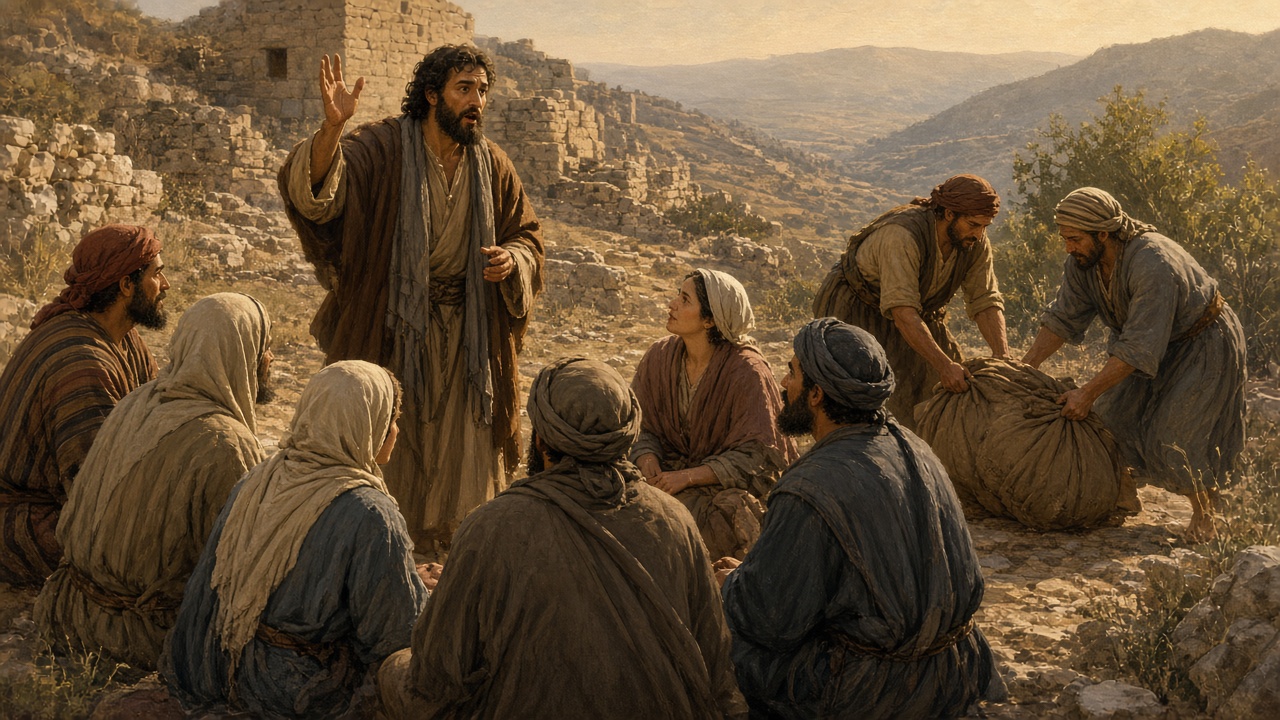
- Quien habla se identifica como Pablo y advierte que, si aquellos a quienes se dirige se dejan circuncidar, Cristo no les valdrá de nada, y que todo hombre que se hace circuncidar queda obligado a cumplir toda la ley. Un relato biográfico dice que el nombre de circuncisión de Pablo era Saulo y que el nombre Pablo probablemente le fue dado en la infancia para usarlo en el mundo de los gentiles, mientras que Saulo sería el nombre hebreo que usaría en casa.Fuentes: el propio texto bíblico · Paul
- La libertad se contrapone a un yugo de esclavitud: el capítulo dice que Cristo los ha libertado y les manda mantenerse firmes y no volver a quedar cargados con ese yugo. Fueron llamados a la libertad, no como una oportunidad para la carne, sino para servir unos a otros en amor, y toda la ley se cumple en el único precepto de amar al prójimo como a uno mismo.Fuentes: el propio texto bíblico
- Andar por el Espíritu se contrasta con satisfacer los deseos de la carne, que se oponen entre sí. Si las personas son guiadas por el Espíritu, no están bajo la ley; el capítulo enumera las obras de la carne y el fruto del Espíritu, y dice que contra tales cosas no hay ley.Fuentes: el propio texto bíblico
Notas escritas con ayuda de IA a partir de fuentes abiertas (Theographic Bible Metadata, CC BY-SA 4.0; Easton’s Bible Dictionary, dominio público) y revisadas antes de publicarse.
Créditos y licencia de esta traducción
Handr Taara
The New Testament in the Borna Language of Ethiopia (Handr Taara)
copyright © 2018 The Word for the World International
Language: Borni (Borna)
Contributor: The Word for the World Southern Africa
Handr Taara
The New Testament in Borna in Latin version
The Word for the World
This translation is made available to you under the terms of the
Creative Commons Attribution license 4.0.
You may share and redistribute this Bible translation or extracts from it in any format, provided that:
You include the above copyright and source information.
If you make any changes to the text, you must indicate that you did so in a way that makes it clear that the original licensor is not necessarily endorsing your changes.
Pictures included with Scriptures and other documents on this site are licensed just for use with those Scriptures and documents.
For other uses, please contact the respective copyright owners.
Note that in addition to the rules above, revising and adapting God's Word involves a great responsibility to be true to God's Word. See Revelation 22:18-19.
2023-04-08
Fuente: http://ebible.org/bwo/ · eBible.org