Hechos 7
Handr Taara · Toca un versículo para ver sus referencias cruzadas.
Ist'fanos keewuts keewo
1Kahniwotsatsi naasho Ist'fanossh, «Eteets keewan arikeya?» eton bíaati.
2Ist'fanosuwere hank'o ett bísh bíaniyi, «Ti eeshuwotsnat tnihotso! aab taan k'ewere! Nonih Abraham Karan datsatse beyosh bíamfetsre shino shin Mesp'et'omiya eteets datsatse b́ befere Mangts Ik'o bísh be'eyat 3‹N datsatse keer, n jagatse k'alyarr, taa neesh t kitsit datsats amee› bí eti. 4Manoor Keledawiyots datsatse kesht Karani eteets datsats be b́wtsi, b́ nih b́k'irihakonowere Ik'o Karanitse kisht hambets it beyiru datsanats bín dek'et b́weyi. 5Wotowabako dab tufi need'okok'o bodts rstiyo bísh imatse, b́wotefere datsani bínat bíyere il b́ naarosh rstiyo woshde'er b́imetuwok'o taarre b́teshi, bísh b́taaruwere Abraham na'o b́ detsfetsere shine. 6B́ naaronuwere ash datsatse gooshtsi wotar b́beetuwok'o datsmanatsnowere awd bal natosh guuts woshde'er was'o kayde'er boon bokewituwok'o bísh keewure b́ teshi. 7Manats dabtnwere, ‹Guuts woshde'er b́ keewit ashuwotsats angshitwe, datsmanatse keer hanoke taan ik'itúne› ett Ik'o keewre. 8Gof ami taaronowere bísh bími, mansha Abraham Yishak'i b́shuwor shimtl aawots gofo b́daamiyi, Mank'o b́ naayi Yisak'i gofo b́daamiyi. Yak'obuwere b́ jir tatse gitetsuwotsi gofo b́damyi.
9«Yak'ob nanaúwots bo eshuwi Yosefi okoort Gbs' datsatsere guutso b́ wotituwok'o bokemi, Ik'onmó bíntoniye b́ teshi, 10Gond bek' jamotse bín b́ kishi, Gbs' naasho Fer'on shinatsere baatsonat danitelefo bísh bi'imi. Naashonuwere Gbs'nat b́ maa jamatse alituwo bín b́woshi. 11Manór Gbs'nat Kene'an dats jamatse ayidek't ash kic'its k'ak'i eeno b́ woti, no nihuwotsuwere misho daatsosh falatsne. 12Ya'ak'obwere Gbs'itse mááyo b́ beyok'owo b́ shishtsok'on tuwreerosh nonihotsi manok b́ woshi. 13Aani gitlo aanat Gbs'i bo amor Yosef b́ eshuotsesh b́ tooko b́ daneyi, jag bowotonúwere Fere'onokere b́ daneyi. 14Maniye hakon Yosef b́ nihi, Yak'obnat b́ jag jamo b́mandan dek't b́weyi, bo bojametsuwre shabe úts ashno. 15Mansh Yak'ob Gbs' maantsan bí ami, bínat no nihwotsn manoke bok'iri. 16Bomak'tsonowere Sekem maantsan dek'amt Abraham Sekemn Emor nan'úwotsoke b́ gizon b́keewts doowots dukeyi. 17Ik'o Abrahamsh taart b́ jangitso wotit aawo b́ t'inor Gbs'n beyiru ashuwots taawo ayefere bí ami. 18Man b́ wotwere Yosefi danawo k'osh Nugúso Gbs'n b́ naashefetsoniye. 19Handr naash manuwere no ashuwotsats gondo k'úmt no nihwotsats kic'iyo dek't bo tuwi, bo nana'i marmat'uwotsno bok'irituwok'o úratse kishde'er bo juwituwok'o, no nihuwotsi bokic'iyi. 20Manór Muse b́ shuweyi, bíwere Ik'i shinatse na'i az sheenge b́teshi, keez shashonowre b́nihi meyitse b́ eeni, 21Uratso juu k'irewor Fereon mááts naú k'audekat b́ naayik'o woshdek'at b ditsi. 22Musewwere Gbs' datsi dani teleef jamo danb́dek'i, b́ keewiru keewonat b́ finonowere kup' wotb́wtsi.
23«Muse hab nato b́ s'eentsok'on bí eshuwotsi Israe'el nana'úwotsi s'iilo b́ tuwi. 24Bí eshuwotsitse ikonuwere Gbs' dats ash ikon t'uk'eyat was'o b́kashefere bek't bísh b́ gatsi, t'uk'eetsmanshowere weero weersht Gbs' dats asho togdek't b́úd'i. 25Ik'o b́ weeron boon b́ fakshiyituwok'o b́ jaguwots t'iwints bodek'etuwok'owa bísh araatni b́ tesh, bomó t'iwintsratsno. 26Yaats guurok'onowere Israe'el ash gitetsuwots bo atsatseyo bo fayefere daatsdek't bonbaziyo geeyat ‹It ashuwtso! itwo eshu itnere, eegishe itfayeyiri?› bíet. 27B́ tooho togiru ashman Museyi okaan gifnit ‹Neenmó noon alituwonat noatse angshituwo kone nee wosh? 28Oots Gbs' dats asho núd'tsok'o taanowere úd'osh geefiya?› bíet. 29Muse man b́shishtsok'on Gbs'itse kesht Midiyam datsomants amt gooshtsi wotat b́beeyi, Manoke nungush nana'a gituwotsi b́shuwi.
30«Muse datsmanatse hab nato b́beshiyakon Debre Sin woruwotse aat'iru t'ugi atatsi tawi laluwotse melaki iko b́be'eyi. 31Muse man b́bek'tsok'on bíadi, karndek't b́s'iilorowere hank'o etiru Doonzo k'aro b́shishi, 32‹Taahe nnihotsko Izar Izewer taane, Abarhamko Izar Izewer, Yisahak'ko Izar Izewer, Yak'obko Izar Izewer taane,› Muse were shatoon k'ewub́wutsi, s'iloshowere aawo shu'atse. 33Doonzonuwere hank'o b́ eti, ‹N ned'iruwok man S'ayin datso b́ wottsotse n tufitsi c'aamo kishuwe, 34Gbs'itse fa'a ti ashuwots weralo gond bo bek'iruwok'o bek're, kic'at bo kuhirwono shishre, mansh boon kashiyosh oot're, andoor wowe! taa neen Gbs'its woshona.›
35«Israe'el ashuwotsu Musesh ‹Neen noats altsonat angshituwon woshtso kone?› Eton bín k'efatni botesh, wotowa boko t'ugi atatse bísh be'ets melakiyo jangon alituwonat nas' kishituwon woshdek't bomandan bín b́ woshi. 36Gbs'nat Aats k'ar birokere aditsonat milikito finat bí ashuwotsi kish dek't hab natosh dats woruwtse jishtso Museyiye b́ teshi. 37‹Doonzo Izar Izewer taan b́ tiztsok'o mank'o it eshuwotsitse nebiyiyo itsh tuuzitwe› ett Isra'el ashuwots keewutso Museyiye b́teshi. 38Woruwotse kakuwedek't teshts ashuwotsntonat Sin guri abaatse keewuts Ik'i melakiyonton animank'o no nihotsnton teshtso bíne. Ik'o keewuts kash imetu aap'o noosh beshitsonuwere un bíne Museyiye.
39«No nihots bína bok'efibako bísh aleratsnee, Bonibotsnowere Gbs' maants aano bo gawi. 40Aronshowere ‹Noon Gbs'itse kishts Muse han eeg bíyats bodtsok'o no danawotse noshin shinatse sha'arr noon jishituwo Izar izewerotsi noosh doozwe› bo eti. 41Manór manz aron dozets Ik'o doozdek't bísh wosho bo t'intsi, bokishi finonowere bogenee'úwi. 42Ik'onmó boatse k'aleniye b́wutsi. Daritsi k'eenwotssh bo ik'ituwok'o boon beshidek't bími. Manwere Nebiywotsn hank'o ett guut'etsok'one,
‹It Israe'el ashuwotso!
Shúkeets gizonat woshon
Hab nati s'eenosh woruwotse it t'ints tasheya?
43Dek'at it amtso Molok gofonat
Refani eteef k'enon it arits it ik'oniye b́ teshi,
Bowere it kishon findek'at,
It boosh it boosh sagadat it teshts ik'irwotsiye,
Taawere Babloniye ok it gishetuwok'o woshituwe.›
44«No nihots woruwotse gawi gofu detsfne b́ teshi, gofmanuwere Ik'o b́ keewutsok'onat b́ kitstsok'o bin fintso Museyiye b́ teshi. 45Ik'o boshinatse b́ gishts Ik' ash Woteraw ashuwots datso bo nator no nihots bodek'ts gofani Iyasunton manok bo kindshi, Dawit dúro b́ borfetsosh manoke b beyi. 46Dawituwere Ik' shinatse baatso daatst Yak'ob Ik'o Izar Izewersh k'ewok wotit moo agosh Ik'o b́ k'oni. 47Ernmó Ik'í maa agtso Solomoniye.
48«B́woteferor jam falts Ik'onmó ash kishon ageets moots beerake, manwere Nebiyon hank'o ett guut'etsoniye,
49‹Daro t be jooroniye,
Datsonuwere t tufi ned'oke,
Eshe ááwu naari mee taash it agetuwoni?›
‹Bíyok t kashituwokonu awuk'one?› Etfe Doonzoni.
50‹Jaman taa t kishon t finkoshna?› Bíeti Ik'oni.
51«It wed'etswotso it nibo is'etswotso! it k'el kúp'uwotso! it nihuwotskok'o jam aawo S'ayin shayiro it k'efiri. 52Nebíyiwotsitse it nihots bo gisherawo kone fa'oni? boowere kááw finetsman b́ weetuwok'o shin keewutswotsi boúd'i, It were and kááwu finetsan beshidek' imaat it úd'i. 53It Ik'i melakiwots weeron Muse nemo dek'at it teshi, ernmó kotde'atste.»
Ist'ifanos shútson jot'eyat b́k'irtsok'o
54Mooshiru jirwots han boshishtsok'on nibo k'únbowutsi, Ist'ifanosi fayat bí'ats gasho bo shas'i. 55Ist'ifanosmó S'ayin shayiron s'eent daro maantsan kawudek't s'iilt, Ik'i mango darotse b́bek'i, Iyesus noowere Ik' k'ani aaromadan b́ need'efere b́ bek'i, 56Eshe «Hambe, daro k'eshe b́ gwutsere ash na'o Ik'i k'ani aaro maantsan b́ need'efere t bek'iri» bí eti. 57Manoor bo k'aari eenon bo kuhi, bo waazono is'dekt ik wotdek't b́ maantsan bowos'i. 58Kitotsno kishdek't shútson bo jot'i, gawuwotsuwre bo shemo dek'amt Sa'oli eteets jawets iko b́ kotetwok'o b́ tufi shirots ged bok'ri. 59Shútson bín bo jot'fere, Ist'ifanos, «Doonzo Iyesuso! t kashu k'aaú de'e!» ett b́ k'oni. 60Tuk'umaldek't, «Doonzono! bo morran boats taawk'aye!» ett k'aari eenon kuhat man ettnuwere k'ir b́wutsi.
¿Sabías que…?
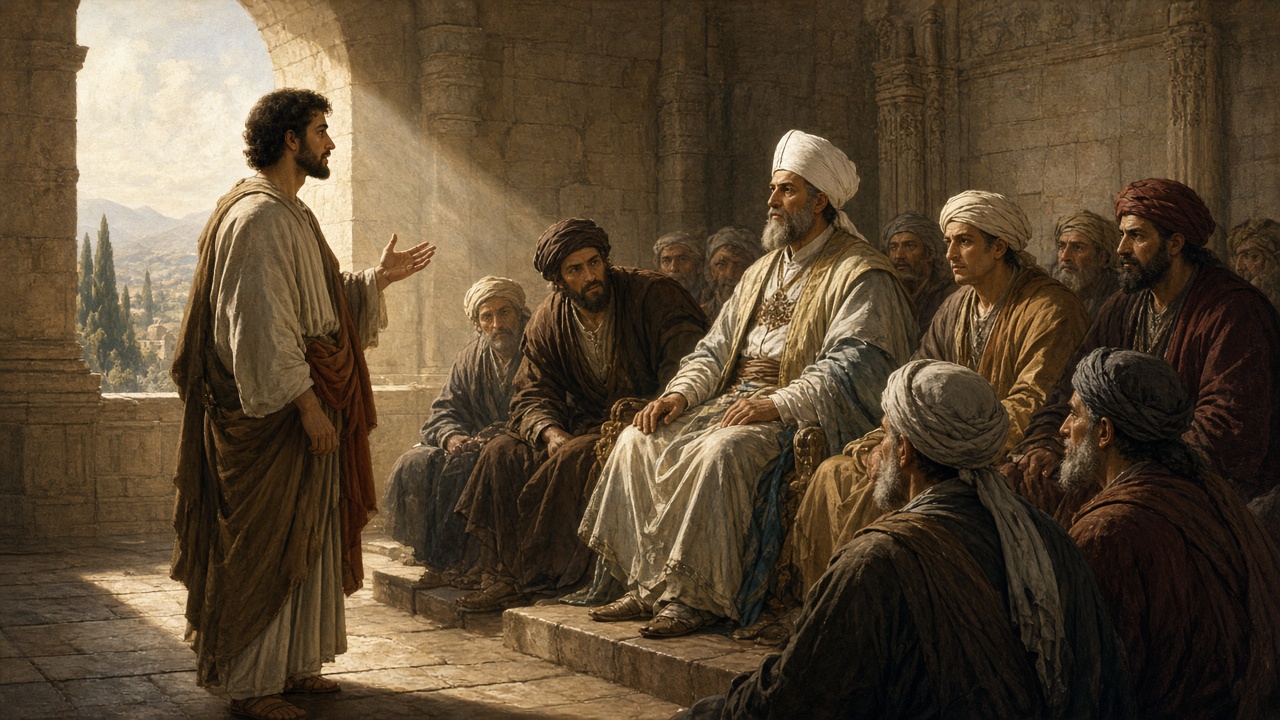
Esteban relata la historia de Israel
- Esteban abre su discurso con Abraham todavía en Mesopotamia, antes de establecerse en Harán, cuando se le ordenó dejar su tierra y sus parientes. Mesopotamia —en hebreo Aram-naharaim, “Siria de los dos ríos”— era el nombre que griegos y romanos daban a la región entre el Éufrates y el Tigris; en el Antiguo Testamento también se llama Padan-aram, “la llanura de Aram”, y el norte de esa meseta fue el hogar antiguo de los antepasados de los hebreos. El Easton's Bible Dictionary (1897) observa que ese primer llamado no se menciona en el Antiguo Testamento, aunque Génesis 12 lo da a entender, y que Abraham salió de Ur, en Caldea, y recorrió unas 300 millas al norte, hasta Harán.Fuentes: el propio texto bíblico · Mesopotamia · Abraham
- Esteban afirma que los huesos de Jacob y de los padres fueron llevados de vuelta a Siquem y depositados en la tumba que Abraham había comprado a los hijos de Hamor. El Easton's Bible Dictionary (1897) identifica a Hamor como un heveo cuyo nombre significa “asno”, señala que en Hechos 7:16 se le llama Emmor y dice que Jacob le compró el terreno de Siquem en el que después fue sepultado José. El artículo añade que Siquem, hijo de Hamor, fundó la ciudad que llevó su nombre.Fuentes: el propio texto bíblico · Hamor
- Esteban sitúa la zarza ardiente en el desierto, cerca del monte Sinaí, y dice que Moisés recibió allí palabras vivas del ángel que le habló en el monte. El Easton's Bible Dictionary (1897) trata Sinaí —nombre ligado a Sin, un dios lunar— como el mismo distrito montañoso llamado también Horeb. Según el artículo, los hebreos llegaron a esa región al tercer mes después del Éxodo, tras un viaje de unas 150 millas desde el mar Rojo, con todos los recodos del camino, y permanecieron acampados cerca de un año.Fuentes: el propio texto bíblico · Mount Sinai
Notas escritas con ayuda de IA a partir de fuentes abiertas (Theographic Bible Metadata, CC BY-SA 4.0; Easton’s Bible Dictionary, dominio público) y revisadas antes de publicarse.
Lugares de este capítulo
- Haran · Hoy: Harran · 36.864, 39.033 · versículos 2, 4
- Mesopotamia · Hoy: Aram-naharaim · 36.864, 39.033 · versículo 2
- Chaldea · 30.962, 46.104 · versículo 4
- Egypt · 30.129, 31.308 · versículos 9, 10, 11, 12, 14, 15, 17, 18, 34, 36, 39, 40
- Canaan · 32.767, 35.333 · versículo 11
- Shechem · Hoy: Tell Balatah · 32.214, 35.282 · versículo 16
- Nile · Hoy: Nile River · 31.465, 30.367 · versículo 19
- Midian · 28.495, 35.012 · versículo 29
- Babylon · 32.543, 44.422 · versículo 43
Solo aparecen lugares identificados con alta confianza (90 % o más según las fuentes académicas reunidas por OpenBible). Mapa de la época: DARE (Digital Atlas of the Roman Empire), CC BY 4.0; mapa actual: © colaboradores de OpenStreetMap; lugares: OpenBible.info (CC BY 4.0).
Créditos y licencia de esta traducción
Handr Taara
The New Testament in the Borna Language of Ethiopia (Handr Taara)
copyright © 2018 The Word for the World International
Language: Borni (Borna)
Contributor: The Word for the World Southern Africa
Handr Taara
The New Testament in Borna in Latin version
The Word for the World
This translation is made available to you under the terms of the
Creative Commons Attribution license 4.0.
You may share and redistribute this Bible translation or extracts from it in any format, provided that:
You include the above copyright and source information.
If you make any changes to the text, you must indicate that you did so in a way that makes it clear that the original licensor is not necessarily endorsing your changes.
Pictures included with Scriptures and other documents on this site are licensed just for use with those Scriptures and documents.
For other uses, please contact the respective copyright owners.
Note that in addition to the rules above, revising and adapting God's Word involves a great responsibility to be true to God's Word. See Revelation 22:18-19.
2023-04-08
Fuente: http://ebible.org/bwo/ · eBible.org