Hechos 16
Handr Taara · Toca un versículo para ver sus referencias cruzadas.
T'imotiwos P'awlosnat Silasnton towaat bíamtsok'o
1P'awlos Derbenat Lst'ra maants bíami, Lst'rn T'imotiwosi eteets amants jawets iko fa'e b́tesh, bínd ayhudiyi ash wotat amank krstiyani btesh, b́ nihmó Grik dats asha b́ tesh. 2T'imotiyos Lst'ronat Ik'oniyonitse fa'a eeshuwwotsokere sheeng shútso detsfe b́ teshi. 3P'awlos T'imotiyosi de'er amo b́getsotse manokere beyru ayhudiwotsatse tuutson gofo b́ ametuwok'o b́woshi, mank'o b́ k'aluwere bo T'imotiyos nih Giriki dats ash b́ woto bodantsotse bojangosha etniye. 4P'awlosnat Silasn kit kitotse beshefetst Iyerusalemn fa'a woshetswotsnat eenashuwotsn eteets nemo amantsuwotssh bodanifere b́teshi, finatsowere bojitsituwok'o boosh bogawifere bo teshi. 5Mansh Ik' moowwots imnetiyon kup'bowutsi, botaawonúwere dabfere bí'amiri.
P'awlos Mek'edoni datso maants bí ametuwok'o s'eegetsok'o
6P'awlosnat Silasn Isiyi datsatse Ik'i aap'o bokeewurawok'o S'ayn shayiro boosh b́ bazitsotse Frgyiyinat Gelatiyi daarok k'az bobeshi, 7Misiyi daarok bobodtsok'on Bitanimaants amoosh gawtni botesh, ernmó Iyesusko S'ayin shayro man maants boametuwok'o eekeratse. 8Mansh Misya weeron beshat T'iroadi bo oot'iye. 9Manoke t'ú Mek'edoni ash iko need'dek't «Mek'edoni maants kimr noon te'úwe!» ett bín b́ k'onfere bek'on b́bek'i. 10P'awlos bek'man b́bek'iyakon manoor Mek'edoni maants amoosh no geyi, Man b́wotuwere Mek'edoni ashuwotsshowere doo shishiyo nodaniyituwok'o Doonzo noon b́ s'eegtsok'o nodani.
Lidiyi Krstosn biamantsok'o
11T'iroadiyere Markabats keshdek'at kááwon Samtrak'e maants noami, yaats guurok'on Nap'ule maants no ami. 12Maniyere tuwat Filip'isyosits nobodi, Filip'isyus Mek'edonitse fa'a kit eenunat Rom dats ashuwots dets bodek'ts datsi b tesh, kitmanitsnowere muk' aawwotsi nobeshi. 13Sanbati aawotsowere Ik' k'onosh boko'efok kitoniyere úratse fa'a foki gúrok noo ami, manoke bedek'at ko'edek'ts máátsuwotssh Ik'i aap'o nodaniyi. 14Nokeewirman k'ebiru máátswotsitsere iku Tiyat'ros kitotse shuwetsu tahi biro jaakiru Lidiya eteets máátsu fa'a b teshi, biwere Ik' Ik'iru máátsiye b teshi, doonzo b nibo bish b́ k'eshtsotse P'awlos bíaap'iru b k'ebfere b teshi, 15Binat b meyitsi fa'a ash jamwots bo gupeyakon, «Doonzo ti amantso arik b́woto itkitsitka wotiyal waar t moots beewere,» etaat kup'idek'at noon b k'oni.
Filp'syus kitotse P'awlosnat Silasn botipetsok'o
16Ik aawu Ik' k'oneyiruwok noamfere shino maants wotit keewo keewit kim shayiro biyatse fa'a ik'ets Gon baarna'ú weerindatse noon b datsi, Gonmanuwere Ik'o oot'at b doonzotssh ay oot'o b datsifo b teshi. 17Biwere noonat P'awlosn shuutso shoydek'at sha'at, «Ashaanots een Ik'o gutswotsiye! boowere kash weerindo itsh keewitúnee!» etaat b kuhefooni. 18Hanoewre ay aawosh aani aani bk'alfoni, P'awlosmó nibok'úúnwutsat wongr et aanat kiimshayirman «Iyesus Krstos shútson biatsotse nkeshetuwok'o neen azazere!» bí eti. Kim sharonuwere manoor k'azb́keshi.
19Bin keezfwotswere b weeron bodatsit oot'o boatse k'ut'b́wtstsok'o bek'bok'rtsok'on P'awlosnat Silasn detsbodek'i, geetsferowere jebomaants dek'amt naashwots shinats t'intsbok'ri. 20Rom dats naashuwotsokowere dek'wat hank'o boeti, «Ashaanots Ayhudi jírnee, no kitotsnowere dimbro botuziri, 21Noo Rom dats ashuwots dek'o nofalrawu niwo noosh bodaniyiri.» 22Ashjamonwere ik wotdek't boats b́tuwi.
Naash naashuwotsuwere P'awlosnat Silasn taho sholbazt gumbon botogetuwok'o boazazi. 23Ayidek't botogeyi hakon t'ip'moots kindsh bok'iri, tipi maa kotiruwonuwere k'up'ide boon b́kotetuwok'o azazk'reyi, 24Kotiruwo azazetsman b́dek'iyakon, tipi maaman gitsotsi kayuts boon kindsh b́k'ri, botufonowere gindonat gindi dagots detsidek't tipb́k'ri.
25T'ú Taali titso maantsowere P'awlosnat Silasn Ik' k'ononat dubon Ik'o údfetstni boteshi, tipeets k'oshuwotswere bóóna bok'ebiri botesh. 26Gawerawonowere tipimaaman b́ned'oko b́gaahefetsosh een dats shek'eyo wotb́wtsi, fengesh jamwotswere k'eshebowutsi, tipetswotsi boon tipeets habiliyo ik ikon bish b́wutsi. 27Kotiruwonuwere b́tokrootse tuut tipimaa fengesuwots k'eshewutsat boere bek't tipetswots k'azbokeshtsok'o bísh bíarere b́ tooko úd'osh b́shiko kaas'b́dek'i, 28Ernmó P'awlos, «No no únetswor hanok noone! manshe ntokats gondofink'aye!» ett k'aar eenon b́kúhi.
29Manoor kotiruwo c'eesho de'eweetuwok'o wosht gitsots b́kindi, k'eewufetst P'awlosnat Silasn tufi shirots b́baron gúp'nb́wútsi. 30Úrats boon kishdekt «T Doonzotso! kashosh eegk'ale taan b́geyiyti?» bí eti.
31Bowere «Doonzo Ieyesusn amanowe, kashituwune, nmeyitsi ashuwotswere kashitúne» boeti. 32Doonzo aap'onowere bínat b́meyitse fa'a jamwotssh bokeewi. 33manoori sa'aton t'úwon tipimo kotiruwo dek'amt bogaawo bo atse b́mashi, manoor bínat b́maa ash jamwots bogúpeyi. 34Maniyere hakon P'awlosnat Silasn b́mook dek'amt misho boosh b́t'intsi, Ik'onowere bí amantsosh b́meyitsi ashuwotsnton geneú b́wutsi.
35B́ gatstsok'onowere naash naashuwots «Ash manots faksheewunee» ett polisuwotsi bowoshi.
36Tipi maa kotfonuwere «It it faksheetuwok'o naash naashuwots asho bowoshtsotse eshe keer jeenon ameree» ett Silassh b́keewi.
37P'awlosmó «Rom datsi ashnowotefere nayiralon jebatse noon jot't tipimoots noon kindshrnee. Andowere tipi mootse ááshon nokeshetuwok'owe bok'aliri? Woteratse! bo botookon waar noon kishunee!» ett bíaani.
38Poliswots keewuman naash naashuwotssh bokeewi, naah naashuwotswere P'awlosnat Silasn Rom dats ashuwotsi bowoto bodantsok'on shatbowtsi. 39Mansh waat naandrone ett aatt tipimootse boon kishbok'ri, kitmanitsnowere boametuwok'o boon bok'oni.
40P'awlosnat Silasnowere tipi mootse kesht Lidiy moots bokindi, manoknowere eshu eshuwotsi daatsdek't boon kup'sht kitmanowere faksht k'azbo ami.
¿Sabías que…?
De Listra a Filipos
- En Listra, Pablo encontró a Timoteo, un discípulo de quien hablaban bien los hermanos de Listra e Iconio, hijo de una judía creyente y de un padre griego. Queriendo llevarlo como compañero, Pablo lo circuncidó a causa de los judíos de allí, que sabían que su padre era griego. El diccionario bíblico de Easton (1897) dice que Timoteo probablemente vivía en Listra y parece haberse convertido en la visita anterior de Pablo.Fuentes: el propio texto bíblico · Timotheus
- Después de que se les impidió hablar en la provincia de Asia, Pablo y sus compañeros viajaron por Frigia y Galacia. En la frontera de Misia no se les permitió entrar en Bitinia, así que bajaron a Troas, el puerto principal de Misia, en la costa noroeste de Asia Menor, ciudad que recibió su nombre de la antigua Troya, a unas cuatro millas al norte. Allí, una visión nocturna de un hombre de Macedonia que pedía ayuda los llevó a navegar hacia esa provincia romana al norte de Grecia.Fuentes: el propio texto bíblico · Mysia · Troas · Macedonia
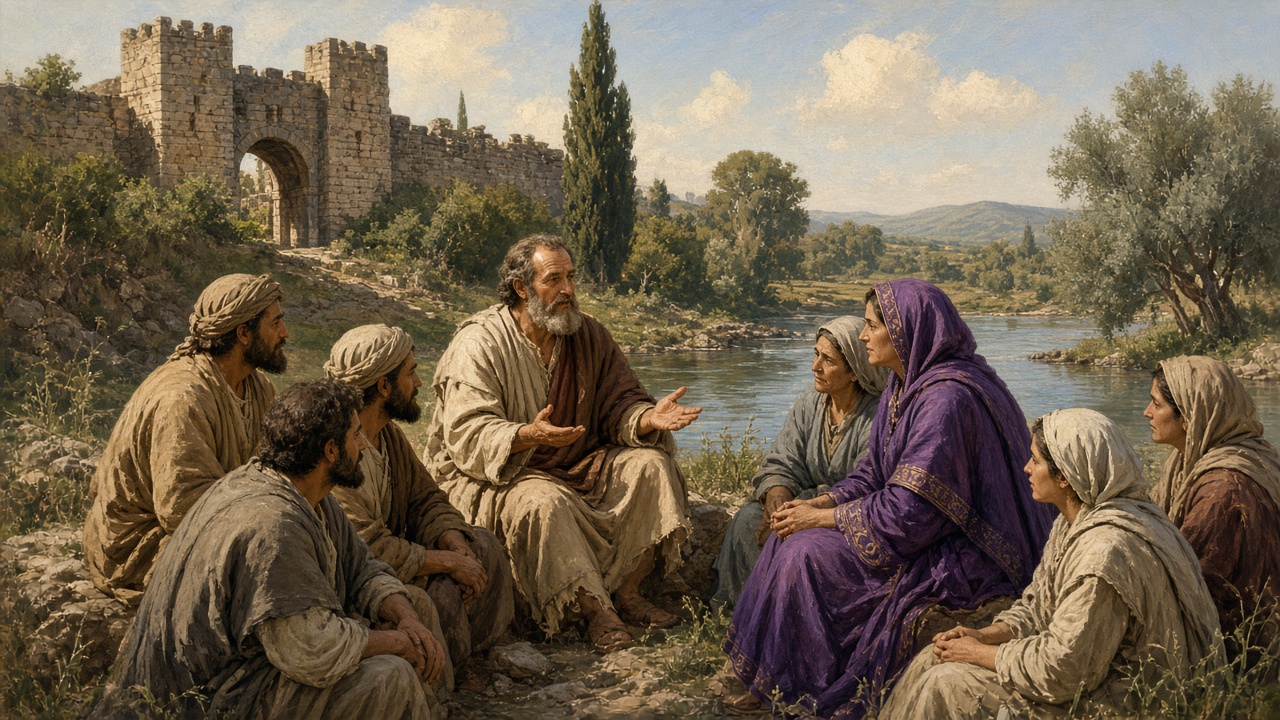
- En la colonia romana de Filipos, Pablo y sus compañeros encontraron, junto al río y fuera de la puerta de la ciudad, un lugar donde era costumbre orar, y allí se habían reunido unas mujeres. Entre ellas estaba Lidia, comerciante de telas de púrpura, de Tiatira, y adoradora de Dios; después de que ella y los de su casa fueron bautizados, convenció a los viajeros de quedarse en su casa. El diccionario bíblico de Easton (1897) la describe como una prosélita de considerable riqueza y como la primera persona en Europa que abrazó el cristianismo.Fuentes: el propio texto bíblico · Lydia
Notas escritas con ayuda de IA a partir de fuentes abiertas (Theographic Bible Metadata, CC BY-SA 4.0; Easton’s Bible Dictionary, dominio público) y revisadas antes de publicarse.
Lugares de este capítulo
- Lystra · Hoy: Tel Lystra · 37.602, 32.338 · versículos 1, 2
- Iconium · Hoy: Konya · 37.872, 32.492 · versículo 2
- Jerusalem · 31.777, 35.234 · versículo 4
- Asia · 38.400, 28.300 · versículo 6
- Galatia · 39.267, 32.983 · versículo 6
- Phrygia · 39.000, 31.000 · versículo 6
- Bithynia · 40.500, 31.000 · versículo 7
- Mysia · 40.000, 28.500 · versículos 7, 8
- Troas · Hoy: Alexandria Troas · 39.752, 26.159 · versículos 8, 11
- Greece · 37.972, 23.727 · versículo 9
- Macedonia · 41.600, 22.540 · versículos 9, 10, 12
- Neapolis · Hoy: Kavala · 40.935, 24.415 · versículo 11
- Samothrace · Hoy: Samothraki · 40.450, 25.583 · versículo 11
- Philippi · 41.012, 24.285 · versículo 12
- Thyatira · Hoy: Akhisar · 38.920, 27.837 · versículo 14
Solo aparecen lugares identificados con alta confianza (90 % o más según las fuentes académicas reunidas por OpenBible). Mapa de la época: DARE (Digital Atlas of the Roman Empire), CC BY 4.0; mapa actual: © colaboradores de OpenStreetMap; lugares: OpenBible.info (CC BY 4.0).
Créditos y licencia de esta traducción
Handr Taara
The New Testament in the Borna Language of Ethiopia (Handr Taara)
copyright © 2018 The Word for the World International
Language: Borni (Borna)
Contributor: The Word for the World Southern Africa
Handr Taara
The New Testament in Borna in Latin version
The Word for the World
This translation is made available to you under the terms of the
Creative Commons Attribution license 4.0.
You may share and redistribute this Bible translation or extracts from it in any format, provided that:
You include the above copyright and source information.
If you make any changes to the text, you must indicate that you did so in a way that makes it clear that the original licensor is not necessarily endorsing your changes.
Pictures included with Scriptures and other documents on this site are licensed just for use with those Scriptures and documents.
For other uses, please contact the respective copyright owners.
Note that in addition to the rules above, revising and adapting God's Word involves a great responsibility to be true to God's Word. See Revelation 22:18-19.
2023-04-08
Fuente: http://ebible.org/bwo/ · eBible.org