Hechos 13
Handr Taara · Toca un versículo para ver sus referencias cruzadas.
Bernabasnat Sa'oln S'ayin shayiron galeyat daniyosh bowoshetsok'o
1Ans'okitse fa'a Ik'i moowutse nebiyiwotsinat danifuwots fa'ano botesh, boowere, Bernabasi, aak'a eteetso Sm'onu, K'eren datsats asho Lukyosu, awdlo kayo keewutso Herodisnton towaat eentso Mnahenat Sa'olne fa'ane boteshi. 2Bo doonzosh finefetst s'oomoke bobefere S'ayin shayiro «Taa boon t galts finosh Bernabasnat Sawln taash galuwere» bíet.
3Bowere s'oomat Ik'o bo k'oniyakon bokishono boats gedt wosh bok'iri.
Barnabasnat Sawln K'op'rositse
4Barnabasnat Sawln S'ayin shayiron wosheyat Selewik'iyo maats boami. Manokno markabon K'op'ros maats boami. 5Selamis kitots bo bodtsok'on ayhudiyots Ik' k'oni mootse Ik'i aap'o bodani, Yohanis Mark'oswere bonton wotat boosh bodabiri b́teshi.
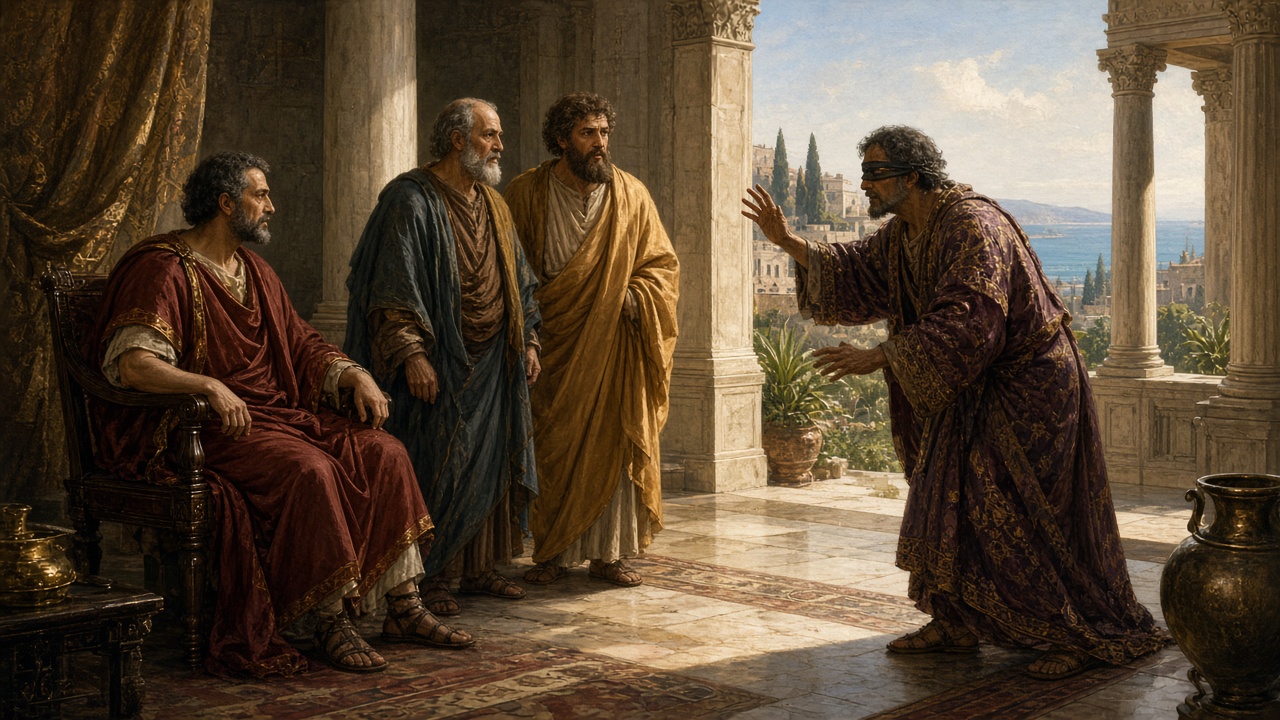
6Aatso gúrts K'op'ros datsu k'ut't p'afuyi bo bodtsok'on Baryesusi eteefo ayhudits ik'ets ash iko daats bodek'i, bímó kootets nebiyiya b́ tesh. 7B́befonuwere Sergyos P'awlosi eteets t'iwintsdek'ts dats k'eezfontoni b́tesh, dats k'eezfan Bernabasnat Sa'oln s'eegt Ik' aap'o k'ebo b́ geyi. 8Ernmó Griki noon keew keewon «Elimas» ett s'eegets ik'etso Beryesus dats k'eezfo bíamanerawok'o geeyat Bernabasnat Sa'oln b́ k'efi. 9P'awlosi eteetso Sa'olmó S'ayin shayiron s'eent ashman t'iwintsdek't s'iilt hank'owa bísh bíet, 10«Nee Dabilos naayo! ar jami t'alatono! dirshonat gond jamon s'eentsono, kááwu wottso doonzo weerindo k'uuriyo k'azalk neeneya! 11Andoor hambe! doonzo kisho neen togetuwee, doogonowere wotitune, muk' gizewosh aawu shaano be'atsnee.»
Manoor bíaawwotsi bampulonat t'aluwo ipb́k'iri, b́ kisho deshde'er jishit asho b́ ganoke geyo dek'b́tuwi. 12Dats k'ezfonuwere wotts jamo b́ bek'tsok'on bíamani, doonzo jangosho b́shishts danon bíadi.
Barnabasnat P'awlosn P'isdi Datso Maantse Fa'a Ans'okiyomats Bíamtsok'o
13Maniyere okoon P'awlosnt b́ tohuwotsn Markabats keshdek't P'afutse P'nflyo maantse daatseyiru P'erge maants boami, Mark'osi eteyiruwo Yohanismó boatse k'aleyat Iyerusalem maants aanat bíami. 14Boomó P'ergeyiyere tuut P'isdyayitsi datsatse fa'a Ans'okiyo maats boami, sanbati aawon ayhudiyots Ik' k'oni moots kindt beebowutsi. 15Muse nemonat Nebiyiwots mas'afwots nababeyakon Ayhudi Ik' k'oni maa naashuwots «T eshuwotso, ashuwotsi kup'it izo detsfte wotiyal keewwere» ett P'awlosots maants asho bo woshi. 16Mansh P'awlos tuut ashosh kishon b́koli, hank'o ett b́keewi, «Isra'el ashuwotsnat Ik' shatiru Ik' ash woterawwotso! k'ewere! 17Israe'el ashaanotsko Izar Izewer yoots no nihotsi galre, Gbs'datsatse boteshor een ashuwotsi boon b́woshi, bí een angonowere datsmanatse boon b́kishi. 18Hab́natonoshowere woruwotse boon b́ k'ami, 19Kan'an datsatse shawat nugúsuwotsi t'afit bodatso bíashwotssh b́naatiyi, 20Jaman awd bale balk'ats naato b́ ishi, maniyakowere nebiyo Samu'el dúrosh b́ borfetso Mesafntiyotsi b́ imi.
21«Manats dabt nugúso boosh b́ naashituwok'o Ik'o bok'oni, Ik'onuwere Biniyam jir wottso K'is naayi Sa'oli hab natosh boosh b́ naashiyi. 22Sa'olno naashatse b́ orshiyakon Dawiti b́ naashiyi, Ik'onu Dawit jangosh b́ gawor, ‹T shuntsok'o wottso, tshunono fintso, Isey naayi Dwiti daatsre› etre. 23Ashaan naarotse Ik'o b́ jangits keewok'on Isra'eli kashituwo Iyesusi boosh b́ tuuzi. 24Iyesus b́ waraftse shinon Yohanis Israe'el ash jamosh naandrone err gupeyo nabre b́teshi. 25Yohanis b́ fino b́ ishtsok'on ‹Taa kone itsh tiari? Taahe Mesihiyo taanaliye, ernmó b́ c'aami tiponoru dab bitsosh tborawo t shutsatse k'osho weetuwe› bí etfoni.
26«It Abraham naaratse shuwets eshuwwotsnat itwere Ik' shatiru Ik' ash woterawwotso! bín kashet wóóshan woshe noshee 27Iyerusalemn beyiru ashuwotsnat boon jishiruwots Iyesus kashitso b́ wottsok'o danatsne, sanbati aawu aawon nababeyiru nebiyiwots mas'aafwotsi t'iwintso bok'aztsosh bíats boangshor bek'on keewetso b́s'eenetuwok'o woshrne. 28K'irosh bín betsit keewo eegoru bíatse datso bok'azaloru bín boosh b́ úd'ituwok'o P'ilat'osi bo k'oni. 29B́ jangosh guut'ets jamo b́s'eeniyakon jitatse orshdek't boduki, 30Ernmó Ik'o k'irotse bín b́tizi. 31Geliltsere Iyerusalem maants bínton waatsuwotsshowere ay aawosh boats b́ be'eyi, boowere and ashuwots shinatse b́ gawwotsiye. 32No itsh detsdek' nowatso Ik'o nonihotssh jangit b́ ímts doo shishiyi keewoniye. 33Ik'o Iyesusi k'irotse b́tiztsotse b́jangitsano noosh bo nanaúwotssh finats jitsre, manuwere gitli Dubotse,
‹Nee tnay neene, taa neen hambets shuure,›
ett guut'etsok'one. 34B́ o'awok'o Ik'o k'irotse b́ tiztsok'o daniyosh,
‹S'ayin amanets deero
Dawitsh jangit imetso itsh imetuwe› ett keewure.
35Dabt k'osh dubotse,
‹N Naayi S'ayino b́ ok'etwok'o woshatsne› bí eti
36Ernmó Dawit b́ dúr jamo b́ fino Ik'i shuntso b́s'eentsyakon k'irre, nihwotsntonuwere duukere, ok'ree. 37Ik'o k'irotse b́tiztsonmó oa'atse. 38Eshe tí eshuwotso! Morrosh oorowe eto datsetuwo Iyesusn b́wottsok'owo itsh nabetsok'o dande'ere, 39Bín amants jamo Muse weeron imets nemo nas'o kisho b́ falawu morr jamatse nas'o keshituwe. 40Mansh nebiyatiyotsn Ik'o hank'o ett b́ keewetso itats b́ borawok'o korde'ere, 41‹It aatsnirwots s'iilere! adúwere! t'afuwere!
Konuworu asho itsh b́ keewure
It amanerawu fino itdúroon finitwe.› »
42P'awlosn at Barnabasn ayhudiyots Ik' k'oni mootse bokeshfere keewan weet sanbatots aani boosh bokewituwok'o ashuwotsi bok'oni. 43Ayhudi Ik' k'oni moots ko'etswots bad'bowutstsok'oon ay Ayhudi jirwotsnat Ayhudi imnetiyots kindt Ik' Ik'iru Ashuwots P'awlosnt Barnabasn shuutso botuwi, P'awlosnt Barnabasnowere ashuwotsi danit Ik'i s'aaton kup'ar bobetuwok'o boosh bogawiyi.
44Weet sanbatono kitotse beyiru ashuwotsitse aywots, Ik'i aap'o shishosh ko'ebowutsi, 45Ayhudiyots ash ashuwots ay bowottsok'o bo bek'tsosh okooron s'een bowutsi, b́ keewono k'efefetst P'awlosi boc'ashi, 46P'awlosn at Barnabasnomó hank'o ett ááwu shuk'on bokeewi, «Ik' aap'o shini itsh keewo geyife, it de'atsone it etalomó dúre dúr kasho itsh b́ woterawok'o it tookats it angshtsotse hamb no Ik' ash woterawwots maants wongrer ametuwone. 47Manowere nok'alitiye doonzo, ‹Kasho dats daarats b́borfetso n doowetuwok'o Ik' ash Woteraw ashuwotssh shááno neen woshre› ett b́ azaztsotsne.»
48Ik' ash woterawwots han boshishtsok'n geneú bowutsi doonzo aap'o bomangiyi, dúre dúr kashosh gaalets jamwotswrere boamani.
49Doonzo aap'onuwere dats jamanats bad'b́wutsi. 50Ayhudi jishiruwotsmó ayhudi imnetiyo amaniru gaalets mááts máátsuwtsenat kititsi een een ashuwotsi gondon P'awlosnat Barnabasn gishetuwok'o bowoshi, bo datsatsnowere boon bokishi. 51P'awlosnat Barnabasn boats botufatsi k'undo tebazt Ik'oniyon maants boami. 52B́ danifuwosuwere gene'onat S'ayn shayiron bos'eeni.
¿Sabías que…?
La misión enviada desde Antioquía
- El Diccionario Bíblico de Easton (1897) describe a Antioquía de Siria como la tercera ciudad en importancia del Imperio romano, después de Roma y Alejandría; fue la iglesia de allí la que apartó a Bernabé y a Saulo. Entre sus profetas y maestros estaban Simeón, llamado Níger, un sobrenombre que significa negro, quizá por su tez oscura, y Lucio de Cirene, en el norte de África.Fuentes: Antioch (Syria) · el propio texto bíblico · Simeon · Lucius
- En Pafos, capital de Chipre y residencia del gobernador romano, un hechicero judío llamado Barjesús, también conocido como Elimas, un nombre árabe que significa mago o hechicero, intentó apartar de la fe al procónsul Sergio Paulo. Es aquí donde Saulo también es llamado Pablo; el Diccionario Bíblico de Easton (1897) dice que el nombre Pablo probablemente le fue dado en la infancia para usarlo en el mundo gentil, mientras que Saulo era su nombre hebreo de casa.Fuentes: Paphos · Elymas · Paul · el propio texto bíblico
- Enviados desde Antioquía, bajaron a Seleucia, el puerto de la ciudad cerca de la desembocadura del Orontes, y navegaron hasta Chipre; después desembarcaron en Perge, capital de Panfilia, a orillas del río Cestro. Allí Juan los dejó y regresó a Jerusalén; su nombre romano, Marcos, poco a poco llegó a reemplazar su nombre judío, y era primo de Bernabé.Fuentes: Seleucia · Perga · John Mark · el propio texto bíblico
Notas escritas con ayuda de IA a partir de fuentes abiertas (Theographic Bible Metadata, CC BY-SA 4.0; Easton’s Bible Dictionary, dominio público) y revisadas antes de publicarse.
Lugares de este capítulo
- Antioch · Hoy: Antioch on the Orontes · 36.227, 36.172 · versículo 1
- Cyrene · 32.821, 21.851 · versículo 1
- Cyprus · 35.000, 33.000 · versículo 4
- Seleucia · Hoy: Seleucia Pieria · 36.124, 35.922 · versículo 4
- Salamis · 35.185, 33.902 · versículo 5
- Paphos · Hoy: New Paphos · 34.756, 32.404 · versículos 6, 13
- Jerusalem · 31.777, 35.234 · versículos 13, 27, 31
- Pamphylia · 37.000, 31.000 · versículo 13
- Perga · 36.960, 30.854 · versículos 13, 14
- Antioch · Hoy: Antioch in Pisidia · 38.306, 31.189 · versículo 14
- Pisidia · 38.306, 31.189 · versículo 14
- Egypt · 30.129, 31.308 · versículo 17
- Canaan · 32.767, 35.333 · versículo 19
- Galilee · 32.760, 35.527 · versículo 31
- Iconium · Hoy: Konya · 37.872, 32.492 · versículo 51
Solo aparecen lugares identificados con alta confianza (90 % o más según las fuentes académicas reunidas por OpenBible). Mapa de la época: DARE (Digital Atlas of the Roman Empire), CC BY 4.0; mapa actual: © colaboradores de OpenStreetMap; lugares: OpenBible.info (CC BY 4.0).
Créditos y licencia de esta traducción
Handr Taara
The New Testament in the Borna Language of Ethiopia (Handr Taara)
copyright © 2018 The Word for the World International
Language: Borni (Borna)
Contributor: The Word for the World Southern Africa
Handr Taara
The New Testament in Borna in Latin version
The Word for the World
This translation is made available to you under the terms of the
Creative Commons Attribution license 4.0.
You may share and redistribute this Bible translation or extracts from it in any format, provided that:
You include the above copyright and source information.
If you make any changes to the text, you must indicate that you did so in a way that makes it clear that the original licensor is not necessarily endorsing your changes.
Pictures included with Scriptures and other documents on this site are licensed just for use with those Scriptures and documents.
For other uses, please contact the respective copyright owners.
Note that in addition to the rules above, revising and adapting God's Word involves a great responsibility to be true to God's Word. See Revelation 22:18-19.
2023-04-08
Fuente: http://ebible.org/bwo/ · eBible.org