Mateo 7
Luda yã takada kↄ̃n Bokobaru yão · Toca un versículo para ver sus referencias cruzadas.
Kↄ̃ taari'ena
1Àton gbɛ̃ taari ero, Luda é a taari e sero. 2Zaakɛ lán nɛɛ̀ gbɛ̃ taari e nà, lɛn Luda é n taari e lɛ. Zaka kɛ̀ ń eè yↄ̃ońnɛn eé yↄ̃onnɛ. 3Bↄ́yãnzi nɛ́ɛ sɛ̃̀buru kɛ̀ da n gbɛ̃daaa wɛ́ɛn eezi, bensↄ̃ nɛ́ɛ líkusu kɛ̀ da n wɛ́ɛn yã daaroo? 4Kɛ̀ líkusu da n wɛ́ɛn, à kɛ̀ dia nɛ́ be n gbɛ̃daaanɛ à tó ǹ sɛ̃̀buru kɛ̀ da à wɛ́ɛn bↄnɛ? 5Mↄnafikide! Ǹ líkusu kɛ̀ da n wɛ́ɛn bↄ gĩa, nɛ́ gbasa ǹ guu e wásawasa, lɛ ǹ e ǹ sɛ̃̀buru kɛ̀ da n gbɛ̃daaa wɛ́ɛn bↄnɛ.
6Àton Luda pↄ́ kpá gbɛ̃ɛnↄaro
lɛ aↄ̃ton sↄkpa wà a kari kɛro yãnzi.
Àton a gbɛ̀ bɛ̀ɛdeenↄ zu alɛdɛnↄnɛro
lɛ aↄ̃ton táa o'oaro yãnzi.
Wɛ́ɛkɛna
7À wɛ́ɛ kɛ, Luda é kpáawa. À wɛtɛ, é e. À gbà lɛ́, Luda é wɛ̃are. 8Zaakɛ gbɛ̃ kɛ̀ wɛ́ɛ kɛ̀n wè kpáa, gbɛ̃ kɛ̀ wɛ̀tɛ sↄ̃ è e. Gbɛ̃ kɛ̀ gbà lɛ̀n weé wɛ̃nɛ. 9A tɛ́, dé bé eé gbɛ̀ kpá a nɛ́a, tó à burɛdi wɛ́ɛ kɛ̀a? 10Tó à kpↄ̀ wɛ́ɛ kɛ̀a sↄ̃, eé mlɛ̃̀ sɛ́ à kpáaↄ́? 11Baa kↄ̃n a zaakɛɛo, á pↄ́ maa kpana a nɛ́nↄa dↄ̃. Weé a De kɛ̀ kú musu pↄ́ maa kpana gbɛ̃ kɛ̀ aↄ̃ wɛ́ɛ kɛ̀anↄa pↄ́ o dↄↄ́?
12À kɛ gbɛ̃nↄnɛ lán á yezi aↄ̃ kɛare nà. Musa doka kↄ̃n annabinↄ yãnↄ mìn gwe.
Zɛ́lɛ kpaatoo
13À gɛ̃ zɛ́lɛ kpaatoo guu. Zɛ́ kɛ̀ à lɛ́ yàasa ben à mɛ̀porokii vĩi è gáńyo kaatɛna guumɛ. Beeen gbɛ̃ paridee e sɛɛ. 14Zɛ́ kɛ̀ è gáńyo wɛ̃̀ndi guu lɛ́ kpaato à nakↄ̃ana, bensↄ̃ gbɛ̃ kɛ̀ aↄ̃ↄ è wà sɛɛnↄↄ pariro.
Gbɛ̃ dↄ̃na a yãkɛnaa
15À làakari kɛ annabi ɛgɛɛnↄzi. Aↄ̃è mↄ́ a kiia sã báao dana, mↄde lɛwan nↄadɛrinↄn ń ũ. 16É ń dↄ̃ ń yãkɛnaa. Wè geepi bo lɛ̀ líaro. Wè kãkãa e babanɛ láaro. 17Lí maaa è nɛ́ nnaa i, lí zaaa è nɛ́ gina i. 18Lí maaa è fↄ̃ à nɛ́ gina ìro, lí zaaa è fↄ̃ à nɛ́ nnaa ìro. 19Wè lí kɛ̀ è nɛ́ maaa iroo zↄ̃ wà zu tɛ́ guumɛ. 20Lɛmɛ é ń dↄ̃ ń yãkɛnaa lɛ.
21Èe kɛ gbɛ̃ kɛ̀ ègↄ̃ ma sisii Dii, Dii, bé eé gɛ̃ kpata kɛ̀ bↄ̀ Luda kiia guuro, sé gbɛ̃ kɛ̀ è ma De kɛ̀ kú musu pↄyezi kɛɛ. 22Yãkpaɛkɛgurↄↄ zĩ gbɛ̃ parideenↄ é bemɛ: Dii, Dii, wa Luda yã òńnɛ kↄ̃n n tↄ́o nɛ́! Wa zĩnnↄ gòḿma kↄ̃n n tↄ́o nɛ́! Wa dabuyãnↄ kɛ̀ pari kↄ̃n n tↄ́o nɛ́! 23Mɛ́ beńnɛ wásawasa: Má a dↄ̃ zikiro. À gumala zaakɛrinↄ!
Kpɛ́bori gↄ̃ↄn plaaanↄ
24Beee yãnzi gbɛ̃ kɛ̀ à ma yã kɛ̀nↄ mà, ben à zĩi kɛ̀a dɛ lán gbɛ̃ làakaridee kɛ̀ à a kpɛ́ bò gbɛ̀a bàmɛ. 25Kɛ̀ lou mà, í dàgula, ĩa kàka à sù kpɛ́ pìa, ben èe lɛ́ɛro, kɛ̀ wà à ɛ̃ɛ dàɛ gbɛ̀a yãnzi. 26Gbɛ̃ kɛ̀ ma yã kɛ̀nↄ mà, ben èe zĩi kɛaroo dɛ lán mìsaidee kɛ̀ à a kpɛ́ bò bùsu'ãatɛ̃a bàmɛ. 27Kɛ̀ lou mà, í dàgula, ĩa kàka à sù kpɛ́ pìa, ben à gbòro à lɛ̀ɛ bìtimm.
Yesu iko
28Kɛ̀ Yesu yã beeenↄ ò à yã̀a, à yãdannɛna bↄ̀ parii saɛ, 29zaakɛ èe yã dańnɛ lán ludayãdannɛrinↄ bàro, à dàńnɛ ikoomɛ.
¿Sabías que…?
El juicio, el camino angosto y un fundamento firme
- El registro del acontecimiento fecha el inicio del Sermón del Monte en el año 28 d. C. y su duración en un día. Este capítulo termina con las multitudes asombradas de la enseñanza de Jesús, porque él enseñaba como quien tiene autoridad, y no como sus escribas.Fuentes: Sermon on the Mount · el propio texto bíblico
- Jesús advierte que el juicio que alguien pronuncia, y la medida que esa persona usa, se volverán contra ella. Describe a alguien que nota la paja en el ojo de su hermano, pero no advierte la viga en el propio, y dice que la viga debe quitarse primero.Fuentes: el propio texto bíblico
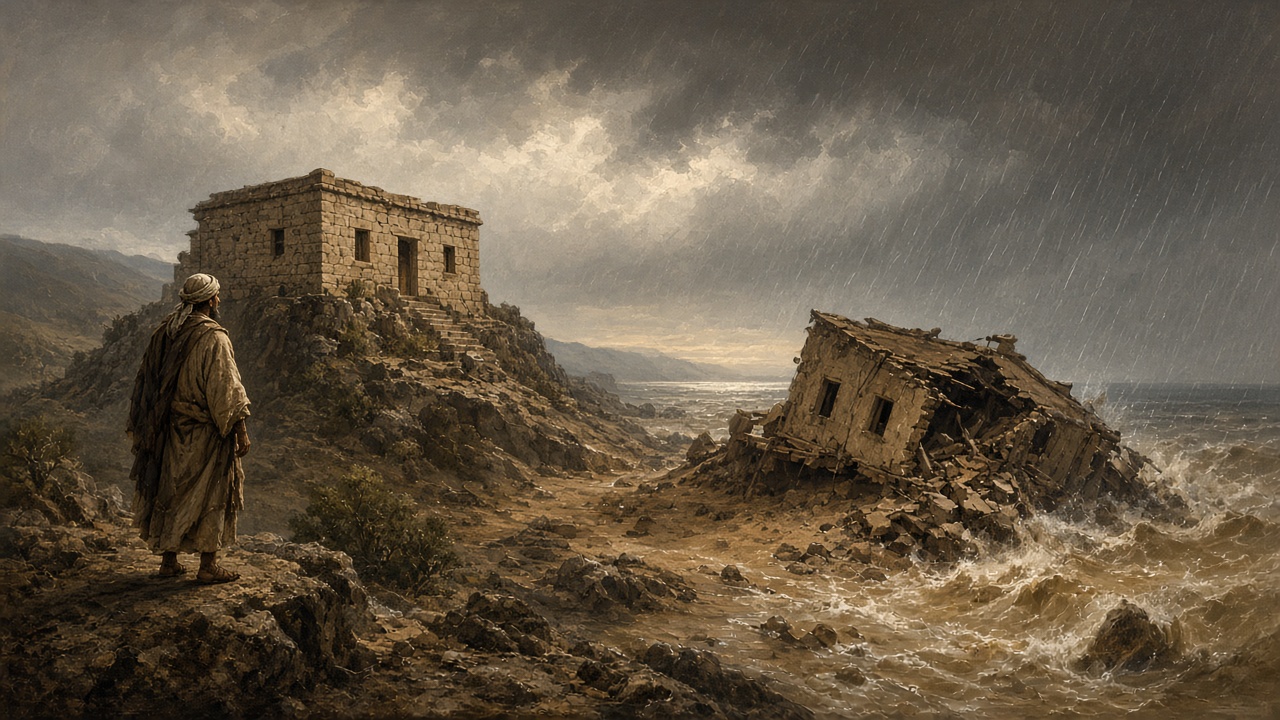
- El capítulo llama esencia de la Ley y los Profetas hacer a los demás lo que uno querría que le hicieran. Contrasta una puerta ancha y un camino espacioso que lleva a la destrucción, por el que entran muchos, con una puerta pequeña y un camino angosto que lleva a la vida, que pocos hallan, y compara oír estas palabras y ponerlas en práctica con una casa edificada sobre la roca y no sobre la arena.Fuentes: el propio texto bíblico
Notas escritas con ayuda de IA a partir de fuentes abiertas (Theographic Bible Metadata, CC BY-SA 4.0; Easton’s Bible Dictionary, dominio público) y revisadas antes de publicarse.
Créditos y licencia de esta traducción
Luda yã takada kↄ̃n Bokobaru yão
The New Testament and portions of the Old Testament in the Bokobaru language of Nigeria
copyright © 2005 SIM International
Language: Bokobaru
Translation by: SIM
This translation text is made available to you under the
terms of the Creative Commons License: Attribution-Noncommercial-No Derivative Works.
( http://creativecommons.org/licenses/by-nc-nd/3.0/ )
In addition, you have permission to port the text to different file formats, as long as you
do not change any of the text or punctuation of the Bible.
You may share, copy, distribute, transmit, and extract portions
or quotations from this work, provided that you include the above copyright
information:
You must give Attribution to the work.
You do not sell this work for a profit.
You do not make any derivative works that change any of the actual words or punctuation of the Scriptures.
Permissions beyond the scope of this license may be
available if you contact
us with your request.
This translation is made available to you under the terms of the
Creative Commons Attribution-Noncommercial-No Derivatives license 4.0.
You may share and redistribute this Bible translation or extracts from it in any format, provided that:
You include the above copyright and source information.
You do not sell this work for a profit.
You do not change any of the words or punctuation of the Scriptures.
Pictures included with Scriptures and other documents on this site are licensed just for use with those Scriptures and documents.
For other uses, please contact the respective copyright owners.
2014-09-22
Fuente: http://ebible.org/bus/ · eBible.org