Josué 7
Luda yã takada kↄ̃n Bokobaru yão · Toca un versículo para ver sus referencias cruzadas.
Akã durun yã
1Isarailinↄ tɛ̃̀ pↄ́ kɛ̀. Kaami nɛ́ Akã, Zimiri dio, Zɛra swãkpɛɛ, Yuda borii bé à tɛ̃̀ pↄ́ kenↄ sɛ̀, ben Dii pↄ fɛ̃̀ Isarailinↄzi.
2Yↄsua gbɛ̃nↄ zĩ̀ à bè, aↄ̃ bↄ Yɛriko wà gá Ai kɛ̀ kú Bɛtavɛ̃ saɛ Bɛtɛli ↄfãntɛ̃bↄɛ kpa lɛ wà bùsu pì asii gwa. Ben aↄ̃ gàa wà Ai asii gwà. 3Kɛ̀ aↄ̃ sù Yↄsua kiia, aↄ̃ bènɛ: Aideenↄↄ pariro, èe ká wà gá gwe wa píngiro. Tó gↄ̃ↄn wàa kuri ke wàa gɛ̃roo gàa, aↄ̃é wɛ́tɛ pì sí. Ǹton ĩa da gbɛ̃nↄa ń píngiro. 4Kɛ̀ gↄ̃ↄn wàa gɛ̃roonↄ gàa gwe, ben Aideenↄ ń fú 5aↄ̃ pɛ̀ḿma bↄna zaa ń wɛ́tɛ bĩilɛa ai gbɛ̀wikiia, aↄ̃ ń dɛ́dɛ sĩ̀sĩgɛɛzi gↄ̃ↄn baaakuri awɛɛswɛɛdo. Ben swɛ̃̀ kɛ̃̀ Isarailinↄn aↄ̃ ninii dà batan.
6Yↄsua a uta gà à kɛ̃̀ à dàɛ a puua Dii àkpati aɛ ai uusiɛ. Àpi kↄ̃n Isaraili gbɛ̃nsinↄ bùsu kùku ń mìa. 7Ben Yↄsua bè: Á'a, Dii Luda! À kɛ̀ dia n wa bikũ Yodaa n wa na Amↄrinↄnɛ ń ↄzĩ aↄ̃ wa kaatɛɛ? Tó wá vɛ̃ɛna Yoda baa kãa kpa yã nɛ́! 8N yã nna Dii! Zaakɛ Isarailinↄ bↄ̀ru kpɛɛ ń ibɛɛnↄnɛ, mɛ́ be dia saa? 9Kanaanↄ kↄ̃n bùsu kɛ̀ deenↄ é yã pì ma ń píngi, aↄ̃ ligawazi aↄ̃ wa kaatɛ andunan. N tↄ́ bítakɛɛ sↄ̃ nɛ́? Nɛ́ kɛo diamɛ? 10Ben Dii bè Yↄsuanɛ: Ǹ fɛɛ ǹ zɛ! À kɛ̀ dia ń daɛna n puua? 11Isarailinↄ durun kɛ̀, aↄ̃ ma bà kuunańyo yã gbòro. Aↄ̃ tɛ̃̀ pↄ́ kenↄ sɛ̀, aↄ̃ kpãi ò, aↄ̃ mↄnafiki kɛ̀, aↄ̃ pↄ́ pì dà ń pↄ́nↄ guu. 12Beee yãnzi aↄ̃ↄe fↄ̃ wà ń ibɛɛnↄ gã̀ fĩ̀ro. Aↄ̃ bↄ̀ru kpɛɛńnɛ, kɛ̀ aↄ̃ gↄ̃̀ kaatɛna pↄ́ ũ yãnzi. Mɛ́gↄ̃ kúao dↄro, séto a tɛ̃̀ pↄ́ kɛ̀ kú a tɛ́nↄ kàatɛ. 13Ǹ fɛɛ ǹ gá gbãsĩ bↄ n gbɛ̃nↄn. Ǹ beńnɛ aↄ̃ gbãsĩ bↄ ń zĩndan ai guu gↄ̃ gá dↄ, zaakɛ mamↄma Dii Isarailinↄ Luda ma bè, tɛ̃̀ pↄ́ kú a tɛ́mɛ. É fↄ̃ à zɛ a ibɛɛnↄ aɛro séto à pↄ́ pì bↄ̀ a tɛ́. 14Tó guu dↄ̀, à sↄ̃mazi bori kↄ̃n boriio. Borii kɛ̀ má sɛ̀ é sↄ̃mazi danɛdanɛ, danɛ kɛ̀ má sɛ̀nↄ é sↄ̃mazi ualɛ kↄ̃n ualɛo, ualɛ kɛ̀ má sɛ̀ sↄ̃, à gↄ̃gbɛ̃nↄ é sↄ̃mazi doodo. 15Gbɛ̃ kɛ̀ wà gà wà tɛ̃̀ pↄ́ pì èa, weé adee kpata kↄ̃n pↄ́ kɛ̀ à vĩinↄ píngi, zaakɛ à ma bà kuunaao yã gbòromɛ, à wí dà Isarailinↄa.
16Yↄsua fɛ̀ɛ kↄngↄ idɛ'idɛ, à tò Isarailinↄ sↄ̃̀ Diizi bori kↄ̃n boriio, ben gbɛ̀ Yuda borii sɛ̀. 17Ben à tò Yudanↄ sↄ̃̀zi danɛdanɛ, ben gbɛ̀ Zɛra danɛnↄ sɛ̀. À tò Zɛra danɛnↄ sↄ̃̀zi ualɛ kↄ̃n ualɛo, ben gbɛ̀ Zimiri ua sɛ̀. 18Ben à tò à ua gↄ̃gbɛ̃nↄ sↄ̃̀zi doodo, ben gbɛ̀ Kaami nɛ́ Akã, Zimiri dio, Zɛra swãkpɛɛ, Yuda borii sɛ̀. 19Ben Yↄsua bè Akãnɛ: Nɛ́, ǹ yãpuraa o ǹ bɛ̀ɛ lí Dii Isarailinↄ Ludanɛ. Ǹ yã kɛ̀ ń kɛ̀ omɛ. Ǹton à ke utɛmɛro. 20Ben Akã wèàla à bè: Yãpuramɛ, ma durun kɛ̀ Dii Isarailinↄ Ludanɛ. Yã kɛ̀ má kɛ̀n yɛ̀. 21Ma Babilↄnia gumusu maaa è ń pↄ́nↄ tɛ́ kↄ̃n kondogio kiloo plaa kↄ̃n vura kiloo kusuo, ben à nii gɛ̃̀magu má sɛ̀. À utɛna wɛ̀ɛn ma kpɛ́n, kondogi kú gĩzĩ. 22Ben Yↄsua gbɛ̃nↄ zĩ̀ gwe. Aↄ̃ kɛ̀ kpaa aↄ̃ gàa wà gɛ̃̀ à kpɛ́n, ben aↄ̃ↄ è utɛna gwe, kondogi kú gĩzĩ. 23Ben aↄ̃ↄ sɛ̀ɛ wà mↄ̀o Yↄsuanɛ kↄ̃n Isarailinↄ ń píngi, aↄ̃ↄ kàɛ Dii aɛ. 24Ben Yↄsua kↄ̃n Isarailinↄ Zɛra swãkpɛɛ Akã sɛ̀ kↄ̃n kondogi pìo kↄ̃n gumusu pìo kↄ̃n vura pìo kↄ̃n à nɛ́gↄ̃gbɛ̃nↄ kↄ̃n à nɛ́nↄgbɛ̃nↄ kↄ̃n à zùnↄ kↄ̃n à zaakinↄ kↄ̃n à sãanↄ kↄ̃n à bisakutaao kↄ̃n à pↄ́nↄ píngi, aↄ̃ gàańyo Akoo guzurɛn. 25Ben Yↄsua bè: N yã gàɛwe fá! Dii é yã mↄ́nnɛ gbã̀a sↄ̃. Ben Isarailinↄ à pàpa gbɛ̀o ń píngi, aↄ̃ à dɛ̀ kↄ̃n à gbɛ̃nↄ ń píngi, ben aↄ̃ ń kpáta. 26Aↄ̃ gbɛ̀ kàkaàla, gbɛ̀didikↄ̃ana bíta pì kú gwe ai kↄ̃n a gbã̀ao. Ben Dii pↄfɛ̃ kpàɛ. Beee yãnzin wè be guu pìnɛ Akoo guzurɛ.
¿Sabías que…?
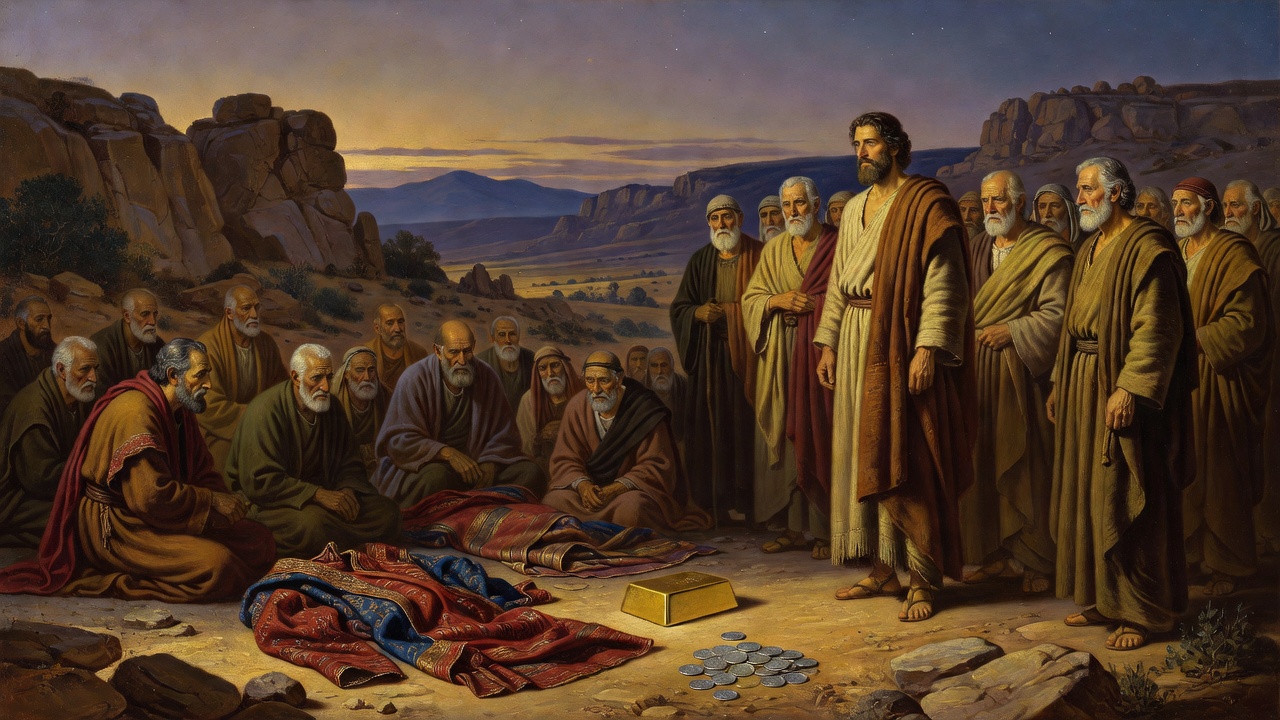
La derrota en Hai y el pecado de Acán
- Hai era una ciudad real cananea situada al este de Betel y cerca de Bet-avén. Tras la toma de Jericó, fue la segunda ciudad a la que se dirigieron los israelitas, aunque una fuerza inicial de unos tres mil soldados fue inesperadamente derrotada en las laderas fuera de la ciudad.Fuentes: Ai · el propio texto bíblico
- Para descubrir la causa de la derrota de Israel en Hai, Josué presentó a la comunidad por etapas de tribu, clan, familia e individuo hasta que Acán, de la tribu de Judá, fue señalado. Acán confesó haber robado y escondido oro, plata y un manto babilónico que estaban consagrados a la destrucción.Fuentes: Achan · el propio texto bíblico
- El nombre del valle de Acor significa aflicción o desgracia, lo que refleja las palabras de Josué de que Acán había acarreado calamidad a Israel. Escritores bíblicos posteriores, como Oseas e Isaías, hicieron referencia a este valle de manera simbólica como un lugar donde el desastre se transforma en esperanza y bendición.Fuentes: Achan · Valley of Achor · el propio texto bíblico
Notas escritas con ayuda de IA a partir de fuentes abiertas (Theographic Bible Metadata, CC BY-SA 4.0; Easton’s Bible Dictionary, dominio público) y revisadas antes de publicarse.
Lugares de este capítulo
- Jericho · Hoy: Tell es Sultan · 31.872, 35.445 · versículo 2
- Jordan · Hoy: Jordan River · 31.761, 35.558 · versículo 7
- Shinar · Hoy: Babylonia · 32.543, 44.422 · versículo 21
Solo aparecen lugares identificados con alta confianza (90 % o más según las fuentes académicas reunidas por OpenBible). Mapa de la época: DARE (Digital Atlas of the Roman Empire), CC BY 4.0; mapa actual: © colaboradores de OpenStreetMap; lugares: OpenBible.info (CC BY 4.0).
Créditos y licencia de esta traducción
Luda yã takada kↄ̃n Bokobaru yão
The New Testament and portions of the Old Testament in the Bokobaru language of Nigeria
copyright © 2005 SIM International
Language: Bokobaru
Translation by: SIM
This translation text is made available to you under the
terms of the Creative Commons License: Attribution-Noncommercial-No Derivative Works.
( http://creativecommons.org/licenses/by-nc-nd/3.0/ )
In addition, you have permission to port the text to different file formats, as long as you
do not change any of the text or punctuation of the Bible.
You may share, copy, distribute, transmit, and extract portions
or quotations from this work, provided that you include the above copyright
information:
You must give Attribution to the work.
You do not sell this work for a profit.
You do not make any derivative works that change any of the actual words or punctuation of the Scriptures.
Permissions beyond the scope of this license may be
available if you contact
us with your request.
This translation is made available to you under the terms of the
Creative Commons Attribution-Noncommercial-No Derivatives license 4.0.
You may share and redistribute this Bible translation or extracts from it in any format, provided that:
You include the above copyright and source information.
You do not sell this work for a profit.
You do not change any of the words or punctuation of the Scriptures.
Pictures included with Scriptures and other documents on this site are licensed just for use with those Scriptures and documents.
For other uses, please contact the respective copyright owners.
2014-09-22
Fuente: http://ebible.org/bus/ · eBible.org