Génesis 46
Luda yã takada kↄ̃n Bokobaru yão · Toca un versículo para ver sus referencias cruzadas.
Yakubu tana Igipiti kↄ̃n a nɛ́nↄ
1Isaraili dà zɛ́n kↄ̃n pↄ́ kɛ̀ a vĩinↄ píngi. Kɛ̀ à kà Bɛsɛba, à saa ò a de Isaaku Ludaa. 2Ben Luda bↄ̀ à mↄ̀zi wɛ́ɛgupu'ena guu gwãavĩ à bè: Yakubu! Yakubu! À wèàla à bè: Maɛ kɛ̀! 3Ben à bè: Mámbe Luda ũ, n de Luda. Ǹton bídi kɛ Igipiti gana yã musuro, zaakɛ gwen mɛ́ n borii kaaran maamaa. 4Mɛ́ gányo Igipiti mà ɛara mà su kↄ̃n n boriinↄ. Yusufu gbádaan nɛ́ gan.
5Ben Yakubu fɛ̀ɛ Bɛsɛba. À nɛ́nↄ à dà zùgoro kɛ̀ Fili'auna gbàrɛ wà à sɛ́onↄ guu kↄ̃n ń nɛ́nↄ kↄ̃n ń naↄ̃ↄnↄo. 6Aↄ̃ ń pↄ́kãdeenↄ kↄ̃n auziki kɛ̀ aↄ̃ↄ è Kanaa bùsu guunↄ sɛ̀ɛ wà tào Igipiti. 7Yakubu tà gwe kↄ̃n a nɛ́gↄ̃gbɛ̃nↄ kↄ̃n a nɛ́nↄgbɛ̃nↄ kↄ̃n a dionↄ ń píngi. 8Isaraili kɛ̀ aↄ̃ tà Igipitinↄ tↄ́nↄn yɛ̀, Yakubu kↄ̃n a boriinↄ.
Yakubu daudu Rubɛni. 9Rubɛni nɛ́gↄ̃gbɛ̃nↄn Anↄku, Palu, Ɛzɛrↄnu kↄ̃n Kaamio ũ. 10Simɛↄ nɛ́gↄ̃gbɛ̃nↄn Yemuɛli, Yami, Oada, Yakĩ, Zoa kↄ̃n Saulu kɛ̀ à à ì kↄ̃n Kanaa nↄgbɛ̃oo ũ. 11Levi nɛ́gↄ̃gbɛ̃nↄn Gɛsↄnu, Koa kↄ̃n Mɛrario ũ. 12Yuda nɛ́gↄ̃gbɛ̃nↄn Ɛɛ, Ona, Sela, Pɛrɛzi kↄ̃n Zɛrao ũ, mↄde Ɛɛ kↄ̃n Onao gà Kanaamɛ. Pɛrɛzi nɛ́gↄ̃gbɛ̃nↄn Ɛzɛrↄnu kↄ̃n Amuluo ũ. 13Isaka nɛ́gↄ̃gbɛ̃nↄn Tola, Pua, Yasubu kↄ̃n Simirↄnuo ũ. 14Zɛbuluni nɛ́gↄ̃gbɛ̃nↄn Sɛrɛdi, Ɛlↄni kↄ̃n Yalɛlio ũ. 15Nɛ́gↄ̃gbɛ̃ kɛ̀ Lea ń í kↄ̃n Yakubuo Mɛsↄpↄtamianↄn gwe. Àmbe à a nɛ́nↄgbɛ̃ Dina ì dↄ. Aↄ̃ borii pìnↄ ń píngi gↄ̃ↄn baaakuri awɛɛ'aagↄ̃mɛ.
16Gada nɛ́gↄ̃gbɛ̃nↄn Zɛfↄ̃, Agi, Suni, Ɛzɛbↄ̃, Eri, Arodi kↄ̃n Arɛlio ũ. 17Asa nɛ́gↄ̃gbɛ̃nↄn Imina, Isiva, Isivi kↄ̃n Bɛriao ũ kↄ̃n ń dãre Sɛrao. Bɛria nɛ́gↄ̃gbɛ̃nↄn Eberu kↄ̃n Malakiɛlio ũ. 18Labã bé à Zilipa kpà Leaa. Borii kɛ̀ Zilipa kɛ̀ kↄ̃n Yakubuon gwe. Aↄ̃ gↄ̃ↄn gɛ̃ro awɛɛdomɛ.
19Yakubu naↄ̃ Rasɛli nɛ́gↄ̃gbɛ̃nↄn Yusufu kↄ̃n Bɛyãmio ũ. 20Yusufu Manase kↄ̃n Ɛflaimuo ì Igipiti kↄ̃n a naↄ̃ Asɛna, Ɛliↄpↄli sa'ori Potifɛra nɛ́o. 21Bɛyãmi nɛ́gↄ̃gbɛ̃nↄn Bɛla, Bɛkɛ, Asabɛli, Gera, Naama, Ɛhi, Rosu, Mupimu, Upimu kↄ̃n Adao ũ. 22Borii kɛ̀ Rasɛli kɛ̀ kↄ̃n Yakubuonↄn gwe. Aↄ̃ gↄ̃ↄn gɛ̃ro dosaimɛ.
23Dani nɛ́gↄ̃gbɛ̃ Usimu. 24Nafatali nɛ́gↄ̃gbɛ̃nↄn Yaziɛli, Guni, Yɛzɛ kↄ̃n Silɛmuo ũ. 25Labã bé à Bila kpà Rasɛlia. Borii kɛ̀ Bila kɛ̀ kↄ̃n Yakubuonↄn gwe. Aↄ̃ gↄ̃ↄn swɛɛplaamɛ.
26Yakubu borii kɛ̀ aↄ̃ tàńyo Igipitinↄn gwe. Aↄ̃ gↄ̃ↄn baaagↄ̃ awɛɛswɛɛdomɛ à nɛ́ naↄ̃ↄnↄ baasi. 27Kɛ̀ Yusufu nɛ́ ì Igipiti gↄ̃ↄn plaa, ben Yakubu borii kɛ̀ aↄ̃ tà gweenↄ kɛ̀ gↄ̃ↄn baaagↄ̃ akuri.
28Yakubu Yuda zĩ̀ à dↄnɛ aɛ Yusufu kiia, lɛ à Gosɛ̃ bùsu zɛ́ ↄdↄanɛ. Kɛ̀ aↄ̃ kà gwe, 29ben Yusufu gɛ̃̀ a sↄ̃goron à gàa da a delɛ gwe. Kɛ̀ à à lè, à mlɛ̃̀a à ↄ́ↄ dↄ̀ gìkɛna. 30Ben Isaraili bè Yusufunɛ: Lán ma wɛ́ɛ sìnlɛ nà má è ń kú wɛ̃̀ndio, gaa é fↄ̃ à ma sɛ́ sa.
31Yusufu bè a vĩ̀inↄnɛ kↄ̃n a de bɛdeenↄ: Mɛ́ gá mà o Fili'aunanɛ ma vĩ̀inↄ kↄ̃n ma de bɛdee kɛ̀ aↄ̃ↄ kú Kanaa bùsunnↄ sù ma kiia. 32Mɛ́ onɛ kɛ̀ sãdãrinↄn a ũ, á pↄ́kãdeenↄ vĩ, ben a mↄ kↄ̃n a sãanↄ kↄ̃n a blènↄ kↄ̃n a zùnↄ kↄ̃n pↄ́ kɛ̀ á vĩinↄ píngi. 33Tó Fili'auna a sisi, ben à a la bↄ́ zĩin eè kɛ, 34à onɛ à be á pↄ́kãdedeenↄ ũ zaa a gↄ̃kparɛkɛgurↄ ai kↄ̃n a gbã̀ao lán a dezinↄ bà. Tó á ònɛ lɛ, é e à vɛ̃ɛ Gosɛ̃ bùsun, zaakɛ Igipitinↄ è kakↄ̃a kↄ̃n sãdãrinↄro.
¿Sabías que…?
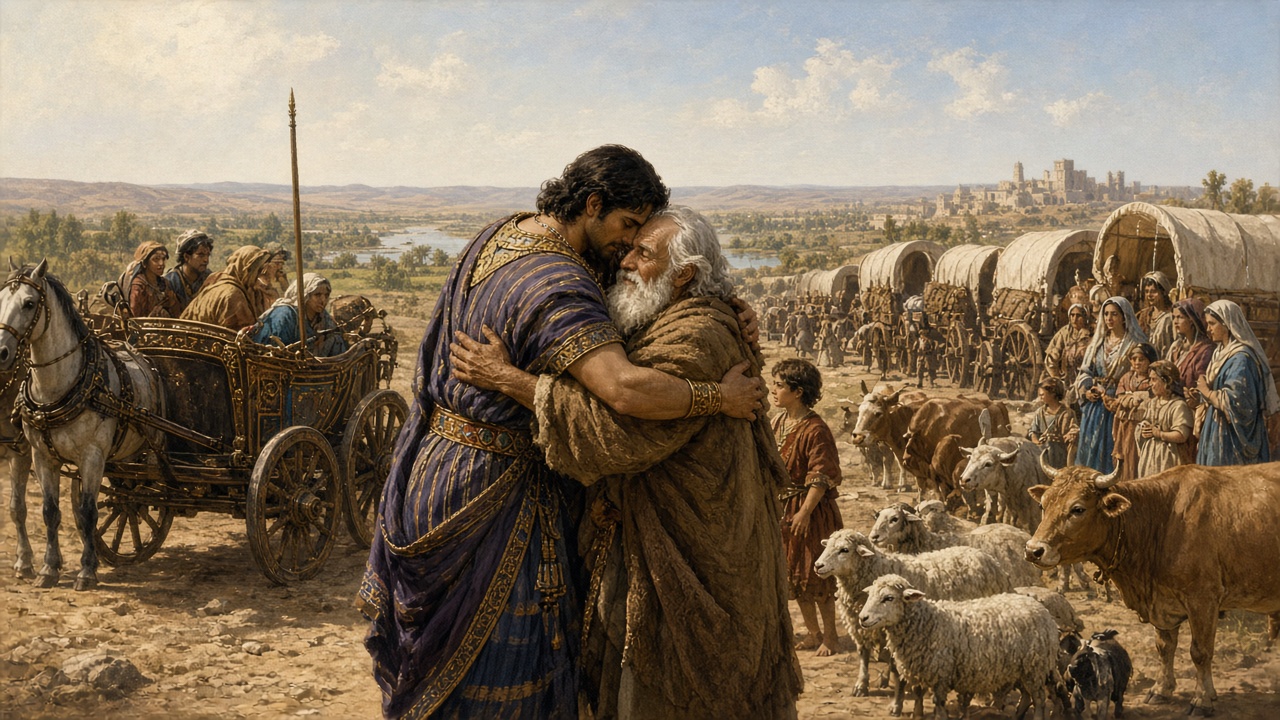
Israel desciende a Egipto
- Cuando Israel partió hacia Egipto con todo lo que tenía, se detuvo en Beerseba y ofreció sacrificios al Dios de su padre Isaac. Beerseba, que significa pozo del juramento o pozo de los siete, fue un pozo que Abraham cavó y nombró tras un pacto con Abimelec; cuando Isaac lo reabrió, le dio el mismo nombre. Era un lugar favorito de residencia de ambos patriarcas, y allí, aquella noche, Dios habló a Jacob en una visión y le dijo que no temiera bajar a Egipto, porque allí lo haría una gran nación.Fuentes: el propio texto bíblico · Beersheba
- Jacob envió a Judá por delante hacia José para que le indicara el camino a Gosén, un distrito egipcio al este del Nilo, al parecer cerca de la residencia real, donde la familia permaneció hasta el Éxodo. El Easton's Bible Dictionary (1897) la llama lo mejor de la tierra, hoy un desierto, y también tierra de Ramesés. José dijo a sus hermanos que afirmaran haber criado ganado desde su juventud, para poder establecerse allí, porque los pastores eran detestables para los egipcios; ese diccionario sugiere que el faraón fue probablemente Apopi, el último rey de los hicsos, que acogió a estos pastores asiáticos, mientras los egipcios nativos los aborrecían, aunque algunos argumentan que José llegó más tarde, bajo Tutmosis III, después de la expulsión de los hicsos.Fuentes: el propio texto bíblico · Goshen · Pharaoh (of Joseph)
- El capítulo cuenta sesenta y seis descendientes directos de Jacob que llegaron a Egipto, sin incluir a las esposas de sus hijos, y setenta al incluir a los dos hijos de José ya nacidos en Egipto. Los hijos de Lea y su hija Dina aparecen en esa lista, aunque el Easton's Bible Dictionary (1897) dice que la propia Lea ya había muerto en Canaán antes del viaje y fue sepultada en la cueva de Macpela; Raquel había muerto antes, al dar a luz a Benjamín, y fue sepultada en el camino a Efrata, es decir, Belén. Manasés y Efraín nacieron a José en Egipto de Asenat, hija de Potifera, sacerdote de On, un centro del culto al sol que la Septuaginta y la Vulgata llaman Heliópolis.Fuentes: el propio texto bíblico · Leah · Rachel · On
Notas escritas con ayuda de IA a partir de fuentes abiertas (Theographic Bible Metadata, CC BY-SA 4.0; Easton’s Bible Dictionary, dominio público) y revisadas antes de publicarse.
Lugares de este capítulo
- Egypt · 30.129, 31.308 · versículos 1, 3, 4, 5, 6, 7, 8, 20, 26, 27
- Canaan · 32.767, 35.333 · versículos 6, 12, 31
- Heliopolis · Hoy: Ain Shams · 30.129, 31.308 · versículo 20
- Goshen · Hoy: Goshen 1 · 30.799, 31.834 · versículos 28, 29, 34
Solo aparecen lugares identificados con alta confianza (90 % o más según las fuentes académicas reunidas por OpenBible). Mapa de la época: DARE (Digital Atlas of the Roman Empire), CC BY 4.0; mapa actual: © colaboradores de OpenStreetMap; lugares: OpenBible.info (CC BY 4.0).
Créditos y licencia de esta traducción
Luda yã takada kↄ̃n Bokobaru yão
The New Testament and portions of the Old Testament in the Bokobaru language of Nigeria
copyright © 2005 SIM International
Language: Bokobaru
Translation by: SIM
This translation text is made available to you under the
terms of the Creative Commons License: Attribution-Noncommercial-No Derivative Works.
( http://creativecommons.org/licenses/by-nc-nd/3.0/ )
In addition, you have permission to port the text to different file formats, as long as you
do not change any of the text or punctuation of the Bible.
You may share, copy, distribute, transmit, and extract portions
or quotations from this work, provided that you include the above copyright
information:
You must give Attribution to the work.
You do not sell this work for a profit.
You do not make any derivative works that change any of the actual words or punctuation of the Scriptures.
Permissions beyond the scope of this license may be
available if you contact
us with your request.
This translation is made available to you under the terms of the
Creative Commons Attribution-Noncommercial-No Derivatives license 4.0.
You may share and redistribute this Bible translation or extracts from it in any format, provided that:
You include the above copyright and source information.
You do not sell this work for a profit.
You do not change any of the words or punctuation of the Scriptures.
Pictures included with Scriptures and other documents on this site are licensed just for use with those Scriptures and documents.
For other uses, please contact the respective copyright owners.
2014-09-22
Fuente: http://ebible.org/bus/ · eBible.org