1 Samuel 12
Luda yã takada kↄ̃n Bokobaru yão · Toca un versículo para ver sus referencias cruzadas.
Samuɛli ↄgbarɛna kpatazi
1Samuɛli bè Isarailinↄnɛ ń píngi: Ma yã kɛ̀ á òmɛɛ mà píngi, ma kí kàare kpatan. 2Àpi bé eé dↄare aɛ sa. Mapi sↄ̃ ma zi kũ̀, ma mìkã pura kũ̀ ben ma nɛ́nↄↄ kúao. Ma dↄare aɛ zaa ma gↄ̃kparɛkɛgurↄ ai kↄ̃n a gbã̀ao. 3Maɛ kɛ̀! À kɛ ma sèedadeenↄ ũ Dii kↄ̃n kí kɛ̀ à kpào aɛ. Ma zù ke zaaki sì a gbɛ̃keaↄ́? Ma a gbɛ̃ke blèↄ́? Ma wɛ́ɛ tã̀ a gbɛ̃keaↄ́? Ma ↄdↄnkpɛɛgbaa sì a gbɛ̃kea ai à ma wɛ́ɛ tàtaↄ́? Tó má kɛ̀ lɛ, mɛ́ à fĩa bonɛ. 4Ben aↄ̃ wèàla wà bè: Nɛ́ɛ wa blero, nɛ́ɛ wɛ́ɛ tãwaro, nɛ́ɛ pↄ́ke sí wa gbɛ̃kearo. 5Samuɛli bèńnɛ dↄ: Dii kↄ̃n kí kɛ̀ à kàon a sèedadeenↄ ũ gbã̀a, kɛ̀ ée taari emaro. Aↄ̃ bè: Dii bé wa sèedadee ũ. 6Ben Samuɛli bèńnɛ: Dii bé à Musa kↄ̃n Arunao dìɛ, ben aↄ̃ bↄ̀ kↄ̃n a dezinↄo Igipiti. 7À zɛ tɛɛɛ Dii aɛ, mɛ́ yã maaa kɛ̀ à kɛ̀are kↄ̃n a dezinↄ tↄ̃kɛ̃are. 8Yakubunↄ gana Igipiti gbɛra a dezinↄ wii pɛ̀ Diizi, ben à Musa kↄ̃n Arunao dìɛ, aↄ̃ ń bↄ́ɛ Igipiti, ben aↄ̃ ń káɛ bùsu kɛ̀kiin. 9Kɛ̀ Dii ń Luda yã sã̀ńgu yãnzi, ben à ń kpá Azo zĩ̀kpɛɛnↄ gbɛ̃nsi Siseraa kↄ̃n Filisitininↄ kↄ̃n Mↄabunↄ kío, aↄ̃ↄe zĩ̀ kaańyo. 10Ben aↄ̃ wii pɛ̀ Diizi wà bè: Wa durun kɛ̀ wa pã kpànzi wa dↄ̀ Baalinↄzi kↄ̃n Asatorɛnↄ. Ǹ wa bↄ wa ibɛɛnↄ ↄzĩ sa, wégↄ̃ dↄↄnzi. 11Ben Dii Gidiↄn dìɛ kↄ̃n Barakio kↄ̃n Yɛfɛtao kↄ̃n Samusĩo aↄ̃ a bↄ a ibɛɛ pìnↄ ↄzĩ baama píngi, ben a gↄ̃ kaɛna aafia.
12Kɛ̀ á è Amↄni kí Naasa e mↄↄ lɛ́ɛawa, baa kɛ̀ Dii a Ludan a kína ũ, a bèmɛ: Lɛnlo! Kín á yezi! 13Tia la kína kɛ̀ á gbèka á sɛ̀n yɛ̀, àɛ kɛ̀ Dii à dìɛare. 14Tó á Dii vĩa vĩ ben ée dↄↄzi, tó ée à yã maa ben ée bↄ à yã kpɛɛro, tó apinↄ kↄ̃n gbɛ̃ kɛ̀ èe kí bleeareeo tɛ́ Dii a Ludazi, égↄ̃ aafia. 15Tó ée Dii yã ma sↄ̃ro, ben a bↄ à yã kpɛɛ, eé ↄ tↄ̃awamɛ lán à kɛ̀ a dezinↄnɛ nà. 16À zɛ à yã bíta kɛ̀ Dii é kɛaree e. 17Ésekɛ̃gurↄↄn wá kún kɛ̀roo? Mɛ́ Dii sísi, eé tó lou vĩ à ma, égↄ̃ dↄ̃ kɛ̀ a kína gbekana kɛ̀ Diinɛ zaa maamaa.
18Ben Samuɛli Dii sìsi, ben Dii tò lou vĩ̀ à mà zĩ beeea. Ben baade píngi vĩa kɛ̀ Diinɛ kↄ̃n Samuɛlio maamaa. 19Ben aↄ̃ bènɛ: Ǹ wɛ́ɛ kɛwe Dii n Ludaa lɛ wapinↄ n zↄ̀blerinↄ tón gagaro. Wa yã zaaa kà wa durunnↄla, kɛ̀ wa kína gbèka.
20Samuɛli bèńnɛ: Àton tó vĩa a kũro. A yã zaaa pì kɛ̀ píngimɛ, mↄde àton kɛ̃ Diiaro. Àgↄ̃ dↄↄzi kↄ̃n nↄ̀sɛo do. 21Àton kɛ̃a à tɛ́ pↄ́ ginanↄziro. Aↄ̃ↄ àre vĩro, aↄ̃é fↄ̃ wà gbɛ̃ bↄro, zaakɛ pↄ́ pãanↄmɛ. 22Dii é a gbɛ̃nↄ zĩnnaro a zĩnda tↄ́ bíta yãnzi, zaakɛ à kɛ̀nɛ à a kɛ a gbɛ̃nↄ ũ. 23Mapi sↄ̃, Dii tón tó mà durun kɛare mà aduakɛnaare tóro. Mɛ́ zɛ́ maaa kɛ̀ dɛ à sɛ́ ↄdↄaare. 24À vĩa kɛ Diinɛ, àgↄ̃ dↄↄzi kↄ̃n náanɛo kↄ̃n nↄ̀sɛo do. À laasuu lɛ́ yã bíta kɛ̀ à kɛ̀areenↄa. 25Tó a gi a tɛ à zaaazi, apinↄ kↄ̃n a kínao, weé a kaatɛ a píngi.
¿Sabías que…?
El discurso de despedida de Samuel y la señal de la lluvia
- Antes de transferir formalmente el liderazgo al rey Saúl, Samuel desafió públicamente a toda la nación a testificar si alguna vez había tomado un buey, recibido soborno u oprimido a alguien durante su gestión. La asamblea confirmó su completa integridad.Fuentes: el propio texto bíblico
- Samuel recordó a los israelitas su historia, señalando que cada vez que se apartaban de la idolatría, Dios levantaba libertadores como Jerobaal (otro nombre de Gedeón), Jefté y el propio Samuel para librarlos de sus opresores.Fuentes: el propio texto bíblico · Gideon · Jephthah
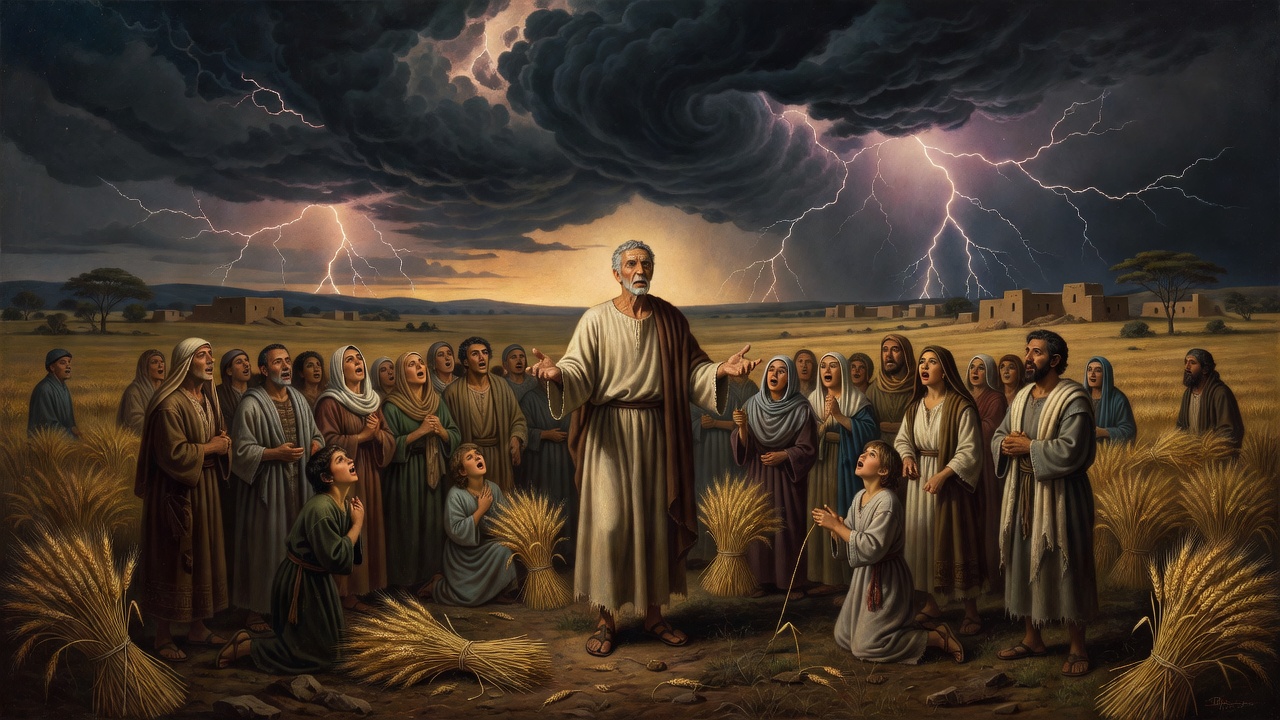
- Para mostrar la gravedad de haber exigido un rey terrenal, Samuel clamó a Dios para que enviara truenos y lluvia durante la cosecha de trigo, una época habitualmente seca en la región. La tormenta repentina llevó al pueblo a temer a Dios y a rogar la intercesión de Samuel.Fuentes: el propio texto bíblico
Notas escritas con ayuda de IA a partir de fuentes abiertas (Theographic Bible Metadata, CC BY-SA 4.0; Easton’s Bible Dictionary, dominio público) y revisadas antes de publicarse.
Lugares de este capítulo
- Egypt · 30.129, 31.308 · versículos 6, 8
- Hazor · Hoy: Tel Hazor · 33.018, 35.569 · versículo 9
- Moab · Hoy: Moab 1 · 31.181, 35.701 · versículo 9
- Ammon · 31.955, 35.934 · versículo 12
Solo aparecen lugares identificados con alta confianza (90 % o más según las fuentes académicas reunidas por OpenBible). Mapa de la época: DARE (Digital Atlas of the Roman Empire), CC BY 4.0; mapa actual: © colaboradores de OpenStreetMap; lugares: OpenBible.info (CC BY 4.0).
Créditos y licencia de esta traducción
Luda yã takada kↄ̃n Bokobaru yão
The New Testament and portions of the Old Testament in the Bokobaru language of Nigeria
copyright © 2005 SIM International
Language: Bokobaru
Translation by: SIM
This translation text is made available to you under the
terms of the Creative Commons License: Attribution-Noncommercial-No Derivative Works.
( http://creativecommons.org/licenses/by-nc-nd/3.0/ )
In addition, you have permission to port the text to different file formats, as long as you
do not change any of the text or punctuation of the Bible.
You may share, copy, distribute, transmit, and extract portions
or quotations from this work, provided that you include the above copyright
information:
You must give Attribution to the work.
You do not sell this work for a profit.
You do not make any derivative works that change any of the actual words or punctuation of the Scriptures.
Permissions beyond the scope of this license may be
available if you contact
us with your request.
This translation is made available to you under the terms of the
Creative Commons Attribution-Noncommercial-No Derivatives license 4.0.
You may share and redistribute this Bible translation or extracts from it in any format, provided that:
You include the above copyright and source information.
You do not sell this work for a profit.
You do not change any of the words or punctuation of the Scriptures.
Pictures included with Scriptures and other documents on this site are licensed just for use with those Scriptures and documents.
For other uses, please contact the respective copyright owners.
2014-09-22
Fuente: http://ebible.org/bus/ · eBible.org