Génesis 44
Kitabu ka Kanu · Toca un versículo para ver sus referencias cruzadas.
Isifu ɔntɔrəs awɛnc ɔn ntɛ tɔŋsɔŋɛ pətam kəcərɛ bəkəc yaŋan mɔ
1Kɔ Isifu oloku wəcamsɛ kɔn: «Məlasɛ afum akaŋɛ malɔ dəlɔba pəmɔ tɔkɔ lɔba yaŋan yɛntam kəlɛk malɔ mɔ. Məbɛr pəsam paŋan nde lɔba yaŋan disrɛ. 2Məbɛr sɔ apɔt ŋem ŋomunɛ ŋa gbeti ŋɔkɔ, nde alɔba ŋa wəfɛt wəkɔ kɔ pəsam pɔkɔ ɛŋkɛrɛ kədewayɛ malɔ mɔ.» Kɔ wəcamsɛ ka Isifu ɔyɔ tɔkɔ Isifu ɛnaloku kɔ mɔ. 3Dec dendesɔk, k'asak afum aŋɛ kəlukus nde ndaraŋan kɔ sɔfale səŋan. 4Ŋawur dare disrɛ ta ŋantabɔlɛ-ɛ, kɔ Isifu oloku wəcamsɛ kɔn: «Məyɛfɛ məcəmɛ afum aŋɛ darəŋ haŋ məbəp ŋa. Məyif ŋa: ‹Ta ake tɔ nəsɔŋɛ pətɔt kəway pəlɛc-ɛ? 5Bafɔ apɔt ŋaŋɛ ŋɔ mariki mem oŋmunɛ, ŋɔsɔŋɛ kɔ kəcərɛ tɔkɔ tender mɔ ba? Nənciya kəyɔ tantɛ nəyɔ mɔ.›» 6Kɔ wəcamsɛ ka Isifu ɛmbɛlər ŋa k'ɛmbəp ŋa. K'ɔŋgbɔkərɛnɛ ŋa moloku mɔkɔ Isifu ɛnasom kɔ mɔ. 7Kɔ ŋaloku wəcamsɛ ka Isifu: «Ta ake tɔ mariki oŋlok-lokərɛ su tantɛ-ɛ? Səna amarəs am səfɔtam kəyɔ tatɔkɔ. 8Sənuŋkɛnɛ kərɛsna kɔ səŋkɛrɛ nu pəsam pɔkɔ sənanəŋk nde lɔba yosu mɔ, kəyɛfɛ Kanaŋ. Ta ake tɔ səndekiyɛnɛ pəsam kɔ pəyi fɛ ti kɛma nde kəlɔ ka mariki mam-ɛ? 9Nwɛ o nwɛ aŋnəŋkɛ ca yayɔkɔ mɔ, padif kɔ, kɔ səna fəp səyɔnɛ acar a mariki mem!» 10Kɔ wəcamsɛ ka Isifu oloku ŋa: «Awa. Ine nu sim! Nwɛ o nwɛ aŋnəŋkɛ paka mɔ, ɔŋyɔnɛ wəcar kem. Nəna alpəs aŋɛ nəŋkɔ.» 11Kɔ ŋambɛlkər-bɛlkər kətorɛ-torɛ lɔba yaŋan dəntɔf kɔ ŋasikəli-sikəli yi. 12Kɔ wəcamsɛ ka Isifu oncop kəfen-feni kəyɛfɛ alɔba ŋa wəbeki, k'ɛləpsər alɔba ŋa wəfɛt. Kɔ wəcamsɛ ka Isifu ɔŋkɔ pənəŋk apɔt nŋɛ nde alɔba ŋa Beŋyamin. 13Kɔ awɛnc a Isifu ŋawal-wali yamos yaŋan, kɔ ŋandəndəsər sɔ sɔfale səŋan lɔba yaŋan. Kɔ ŋaluksərnɛ sɔ dare disrɛ.
Yuda kəcɔpɛ Beŋyamin
14Yuda kɔ awɛnc aŋa ŋander sɔ nda Isifu wəkɔ ɛnasɔrɔyi kəfo kaŋkɔ ŋanasak kɔ mɔ. Kɔ ŋantɛmpɛnɛ dəntɔf Isifu fɔr kiriŋ. 15Kɔ Isifu eyif ŋa: «Cəke cɔ nəyɔ tantɛ-ɛ? Nəncərɛ fɛ a intam kəcərɛ tɔkɔ tɔŋgbɔpnɛ mɔ, tɔkɔ tender mɔ?» 16Kɔ Yuda oloku: «Cəke c'indeloku mariki mem-ɛ? Cəke c'indeloku mətam kəlaŋ su-ɛ? Kanu kəmbəp amarəs am ŋaciya. Səyɔnɛ oŋ acar a mariki mosu, kəyɛfɛ səna haŋ wəkɔ anəŋk apɔt alɔba ŋɔn disrɛ mɔ.» 17Kɔ Isifu oloku: «Ifɔdebəc ti tatɔkɔ! Fum nwɛ anəŋkɛ apɔt mɔ, endeyɔnɛ wəcar kem. Kɔ nəna, nəpɛrnɛ nəkɔ ndena papa konu bəkəc yoforu disrɛ.»
18Kɔ Yuda ɔlɔtərnɛ Isifu k'oloku kɔ: «Ilɔktərn'am mariki, məwosɛ wəmarəs kam pəlok-lokər əm ta abəkəc ŋɛp'am nnɔ eyi mɔ! Bawo məyi pəmɔ Firawona. 19Tɔcɔkɔ-cɔkɔ Mariki ɛnayifət amarəs ɔn pəcloku: ‹Nəyɔ kas kɔ pəyɔnɛ fɛ ti-ɛ wəfɛt ba?› 20Kɔ səwosɛnɛ kɔ: ‹Səyɔ kas kətem, kɔ wəfɛt wan nwɛ oŋkom detem dɔn disrɛ mɔ. Wəpaŋnɛ kɔn kɛrɛ ɛnafi. Kɛrɛ kɔn kəkom, sona s'eyi oŋ, kɔ kas ɔmbɔtər kɔ.› 21Kɔ məloku amarəs am: ‹Nəkɔ nəkɛrɛ wəfɛt konu inəŋk kɔ fɔr yem.› 22Kɔ səloku mariki mem: ‹Wəfɛt kosu ɔfɔtam kəyɛfɛ papa kosu kəsək. K'ɛyɛfɛ kɔ kəsək-ɛ, papa kosu eŋfi.› 23Kɔ məloku amarəs am: ‹Kɔ nəntɔkɛrɛ wəfɛt konu-ɛ, ta inəŋk nu sɔ dɛ.› 24Ntɛ səluksərnɛ ndena papa kosu wəmarəs kam mɔ, kɔ səluksɛ kɔ moloku ma məna mariki mem. 25Kɔ papa kosu oloku: ‹Nəkɔ sɔ nəwayɛ su yeri yepic.› 26Kɔ səloku kɔ: ‹Səfɔtam kəkɔ. Mba kɔ səŋsolɛ wəfɛt kosu-ɛ, səŋkɔ, bawo wərkun wəkakɔ ɔfɔwosɛ kənəŋk su cəro ta səŋkenɛ kɔ wəfɛt kosu pənəŋk-ɛ.› 27Kɔ papa kosu wəmarəs kam oloku su: ‹Nəncərɛ a wəran kem awut mɛrəŋ ŋ'ɛnakom'em. 28Kɔ wəkin ende pəsak im. Ilaŋ ti a wəkakɔ, anawatəri-watəri kɔ, bawo intanəŋk fɛ kɔ haŋ mɔkɔ. 29Kɔ nəmbaŋər im sɔ ndɛkəl wəkawɛ-ɛ, tes tedekɔsɔtɔ kɔ-ɛ, pəcuy disrɛ pɔ nəndesɔŋ'em kətorɛ cəfon cem cəfer dabiya nde afi ŋayi mɔ.› 30Ndɛkəl oŋ k'ilukus nde wəmarəs kam, papa kem eyi mɔ, ta iŋkenɛ kɔ wəfɛt kosu nwɛ abəkəc ŋɔn ŋosumpər mɔ, 31eŋfi katina kɔ ɔntɔnəŋkɛ su wəfɛt kosu-ɛ. Tɛm tatɔkɔ amarəs am ŋandesɔŋɛ wəmarəs kam papa kosu kətorɛnɛ cəfon cɔn cəfer dabiya pəcuy disrɛ. 32Bawo ina wəmarəs kam isɔŋ kɔ temer kəluksɛ kɔ sɔ wan kɔn, icloku papa kosu: ‹K'intɔluks'am wəfɛt kosu-ɛ, in'endesarɛ kiciya doru o doru nnɔ papa kem eyi mɔ!› 33Ndɛkəl ilɛtsɛn'am: Ina wəmarəs kam iyi nnɔ. Iyɔnɛ wəcar ka məna mariki mem. Wəfɛt kosu pəlukus kɔ awɛnc im aŋa nde papa kosu eyi mɔ. 34Cəke c'intam kəlukus, ta iluksɛ wəfɛt kosu nnɔ papa kosu eyi mɔ-ɛ? Ha! Intola fɛ kənəŋk pəlɛc pɔkɔ pendekɔsɔtɔ papa kosu mɔ, k'intɔluksɛ kɔ wəfɛt kosu-ɛ!»
¿Sabías que…?
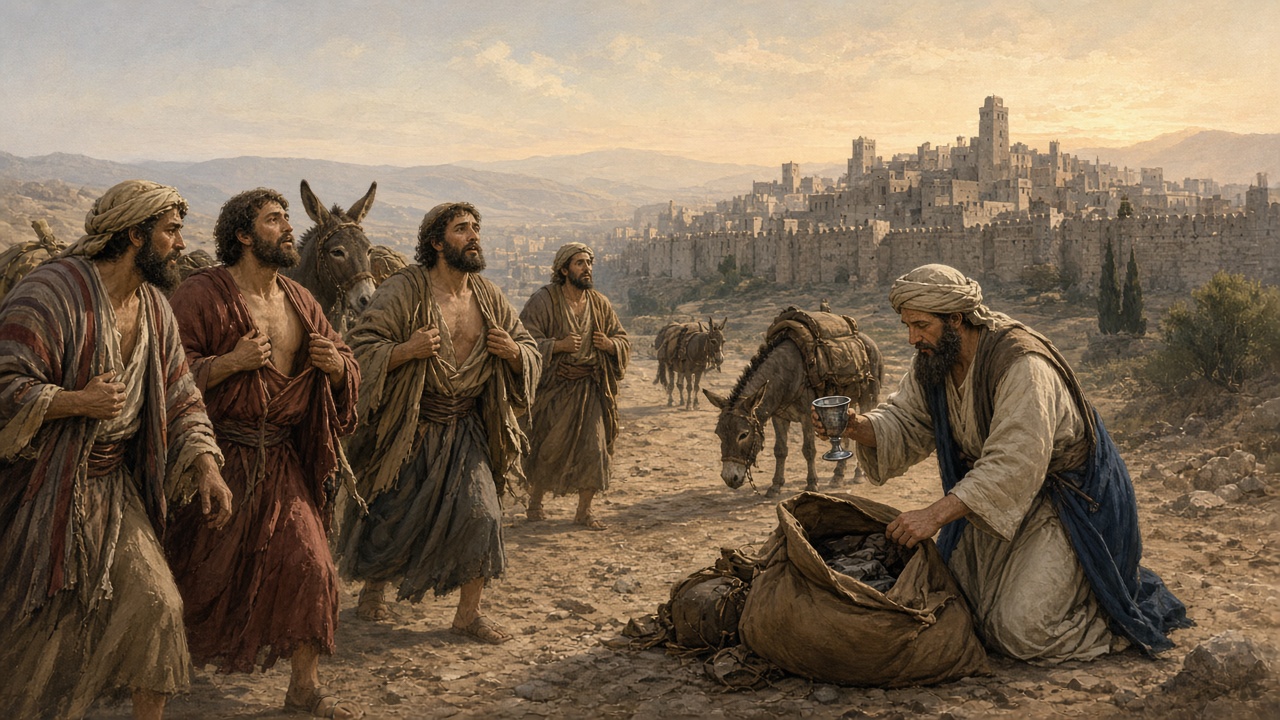
La copa escondida y la súplica de Judá
- Judá, el cuarto hijo de Jacob con Lea, habla por los hermanos y se ofrece a quedarse como esclavo en lugar del muchacho, para que Benjamín pueda volver con sus hermanos. El Diccionario Bíblico de Easton (1897) señala que Judá ya había intervenido para que se le perdonara la vida a José, y que tomó la delantera en los asuntos de la familia, incluso en la súplica registrada en este capítulo.Fuentes: Judah (patriarch) · el propio texto bíblico
- Benjamín era el menor de los dos hijos de Jacob con Raquel; ella murió al darlo a luz y lo llamó Benoni, "hijo de mi dolor", antes de que su padre lo llamara Benjamín. Los hermanos le dicen a José que el muchacho es el único hijo de su madre que aún vive y que su padre cree que el otro fue despedazado. Se lo dicen al propio José —el hijo mayor de Raquel, a quien Jacob amaba por ser el hijo de su vejez—, mientras todavía le hablan como a un señor igual al faraón.Fuentes: Benjamin (patriarch) · Joseph (son of Jacob) · el propio texto bíblico
- Por orden de José, el mayordomo escondió la copa de plata de José —la copa de la que bebía y que usaba para la adivinación— en el saco de Benjamín, junto con la plata pagada por el grano. Cuando la encontraron, los hermanos rasgaron sus ropas y volvieron a la ciudad. José les preguntó entonces si no sabían que un hombre como él podía adivinar la verdad, aunque el relato muestra que él mismo había dispuesto que se hallara la copa.Fuentes: el propio texto bíblico
Notas escritas con ayuda de IA a partir de fuentes abiertas (Theographic Bible Metadata, CC BY-SA 4.0; Easton’s Bible Dictionary, dominio público) y revisadas antes de publicarse.
Lugares de este capítulo
- Canaan · 32.767, 35.333 · versículo 8
Solo aparecen lugares identificados con alta confianza (90 % o más según las fuentes académicas reunidas por OpenBible). Mapa de la época: DARE (Digital Atlas of the Roman Empire), CC BY 4.0; mapa actual: © colaboradores de OpenStreetMap; lugares: OpenBible.info (CC BY 4.0).
Créditos y licencia de esta traducción
Kitabu ka Kanu
Portions of the Holy Bible in the Baga Sitemu language of Guinea
Des portions de la Sainte Bible dans la langue Baga Sitemu de Guinée
copyright © 2015 Pioneer Bible Translators
Language: Baga Sitemu
Translation by: Traducteurs Pionniers de la Bible
Contributor: Pioneer Bible Translators
This translation is made available to you under the terms of the
Creative Commons Attribution Share-Alike license 4.0.
You have permission to share and redistribute this Bible translation in any format and to make reasonable revisions and adaptations of this translation, provided that:
You include the above copyright and source information.
If you make any changes to the text, you must indicate that you did so in a way that makes it clear that the original licensor is not necessarily endorsing your changes.
If you redistribute this text, you must distribute your contributions under the same license as the original.
Pictures included with Scriptures and other documents on this site are licensed just for use with those Scriptures and documents.
For other uses, please contact the respective copyright owners.
Note that in addition to the rules above, revising and adapting God's Word involves a great responsibility to be true to God's Word. See Revelation 22:18-19.
2025-04-29
Fuente: http://ebible.org/bsp/ · eBible.org