Hechos 19
Kitabu ka Kanu · Toca un versículo para ver sus referencias cruzadas.
Pol nde dare da Efesi
1Tɛm ntɛ Apolos ɛnayi Kɔrɛnt mɔ, Pol nwɛ ɛnacepər sədare sa mɔrɔ mɔ, ontor dare da Efesi. K'ɛmbəp di acɛpsɛ a Mariki Yesu darəŋ alɔma. 2K'eyif ŋa: «Nənasɔtɔ Amera Ŋecempi ŋa Kanu kəyɛfɛ ntɛ nənayɔnɛ alaŋ Yesu mɔ ba?»
Kɔ ŋaluksɛ Pol: «Səntane fɛ yati teta Amera Ŋecempi.»
3Kɔ Pol eyif ŋa sɔ: «Kɔ kəgbət dəromun kəre kɔ nəsɔtɔ-ɛ?»
Kɔ ŋaluksɛ Pol: «Kəgbət ka Saŋ.»
4Kɔ Pol oloku: «Kəgbət dəromun ka Saŋ, kəsəkpər mera yati kənayi teta Kanu. Mba Saŋ oncloku afum a ŋalaŋ wəkɔ endeder nkɔn tadarəŋ mɔ, itɔ tatɔkɔ Yesu.» 5Ntɛ ŋane moloku mamɔkɔ mɔ kɔ ŋasɔtɔ kəgbət dəromun tewe ta Mariki Yesu. 6Kɔ Pol endeŋər ŋa waca, kɔ Amera Ŋecempi ŋender ŋa, kɔ ŋayɛfɛ kəcɔp cusu ncɛ ŋantɔcərɛ mɔ, ŋacdəŋk sɔ moloku mɔtɔt mmɛ Kanu kənasom ŋa kədəŋk mɔ. 7Arkun akakɔ ŋancbəp wəco kɔ mɛrəŋ.
8Kɔ Pol ɛmbɛrɛ dəkətola Kanu da aSuyif, pəclok-lokɛ di kəbəknɛ disrɛ haŋ yof maas, pəcgbɛkəlɛnɛ, pəcsɛp kəsɔŋɛ afum kəcərɛ mes ma dɛbɛ da Kanu. 9Mba ntɛ ayeŋki səbomp alɔma ŋancfati kəlaŋ mɔ, ŋacfani dɔpɔ da Mariki nnɔ kənay kəyi mɔ. Kɔ Pol ɔmbɔlɛ ŋa, k'ɛlɛkɛnɛ acɛpsɛ a Yesu darəŋ alɔma, kɔ ŋawɛnnɛ kəsək, kɔ ŋaŋlok-lokərɛnɛ dɔsɔk o dɔsɔk nde dəkətəksɛ da Tirano. 10Tatɔkɔ tɛnawon meren mɛrəŋ, kɔ tɔsɔŋɛ aSuyif kɔ aKresi aŋɛ ŋanayi atɔf ŋa Asi mɔ kəne toloku ta Mariki.
Awut a Sefa
11Kanu kəncsɔŋɛ waca wa Pol kəyɔ mes mɛwɛy-wɛy mmɛ mɛnacuca kənəŋk mɔ. 12Tɛnasɔŋɛ pacbəcəsɛ acuy cəloto, kɔ pəyɔnɛ fɛ ti-ɛ kəpol nkɛ kəŋgbuŋɛnɛ Pol mɔ, kɔ ayɔ ti-ɛ, docu doncwur wəkayi, kɔ yɔŋk yɛlɛc yocwur sɔ wəkayi dəris.
13Kɔ aSuyif alɔma ŋaŋkɔs-kɔs mofo mɛlarəm, kɔ ŋatubucnɛ Pol kəbɛləs ka yɔŋk yɛlɛc nnɔ acuy ŋayi mɔ, ŋacloku: «Ilok'əm: Məwur wəcuy wəkawɛ tewe ta Yesu wəkɔ Pol ɛncam mɔ.» 14Wəloŋnɛ wəpɔŋ wəka aSuyif wəlɔma ɛnayi pacwe kɔ Sefa. Awut ɔn atɛmp camət-mɛrəŋ ŋa ŋancyɔ mɔyɔ mamɔkɔ. 15Mba kɔ ŋawak kəbɛləs ŋɔŋk ŋɛlɛc-ɛ, ŋi ŋoloku ŋa: «Yesu, incərɛ kɔ. K'iŋnɛpəl sɔ belbel fum nwɛ Pol ɔyɔnɛ mɔ, mba nəna, an'ɔ nəyɔnɛ-ɛ?» 16Kɔ fum wəkɔ ŋɔŋk ŋɛlɛc ŋɛnayi mɔ ɛŋgbəpərnɛ ŋa kəyɛfərɛnɛ, k'ɛntam ŋa fəp k'ombopər-bopər atɛmp aŋɛ, kɔ ŋayɛksɛ fəp faŋan dis fos kɔ ŋasak kəlɔ.
17ASuyif kɔ aKresi aka dare da Efesi ŋancərɛ toloku tatɔkɔ, kɔ kənesɛ kəyi ŋa fəp, kɔ ŋaleləs oŋ tewe ta Mariki Yesu. 18Afum alarəm aŋɛ ŋanawosɛ kəlaŋ Yesu mɔ, ŋancder ŋaccɛŋ fɔr ya afum fəp kiriŋ pəlɛc mpɛ ŋancyɔ mɔ. 19Kɔ afum akɔ ŋanayɔnɛ dure mɔ, ŋanckɛrɛ səbuk səŋan sa dure kɔ ŋancɔf si fɔr ya afum fəp kiriŋ. Kəway ka səbuk sasɔkɔ kənabəp mɛncəmbəl ma gbeti wul wəco kəcamət (50.000). 20Ti disrɛ kətam ka Mariki disrɛ kɔ toloku ta Kanu tɛsamsər kɔ tɔsɔtɔ fənɔntər.
Pəyamayama dare da Efesi
21Ntɛ tencepər mɔ kɔ Pol olompəsnɛ kəkɔ dare da Yerusalɛm pəccepərɛnɛ tɔf ya Masedon kɔ Akaya. K'oloku: «K'iŋkɔbɛrɛ Yerusalɛm-ɛ, mɛnɛ idekɔsɔmɔmən Rom.» 22Kɔ Pol osom Masedon amar ɔn mɛrəŋ Timote kɔ Erasto, mba kɔ nkɔn Pol eyi mataka mɔlɔma atɔf ŋa Asi.
23Tɛm tatɔkɔ tɔ pəyamayama pɔpɔŋ pɛnayi Efesi teta dɔpɔ da kəlaŋ ka Mariki Yesu. 24Wəgbɛc wəlɔma ɛnayi di, pacwe kɔ Demeteri, pəctubucnɛ kəlompəs ka wɔlɔ wa tɛrəŋka mpɛ ancwe Artemi mɔ. Agbɛc a wɔlɔ wa gbeti wawɔkɔ ŋancsɔtɔnɛ wi daka dɛlarəm. 25Kɔ Demeteri oloŋka agbɛc kɔ akɔ ŋancdinɛ yɛbəc yayɔkɔ mɔ, k'oloku ŋa: «Arkun! Nəncərɛ ti belbel a yɛbəc yayɛ y'andinɛ. 26Mba nənəŋk kɔ nəne a nnɔ Efesi kəbəp ka atɔf ŋa Asi Pol pampɛ ɛsɛp kəsɔŋɛ afum alarəm kəlaŋ haŋ pəckafəli ŋa mera kəloku a mɛrəŋka mmɛ waca wa fum wolompəs mɔ, bafɔ canu cɔ. 27Moloku mamɔkɔ mɛntam kəsɔŋɛ yɛbəc yosu kəlɛcɛ. Tɔsɔŋɛ sɔ teta kəlɔ ka tɛrəŋka Artemi tɔyɔ sɔ abɔc. Afɔde sɔ pacloku a Artemi tɛrəŋka a kanu kɔ, kanu kəran nkɛ afum fəp ŋaŋkor-koru nnɔ atɔf ŋa Asi, kɔ doru kɔrkɔr mɔ.»
28Ntɛ afum ŋane moloku mamɔkɔ mɔ, kɔ mɛtɛlɛ mencepərər ŋa, kɔ ŋayɛfɛ kəkulɛ-kulɛ: «Artemi kanu ka Efesi kəyɔnɛ kəpɔŋ!» 29Kɔ pəyamayama papɔkɔ posumpər dare fəp, kətəŋnɛ disrɛ kɔ afum ŋambəpsɛnɛ abaŋka ŋaŋan ŋɔpɔŋ. Kɔ ŋaliŋəs asol a Pol Kayus kɔ Aristarko, aŋɛ ŋanayɛfɛ Masedon mɔ, kɔ ŋaŋkekərɛ. 30Pol ɛnafaŋ kəkɔmentərnɛ afum fɔr kiriŋ, mba acɛpsɛ a Yesu darəŋ ŋanawosɛnɛ fɛ kɔ ti. 31Abɛ alɔma a atɔf ŋa Asi, aŋɛ ŋanayɔnɛ anapa a Pol mɔ, ŋanasom afum nnɔ eyi mɔ ŋaclɛtsɛnɛ kɔ a ta pəkɔ dəndo abaŋka ŋaŋan ŋɔpɔŋ de!
32Kɔ pəyamayama poncop afum dacɔ, aŋɛ ŋackul-kulɛnɛ ntɛ, akɔ ŋackul-kulɛnɛ tɔkɔ. Afum alarəm ŋa dacɔ ŋanacərɛ fɛ ntɛ o ntɛ anabəpsɛnɛnɛ mɔ. 33Kənay kaŋkɔ dacɔ kɔ afum alɔma ŋalɔmər Alɛksandər, nwɛ aSuyif alɔma ŋanacɔŋəs kəkɔlok-loku fɔr ya afum kiriŋ mɔ. Kɔ Alɛksandər ɛfɛk kəca, pəfaŋ kəlok-loku pəyacnɛ. 34Mba ntɛ ŋanadenɛpəl a Alɛksandər wəSuyif ɔyɔnɛ mɔ, kɔ fəp fəyɛfɛ kəkulɛ-kulɛ haŋ dec mɛrəŋ: «Artemi kanu ka Efesi kəyɔnɛ kəpɔŋ!»
35Kɔ wəbɛ wəlɔma wəka di ɛntam kətorɛ-torɛ afum bəkəc pəcloku: «Arkun a Efesi, an'ɔtɔcərɛ a dare da Efesi dɔtɔmpər kəbum ka kəlɔ kəpɔŋ ka kanu kosu Artemi kɔ tɛrəŋka tɔn mpɛ pontor kəyɛfɛ darenc mɔ-ɛ? 36Fum ɔfɔtam kəgbɛkəl tatɔkɔ, pəmar nəndɛ nəcaŋk ta nəbɛlkər kəyɔ ntɛ o ntɛ. 37Ntɛ tɔsɔk mɔ, afum aŋɛ nəŋkɛrɛ mɔ ŋaləsər fɛ kəlɔ kosu kəpɔŋ, ŋalɔməs fɛ sɔ kanu kosu Artemi. 38Kɔ Demeteri kɔ awɛnc aŋa apaŋnɛ ɔn yɛbəc ŋayɔ kəbokɛnɛ teta fum-ɛ, dəkəboc kiti deyi kɔ aboc kiti ŋayi, dəndo pəmar ŋakɔ ŋabokɛnɛ! 39Kɔ nəyɔ sɔ tobokɛnɛ tɔlɔma-ɛ, andekɔlompəs ti pəmɔ tɔkɔ sariyɛ səloku ti mɔ nde aboc kiti ŋaŋloŋkanɛ mɔ. 40Nəkɛmbərnɛ, bawo antam kəboncɛ su kəsɔŋɛ pəyamayama pampɛ kəyi, teta mes mamɛ mencepər dɛ mɔkɔ mɔ, bawo ali toloku səfɔtam kəsɔtɔ kəloku ntɛ tɔsɔŋɛ afum kəbəpsɛnɛ tantɛ mɔ.» Ntɛ wəbɛ elip kəloku tatɔkɔ mɔ, k'oloku nwɛ o nwɛ kəlukus nde ndɔrɔn.
¿Sabías que…?
Pablo, el Camino y Artemisa en Éfeso
- Éfeso era la capital del Asia proconsular, la provincia romana que abarcaba la parte occidental de Asia Menor, y en tiempos romanos llevaba el título de primera y más grande metrópoli de Asia. La ciudad se distinguía por el templo de Artemisa, a quien los romanos llamaban Diana, construido fuera de las murallas y contado entre las siete maravillas del mundo antiguo. En el centro había una imagen antigua de la diosa, de la que se decía que había caído del cielo.Fuentes: Ephesus · Diana · Asia
- Demetrio, un platero de Éfeso, hacía santuarios de plata de Artemisa, modelos del templo o de la estatua de la diosa, que se vendían con facilidad a los visitantes llegados de toda Asia Menor. Hechos dice que ese oficio era la fuente de prosperidad de los artesanos y que Demetrio les advirtió del peligro para el negocio y para el honor del templo de Artemisa, la diosa que, según él, era adorada en toda la provincia de Asia y en el mundo entero.Fuentes: Demetrius · el propio texto bíblico
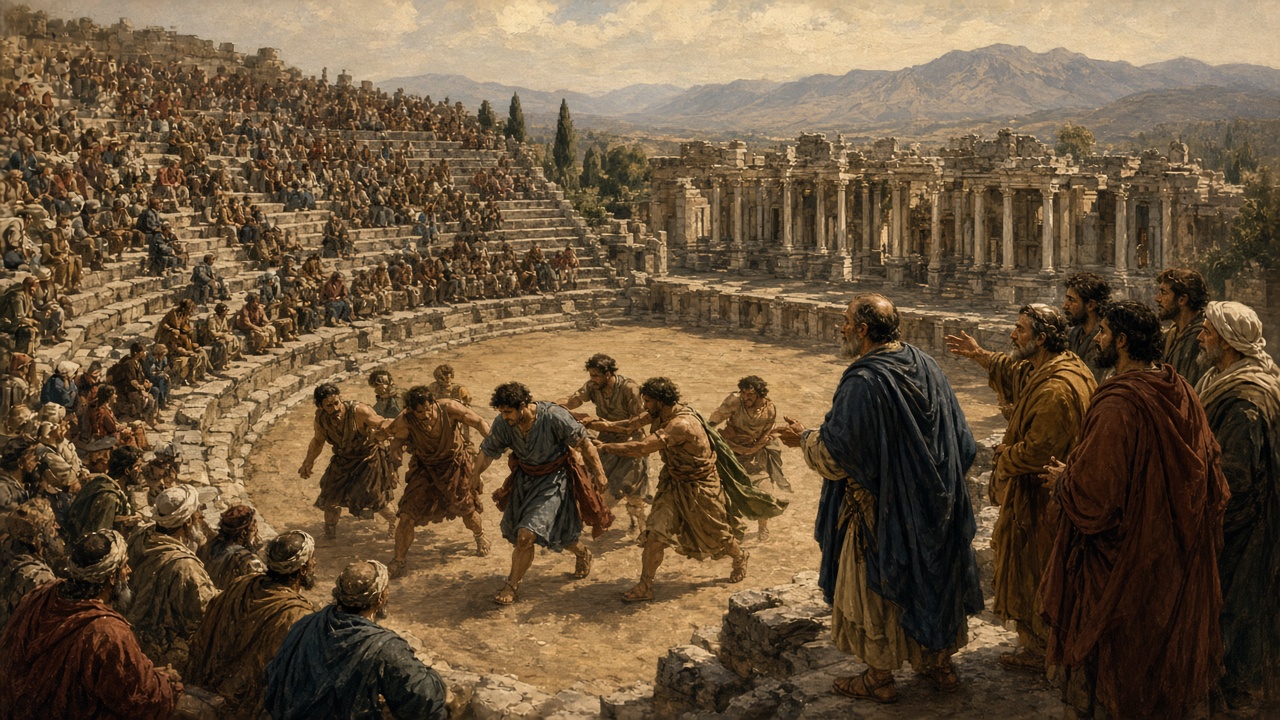
- La multitud se lanzó al teatro de Éfeso, que el Diccionario Bíblico de Easton (1897) describe como el más grande del mundo, a cielo abierto y capaz de albergar a 50.000 espectadores. Amigos de Pablo entre los jefes de Asia, ciudadanos ricos elegidos cada año para presidir los juegos y las fiestas religiosas de sus ciudades, le rogaron que no entrara. El secretario de la ciudad recordó entonces a la asamblea que Éfeso era guardiana del templo de la gran Artemisa y de su imagen, de la que se decía que había caído del cielo.Fuentes: Ephesus · Asia · el propio texto bíblico
Notas escritas con ayuda de IA a partir de fuentes abiertas (Theographic Bible Metadata, CC BY-SA 4.0; Easton’s Bible Dictionary, dominio público) y revisadas antes de publicarse.
Lugares de este capítulo
- Corinth · 37.906, 22.879 · versículo 1
- Ephesus · 37.939, 27.341 · versículos 1, 17, 23, 26, 35
- Asia · 38.400, 28.300 · versículos 10, 22, 26, 27, 31
- Achaia · 38.720, 22.540 · versículo 21
- Jerusalem · 31.777, 35.234 · versículo 21
- Macedonia · 41.600, 22.540 · versículos 21, 22, 29
- Rome · 41.892, 12.485 · versículos 21, 40
Solo aparecen lugares identificados con alta confianza (90 % o más según las fuentes académicas reunidas por OpenBible). Mapa de la época: DARE (Digital Atlas of the Roman Empire), CC BY 4.0; mapa actual: © colaboradores de OpenStreetMap; lugares: OpenBible.info (CC BY 4.0).
Créditos y licencia de esta traducción
Kitabu ka Kanu
Portions of the Holy Bible in the Baga Sitemu language of Guinea
Des portions de la Sainte Bible dans la langue Baga Sitemu de Guinée
copyright © 2015 Pioneer Bible Translators
Language: Baga Sitemu
Translation by: Traducteurs Pionniers de la Bible
Contributor: Pioneer Bible Translators
This translation is made available to you under the terms of the
Creative Commons Attribution Share-Alike license 4.0.
You have permission to share and redistribute this Bible translation in any format and to make reasonable revisions and adaptations of this translation, provided that:
You include the above copyright and source information.
If you make any changes to the text, you must indicate that you did so in a way that makes it clear that the original licensor is not necessarily endorsing your changes.
If you redistribute this text, you must distribute your contributions under the same license as the original.
Pictures included with Scriptures and other documents on this site are licensed just for use with those Scriptures and documents.
For other uses, please contact the respective copyright owners.
Note that in addition to the rules above, revising and adapting God's Word involves a great responsibility to be true to God's Word. See Revelation 22:18-19.
2025-04-29
Fuente: http://ebible.org/bsp/ · eBible.org