Apocalipsis 10
Dios oca gotirituti · Toca un versículo para ver sus referencias cruzadas.
Ángel, papera tũnariajotiaca cʉogʉ ĩ bajire queti
1Tijʉ bero, gajeye ado bajise bajicajʉ: Sĩgʉ̃ ángel, gãjerã ángel mesa rẽtoro tutuagʉ, õ vecajʉ buerigaseri vatoajʉ rujiacami. Ado bajiro bajicami: Ĩ rʉjoa vecare buerimamʉ ñacami. Ĩ riogama, muiju ʉ̃mʉagʉre bajiro busucajʉ. Ĩ ñicʉgʉ̃ri quẽne, jeare bajise yaacajʉ. 2Papera tũnariajotiaca õjacõari cʉocami. Rujiejacõari, ĩ gʉbo riojojacatʉajʉa, moa riagajʉ cʉdarocaroacami. Gãcojacatʉa gʉbo boejʉa cʉdacũcami. 3To yicõari, ruyugoaro avasãcami. Yai, león vãme cʉtigʉ ĩ avasãrore bajiro ruyucajʉ, ĩ avasãcati. Ruyugoaro ĩ avasãrone, cojomo cõro, jʉa jẽnituarirãcʉ bʉjoa ñarã ĩre cʉdi ocaruyucama. 4Ĩna cʉdi ocaruyusere ajicõari, ucagʉagʉ yiboacajʉ yʉ. Tire ucagʉagʉ yʉ yirone,
—Tire ucabesa. To yicõari, gãjerãre gotibesa —yʉre yi ocaruyucajʉ, õ vecajʉ.
5To bajise ti yi ocaruyuro bero, cojojacatʉa gʉbo moa riagajʉ cʉdarocaroacõari, gaje gʉbo boejʉ cʉdacũcõari, ĩ ãmo riojojacatʉa ĩ ñumʉosere ĩacajʉ yʉ. 6“‘Yʉ gotirore bajirone bajirʉaroja’ ĩre mani yimasirotire” yigʉ, ado bajise yicami yʉre ruyuaĩocacʉ:
—Catimʉorʉ̃gõrocʉ, Dios, õ vecaye, to yicõari, adi macarʉcʉroaye jediro rujeocacʉ, ĩ ĩaro rĩjorojʉa riojo yʉ gotirũgũrore bajirone ado bajise yaja yʉ: Cojomo cõro jʉa jẽnituarirãcʉ tʉsacʉ ángel ĩ jutitʉsarirĩmarone, masa ĩna masibeticati, “Ado bajiro yirʉcʉja yʉ” gotirẽtobosarimasare ĩnare ĩ yicatore bajirone yijeocõarʉcʉmi Dios, yicami yʉre ruyuaĩocacʉ. “To cõrone yijeorʉcʉja yʉ” ĩ yitʉoĩariajʉ ejaja —yicami yuja.
8To ĩ yiro bero, õ vecajʉ yʉ ajicati quẽna ado bajiro yʉre gotirẽmo ocaruyucajʉ:
—Ángel riojojacatʉa gʉbo moa riagajʉ cʉdarocaroacõari, gaje gʉbo boejʉ cʉdacũcõari ñagʉ̃ tʉjʉ vasa. Papera tũnariajotiaca ĩ cʉorijotire ãmiaya —yʉre yi ocaruyucajʉ.
9To bajiro ti ocaruyusere ajicõari, ángel tʉjʉ vacajʉ yʉ. Ĩ tʉjʉ ejacõari,
—Tijotiacare yʉre ĩsiña —ĩre yisẽnicajʉ yʉ.
To yʉ yisere ajicõari, yʉre ĩsigʉ̃ne, ado bajiro yʉre yicami:
—Ũma. Baya mʉ. Adijotiacare mʉ barone, beroa ocore bajiro ibisitirʉaroja mʉ risejʉ. To bajiboarine, mʉ baro bero, mʉ gʉdajoajʉ sʉ̃ecoarʉaroja —yʉre yicami.
10To ĩ yijare, tijotire ãmicõari, bacajʉ yʉ. Beroa ocore bajiro ibisiticajʉ. To bajiboarine yʉ baro bero, yʉ gʉdajoajʉ bʉto sʉ̃ecajʉ. 11Yʉ baro bero, ado bajiro yʉre goticami ĩ quẽna:
—Masa tocãrãca macana, cojo masa jũna rʉyabeto, cojo oca rʉyabeto ñagõrã, to yicõari, cojo sita rʉyabetoana ĩna ʉjarã quẽne ĩna bajirotire goti rĩjoro yiroti ñaja mʉre quẽna —yʉre yicami.
¿Sabías que…?
El ángel, los truenos sellados y el rollo
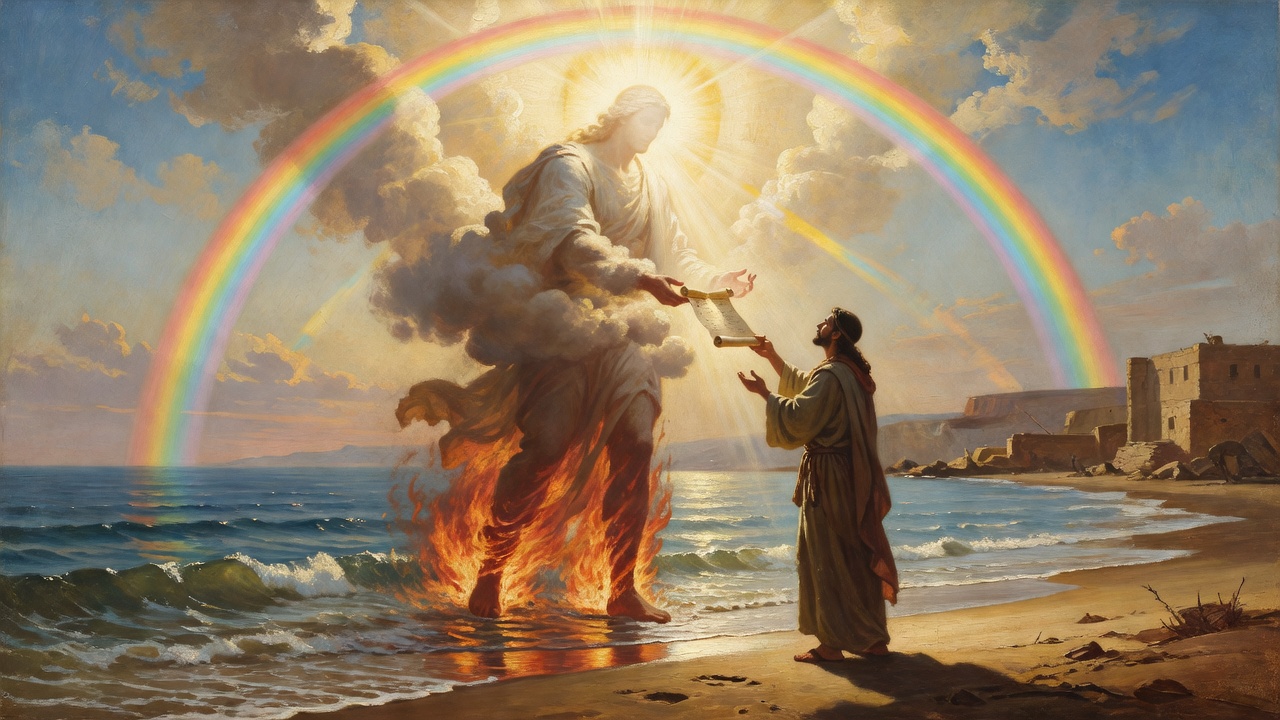
- Un ángel fuerte desciende del cielo, envuelto en una nube, con un arcoíris sobre la cabeza, el rostro como el sol y las piernas como columnas de fuego. Lleva en la mano un pequeño rollo abierto y pone el pie derecho sobre el mar y el pie izquierdo sobre la tierra.Fuentes: el propio texto bíblico
- Cuando el ángel clama como un león que ruge, siete truenos hacen oír su voz. El narrador está a punto de escribir lo que dijeron, pero una voz del cielo ordena que eso quede sellado y no se escriba. De pie sobre el mar y sobre la tierra, el ángel levanta la mano derecha al cielo y jura por quien vive por los siglos de los siglos, que creó el cielo y todo lo que hay en él, la tierra y todo lo que hay en ella, y el mar y todo lo que hay en él, que ya no habrá más demora, pero que en los días en que el séptimo ángel esté a punto de tocar la trompeta el misterio de Dios se cumplirá, tal como él lo anunció a sus siervos los profetas.Fuentes: el propio texto bíblico
- Una voz del cielo manda al narrador tomar de la mano del ángel el pequeño rollo abierto. El ángel dice que lo coma y advierte que será dulce como miel en la boca, pero amargo en el estómago. El narrador lo come y así lo experimenta, y después le dicen que debe profetizar otra vez sobre muchos pueblos, naciones, lenguas y reyes.Fuentes: el propio texto bíblico
Notas escritas con ayuda de IA a partir de fuentes abiertas (Theographic Bible Metadata, CC BY-SA 4.0; Easton’s Bible Dictionary, dominio público) y revisadas antes de publicarse.
Créditos y licencia de esta traducción
Dios oca gotirituti
New Testament in Barasana-Eduria (CO:bsn:Barasana-Eduria)
copyright © 2010 Wycliffe Bible Translators, Inc.
Language: Barasana-Eduria
Translation by: Wycliffe Bible Translators, Inc.
Copyright Information
© 2010, Wycliffe Bible Translators, Inc. All rights reserved.
This translation text is made available to you under the
terms of the Creative Commons License: Attribution-Noncommercial-No Derivative Works.
( http://creativecommons.org/licenses/by-nc-nd/3.0/ )
In addition, you have permission to port the text to different file formats, as long as you
do not change any of the text or punctuation of the Bible.
You may share, copy, distribute, transmit, and extract portions
or quotations from this work, provided that you include the above copyright
information:
You must give Attribution to the work.
You do not sell this work for a profit.
You do not make any derivative works that change any of the actual words or punctuation of the Scriptures.
Permissions beyond the scope of this license may be
available if you contact
us with your request.
The New Testament
in Barasana-Eduria
© 2010, Wycliffe Bible Translators, Inc. All rights reserved.
This translation is made available to you under the terms of the
Creative Commons Attribution-Noncommercial-No Derivatives license 4.0.
You may share and redistribute this Bible translation or extracts from it in any format, provided that:
You include the above copyright and source information.
You do not sell this work for a profit.
You do not change any of the words or punctuation of the Scriptures.
Pictures included with Scriptures and other documents on this site are licensed just for use with those Scriptures and documents.
For other uses, please contact the respective copyright owners.
2014-04-22
Fuente: http://ebible.org/bsnNT/ · eBible.org