Romanos 16
Bangwinji · Toca un versículo para ver sus referencias cruzadas.
1Min caklang Fibi korya nye kimen, cin canga bikur wābero mor Kankiriya, 2na kom yo co mor Kwama. Kom ma wuro ki nure daten wo nob neka bilenkere ce, kom ti kange co, mor dikero ca do kom tiye nin. Wori co ciki bwici yilam nii tikali nube ducce, ki mo ce ken. 3Kom yarum Bilki kange Akila, nob nangeneb kange mo mor Kiritti Yecu. 4Buro neken dume ce ker dume mireu. Ma bucinen kang ti, dila kebo ka mo, la kange mwer kangka nob Kwama ko wo nubo kumtacili ceu. 5Ko yarum nob Kwama bo wo lociyeu. Yarum Abainitas nii mi cwi tiyeu, wuro yilam co nii ter neka bilenke Kiritti nin Asiya. 6Ko yarum Maryamu, wo manangen kibi kwan ker kimereu. 7Kom yarum Andranikus, kange Yuniyas, kebmibbo, kange farum fucina mik. Ciin nubo ko nyumangum cii nyumange mor nob tomangeb, buro nyimangum ten Kiritti mineneu. 8Ko yarum Amfiliyas, wo ma cwi mor Teluwe. 9Ko yarum Urbanas, far nangene mi mor Kiritti, kange Istakis, nii ma cwiyeu. 10Ko yarum ten Abalis, nii ken mor Kiritti. Ko yaru buro mor luwe Aristobulus ce. 11Ko yarum Hirudiyan, kemi. Ko yarum nubo lo Narkiss, buro Teluwe nine. 12Ko yarum Tarafina kange Tarafusa, buro manangen kibi kwan neret Kwama nineu. Ko yarum Barsisa nawiye ken, wo manangen do ducce Kwama nine. 13Ko yarum Rufus, wuro Kwama cokkeu, kange nee ce kange wo miu. 14Ko yarum Asinkiritas, Filiguna, Hamisa, Baturabas, Hamas, kange keb-bebbo buro kange ciyeu. 15Ko yarum, Filulugusa, kange Yuliya, Niriyas kange korya ceu, kange Ulumfas, kange nob Kwama buro wari kange ciyeu. 16Ko yarum bwiti kimeu ki kor-kang kako wucakke. Mwer kangka nob Kwama ko gwam yarum kom ti. 17Naweu mi ken komti, keb-mibbo, na kom kwa nubo buro bouti ki yalkangka kange kottangkau ki ner. Cii tou dikero cum bikwan dike kom merange ti. Kom yila bwim cinen. 18Wori wang nobeko buro mani cii bwang ten Teluwe be Yeecu Kiritti ti, la mor fwiye ciye. Ki luma nyiye ceko cii bolang nubo ki lom jome duwe ti. 19Wori dangke neka dure kimeko lam fiye gwam. Min ma bilangtum, dor kimer, dila ma cwiti na kom yilam ki yilen dor dikero yilam na kenneu, kange wucakke ki dikero yilam na bwireu. 20Kwama wo ne fuwor nerer tiyeu an dok kom nako fuwarangum bwekel-keleu wulom mor na kimek. Luma Teluwe be Yecu Kiritti ati kange kom. 21Timoti, far nangene mi, yarum kom ti, kange Lukiyas, kange Yason, kange Susibataras, keb mibbo. 22Mo Tartiyas nii wo mulang bifumero weu, ma yarum kom ti Kwama nin. 23Gayus nii ciyerka miik kange nob Kwama bo gwam, yarum kom ti. Arastas wo co tinger yoka cinan loro ceu, yarum komti kange ke nye Kawartas, cii yarum kom ti. 24Luma Teluwe be Yecu Kiritti ati kange kom gwam. Ati nyo. 25Naweu duktangka nace wo lami na dok kom tim nawo fulen kere miro kange fulen ker Yecu Kiritti, Wo ker nung ka dukumeko wo no kwitangi yurangum-yurangeu, 26Dila naweu cin wumom, ki mulangka nob tomangeb dukume ko cin yi ber biten tini gwam, ki tokka Kwama diriyeu, ker bwangka bilenker. 27Ki Kwama wiin cwar ki yileneu, fiye Yecu Kiritti wiye, duktangka bak-ni-bak. Ati nyo.
¿Sabías que…?
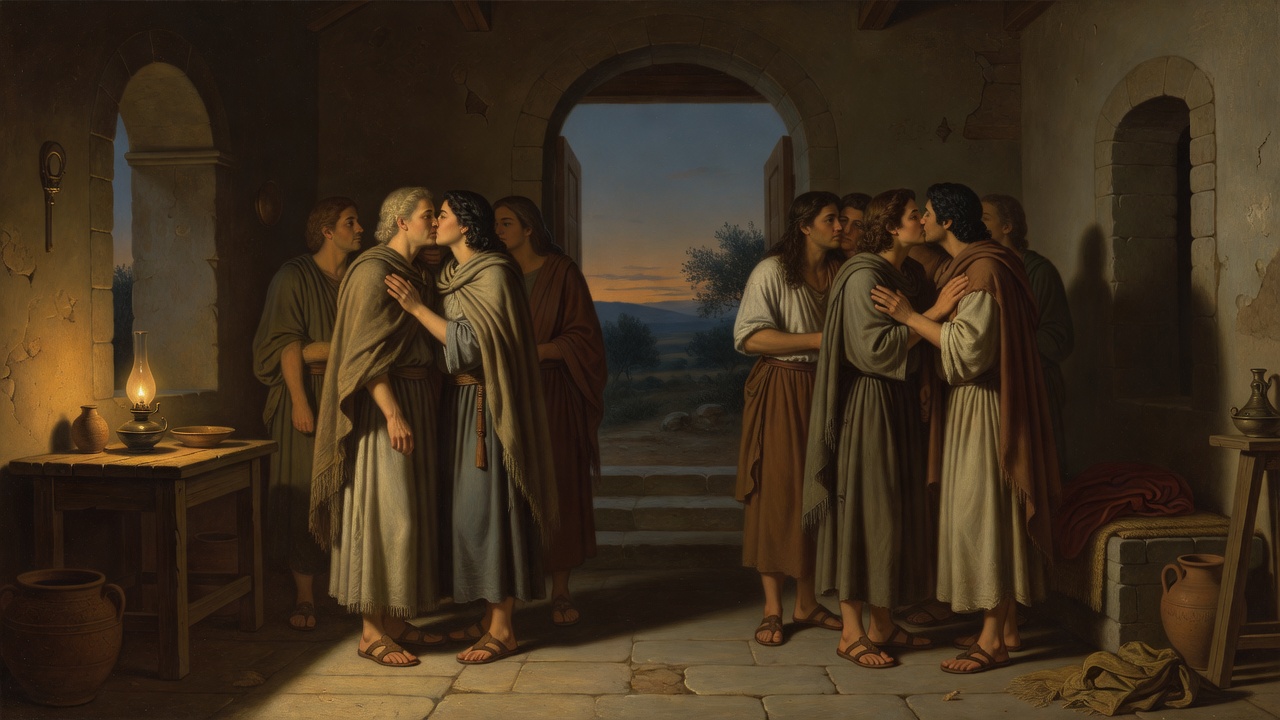
Saludos a la iglesia en Roma
- Pablo recomienda a Febe, sierva de la iglesia en Cencrea, y pide a los destinatarios en Roma que la reciban bien y la ayuden en lo que necesite, porque ha sido de gran ayuda para mucha gente, incluido él. Cencrea era el puerto oriental de Corinto, a unas nueve millas al este de la ciudad y la salida de su comercio con las costas asiáticas del Mediterráneo; el Easton's Bible Dictionary (1897) dice que ella probablemente fue quien llevó esta carta.Fuentes: el propio texto bíblico · Phebe · Cenchreae
- Pablo saluda a Prisca y a Aquila, sus colaboradores en Cristo Jesús, que arriesgaron la vida por él, y también a la iglesia que se reúne en su casa; dice que no solo él, sino todas las iglesias de los gentiles les están agradecidas. El Easton's Bible Dictionary (1897) la llama Priscila y describe a Aquila como fabricante de tiendas, natural del Ponto, que con su esposa dejó Roma a causa de un decreto de Claudio, en el año 50 d. C., que ordenaba a todos los judíos salir de la ciudad; el nombre de ella a veces aparece antes que el de él, como aquí.Fuentes: el propio texto bíblico · Priscilla · Aquila
- Cerca del final, Tercio, quien puso la carta por escrito, añade su propio saludo. Gayo, que ha hospedado a Pablo y a toda la iglesia, también envía saludos, al igual que Erasto, el tesorero de la ciudad, y Cuarto.Fuentes: el propio texto bíblico
Notas escritas con ayuda de IA a partir de fuentes abiertas (Theographic Bible Metadata, CC BY-SA 4.0; Easton’s Bible Dictionary, dominio público) y revisadas antes de publicarse.
Lugares de este capítulo
Solo aparecen lugares identificados con alta confianza (90 % o más según las fuentes académicas reunidas por OpenBible). Mapa de la época: DARE (Digital Atlas of the Roman Empire), CC BY 4.0; mapa actual: © colaboradores de OpenStreetMap; lugares: OpenBible.info (CC BY 4.0).
Créditos y licencia de esta traducción
Bangwinji
The New Testament in the Bangwinji language of Nigeria
copyright © 2020 Door43 Worldwide Mission Community
Language: Bangunji (Bangwinji)
Translation by: Door43 Worldwide Mission Community
Contributor: Bangunji, RUMTONG, Bangwinji, Kunini
This translation is made available to you under the terms of the
Creative Commons Attribution Share-Alike license 4.0.
You have permission to share and redistribute this Bible translation in any format and to make reasonable revisions and adaptations of this translation, provided that:
You include the above copyright and source information.
If you make any changes to the text, you must indicate that you did so in a way that makes it clear that the original licensor is not necessarily endorsing your changes.
If you redistribute this text, you must distribute your contributions under the same license as the original.
Pictures included with Scriptures and other documents on this site are licensed just for use with those Scriptures and documents.
For other uses, please contact the respective copyright owners.
Note that in addition to the rules above, revising and adapting God's Word involves a great responsibility to be true to God's Word. See Revelation 22:18-19.
2024-05-01
Fuente: http://ebible.org/bsj/ · eBible.org