1 Corintios 10
Bangwinji · Toca un versículo para ver sus referencias cruzadas.
1Ma chwibo ki yilam kebo ki nyomka kebmibo tebbebo gwam ki no tob bilorem kange chuu mor wima. 2Gwam cin yuchinen mwem Musambo more bilore kange wima. 3Gwam chiye ci cha ti yuwa tangbe wucake win. 4Gwam chiye chin noo yuwa tangbe wucake nyo wo ci no chwela yuwa tangbe ko bwanchinenten teyeu, chwelaka churo kiristi. 5La kwama nuwabo lima ki ducce more ciye la bitenti chiro watangum wi yera. 6Na weu dike buro yilam nungka binen, na bi yilare nob dilanka bwiyek dor dikero bwir wo bi dilantiye. 7Bi yilare nob wabe fulene na wo more chiyeci matiye. na wo mulangum mulange, “Nubbo yiken cha, noo la kwen loro”. 8Bi yilare kayaka, na wo ducce more che mane. Mor kume win nubo bikate kwini yob chilombo taar bwiyam dor cher. 9Bi chuware Kiristi na wo ducce more chiye mane, La nachuwe twalangum chi. 10Ki mare fwenna na wo ducce more che mane, cin bwiya bwar kang ni tomange kwama wucake. 11Na weu dike buro machineneu na yilam nungka binen. Mullangum Mulange na yilam werangka, binen wo chile kale wo bo bineneu. 12Nyori ni wuro toti chin timeri cha ma nyora kari cho yari. 13chuwakakako kange mani wo bo kimen mani nubo nin gwamme, wori kwama ni bilenke. mani a dobti ci chuwakom wo a lam bikwan kumero tiye. Ki chuwaka chan ma kumen nure cherka, wo ka mwirumum tie. 14Nyori kom mi cwiti-cwiyeu, kom cwam fiye fulene. 15Miki yi kom na nubbo wuro ki nyomka, na kom warker dor dike ma tokkeu. 16Kwele bibwiyere wo nyoten bibwiyer tiyeu, kebo wo ki chike gwam mor bwiyale kiristi ka? Charito wo nya wulangeu, kebo wo bi chiko win mor bwiye Kiristi ka? 17Wori charito wiin, bo keneu bi ducce bwiyo wiin. Bin cha chari wiin gwam be. 18ki too israila mor bwiye, kebo nubbo buro twi nuwang tiye cha dikero tangjilanko wucake tiye ka? 19Ye mi toktiye, ki fulen diker ka? kaka charito ci ne fulen neu diker ka? 20La miki tok dike buro nubbo nyombo kwama, nob fulenneb ki ne ninga dike buro, kebo kwama. ma chwibo ki mwerkang dor kange ninga. 21ma ka noo kwele teluwe ti kange kwele ninga. 22Kaka biki kang teluwe nin ner mor kiye ka? bin kwami bin lacho ka? 23dikero gwam na wo yor yore, la kebo dikero gwam ki tikaliye. “Dikero gwam na wo yor. yore,” La kebo dikero gwam wo muu ni tiye. 24Kange nii a dore dike yor yore dor chero che komi, nyori cha do dike yori ni chi wariye. 25Kom cha dikero gwam ci miti fiye miyaka, kom mere bi mer more nere. 26Wori “Kalewo na Teluwe che kange dike more che”. 27No nii nyombo kwama chuwo nen chaka chari di, mwen chiya mo yari, cha dike cho ne nenneu, mere bi mer mor nere. 28La no kange yinen ki “wo chin wabum fulen chiko di” chare, ki ker nii wo yi neneu kange ker meka nererk. 29Meka nerek ni wineu, kebo mweu. Ye a bwiti war neri kange a warkerti dor cherka mike? 30No min cha charito ki buka kangek ri, ye bwi chiya toyeti dor dikero wo ma ne buka kangekeu? 31Nyori, no mo cha kaka noo, kaka dike mo maneu ri, mani gwam dike a bouti ki duktangka kwama ke. 32Kom yilam dikero manki diker yaret Yahudawa nin, helenawa nin kange mwerkangka nubbo bwan kwama nin tiyeu. 33Nyo tak kom ma dike wuro nubbo gwam a bilangtiye. Ma dobo yokka dor mirek kini, miki do nubbo nin ducce. Ma wuro mna fiya fuloka.
¿Sabías que…?
Advertencias del desierto y la mesa del Señor
- Pablo dice que no quiere que los corintios ignoren que los antepasados estuvieron todos bajo la nube y pasaron todos por el mar, y que fueron bautizados en Moisés en la nube y en el mar. Todos comieron el mismo alimento espiritual y bebieron la misma bebida espiritual de la roca espiritual que los acompañaba, y él afirma que esa roca era Cristo.Fuentes: el propio texto bíblico
- Pablo dice que Dios no se agradó de la mayoría de ellos, pues fueron derribados en el desierto. Menciona la idolatría, la inmoralidad sexual en la que veintitrés mil murieron en un solo día, el poner a prueba a Cristo, que trajo muerte por serpientes, y las quejas, castigadas por el ángel destructor, y llama a esos hechos ejemplos escritos como advertencias.Fuentes: el propio texto bíblico
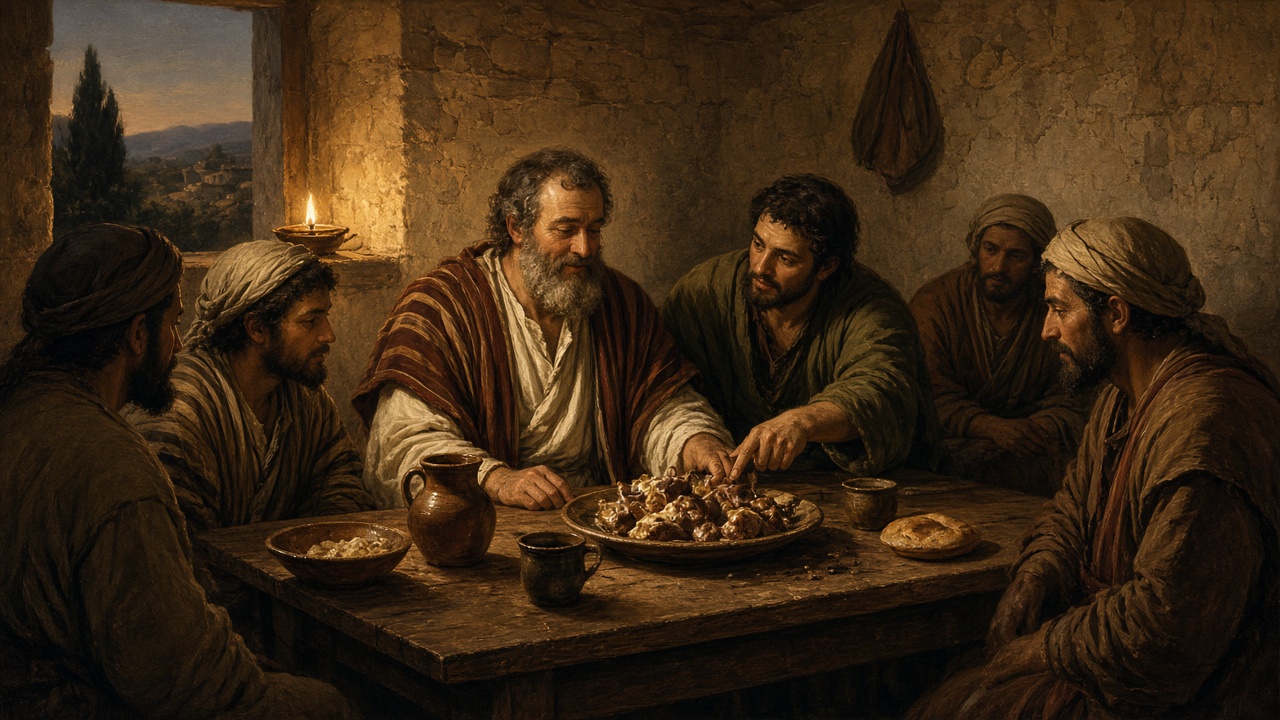
- Llama a la copa de bendición y al pan que se parte una participación en la sangre y el cuerpo de Cristo, y afirma que los sacrificios de los paganos se ofrecen a los demonios, no a Dios, de modo que las dos mesas no pueden compartirse. Lo que se vende en el mercado de carne puede comerse sin plantear cuestiones de conciencia, pues "Del Señor es la tierra y su plenitud", pero si alguien dice que fue ofrecido a los ídolos, conviene rechazarlo por la conciencia de esa persona.Fuentes: el propio texto bíblico
Notas escritas con ayuda de IA a partir de fuentes abiertas (Theographic Bible Metadata, CC BY-SA 4.0; Easton’s Bible Dictionary, dominio público) y revisadas antes de publicarse.
Créditos y licencia de esta traducción
Bangwinji
The New Testament in the Bangwinji language of Nigeria
copyright © 2020 Door43 Worldwide Mission Community
Language: Bangunji (Bangwinji)
Translation by: Door43 Worldwide Mission Community
Contributor: Bangunji, RUMTONG, Bangwinji, Kunini
This translation is made available to you under the terms of the
Creative Commons Attribution Share-Alike license 4.0.
You have permission to share and redistribute this Bible translation in any format and to make reasonable revisions and adaptations of this translation, provided that:
You include the above copyright and source information.
If you make any changes to the text, you must indicate that you did so in a way that makes it clear that the original licensor is not necessarily endorsing your changes.
If you redistribute this text, you must distribute your contributions under the same license as the original.
Pictures included with Scriptures and other documents on this site are licensed just for use with those Scriptures and documents.
For other uses, please contact the respective copyright owners.
Note that in addition to the rules above, revising and adapting God's Word involves a great responsibility to be true to God's Word. See Revelation 22:18-19.
2024-05-01
Fuente: http://ebible.org/bsj/ · eBible.org