Rut 4
Luda yã takada kũ Bisã yão · Toca un versículo para ver sus referencias cruzadas.
Rutu zãkɛna kũ Bↄazao
1Bↄaza gɛ̀ɛ à vùtɛ wɛ̃tɛ bĩnilɛa, akũ à è danɛ kãni bòri kũ à a yã òo pì tɛn su. Akũ à pì: Ma gbɛ̃, ǹ mↄ́ ǹ vutɛ. 2Akũ à wɛ̃tɛ gbɛ̃ zↄ̃kↄ̃nↄ sìsi gbɛ̃nↄn kuri à pì ò vutɛ. 3Akũ à pì danɛ kãni kũ ani a sura ba pìinɛ: Naomi kũ à sù kũ Mↄabunↄ bùsuuo tɛni ó vĩ̀ni Ɛlimɛlɛki bura kpado yía. 4Akũ ma è à mana mà a yã onnɛ, de ǹ lú ó gbɛ̃ zↄ̃kↄ̃ kũ ò vutɛna lanↄ wára. Tó ń ye ǹ lúmɛ, ǹ lú. Tó ń ye ǹ lú sↄ̃ro, ǹ omɛnɛ mà ma, zaakũ mↄkↄ̃n mɛ́ ń a luna zɛ́ vĩ. Tó n bakanlo, séde makũ mà lú. Akũ gↄ̃gbɛ̃ pìi pì: Mani lú. 5Akũ Bↄaza pì: Tó n bura pìi lù Naomi kũ Mↄabu nↄgbɛ̃ Rutuoa, ĩni gbɛ̃ kũ à gà gyaanↄ le dↄ, de a tↄ́ le à gↄ̃ a túbia. 6Akũ danɛ kãni bòrii pìi pì: Tó lɛn à de lɛ, mani lúro, de màsun ma zĩda túbi yakaro yãi. Ǹ n pↄ́ lú, zaakũ mani fↄ̃ mà lúro. 7Isarailanↄ bùsun yã tó gbɛ̃ tɛn bura lú ke tó àtɛni a lilin kɛ, tó àtɛn yã mì láka, àdi a kyate gbá do bo à kpá gbɛ̃amɛ yã pì lakana sèeda ũ Isarailanↄnɛ. 8Kũ danɛ kãni bòrii pìi pì Bↄazanɛ à lú, akũ à a kyate bò à kpà Bↄazaa. 9Akũ Bↄaza pì gbɛ̃ zↄ̃kↄ̃ↄ pìnↄnɛ kũ gbɛ̃ kparanↄ ń pínki: Ákↄ̃nↄmɛ sèedadenↄ ũ gbãra, kũ ma Ɛlimɛlɛki kũ Malonuo kũ Kiliↄ̃o pↄ́nↄ lù Naomia pínki. 10Akũ ma Malonu gyaanↄ Rutu, Mↄabu nↄgbɛ̃ lè nↄ ũ dↄ, de gbɛ̃ kũ à gàa pì tↄ́ le àgↄ̃ kú a túbia, de a tↄ́ sún ga a gbɛ̃nↄ tɛ́ ke a wɛ̃tɛ díkĩna gũnlo. Ákↄ̃nↄmɛ yã pìi sèedadenↄ ũ gbãra.
11Akũ gbɛ̃ zↄ̃kↄ̃ↄ pìnↄ kũ gbɛ̃ kũ ò kú gãnu gũnnↄ pì ń pínki: Ókↄ̃nↄmɛ sèedadenↄ ũ. Dikiri tó nↄgbɛ̃ kũ àtɛn gɛ̃ n ↄnn pì gↄ̃ lán Rahila kũ Leao bà, kũ ò Isarailanↄ buri kɛ̀. Ani tó ǹ gbãna kũ Ɛflata bùsun ǹ tↄ́ bo Bɛtilihamu. 12Dikiri tó buri kũ ani kpámma kũ nↄgbɛ̃ pìionↄ gↄ̃ lán Pɛrɛzi kũ Tama ì Yudanɛɛ burinↄ bà.
Dauda buri bozirɛ
13Akũ Bↄaza Rutu sɛ̀ nↄ ũ. À wùtɛ kãao, akũ Dikiri tò à nↄ̀ↄ sì, akũ à nɛ́ ì gↄ̃gbɛ̃ ũ. 14Akũ nↄgbɛ̃nↄ pì Naominɛ: O Dikiri sáabu kɛ̀, adi n tó buri sari gbãraro. Luda tó nɛ́ pì tↄ́ bo Isarailanↄ tɛ́. 15Ani n laakari kpátɛnnɛ, ani n gwa n zĩkũnaa gũn, zaakũ n nɛ́ gyaanↄ kũ à yenyĩ mɛ́ à a ìnnɛ, akũsↄ̃ à manannɛ de nɛ́gↄ̃gbɛ̃ gbɛ̃nↄn supplanↄla. 16Akũ Naomi nɛ́ pìi sɛ̀ à kpà a kùla à gↄ̃̀ a gwàri ũ. 17Akũ nↄgbɛ̃ kũ ò kú gwenↄ pì: Ò nɛ́gↄ̃gbɛ̃ ì Naominɛ. Akũ ò tↄ́ kpànɛ Ɔbɛdi. Àkũmɛ Yɛsɛ de, Dauda dizi ũ.
18Pɛrɛzi burinↄ tↄ́n dí:
Pɛrɛzi mɛ́ à Ɛzɛrↄnu ì,
19Ɛzɛrↄnu Ramu ì, Ramu Aminadabu ì,
20Aminadabu Nasↄ̃ ì, Nasↄ̃ Salamↄ ì,
21Salamↄ Bↄaza ì, Bↄaza Ɔbɛdi ì,
22Ɔbɛdi Yɛsɛ ì, akũ Yɛsɛ Dauda ì.
¿Sabías que…?
La redención en la puerta y el linaje de David
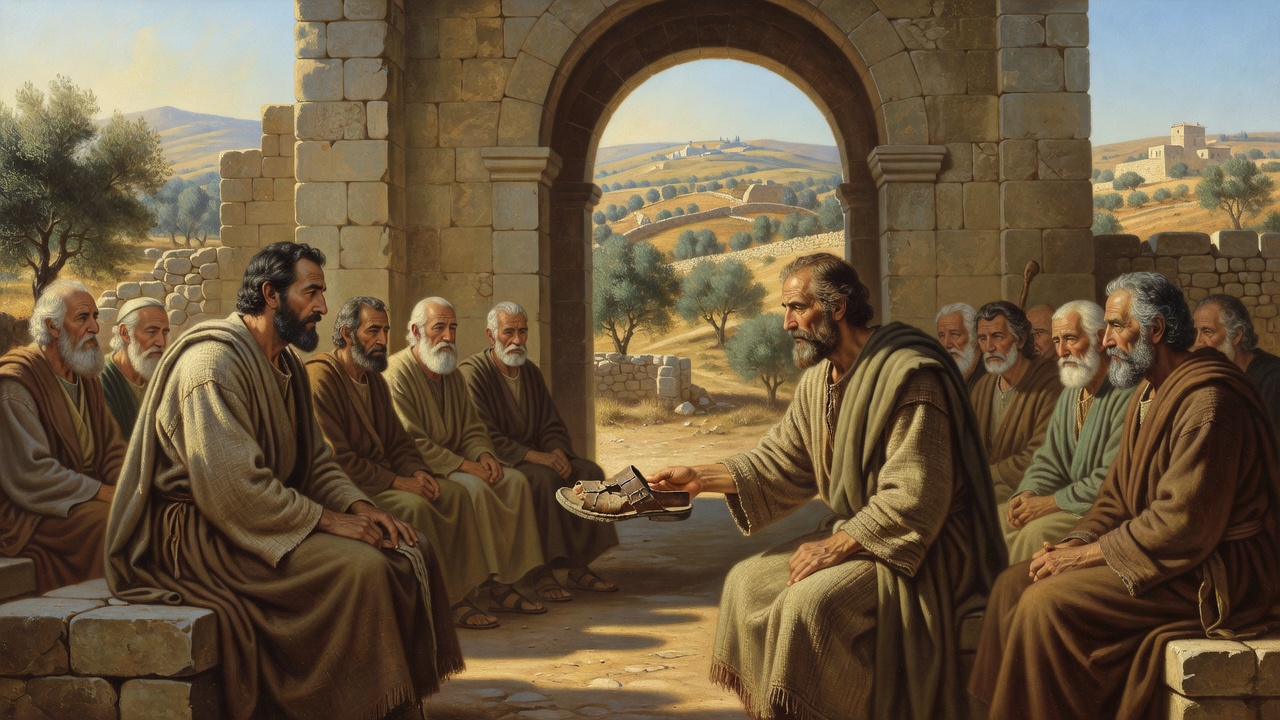
- En el antiguo Israel, las transacciones legales como la redención de propiedades se realizaban públicamente junto a la puerta de la ciudad ante ancianos y testigos. Quitarse y entregar una sandalia servía como un acto legal acostumbrado para confirmar la transferencia de los derechos de rescate.Fuentes: el propio texto bíblico · Ruth
- Al adquirir las tierras de Elimelec y de sus hijos, Boaz asumió también la obligación de casarse con la viuda de Majlón, Rut la moabita, a fin de preservar el nombre del difunto sobre su heredad familiar.Fuentes: el propio texto bíblico · Boaz · Mahlon · Elimelech
- El niño nacido de Rut y Boaz, llamado Obed, llegó a ser el abuelo del rey David, incorporando a Rut, una extranjera de Moab, en la genealogía real que desciende de Pérez.Fuentes: el propio texto bíblico · Obed · David · Pharez
Notas escritas con ayuda de IA a partir de fuentes abiertas (Theographic Bible Metadata, CC BY-SA 4.0; Easton’s Bible Dictionary, dominio público) y revisadas antes de publicarse.
Lugares de este capítulo
- Moab · Hoy: Moab 1 · 31.181, 35.701 · versículo 3
- Bethlehem · 31.704, 35.208 · versículo 11
- Ephrathah · Hoy: Bethlehem · 31.704, 35.208 · versículo 11
Solo aparecen lugares identificados con alta confianza (90 % o más según las fuentes académicas reunidas por OpenBible). Mapa de la época: DARE (Digital Atlas of the Roman Empire), CC BY 4.0; mapa actual: © colaboradores de OpenStreetMap; lugares: OpenBible.info (CC BY 4.0).
Créditos y licencia de esta traducción
Luda yã takada kũ Bisã yão
Portions of the Holy Bible in the Busa language of Nigeria
copyright © 2005 SIM International
Language: Bisã (Busa)
Translation by: SIM
This translation text is made available to you under the
terms of the Creative Commons License: Attribution-Noncommercial-No Derivative Works.
( http://creativecommons.org/licenses/by-nc-nd/3.0/ )
In addition, you have permission to port the text to different file formats, as long as you
do not change any of the text or punctuation of the Bible.
You may share, copy, distribute, transmit, and extract portions
or quotations from this work, provided that you include the above copyright
information:
You must give Attribution to the work.
You do not sell this work for a profit.
You do not make any derivative works that change any of the actual words or punctuation of the Scriptures.
Permissions beyond the scope of this license may be
available if you contact
us with your request.
This translation is made available to you under the terms of the
Creative Commons Attribution-Noncommercial-No Derivatives license 4.0.
You may share and redistribute this Bible translation or extracts from it in any format, provided that:
You include the above copyright and source information.
You do not sell this work for a profit.
You do not change any of the words or punctuation of the Scriptures.
Pictures included with Scriptures and other documents on this site are licensed just for use with those Scriptures and documents.
For other uses, please contact the respective copyright owners.
2014-10-10
Fuente: http://ebible.org/bqp/ · eBible.org