Salmos 148
Luda yã takada kũ Bisã yão · Toca un versículo para ver sus referencias cruzadas.
Dikiri pↄ́ kũ à kɛ̀nↄ a táakilɛnaa
1Aleluya!
À Dikiri táaki lɛ́, a bedenↄ!
À a táaki lɛ́ zaa musu!
2À a táaki lɛ́, a malaikanↄ á pínki!
À a táaki lɛ́, a ìbanↄ á pínki!
3À a táaki lɛ́, ifãntɛ̃ kũ mↄvuraao!
À a táaki lɛ́, susunɛ ínnanↄ pínki!
4À à táaki lɛ́, sarapura musumusu pↄ́nↄ
kũ í kũ à kú ludambɛlanↄ.
5Ò Dikiri tↄ́ bo,
zaakũ à yã ò, akũ ò kun.
6À ń pɛpɛ ń pɛ́pɛkia
de ògↄ̃ kú gwe gↄrↄ sĩnda pínki,
à doka dìtɛńnɛ, oni fↄ̃ ò vĩalaro.
7À Dikiri táaki lɛ́, pↄ́ kũ ò kú zĩtɛnↄ,
kpↄ̀ gbɛ̃̀ntɛ̃nↄ kũ ísira lↄ̀nↄ
8kũ legũpinaao kũ legũgbɛɛo kũ legũsisinaao
kũ zàga'ĩa kũ àdi mìi natɛ a yãnɛɛo,
9kũ kpinↄ kũ sĩ̀sĩnↄ pínki
kũ lí nɛ́'irinↄ kũ sida línↄ pínki,
10kũ nↄ̀bↄsɛ̃ntɛnↄ kũ pↄ́kãdenↄ pínki
kũ pↄ́ kũ òdi táa o kũ kùaonↄ kũ bãnↄ,
11kũ andunia kínanↄ kũ burinↄ pínki
kũ kínanɛnↄ kũ bùsu gbãnadenↄ ń pínki,
12kũ kɛfɛnnanↄ kũ nↄkparenↄ ń pínki
kũ gbɛ̃ zↄ̃kↄ̃nↄ kũ nɛ́ fítinↄo.
13Ò Dikiri tↄ́ bo,
zaakũ a mɛ̀n do tↄ́ mɛ́ à zↄ̃kↄ̃,
a gakuri de musu kũ zĩtɛola.
14À kína kà a gbɛ̃nↄnɛ,
kũ a yãmarinↄ dì a táaki lɛ́,
Isaraila kũ ò kãni kãaonↄ.
Aleluya!
¿Sabías que…?
Alabanza universal del cielo y de la tierra
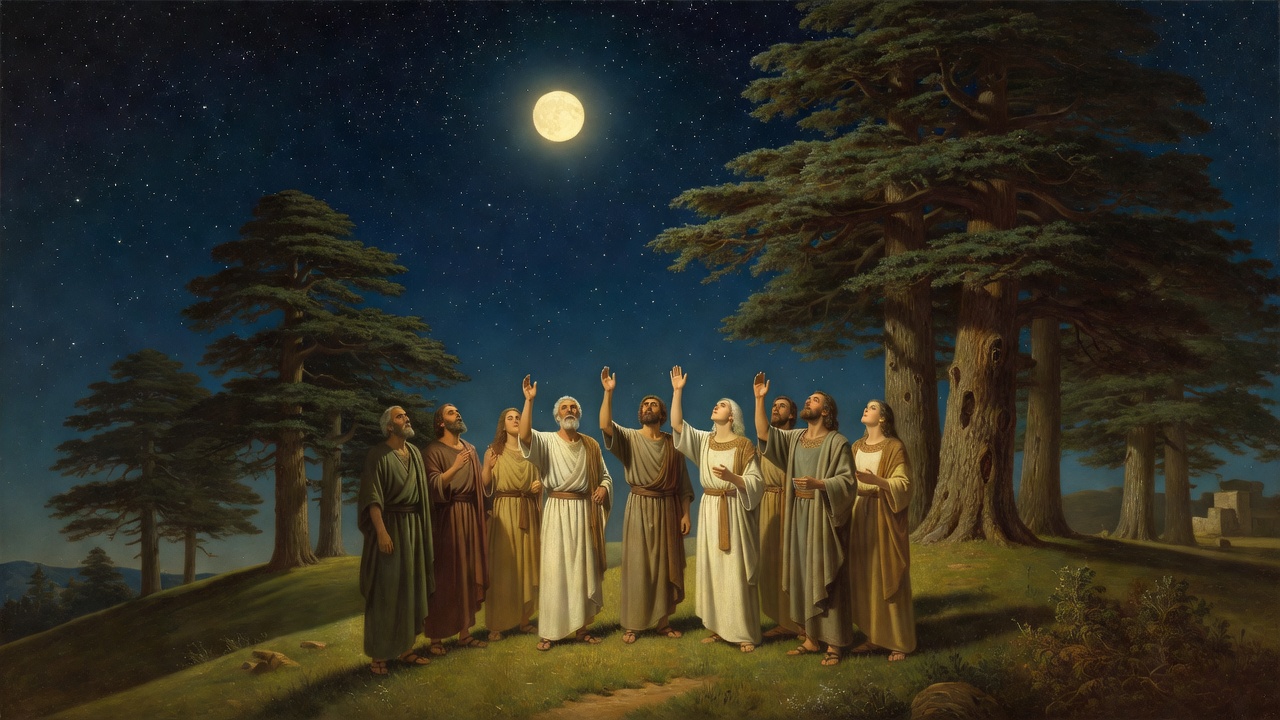
- El Salmo 148 está estructurado como un inventario cósmico integral que convoca a cada nivel de la creación a alabar a Dios. Comienza en las alturas celestiales con ángeles, huestes celestes, el sol, la luna, las estrellas y las aguas superiores, antes de descender a la tierra.Fuentes: el propio texto bíblico
- La sección terrenal abarca fenómenos meteorológicos, relieves, árboles, animales salvajes y domésticos, así como todos los sectores de la sociedad humana, desde reyes y gobernantes hasta jóvenes, doncellas y ancianos.Fuentes: el propio texto bíblico
- El himno concluye su amplio recorrido enfocándose en el pueblo del pacto, señalando que Dios ha levantado el poder de Sus fieles y describiendo a Israel como un pueblo cercano a Él.Fuentes: el propio texto bíblico · Jacob (Israel)
Notas escritas con ayuda de IA a partir de fuentes abiertas (Theographic Bible Metadata, CC BY-SA 4.0; Easton’s Bible Dictionary, dominio público) y revisadas antes de publicarse.
Créditos y licencia de esta traducción
Luda yã takada kũ Bisã yão
Portions of the Holy Bible in the Busa language of Nigeria
copyright © 2005 SIM International
Language: Bisã (Busa)
Translation by: SIM
This translation text is made available to you under the
terms of the Creative Commons License: Attribution-Noncommercial-No Derivative Works.
( http://creativecommons.org/licenses/by-nc-nd/3.0/ )
In addition, you have permission to port the text to different file formats, as long as you
do not change any of the text or punctuation of the Bible.
You may share, copy, distribute, transmit, and extract portions
or quotations from this work, provided that you include the above copyright
information:
You must give Attribution to the work.
You do not sell this work for a profit.
You do not make any derivative works that change any of the actual words or punctuation of the Scriptures.
Permissions beyond the scope of this license may be
available if you contact
us with your request.
This translation is made available to you under the terms of the
Creative Commons Attribution-Noncommercial-No Derivatives license 4.0.
You may share and redistribute this Bible translation or extracts from it in any format, provided that:
You include the above copyright and source information.
You do not sell this work for a profit.
You do not change any of the words or punctuation of the Scriptures.
Pictures included with Scriptures and other documents on this site are licensed just for use with those Scriptures and documents.
For other uses, please contact the respective copyright owners.
2014-10-10
Fuente: http://ebible.org/bqp/ · eBible.org