Salmos 144
Luda yã takada kũ Bisã yão · Toca un versículo para ver sus referencias cruzadas.
Aduakɛna surabana yã musu
Dauda lɛ̀ɛ.
1Arubarikademɛ Dikiri ma gbɛ̀si ũ,
àdi zĩ̀kana dadamɛnɛ,
àdi ma ↄ tùtu kɛ zĩ̀kana yãi.
2Àkũmɛ ma utɛki ũ, àdi gbɛ̃kɛ kɛmɛnɛ,
à de ma zɛki gbãna ũ, àdi ma sura ba.
À de ma sɛ̃ngbako ũ kũ madì nai,
àdi tó burinↄ mì natɛmɛnɛ.
3Dikiri, bↄ́n bisãsiri ũ
kũ a yã dìgↄ̃ dↄnguu?
Bↄ́n a ũ kũ ndì laakari dↄaa?
4Bisãsiri de lán kàsa plí bàmɛ,
a wɛ̃̀ndii dì gɛ̃tɛ lán uraa bà.
5Dikiri, ǹ musu natɛ ǹ kipa,
ǹ ↄ na kpinↄa de ò túsukpɛ bo.
6Ǹ tó legũ pí ǹ gbɛ̃nↄ fãkↄ̃a,
ǹ kà fã ń tɛ́ ò lɛkↄ̃a.
7Ǹ ↄ bo zaa musu ǹ ma kũ,
ǹ ma bo í zↄ̃kↄ̃ↄ gũn,
ǹ ma sí buri zĩ̀tↄnↄa.
8Ɛ́kɛtona ń lɛ́ pà,
òdi ↄ pãtɛ kũ lɛ́pãgbɛ̃naao.
9Luda, mani lɛ̀ dufu sínnɛ,
mani n táaki lɛ́ kũ mↄrↄ bà mɛ̀n kurideo,
10mↄkↄ̃n kũ ndì tó kínanↄ zĩ̀ ble,
ndì n zↄ̀bleri Dauda bo fɛ̃nɛda pãsĩ lɛ́i.
11Ǹ ma sí ǹ ma bo buri zĩ̀tↄnↄ ↄĩ,
ɛ́kɛtona ń lɛ́ pà,
òdi ↄ pãtɛ kũ lɛ́pãgbɛ̃naao.
12Ó nɛ́gↄ̃gbɛ̃nↄ ni futɛ ń kɛfɛnnakɛgↄrↄa
lán lí kũ à nna màa bà,
ó nɛ́nↄgbɛ̃nↄ gↄ̃ de
lán kínabɛ gbɛ̀gba kũ ò zã blèaa bà.
13Ó dↄ̃̀nↄ ni pa kũ pↄ́ buri sĩnda pínkio.
Ó sãnↄ ni kↄ̃ lɛu wàa do,
oni ká ũgbangba ó kpàsan.
14Ó zùnↄ nigↄ̃ de nɛ́randenↄ ũ,
nↄ̀bↄtɛna nigↄ̃ kunlo,
lagona nigↄ̃ kunlo,
wɛ̃nda'ↄ́ↄdↄna nigↄ̃ kú gãnulɛaro.
15Arubarikadenↄmɛ gbɛ̃ kũ ń kunna de lɛnↄ ũ,
arubarikadenↄmɛ gbɛ̃ kũ Dikiri de ń Luda ũnↄ ũ.
¿Sabías que…?
La oración de un rey por liberación y prosperidad
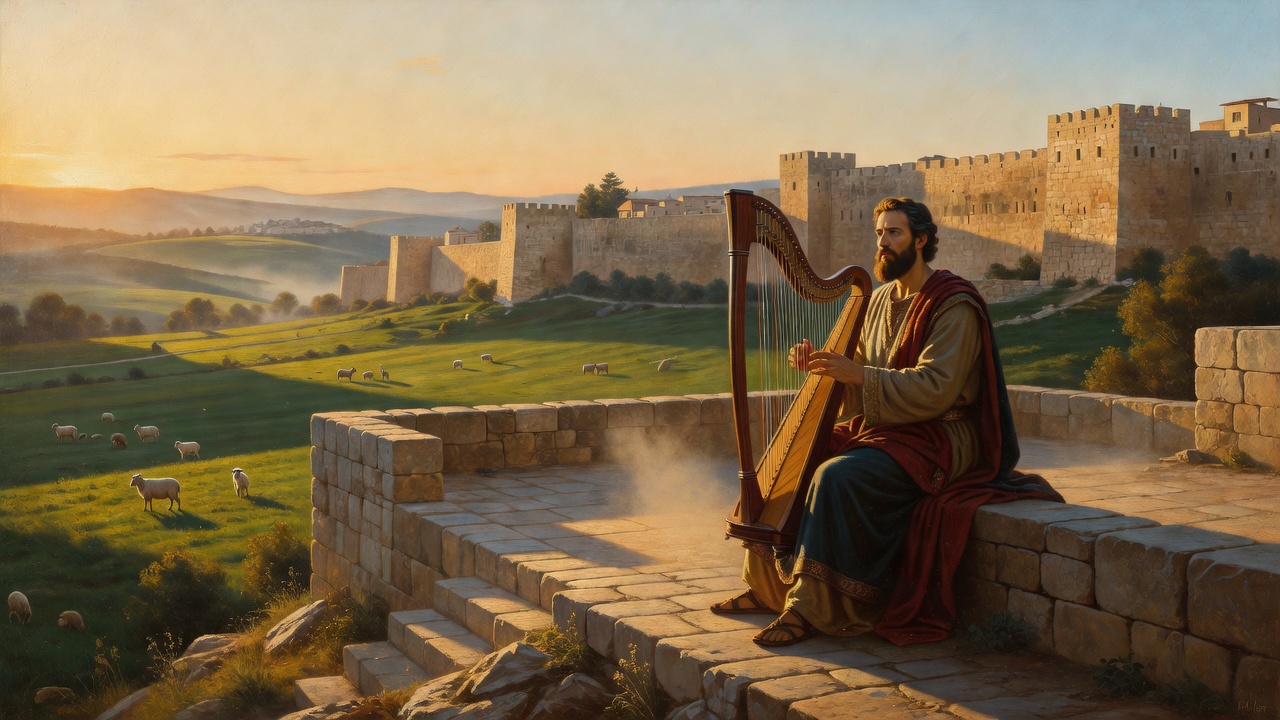
- El salmo se atribuye a David, quien une súplicas de liberación militar con alabanza musical, prometiendo cantar un cántico nuevo a Dios acompañado de un arpa de diez cuerdas.Fuentes: David · el propio texto bíblico
- El texto reflexiona sobre la fragilidad humana, describiendo al hombre como un simple aliento y la vida humana como una sombra que pasa frente a la majestad y el poder divinos.Fuentes: el propio texto bíblico
- La sección final contempla la seguridad comunitaria y la abundancia agrícola, rogando por hijos vigorosos, graneros llenos, rebaños que se multiplican y ciudades con muros intactos, sin asedios ni cautiverio.Fuentes: el propio texto bíblico
Notas escritas con ayuda de IA a partir de fuentes abiertas (Theographic Bible Metadata, CC BY-SA 4.0; Easton’s Bible Dictionary, dominio público) y revisadas antes de publicarse.
Créditos y licencia de esta traducción
Luda yã takada kũ Bisã yão
Portions of the Holy Bible in the Busa language of Nigeria
copyright © 2005 SIM International
Language: Bisã (Busa)
Translation by: SIM
This translation text is made available to you under the
terms of the Creative Commons License: Attribution-Noncommercial-No Derivative Works.
( http://creativecommons.org/licenses/by-nc-nd/3.0/ )
In addition, you have permission to port the text to different file formats, as long as you
do not change any of the text or punctuation of the Bible.
You may share, copy, distribute, transmit, and extract portions
or quotations from this work, provided that you include the above copyright
information:
You must give Attribution to the work.
You do not sell this work for a profit.
You do not make any derivative works that change any of the actual words or punctuation of the Scriptures.
Permissions beyond the scope of this license may be
available if you contact
us with your request.
This translation is made available to you under the terms of the
Creative Commons Attribution-Noncommercial-No Derivatives license 4.0.
You may share and redistribute this Bible translation or extracts from it in any format, provided that:
You include the above copyright and source information.
You do not sell this work for a profit.
You do not change any of the words or punctuation of the Scriptures.
Pictures included with Scriptures and other documents on this site are licensed just for use with those Scriptures and documents.
For other uses, please contact the respective copyright owners.
2014-10-10
Fuente: http://ebible.org/bqp/ · eBible.org