Génesis 13
Luda yã takada kũ Bisã yão · Toca un versículo para ver sus referencias cruzadas.
Abramu kɛ̃kↄ̃ana kũ Lutuo
1Akũ Abramu bò Misila à sù Nɛgɛvi kũ a nanↄo kũ a aruzɛkɛnↄ pínki kũ Lutuo. 2Abramu bi aruzɛkɛdemɛ, à pↄ́kãdenↄ vĩ dasi kũ andurufuuo kũ wuraao. 3Bona Nɛgɛvi à sↄ̃̀sↄ̃ gu kũ guo ari à gɛ̀ɛ à kào Bɛtɛli, gu kũ à bùraa kàtɛn káaku Bɛtɛli dagura kũ Aio, 4gu kũ à sa'oki bòn yã. Akũ à Dikiri sìsi gwe.
5Lutu dìgↄ̃ tɛ́ kũ Abramuo lɛɛlɛ. À sãnↄ kũ zùnↄ kũ bizakutanↄ vĩ se. 6Ń pↄ́kãdenↄn dasi, gu pìi sɛ̃̀ dí mↄ́ḿma ń pínkiro. A yã mɛ́ à tò oni fↄ̃ ògↄ̃ kú gu dokↄ̃nↄ lɛɛlɛ doro. 7Akũ lɛ́kpakↄ̃a gɛ̃̀ Abramu pↄ́dãrinↄ kũ Lutu pↄ́dãrinↄ dagura. Zĩ kũ̀a sↄ̃ Kanaanↄ kũ Pɛrizinↄn kú bùsuu pìn. 8Akũ Abramu pì Lutunɛ: À mana lɛ́kpakↄ̃a gↄ̃ kú ó daguraro, ke ma pↄ́dãrinↄ kũ n pↄ́dãrinↄ dagura, zaakũ danɛnↄn ó ũ. 9Ǹ bùsu gwa da n arɛ pínki. Ò kɛ̃kↄ̃a. Tó n gɛ ↄzɛi, mani gɛ́ ↄplai. Tó n gɛ ↄplaimɛ sↄ̃, mani gɛ́ ↄzɛi. 10Kũ Lutu gu gwà, à è Yoda guvutɛ pínki mↄtↄ vĩ manamana. Ari Dikiri gↄ̃ gɛ́ Sↄdↄmu kũ Gↄmↄrao kakatɛ, guvutɛ pì de lán Dikiri swadakoo bà, lán Misila bùsuu bà, ari à gɛ̀ɛ pɛ́ Zoaa. 11Akũ Lutu Yoda guvutɛ sɛ̀ pínki. Ò kɛ̃̀kↄ̃a, akũ Lutu dà zɛ́n à tà ifãboki kpa. 12Abramu gↄ̃̀ Kanaanↄ bùsun, Lutu sↄ̃ à kú Yoda guvutɛ wɛ̃tɛnↄ dagura. À bùraa kàtɛ Sↄdↄmu sarɛ. 13Sↄdↄmudenↄ sↄ̃ ò vãni, durunnakɛri sànↄmɛ ń ũ Dikiri kĩnaa.
14Lutu tanaa gbɛra Dikiri pì Abramunɛ: Gu kũ ń zɛ́n ǹ wɛ́ sɛ́ ǹ gugbãnduru kũ gɛ̀nↄmidↄkio kũ ifãbokio kũ ifãlɛtɛo gwa. 15Zĩtɛ kũ n è pínki, ma kpàmma, anigↄ̃ de mↄkↄ̃n kũ n burinↄ pↄ́ ũ ari gↄrↄ sĩnda pínki. 16Mani tó n burinↄ kɛ dasi lán bùsu'atɛ̃ bà. Tó gbɛ̃ke ni fↄ̃ à bùsu'atɛ̃ naro, de ani fↄ̃ à n burinↄ naro. 17Ǹ futɛ ǹ gɛ̃ bùsuu pìn ǹ a gbã̀na kũ a yàasaao gwa, zaakũ ma kpàmmamɛ. 18Abramu fùtɛ à gɛ̀ɛ à vùtɛ Mamare gbiri lí kũ ò kú Ɛblↄnunↄ sarɛ, akũ à Dikiri gbagbaki bò gwe.
¿Sabías que…?
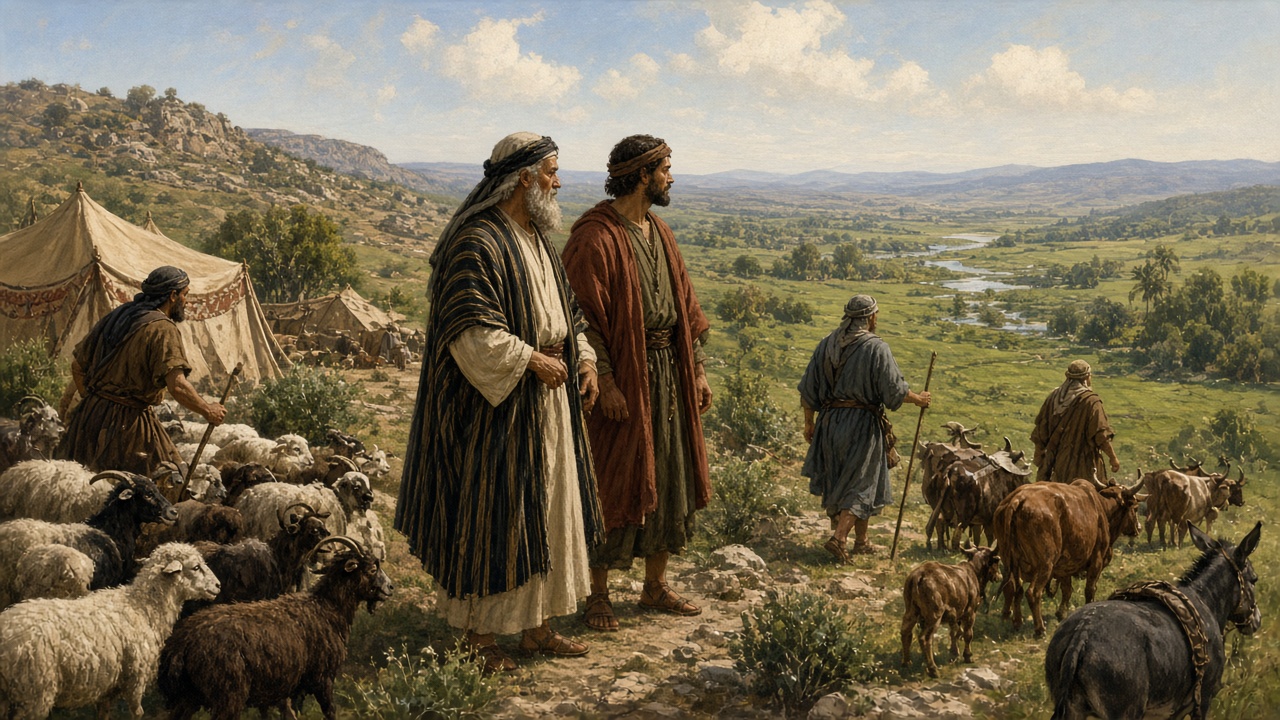
Abram y Lot se separan
- Abram subió de Egipto al Néguev, la región árida al sur de Palestina por donde corría la ruta de las caravanas entre la Palestina central y Egipto, y avanzó de lugar en lugar hacia Betel.Fuentes: Negeb · el propio texto bíblico
- Volvió al lugar entre Betel y Ai donde había estado su tienda y donde había construido un altar, y allí invocó el nombre del Señor. El Diccionario Bíblico de Easton (1897) describe Betel, a unas diez millas al norte de Jerusalén, como la antigua ciudad real cananea de Luz, y sostiene que el nombre Betel se dio primero a un santuario cercano y no a la ciudad misma hasta que la tribu de Efraín la conquistó. Ai era una de las ciudades reales cananeas y quedaba al este de Betel.Fuentes: Bethel (of Palestine) · Ai · el propio texto bíblico
- Lot miró y vio la llanura del Jordán, bien regada hasta Zoar, como el jardín del Señor y como la tierra de Egipto. El Diccionario Bíblico de Easton (1897) llama a esto la primera mención histórica del Jordán, en el relato de la separación de Abraham y Lot, y sitúa Sodoma, hacia donde Lot plantó su tienda, en el valle de Sidim. El capítulo señala que el Señor aún no había destruido Sodoma y Gomorra, destrucción que el diccionario atribuye a fuego del cielo por la maldad de la ciudad.Fuentes: Plain of Jordan · Sodom · el propio texto bíblico
Notas escritas con ayuda de IA a partir de fuentes abiertas (Theographic Bible Metadata, CC BY-SA 4.0; Easton’s Bible Dictionary, dominio público) y revisadas antes de publicarse.
Lugares de este capítulo
- Egypt · 30.129, 31.308 · versículos 1, 10
- Negeb · 31.245, 34.841 · versículos 1, 3
- Jordan Valley · 32.317, 35.570 · versículos 10, 11, 12
- Canaan · 32.767, 35.333 · versículo 12
- Hebron · Hoy: Tel Rumeida · 31.525, 35.102 · versículo 18
Solo aparecen lugares identificados con alta confianza (90 % o más según las fuentes académicas reunidas por OpenBible). Mapa de la época: DARE (Digital Atlas of the Roman Empire), CC BY 4.0; mapa actual: © colaboradores de OpenStreetMap; lugares: OpenBible.info (CC BY 4.0).
Créditos y licencia de esta traducción
Luda yã takada kũ Bisã yão
Portions of the Holy Bible in the Busa language of Nigeria
copyright © 2005 SIM International
Language: Bisã (Busa)
Translation by: SIM
This translation text is made available to you under the
terms of the Creative Commons License: Attribution-Noncommercial-No Derivative Works.
( http://creativecommons.org/licenses/by-nc-nd/3.0/ )
In addition, you have permission to port the text to different file formats, as long as you
do not change any of the text or punctuation of the Bible.
You may share, copy, distribute, transmit, and extract portions
or quotations from this work, provided that you include the above copyright
information:
You must give Attribution to the work.
You do not sell this work for a profit.
You do not make any derivative works that change any of the actual words or punctuation of the Scriptures.
Permissions beyond the scope of this license may be
available if you contact
us with your request.
This translation is made available to you under the terms of the
Creative Commons Attribution-Noncommercial-No Derivatives license 4.0.
You may share and redistribute this Bible translation or extracts from it in any format, provided that:
You include the above copyright and source information.
You do not sell this work for a profit.
You do not change any of the words or punctuation of the Scriptures.
Pictures included with Scriptures and other documents on this site are licensed just for use with those Scriptures and documents.
For other uses, please contact the respective copyright owners.
2014-10-10
Fuente: http://ebible.org/bqp/ · eBible.org