Daniel 9
Luda yã takada kũ Bisã yão · Toca un versículo para ver sus referencias cruzadas.
Dɑniɛli u kɑnɑru kuɑ
win tɔmbun sɔ̃
1Sɑɑ ye Dɑrusi, Asuresin bii, Mɛdin bweseru u bɑndu dii Bɑbilonin temɔ, 2win bɑndun wɔ̃ɔ gbiikuu sɔɔ, Dɑniɛli u tirenu mɛɛrimɔ mɑ u girɑri mi Yinni Gusunɔ u win sɔmɔ Yeremi sɔ̃ɔwɑ u nɛɛ, wɔ̃ɔ wɑtɑ kɑ wɔkurɑ Yerusɑlɛmu yɑ ko n sɑ̃ɑ bɑnsu. 3Mɑ u nɔɔ bɔkuɑ u sɑɑki deewɑ u tii torom wisi nuku sɑnkirɑnun sɔ̃. Mɑ u kɑnɑru koosi Yinni Gusunɔn mi giɑ, 4u win tɔmbun torɑnu tuubɑ mɔ̀.
U nɛɛ, Yinni Gusunɔ, ɑ kpɑ̃ mɑ sɑ nun nɑsie. A rɑ wunɛn nɔɔ mwɛɛru yibie kpɑ ɑ wunɛgibu kĩru sɔ̃ɔsi be bɑ nun kĩ bɑ wunɛn woodɑbɑ mɛm nɔɔwɑmmɛ. 5Sɑ torɑ, sɑ dɑɑ kɔ̃sɑ kuɑ, sɑ sɑ̃ɑ nuku kɔ̃surugibu, sɑ wunɛn gɑri yinɑ, sɑ mɑɑ wunɛn woodɑbɑ sɑrɑ. 6Sɑ ǹ wunɛn sɔmɔbu swɑɑ dɑki sɑnɑm mɛ bɑ bɛsɛn sinɑmbu kɑ bɛsɛn wirugibu kɑ bɛsɛn bɑɑbɑbɑ kɑ bɛsɛn tɔmbu kpuro wunɛn gɑri sɔ̃ɔwɑ. 7Yinni Gusunɔ, ɑ sɑ̃ɑwɑ gemgii. Bɛsɛrɑ sɑ torɑ. Mɑ sɑ wɑ̃ɑ sekuru sɔɔ gisɔ bɛsɛ Yudɑbɑ kɑ be bɑ wɑ̃ɑ Yerusɑlɛmuɔ kɑ Isirelibɑ kpuro be ɑ yɑrinɑsiɑ tontondeɔ kɑ turukuɔ yèn sɔ̃ sɑ ǹ nun mɛm nɔɔwɛ. 8Yinni, wee sɑ sekuru sɔɔwɑ bɛsɛ kɑ bɛsɛn sinɑmbu kɑ bɛsɛn wirugibu kɑ bɛsɛn bɑɑbɑbɑ. Domi sɑ nun torɑri. 9Gusunɔ bɛsɛn Yinni, ɑ sun suuru kuo wunɛn wɔnwɔndun sɑɑbu bɑɑ mɛ sɑ wunɛn gɑri yinɑ. 10Sɑ ǹ mɑɑ wunɛn gere swɑɑ dɑki su sere nɛɛ, sɑ ko wunɛn woodɑbɑ swĩi ye wunɛn sɔmɔbu bɑ sun nɔɔsiɑ. 11Mɛyɑ bɛsɛ Isirelibɑ kpuro sɑ wunɛn woodɑbɑ sɑrɑ, sɑ ǹ wunɛn gere swɑɑ dɑki. Sɑ torɑ. Yen sɔ̃nɑ bɔ̃ri yi ɑ derɑ wunɛn sɔm kowo Mɔwisi u yoruɑ woodɑn tireru sɔɔ yi sun di. 12Nge mɛyɑ ɑ derɑ wunɛn gɑri yi koorɑ yi ɑ nɛɛ, kɑɑ bɛsɛ kɑ bɛsɛn wirugibu kuɑ. A derɑ Yerusɑlɛmu yɑ nɔni swɑ̃ɑru wɑ tèn bweseru bɑ ǹ wɑɑre gɑm. 13Wɑhɑlɑ ye kpuro, yɑ sun deemɑ nge mɛ Mɔwisi u yoruɑ woodɑn tireru sɔɔ. Kɑ mɛ, sɑ ǹ bɛsɛn dɑɑ kɔ̃sɑ deri su wunɛn gem swĩi kpɑ su wunɛn kĩi geeru kɑsu. 14Gusunɔ bɛsɛn Yinni, wɑhɑlɑ ye ɑ nɛɛ, sɑ ko wɑ, yerɑ yɑ sun deemɑ. Ye ɑ kuɑ kpuro yɑ sɑ̃ɑwɑ dee dee. Bɛsɛrɑ sɑ ǹ nun mɛm nɔɔwɛ.
15Gusunɔ bɛsɛn Yinni, ye ɑ sun yɑrɑmɑ Egibitin tem di, wunɛn dɑm mu sɔ̃ɔsirɑ. A yĩsiru yɑrɑ te tɑ wɑ̃ɑ sere kɑ gisɔ. Adɑmɑ bɛsɛ, sɑ durum kɑ dɑɑ kɔ̃sɑ kuɑ gem gem. 16Tɛ̃ Yinni, nɑ nun kɑnɑmɔ wunɛn durom sɔ̃, ɑ de wunɛn mɔru yu doonɑ wunɛn wuu Yerusɑlɛmun min di, ge gɑ wɑ̃ɑ wunɛn guu te ɑ gɔsɑn wɔllɔ. Domi be bɑ sun sikerenɛ bɑ Yerusɑlɛmu kɑ bɛsɛ wunɛn tɔmbu gɛmɑ bɛsɛn torɑnu kɑ bɛsɛn bɑɑbɑbɑn dɑɑ kɔ̃sɑn sɔ̃. 17Gusunɔ, ɑ nɛn nɔɔ swɑɑ dɑkio kpɑ ɑ nɛn kɑnɑru nɔ. A wunɛn sɑ̃ɑ yee te tɑ bɑnsu sɑ̃ɑ mi mɛɛrio wunɛn yĩsirun sɔ̃. 18Gusunɔ nɛn Yinni, ɑ swɑɑ dɑkio ɑ nɔ. A nɔni seeyo ɑ wuu ge bɑ kɑ wunɛn yĩsiru sokumɔ mɛɛri nge mɛ gɑ bɑnsu kuɑ. Sɑ yɛ̃ mɑ bɛsɛn dɛɛrɑrɑ kun turɑ su kɑ nun gɑ̃ɑnu gɑnu kɑnɑ. Adɑmɑ wunɛn wɔnwɔn bɑkɑrun sɔ̃nɑ sɑ nun yeni kɑnɑmɔ. 19Yinni, ɑ bɛsɛn kɑnɑru nɔɔwɔ kpɑ ɑ sun suuru kuɑ. A bɛsɛn gere swɑɑ dɑkio kpɑ ɑ ko ye sɑ bikiɑ. A ku de n tɛ wunɛn yĩsirun sɔ̃. Domi wunɑ ɑ wuu ge kɑ tɔn be kpuro mɔ.
Gɑbiriɛ u kɑ̃siru tubusiɑ
20Sɑnɑm mɛ Dɑniɛli u kɑnɑ te mɔ̀ u gɑri gerumɔ u ǹ kpɑ, u wi kɑ win tɔmbun torɑnu tuubɑ mɔ̀, mɑ u Gusunɔ win Yinni kɑnɑmɔ win sɑ̃ɑ yee dɛɛrɑ ten sɔ̃, yerɑ durɔ wi, Gɑbiriɛ wi u rɑɑ wɑ win kɑ̃si gbiikiru sɔɔ, u nùn yɔ̃ɔsimɑ kɑ dɑm u surɑ win bɔkuɔ sɑɑ yè sɔɔ bɑ rɑ yokɑn yɑ̃kuru ko. 22U kɑ nùn gɑri kuɑ u nɛɛ, nɑ nɑwɑ wunɛn mi, n kɑ nun kɑ̃si te tubusiɑ. 23Sɑɑ yèn di ɑ wunɛn kɑnɑru toruɑ, Gusunɔ u tu mwɑ. Yen sɔ̃nɑ nɑ nun win gɑri sɔ̃ɔbu nɑ, domi Gusunɔ u nun kĩ. Ǹ n mɛn nɑ, ɑ swɑɑ dɑkio n nun kɑ̃si te tubusiɑ. 24Sɑɑ nɔɔbɑ yirun nɔn wɑtɑ kɑ wɔkurɑ Gusunɔ u himbɑ kuɑ yu doonɑ u sere wunɛn tɔmbu kɑ wunɛn wuu dɛɛrɔ yɑkiɑ torɑnu kɑ kɔ̃sɑ kpuron di. Yen biru, u koo bu ben torɑnu suuru kuɑ kpɑ u bu gem wɛ̃ sere kɑ bɑɑdommɑɔ. Gusunɔn sɔmɔbun gɑri kɑ kɑ̃sinun bɑɑ yɑ koo doonɑ kpɑ tɔn dɛɛro goo u ko sunɔ. 25Ǹ n mɛn nɑ, ɑ bwisikuo kpɑ ɑ tubu. Sɑɑ mìn di bɑ woodɑ wɛ̃ bu Yerusɑlɛmu sɔmɛ bu bɑni, sere wirugii wi Gusunɔ u gɔsɑ u kɑ nɑ, yɑ koo kowɑ sɑɑ nɔɔbɑ yirun nɔn nɔɔbɑ yiru. Yen biru, bɑ koo yen swɛɛ sɔmɛ kɑ yen gbɑ̃rɑru sɑɑ nɔɔbɑ yirun non wɑtɑ kɑ yiru sɔɔ. Sɑɑ ye, yɑ ko n sɑ̃ɑwɑ wɑhɑlɑn sɑɑ. 26Sɑɑ nɔɔbɑ yirun nɔn wɑtɑ kɑ yiru ye, yɑ̀ n doonɑ, bɑ koo wirugii wi Gusunɔ u gɔsɑ go. Goo sɑri wi u koo kɑ nùn yinɑ. Kpɑ sunɔ kpɑo kɑ win tɑbu kowobu bu wuu ge, kɑ sɑ̃ɑ yee te wisire bu kɔsuku kpɑ bɑ n ɑsɔrɔ mɔ̀ sere Gusunɔ u rɑ kɑ nùn kpeerɑsiɑ nge mɛ u yi. 27Wirugii wi, u ko n kɑ tɔn dɑbiru nɔɔ tiɑ sɑ̃ɑ sere sɑɑ nɔɔbɑ yiru. Sɑɑ itɑ kɑ bɔnun biru, u koo de yɑ̃kunu kɑ ɑbɔnu nu kpe kpɑ u gɑ̃ɑ kɔ̃sunu ko sɑ̃ɑ yerɔ nìn bweseru goo kun koore sere kɑm koo bi Yinni Gusunɔ u yi win sɔ̃ bu kɑ nùn deemɑ.
¿Sabías que…?
La oración de Daniel y las setenta semanas
- Daniel comprendió, a través de los escritos sagrados con la profecía de Jeremías, que la desolación de Jerusalén duraría setenta años. Esto lo impulsó a buscar a Dios con profunda intercesión, ayuno, cilicio y ceniza, confesando los pecados de su pueblo.Fuentes: el propio texto bíblico · Jeremiah
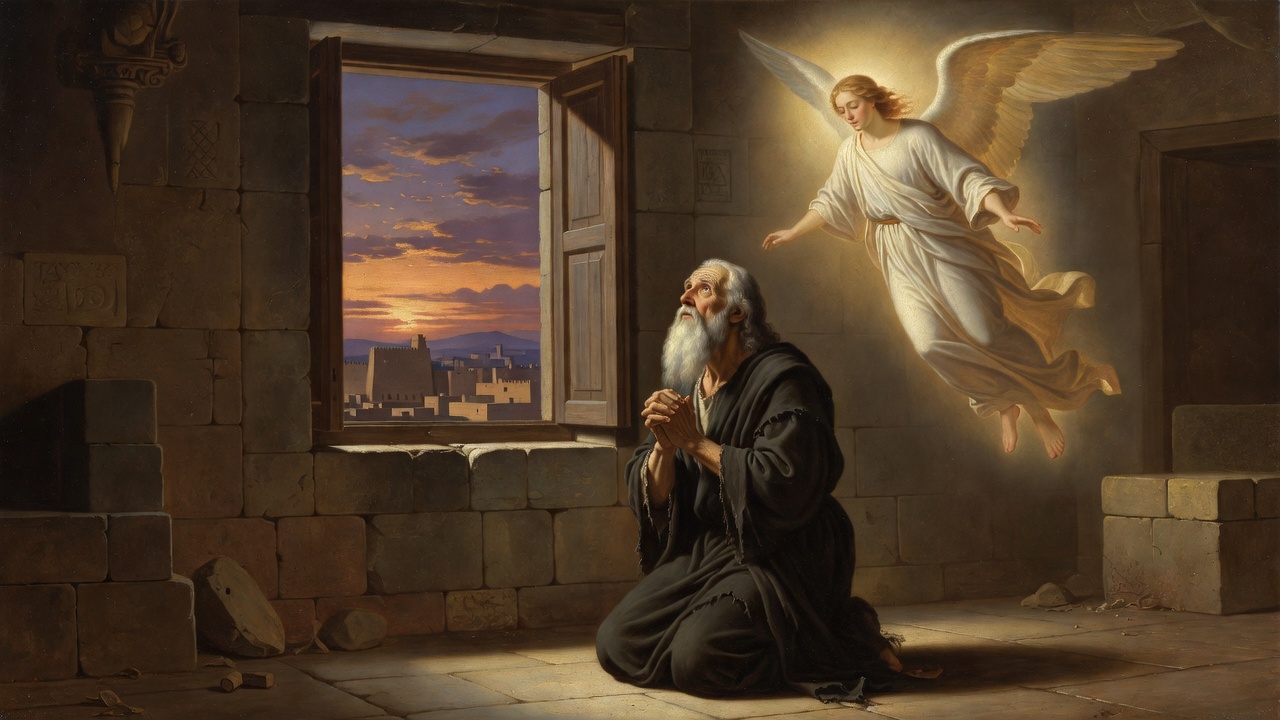
- Mientras Daniel oraba a la hora del sacrificio de la tarde, el ángel Gabriel —cuyo nombre significa "Campeón de Dios"— se le acercó para darle entendimiento. Gabriel le comunicó la profecía de las "setenta semanas" decretadas para la ciudad santa y su pueblo.Fuentes: el propio texto bíblico · Gabriel
- En su oración de confesión, Daniel reconoció que la calamidad sobre Jerusalén y la dispersión del pueblo cumplían directamente el juramento y la maldición escritos en la Ley de Moisés.Fuentes: el propio texto bíblico · Moses
Notas escritas con ayuda de IA a partir de fuentes abiertas (Theographic Bible Metadata, CC BY-SA 4.0; Easton’s Bible Dictionary, dominio público) y revisadas antes de publicarse.
Lugares de este capítulo
- Chaldea · 30.962, 46.104 · versículo 1
- Jerusalem · 31.777, 35.234 · versículos 2, 7, 12, 16, 20, 25
- Egypt · 30.129, 31.308 · versículo 15
- Most Holy Place · Hoy: on Mount Moriah · 31.778, 35.236 · versículo 24
Solo aparecen lugares identificados con alta confianza (90 % o más según las fuentes académicas reunidas por OpenBible). Mapa de la época: DARE (Digital Atlas of the Roman Empire), CC BY 4.0; mapa actual: © colaboradores de OpenStreetMap; lugares: OpenBible.info (CC BY 4.0).
Créditos y licencia de esta traducción
Luda yã takada kũ Bisã yão
Portions of the Holy Bible in the Busa language of Nigeria
copyright © 2005 SIM International
Language: Bisã (Busa)
Translation by: SIM
This translation text is made available to you under the
terms of the Creative Commons License: Attribution-Noncommercial-No Derivative Works.
( http://creativecommons.org/licenses/by-nc-nd/3.0/ )
In addition, you have permission to port the text to different file formats, as long as you
do not change any of the text or punctuation of the Bible.
You may share, copy, distribute, transmit, and extract portions
or quotations from this work, provided that you include the above copyright
information:
You must give Attribution to the work.
You do not sell this work for a profit.
You do not make any derivative works that change any of the actual words or punctuation of the Scriptures.
Permissions beyond the scope of this license may be
available if you contact
us with your request.
This translation is made available to you under the terms of the
Creative Commons Attribution-Noncommercial-No Derivatives license 4.0.
You may share and redistribute this Bible translation or extracts from it in any format, provided that:
You include the above copyright and source information.
You do not sell this work for a profit.
You do not change any of the words or punctuation of the Scriptures.
Pictures included with Scriptures and other documents on this site are licensed just for use with those Scriptures and documents.
For other uses, please contact the respective copyright owners.
2014-10-10
Fuente: http://ebible.org/bqp/ · eBible.org