Salmos 87
Bibeli Luayãtaalá · Toca un versículo para ver sus referencias cruzadas.
Siↄnaá Lua wɛ̃́lɛɛ
Kole buiↄ lɛ.
1Lua a wɛ̃́lɛ kàlɛ gbɛ̀sĩsĩ pↄ́ a kua adoa musu,
2Dii ye Siↄna bĩ́ibↄlɛↄi
dɛ Yakↄbu buiↄ wɛ̃́lɛ kĩniↄla píi.
3Lua gawi yã'ò wɛ̃́lɛpi musu à mɛ̀:
4Má Egipiↄ ń Babɛlideↄ da gbɛ̃́ pↄ́ aa ma dↄ̃ↄ guu.
Filitɛ̃ↄ ku a guu lↄ ń Tiideↄ ń Etiopiↄ.
Wa mɛ wà gbɛ̃́ beeↄ ì weɛ.
5Wa o Siↄna yã́ musu:
Wà wã́anɛ ń wã́anɛo ì weɛ,
Musude mɛ́ ì a zɛdↄ gíũgiũ.
6Tó Dii lɛ́ gbɛ̃́ↄ tↄ́ dalau,
a mɛ: Wà gbɛ̃́ beeↄ ì weɛ.
7Lɛ̀sinaↄ ń ↄ̃wãnaↄ píi aa mɛ:
Wá maa píi ì bↄ Siↄnaɛ.
¿Sabías que…?
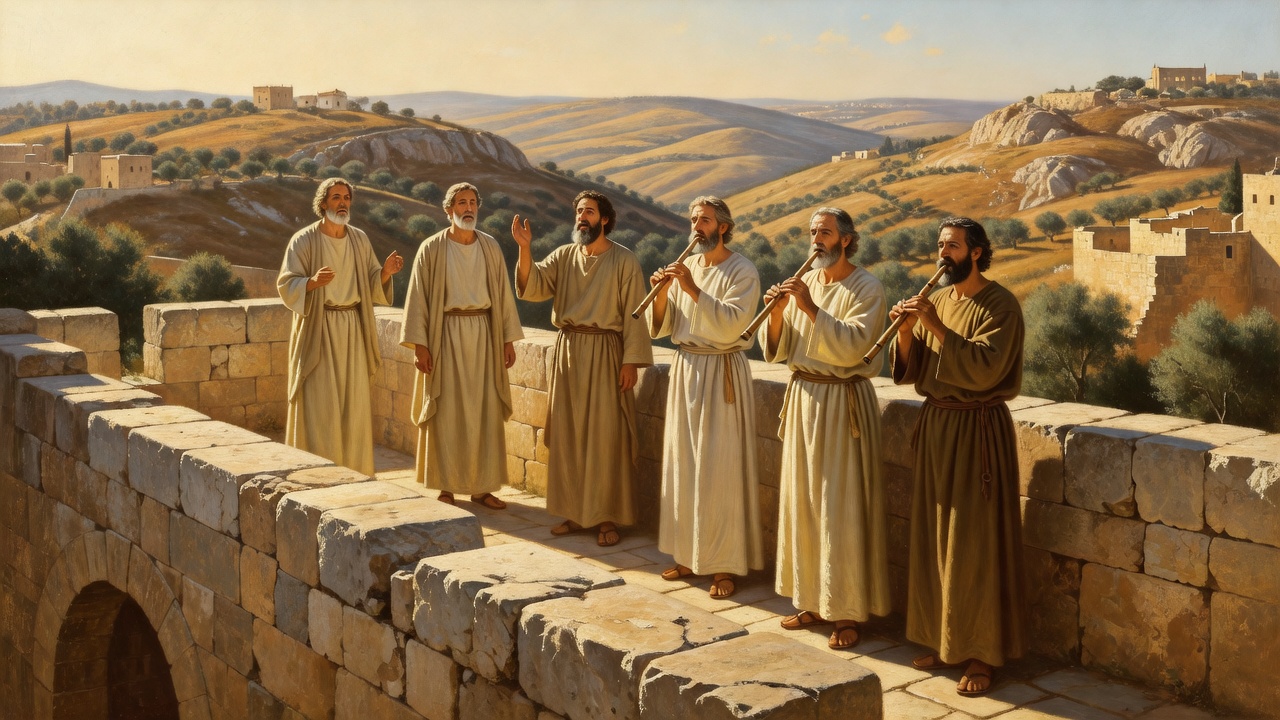
Sion y las naciones
- En el Salmo 87, regiones extranjeras e históricamente rivales —incluidas Babilonia, Filistea, Tiro y Cus— son retratadas como registradas como ciudadanas nativas nacidas en Sion, la ciudad de Dios.Fuentes: el propio texto bíblico · Zion · Tyre · Babylon
- El nombre 'Rahab' en el versículo 4 es un término poético hebreo que significa insolencia u orgullo, empleado en la poesía bíblica como una designación simbólica de Egipto.Fuentes: Rahab · el propio texto bíblico
- El salmo está atribuido a los 'hijos de Coré', un grupo levítico encargado de la música en Jerusalén siglos después de que su antepasado Coré encabezara una rebelión en el desierto.Fuentes: Korah (Levite) · el propio texto bíblico
Notas escritas con ayuda de IA a partir de fuentes abiertas (Theographic Bible Metadata, CC BY-SA 4.0; Easton’s Bible Dictionary, dominio público) y revisadas antes de publicarse.
Lugares de este capítulo
- Zion · Hoy: Jerusalem · 31.777, 35.234 · versículos 2, 5
- Babylon · 32.543, 44.422 · versículo 4
- Cush · Hoy: Cush 1 · 16.935, 33.751 · versículo 4
- Egypt · 30.129, 31.308 · versículo 4
- Jerusalem · 31.777, 35.234 · versículos 4, 6, 7
- Philistia · 31.664, 34.546 · versículo 4
- Tyre · 33.271, 35.196 · versículo 4
Solo aparecen lugares identificados con alta confianza (90 % o más según las fuentes académicas reunidas por OpenBible). Mapa de la época: DARE (Digital Atlas of the Roman Empire), CC BY 4.0; mapa actual: © colaboradores de OpenStreetMap; lugares: OpenBible.info (CC BY 4.0).
Créditos y licencia de esta traducción
Bibeli Luayãtaalá
The Holy Bible in the Boko language spoken in Benin and Nigeria
copyright © 2010 SIM International
Language: Boko
Translation by: SIM International
Boko Bibeli Luayãtaala
This translation, published by the SIM au Benin, was published in 2010.
If you are interested in obtaining a printed copy, please contact the SIM at ECWA/SIM H.Q., P.M.B. 2009, Jos, Plateau State, NIGERIA.
This translation text is made available to you under the
terms of the Creative Commons License: Attribution-Noncommercial-No Derivative Works.
( http://creativecommons.org/licenses/by-nc-nd/3.0/ )
In addition, you have permission to port the text to different file formats, as long as you
do not change any of the text or punctuation of the Bible.
You may share, copy, distribute, transmit, and extract portions
or quotations from this work, provided that you include the above copyright
information:
You must give Attribution to the work.
You do not sell this work for a profit.
You do not make any derivative works that change any of the actual words or punctuation of the Scriptures.
Permissions beyond the scope of this license may be
available if you contact
us with your request.
This translation is made available to you under the terms of the
Creative Commons Attribution-Noncommercial-No Derivatives license 4.0.
You may share and redistribute this Bible translation or extracts from it in any format, provided that:
You include the above copyright and source information.
You do not sell this work for a profit.
You do not change any of the words or punctuation of the Scriptures.
Pictures included with Scriptures and other documents on this site are licensed just for use with those Scriptures and documents.
For other uses, please contact the respective copyright owners.
2014-09-25
Fuente: http://ebible.org/bqcsim/ · eBible.org