Juan 11
Bibeli Luayãtaalá · Toca un versículo para ver sus referencias cruzadas.
Lazaa gaa
1Gbɛ̃́ pↄ́ wì mɛ Lazaa lɛ́ gyãkɛ Bɛtani, wɛ̃́lɛ pↄ́ aà dãeↄ Maliama ń Maatao kuu. 2Maliamapi mɛ́ nↄɛ pↄ́ tulale kà Diiwa à aà gbá wàa ń a mikão ũ. 3Ɔ̃ Lazaa dãepiↄ lɛ́kpãsãkɛ̀ Yesuɛ aa mɛ̀: Dii, n gbɛ̃na lɛ́ gyãkɛ. 4Kɛ́ Yesu yã́pi mà à mɛ̀: Gyãpi miá ga no. Kɛ́ Lua zↄ̃ↄkɛ bↄ gupuau yã́iɛ, Lua Nɛ́ i tↄbↄ a musu. 5Yesu ye Maata ń aà dãunao ń Lazaaozi. 6Aà Lazaa gyãkɛa baomaa gbɛa à kɛ̀ gu pↄ́ á kúu gĩa gↄↄ pla.
7Bee gbɛa ↄ̃ a ò a ìwaↄnɛ: Wà ɛa gɛ́ Yude. 8Ɔ̃ aà ìwaↄ òɛ̀: Mɛtulu, gbãadeↄ ye n pápa ń gbɛo i gɛ̃gɛ̃o, ↄ̃ ń ye wà ɛa gɛ́ we lↄa? 9Yesu mɛ̀: Fãanɛ do lɛɛlu kuɛpla nolo? Gbɛ̃́ pↄ́ lɛ́ bɛbɛ fãanɛ lí gɛ̃mbↄlɛo, kɛ́ àlɛ gu'e dṹniaɛ bee gupua yã́i. 10Tó àlɛ bɛbɛ gwãasĩna, a gɛ̃mbↄlɛɛ, kɛ́ a gupuapi vĩo yã́i.
11Yã́pi oa gbɛa Yesu ònɛ́: Wá gbɛ̃na Lazaa i'ò. Málɛ gɛ́ aà vuiɛ. 12Ɔ̃ aà ìwaↄ òɛ̀: Dii, tó àlɛ i'oɛ, a aafiaʼe. 13Lazaa gaa yã́ Yesu lɛ́ onɛ́, ↄ̃ aalɛ e i'oaɛ sĩana. 14Ɔ̃ Yesu ònɛ́ sa wásawasa: Lazaa gàɛ. 15Ma pↄ kɛ̀na kɛ́ má kú weo, kɛ́ à e à ma náaikɛ yã́i. Wà gɛ́ aà kĩ́i. 16Ɔ̃ Tomaa pↄ́ wì mɛ Sìa ò a gbɛ̃́ↄnɛ: Wà gɛ́, wí ga ń Diio sↄ̃.
17Kɛ́ Yesu kà we, à mↄ lè wà Lazaa vĩ̀ à kɛ̀ gↄↄ síiↄ̃ kↄ̀. 18Bɛtani ku kãi ń Yelusalɛũo lán kiloo àaↄ̃ taawa. 19Yuda gbãadeↄ bↄ̀ we dasi aa mↄ̀ Maata ń Maliamao kĩ́i an nↄ̀sɛ níniinɛ́ an dãↄ ga yã́ musu. 20Kɛ́ Maata mà Yesu lɛ́ mↄ́, à gɛ̀ daiaàlɛ. Maliama gↄ̃̀ zↄ̃lɛa bɛ. 21Ɔ̃ Maata ò Yesuɛ: Dii, tó ń kú la yãa, ma dãↄ a gao. 22Baa tia má dↄ̃ kɛ́ yã́ pↄ́ ń gbɛ̀a Luawa, a kɛnɛ. 23Yesu òɛ̀: N dãↄ a vu. 24Maata òɛ̀: Má dↄ̃ kɛ́ a vu zĩ́ pↄ́ gɛↄ vu gↄↄgbɛzãzĩ. 25Yesu òɛ̀: Mámɛ má gbɛ̃́ pↄ́ ì gɛↄ vu à wɛ̃ni kpámá ũ. Baa tó ma náaikɛna gà, a gi àↄ kuɛ. 26Gbɛ̃́ pↄ́ kú mɛ́ àlɛ ma náaikɛ a ga bauo. N bee sìa? 27Maata òɛ̀: Ao Dii, má sì kɛ́ Mɛsii, Lua Nɛ́ pↄ́ wà mɛ̀ a mↄ dṹnia guun n ũ.
Lazaa vua
28Kɛ́ Maata yã́pi ò, à gɛ̀ a dãuna sìsi, a òɛ̀ asii guu: Mɛtulu mↄ̀, àlɛ n gbɛa. 29Kɛ́ Maliama yã́pi mà, à fɛ̀lɛ kpakpa, àlɛ gɛ́ aà kĩ́i. 30Yesu i gɛ̃ wɛ̃́lɛ guu yãao, a ku gu pↄ́ Maata dàuaàlɛ gĩaɛ. 31Gbãadepiↄ ku kpɛ́u ń Maliamao, aalɛ aà nↄ̀sɛ niniɛ̀. Kɛ́ aa è à fɛ̀lɛ ń wãao à bↄ̀, aa bↄ̀ tɛaàzi, asa aalɛ e àlɛ gɛ́ ↄ́ↄlↄi miaaɛ.
32Kɛ́ Maliama kà gu pↄ́ Yesu kúu, kɛ́ à aà è, à kùlɛ aà gbázĩ a òɛ̀: Dii, tó ń kú la yãa, ma dãↄ a gao. 33Yesu è àlɛ ↄ́ↄlↄ mɛ́ gbãade pↄ́ mↄ̀aànↄpiↄ lɛ́ ↄ́ↄlↄ lↄ. Ɔ̃ tòlobi zùaàgu, aà pↄ yà. 34Ɔ̃ à mɛ̀: A aà vĩ̀ má ni? Aa wèwà aa mɛ̀: Mae, mↄ ǹ gwa. 35Yesu wɛ́'ikàu. 36Ɔ̃ gbãadepiↄ mɛ̀: À gwa lá a yeaàzi. 37Ɔ̃ an gbɛ̃eↄ mɛ̀: Aà gbɛ̃́ pↄ́ à vĩ̀a wɛ́ wɛ̃̀, a fↄ̃ gi Lazaa ga yãao lé?
38Kɛ́ Yesu lɛ́ gɛ́ miapi kĩ́i, ↄ̃ tòlobi zùaàgu lↄ. Miapiá gbɛ̀'ɛɛ, gbɛ̀ gbɛ̃̀nɛ ta a lɛ́lɛ. 39Yesu mɛ̀: À gbɛpi go ɛpilɛ. Ɔ̃ gɛpi dãe Maata òɛ̀: Dii, à yaikɛ̀ kↄ̀, asa à kɛ̀ gↄↄ síiↄ̃ɛ. 40Yesu òɛ̀: Mi onɛ, tó ńlɛ ma náaikɛ, ńyↄ̃ Lua zↄ̃ↄkɛ eo lé? 41Ɔ̃ wà gbɛpi gò. Yesu wɛsɛ̀ musu à mɛ̀: Baa, ma n sáaukɛ̀ kɛ́ n ma yãmà. 42Má dↄ̃ kɛ́ niↄ ma yãma gↄↄpii, ãma má ò bíla pↄ́ kú la yã́iɛ, kɛ́ aa e si ḿmɛ n ma zĩ.
43Kɛ́ a ò beewa, à pũ̀na ń lↄↄ gbãao à mɛ̀: Lazaa, mↄ ǹ bↄ. 44Ɔ̃ gbɛ̃́ pↄ́ gàpi bↄ̀, pↄ́lɛ fĩfĩa aà mɛwa mɛ́ zwãa yea aà miwa. Yesu ònɛ́: À pↄ́ polowà, í aà gbaɛ.
Lɛkpaaĩa Yesuzi
45Yuda gbãade pↄ́ aa mↄ̀ Maliama kĩ́ipiↄ, kɛ́ aa yã́ pↄ́ Yesu kɛ̀pi è, aa aà náaikɛ̀ dasi. 46Ãma an gbɛ̃eↄ gɛ̀ Falisiↄ kĩ́i, aa yã́ pↄ́ Yesu kɛ̀ ònɛ́. 47Ɔ̃ sa'onkiaↄ ń Falisipiↄ gbãadeↄ gbɛ̀a kↄ̃kãaawa aa mɛ̀: Gbɛ̃́pi lɛ́ dabudabukɛ dasi, wá sɛ́ kpelewa ni? 48Tó wá tò àlɛ kɛ màa, wa aà náaikɛ píiɛ, Lomadeↄ i mↄ wá Lua kpɛ́ ń wá buio suumpa píi. 49Ɔ̃ an gbɛ̃do Kaaifa pↄ́ dɛ sa'onkia ũ wɛ̃ bee ònɛ́: Á yãe dↄ̃o. 50Kɛ́ gbɛ̃́ mɛ̀ndo gaa wápii gbɛu maa dɛ wá bui midɛala, á dↄ̃o lé? 51I yã́ bee o ń azĩaoo. Kɛ́ a dɛ sa'onkia ũ wɛ̃ bee yã́i, ↄ̃ à ãnabikɛkɛ̀ à dↄ̀aa lá Yesu a su ga Yudaↄ gbɛu ò. 52I kɛ Yudaↄ ńtɛ̃ɛ no, ń Lua nɛ́ pↄ́ fãaaaↄɛ lↄ, kɛ́ aà ń kɛ mɛ̀ doũ. 53Za zĩbeezĩ ↄ̃ gbãadepiↄ zɛ̀ ń Yesu dɛao. 54A yã́i tò Yesu i bↄ gupuau ń guu lↄo. Ɔ̃ à gɛ̀ zↄ̃ɛwia pↄ́ kú gbáa lɛ́a, wì mɛ Ɛflaiũ. À gↄↄplakɛ̀ we ń a ìwaↄ.
55Yudaↄ Gɛ̃amusu dikpɛ kãikũ̀. Wà bↄ̀ zↄ̃ɛwiaↄ guu dasidasi, wà gɛ̀ Yelusalɛũ e dikpɛpi àↄ ka gbãbↄa yã́i. 56Wàlɛ Yesu wɛɛlɛ, wa zɛa Lua ua, wàlɛ kↄ̃ lala wà mɛ̀: Á è kpelewai? A we mↄ dikpɛue? 57Sa'onkiaↄ ń Falisiↄ dìlɛ tó gbɛ̃e Yesu kúkĩi dↄ̃, aà onɛ́ kɛ́ wà e aà kṹ.
¿Sabías que…?
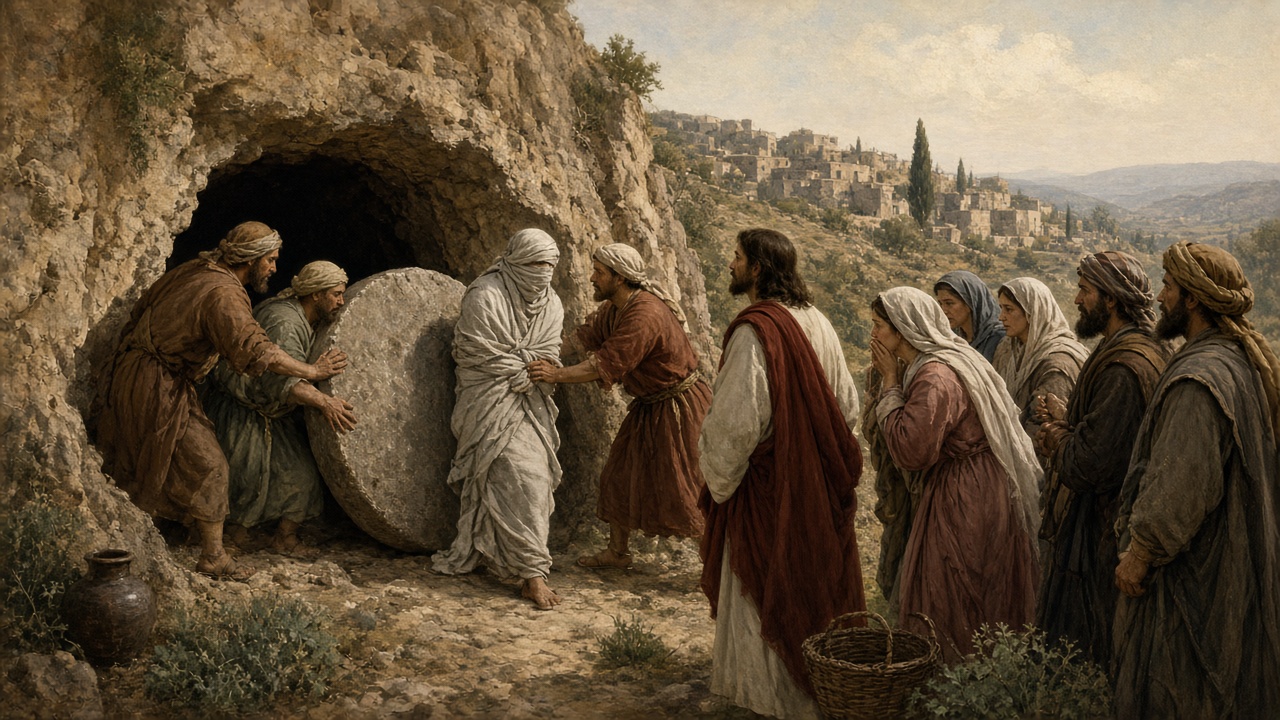
Lázaro resucitado en Betania
- Juan sitúa Betania, la aldea de Lázaro y de sus hermanas María y Marta, a poco menos de dos millas de Jerusalén. El diccionario bíblico de Easton (1897) la ubica en la ladera sureste del monte de los Olivos, en el camino a Jericó, y dice que el nombre venía de las palmeras que crecían allí y que la aldea era conocida como el-Azariyeh, “lugar de Lázaro”.Fuentes: Bethany · el propio texto bíblico
- Tomás, uno de los doce, también era llamado Dídimo, el equivalente griego de su nombre, que significa “gemelo”. Cuando Jesús decidió volver a Judea, donde poco antes habían intentado apedrearlo, Tomás dijo a los otros discípulos: “Vayamos también nosotros, para morir con él”.Fuentes: Thomas · el propio texto bíblico
- Después de que algunos contaron lo que Jesús había hecho, los principales sacerdotes y los fariseos reunieron al Sanedrín, temiendo que, si todos creían en Jesús, los romanos les quitaran su lugar y su nación. Caifás, sumo sacerdote aquel año y, según el diccionario bíblico de Easton (1897), un saduceo que ocupó el cargo del 27 al 36 d.C., dijo que era mejor que un hombre muriera por el pueblo a que pereciera toda la nación. Juan dice que, como sumo sacerdote aquel año, profetizaba que Jesús moriría por la nación, y desde ese día tramaron matarlo.Fuentes: Caiaphas · el propio texto bíblico
Notas escritas con ayuda de IA a partir de fuentes abiertas (Theographic Bible Metadata, CC BY-SA 4.0; Easton’s Bible Dictionary, dominio público) y revisadas antes de publicarse.
Lugares de este capítulo
- Judea · Hoy: Judea 1 · 31.777, 35.234 · versículos 7, 8, 54
- Jerusalem · 31.777, 35.234 · versículos 18, 54, 55
- Ephraim · Hoy: Taybeh · 31.954, 35.300 · versículo 54
Solo aparecen lugares identificados con alta confianza (90 % o más según las fuentes académicas reunidas por OpenBible). Mapa de la época: DARE (Digital Atlas of the Roman Empire), CC BY 4.0; mapa actual: © colaboradores de OpenStreetMap; lugares: OpenBible.info (CC BY 4.0).
Créditos y licencia de esta traducción
Bibeli Luayãtaalá
The Holy Bible in the Boko language spoken in Benin and Nigeria
copyright © 2010 SIM International
Language: Boko
Translation by: SIM International
Boko Bibeli Luayãtaala
This translation, published by the SIM au Benin, was published in 2010.
If you are interested in obtaining a printed copy, please contact the SIM at ECWA/SIM H.Q., P.M.B. 2009, Jos, Plateau State, NIGERIA.
This translation text is made available to you under the
terms of the Creative Commons License: Attribution-Noncommercial-No Derivative Works.
( http://creativecommons.org/licenses/by-nc-nd/3.0/ )
In addition, you have permission to port the text to different file formats, as long as you
do not change any of the text or punctuation of the Bible.
You may share, copy, distribute, transmit, and extract portions
or quotations from this work, provided that you include the above copyright
information:
You must give Attribution to the work.
You do not sell this work for a profit.
You do not make any derivative works that change any of the actual words or punctuation of the Scriptures.
Permissions beyond the scope of this license may be
available if you contact
us with your request.
This translation is made available to you under the terms of the
Creative Commons Attribution-Noncommercial-No Derivatives license 4.0.
You may share and redistribute this Bible translation or extracts from it in any format, provided that:
You include the above copyright and source information.
You do not sell this work for a profit.
You do not change any of the words or punctuation of the Scriptures.
Pictures included with Scriptures and other documents on this site are licensed just for use with those Scriptures and documents.
For other uses, please contact the respective copyright owners.
2014-09-25
Fuente: http://ebible.org/bqcsim/ · eBible.org