Jeremías 8
Bibeli Luayãtaalá · Toca un versículo para ver sus referencias cruzadas.
1Ma Dii ma mɛ̀, gↄↄ bee wa Yuda kíaↄ gɛwa bↄlɛ miau ń a gbãadeↄ ń a sa'onaↄ ń a ãnabiↄ ń Yelusalɛũdeↄ píi. 2Wa ↄliu ĩatɛ̃i ń mↄvuao ń saana pↄ́ aa yeńzi aa zↄblènɛ́ aa tɛ̀ńzi aa yãgbɛ̀amá aa kùlɛnɛ́ↄ. Wa sɛ́lɛ vĩo, aa gↄ̃ kálɛa tↄↄlɛ lán pↄtuo gbↄ̃waɛ. 3Gu pↄ́ má ↄzↄ̃u bui vãipizi píi, an gbɛ̃́ pↄ́ gↄ̃̀piↄ ga sí ń kuawaɛ. Ma Dii Zĩgↄ̃de mámɛ má ò.
Duuna ń yã́ pↄ́ ì inɛ́o
4Onɛ́ ma Dii ma mɛ̀:
Tó gbɛ̃́ lɛ̀lɛ, ìli fɛlɛo lé?
Tó gbɛ̃́ zã̀ zɛ́wa, ìli ɛao lé?
5Bↄ́yãi Yelusalɛũdeↄ ì zãmɛɛ yã́wai?
Àkɛa gbɛ̃́piↄ mikpɛ ìↄ dↄamɛɛi?
Mↄafili ↄ̃ aa zɛ̀ò, aa gì suia.
6Ma swãkpà má mà,
aali yã́zɛde oo,
mɛ́ an gbɛ̃e líↄ ku déndↄ̃mɛɛ guu
à mɛ: Bↄ́yãi ma vãiɛ taa kɛ̀o.
Ampii aaì tɛ́ ń tufaiɛ,
lán sↄ̃́ pↄ́ lɛ́ si zĩlauwa.
7Baa wàaliana ì fɛlɛ a gↄↄwaɛ,
felena ń luakibãnao ń yaabɛɛo
aaìↄ gↄↄ pↄ́ dɛ wa ɛa suwà dↄ̃ɛ,
kási ma gbɛ̃́ↄ ma yãdilɛnɛ dↄ̃o.
8Kpelewa á e o ↄ̃nↄnaↄn á ũ,
ámɛ á Dii ikoyã kũai?
Yãdanɛde ɛgɛnaↄ a bↄↄlɛkɛ̀ɛ́ kpaanlaɛ.
9Wí a ↄ̃nↄnapiↄ kũɛ,
aa bílikɛ, aai zu bai guu.
Aa gì ma yã́iɛ.
Ɔ̃nↄ kpeletaa buin wei?
10A yã́i má ń nↄɛↄ kpa gbɛ̃pãleↄwa,
an buaↄ i gↄ̃ dãↄnɛ.
Nɛ́fɛ̃nɛn gbɛ̃zↄ̃ↄ píi ↄvãi'enaↄnɛ.
Ãnabiↄ ń sa'onaↄá gbɛ̃sãsãnaↄnɛ.
11Aaì ɛsɛ má ma gbɛ̃́ↄ bↄwa,
lá a dɛ pↄe ũowa.
Aaì mɛ, aafia ku, aafia ku,
kási aafia ku we sↄ̃o.
12Yãbɛ̃ɛ pↄ́ aa kɛ̀ ì kɛnɛ́ wí ũe?
Aawo, ìli kɛnɛ́ wí ũo,
an gɛɛ lí gↄ̃ kpá ń wɛ́io.
A yã́i aa ta gbɛ̃́ pↄ́ gɛ̀ gɛ́kĩiↄ guu,
aa kwɛ gↄↄ pↄ́ málɛ ĩadamá.
Má Dii mámɛ má ò.
13Ma Dii ma mɛ̀,
má ń buapↄ́ↄ símáɛ.
Vɛ̃ɛ a kɛo,
kaadↄɛna a nɛ'io,
baa lá a giigaga.
Wa pↄ́ pↄ́ má kpàmáↄ símá.
14Bↄ́yãi wá kálɛa lai?
Wà kãaa wà ta wɛ̃́lɛ bĩ́ideↄu,
wíↄ ga dã we,
asa Dii wá Lua dìlɛ wà gagaɛ.
À kona í kpàwá wà mi,
kɛ́ wa duunakɛ̀ɛ yã́i.
15Wá wɛ́ dↄ aafiai,
kási yãmaae kuo.
Wa gbã́gbãgↄↄ dã̀,
ↄ̃ wá nisĩna nà líwa.
16Sↄ̃́ↄ lɛ́ pↄbↄ ń níu Dã buiↄ bùsuu,
bùsupi lɛ́ lualua sↄ̃saↄ ↄ́ↄlↄa yã́i.
Wà mↄ̀ bùsu ↄ̃̀ↄkpai ń pↄ́ pↄ́ kúuↄ,
wɛ̃́lɛ ń gbɛ̃́ pↄ́ aa ku a guuↄ.
17Ma Dii ma mɛ̀,
má mlɛ̃̀ pãsĩnaↄ gbaɛwá aa á sósoɛ,
mlɛ̃piↄ lí ɛsɛdeↄ yãmao.
Má Dii mámɛ má ò.
18Ma Gbɛ̃nↄsɛninina, ma pↄ siakũ̀,
ma nↄ̀sɛ ↄ̃̀ↄkpà.
19Ma gbɛ̃́ↄ wii ma dↄ
za bùsu zã̀zãu aa mɛ̀:
Dii ku Siↄnao lé?
Siↄna Kíapi ku we lↄo lé?
Bↄ́mɛ tò aa ma pↄ fɛ̀lɛmɛɛ ń ń tã́aↄi?
Bↄ́yãi aa ma zafɛ̃̀mɛɛ ń dii zĩ̀lo pãↄi?
20Wà pↄ́ kɛ̀kɛ kↄ̀, saɛ gɛ̃̀,
wápiↄ sↄ̃, wi wá suabao.
21Lá ma gbɛ̃́ↄ wíwia, màa má wíwia,
ma oosìsi, iwãa kà ma pↄa.
22Bↄ̀ ɛsɛ ku Galada bùsuuo lé?
Lòotoo ku weo lé?
Àkɛa ma gbɛ̃́ↄ bↄ i láao ni?
23Tó ma miá íɛ yãa,
mɛ́ ma wɛ́á nibↄnaɛ lé,
dↄ̃ má wɛ́'i lɛ́ kwɛ́ fãanɛ ń gwãasĩnao
ma gbɛ̃́ pↄ́ wa ń dɛdɛↄ yã́ musu.
¿Sabías que…?
Juicio, engaño y el bálsamo de Galaad
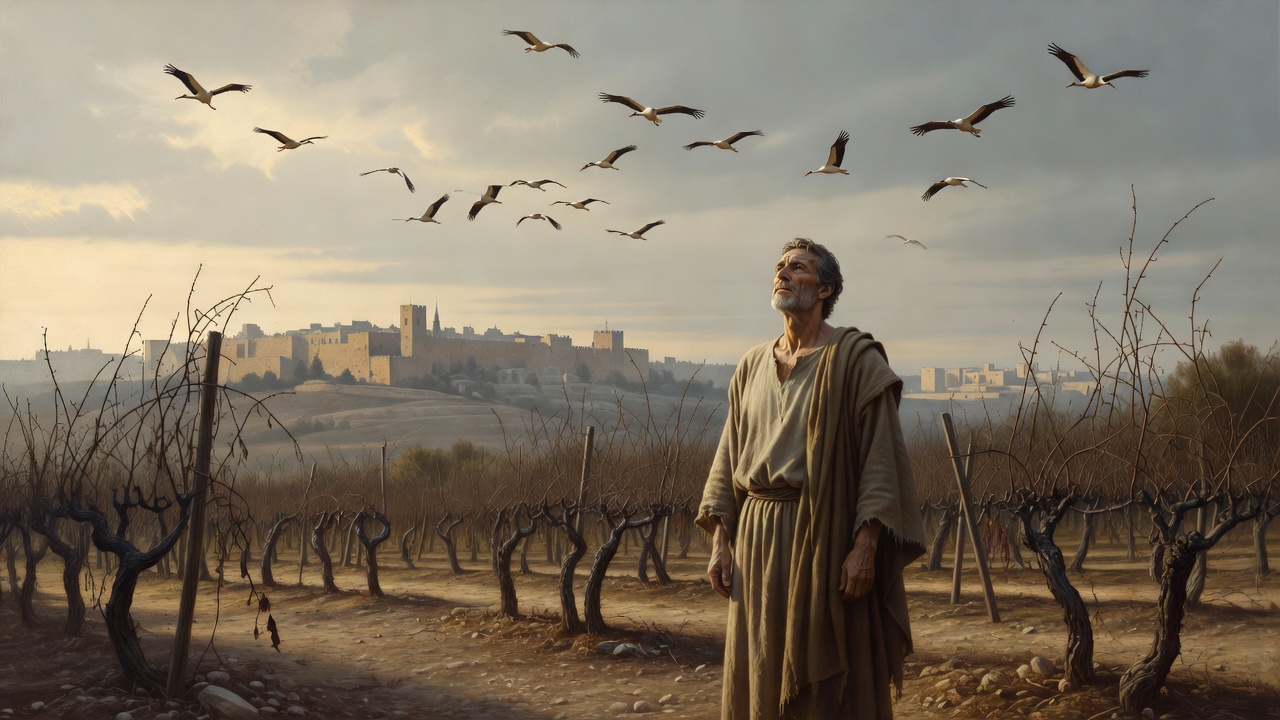
- Jeremías contrasta el instinto natural de las aves migratorias, como la cigüeña, la tórtola, el vencejo y el tordo, con la conducta del pueblo de Jerusalén. Mientras las aves reconocen por instinto sus épocas fijadas y sus tiempos de migración, el pueblo se niega con terquedad a volverse a Dios.Fuentes: el propio texto bíblico · Jerusalem
- La advertencia de que el resoplido de los caballos de guerra enemigos se escucha desde Dan señala una invasión que entra por el extremo norte. Dan se situaba en el límite septentrional del país, indicando que el destructor ejército invasor ya avanzaba sobre el territorio.Fuentes: el propio texto bíblico · Dan
- El clamor del profeta, '¿No hay bálsamo en Galaad?', evoca a Galaad, una región montañosa situada al este del río Jordán. Jeremías recurre a la figura de médicos y remedios de dicha región para lamentar el colapso moral y físico de su pueblo que sigue sin sanar.Fuentes: el propio texto bíblico · Gilead
Notas escritas con ayuda de IA a partir de fuentes abiertas (Theographic Bible Metadata, CC BY-SA 4.0; Easton’s Bible Dictionary, dominio público) y revisadas antes de publicarse.
Lugares de este capítulo
- Jerusalem · 31.777, 35.234 · versículos 1, 5
- Dan · Hoy: Tel Dan · 33.249, 35.652 · versículo 16
- Zion · Hoy: Jerusalem · 31.777, 35.234 · versículo 19
- Gilead · Hoy: Gilead 1 · 32.187, 35.692 · versículo 22
Solo aparecen lugares identificados con alta confianza (90 % o más según las fuentes académicas reunidas por OpenBible). Mapa de la época: DARE (Digital Atlas of the Roman Empire), CC BY 4.0; mapa actual: © colaboradores de OpenStreetMap; lugares: OpenBible.info (CC BY 4.0).
Créditos y licencia de esta traducción
Bibeli Luayãtaalá
The Holy Bible in the Boko language spoken in Benin and Nigeria
copyright © 2010 SIM International
Language: Boko
Translation by: SIM International
Boko Bibeli Luayãtaala
This translation, published by the SIM au Benin, was published in 2010.
If you are interested in obtaining a printed copy, please contact the SIM at ECWA/SIM H.Q., P.M.B. 2009, Jos, Plateau State, NIGERIA.
This translation text is made available to you under the
terms of the Creative Commons License: Attribution-Noncommercial-No Derivative Works.
( http://creativecommons.org/licenses/by-nc-nd/3.0/ )
In addition, you have permission to port the text to different file formats, as long as you
do not change any of the text or punctuation of the Bible.
You may share, copy, distribute, transmit, and extract portions
or quotations from this work, provided that you include the above copyright
information:
You must give Attribution to the work.
You do not sell this work for a profit.
You do not make any derivative works that change any of the actual words or punctuation of the Scriptures.
Permissions beyond the scope of this license may be
available if you contact
us with your request.
This translation is made available to you under the terms of the
Creative Commons Attribution-Noncommercial-No Derivatives license 4.0.
You may share and redistribute this Bible translation or extracts from it in any format, provided that:
You include the above copyright and source information.
You do not sell this work for a profit.
You do not change any of the words or punctuation of the Scriptures.
Pictures included with Scriptures and other documents on this site are licensed just for use with those Scriptures and documents.
For other uses, please contact the respective copyright owners.
2014-09-25
Fuente: http://ebible.org/bqcsim/ · eBible.org