Jeremías 14
Bibeli Luayãtaalá · Toca un versículo para ver sus referencias cruzadas.
Ikpaa
1Dii yã'ò Zelemiiɛ lousai yã́ musun à mɛ̀:
2Yuda bùsu gↄ̃̀ wɛ̃nannↄ,
a wɛ̃́lɛↄ gↄ̃̀ zeesai.
Wɛ̃́lɛdeↄ oosìsi ń bùsu yã́ musu,
Yelusalɛũdeↄ zↄa ma dↄ.
3Zɛdeↄ ì ń zĩkɛnaↄ zĩ ítↄi.
Tó aa gɛ̀ lↄ̀ↄi, aali í eo,
aaì su tùu giiɛ, bíli ì ń kṹ.
Ì kɛnɛ́ wí ũ, aaì pↄ́ku ń wɛ́a.
4Sɛ̃̀wanaↄ gↄ̃̀ ń bílio,
aalɛ pↄ́kuku ń wɛ́a,
tↄↄlɛ pàapaa, lou i ma gueio.
5Baa tue da ì a nɛ́ tó weɛ,
kɛ́ sɛ̃ kuo yã́i.
6Sɛ̃̀a zàa'ĩnaↄ zɛ sĩ̀sĩ wáiwaiↄ musu,
aalɛ we hɛ̀hɛhɛhɛ lán gbɛ̃gbonaↄwa,
an wɛ́ tà loũloũ sɛ̃sai yã́i.
7Baa kɛ́ wá tàaeↄ wá dá yã́u,
dↄwálɛ n tↄ́ yã́i.
Wá pↄ̀ↄbↄzãkɛa kɛ̀ zài,
wa duunakɛ̀nɛ.
8N gbɛ̃́ pↄ́ Isailiↄ wɛ́ dↄnzi,
an wɛtãgↄↄ Suabana,
àkɛa n gↄ̃wɛ̃ɛ lán nibↄ ge gɛ̃zɛa
pↄ́ mↄ̀ ì wá bùsuu gↄↄ dowai?
9Bↄ́yãi ń dɛ lán gbɛ̃́ pↄ́ yã́ dìwà
ge nɛgↄ̃na pↄ́ a fↄ̃ ń suabaowai?
Dii, ń kú wá guu,
wìↄ wá sisi n tↄ́wa,
ńsu pãkpawázio.
10Yã́ pↄ́ Dii ò gbɛ̃́piↄ yã́ musun kɛ:
Aa ye liaaliaai maamaaɛ,
aali zↄ̃lɛ ń zíwao,
an yã́ lí ká Diiguo.
An tàaeↄ a dↄaàgu sa,
i ĩadamá an duuna yã́i.
11Ɔ̃ Dii òmɛɛ: Ńsu gbɛ̃́piↄ aafia wabikɛao. 12Baa tó aa lɛyè, má ń wabikɛa sio. Baa tó aa sa pↄ́ wì a pↄ́ kátɛu à tɛ́kũ òa ń pↄ́wɛntio, má síńnↄo. Má ń midɛ ń zĩo ń nↄanao ń gagyãoɛ. 13Ɔ̃ ma mɛ̀: Á'a Dii Lua! Ãnabiↄ mɛ́ i onɛ́ aa wɛsi zĩlɛo, nↄana a ń dɛo. Aaì mɛ ńyↄ̃ ń gba aafia gↄↄpii guɛ beeuɛ.
14Ɔ̃ Dii òmɛɛ: Ãnabipiↄ lɛ́ ãnabikɛkɛ ń ɛɛo ń ma tↄ́oɛ. Mi ń zĩo, mi yãdilɛnɛ́o, mɛ́ mi yãe onɛ́o. Ãnabikɛ pↄ́ aalɛ kɛɛ́á wɛ́pungu ɛgɛna ń màso bɛɛɛsaio ń làasoo kpaanlao yã́ɛ. 15A yã́i tò yã́ pↄ́ ma Dii má ò ãnabi pↄ́ mi ń zĩo, mɛ́ aalɛ ãnabikɛkɛ ń ma tↄ́opiↄ musun kɛ: Aalɛ mɛ zĩ ge nↄana a gɛ̃ ń bùsuuo, kási sↄ̃ zĩ ń nↄanao mɛ́ a ń dɛdɛ, 16wi gbɛ̃́ pↄ́ aalɛ ãnabikɛkɛnɛ́ↄ zuzu Yelusalɛũ gãaɛↄ nↄana ń zĩpio yã́i. Gbɛ̃e aↄ ku à ń vĩo ge ń nↄɛↄ ge ń nɛ́ↄ. Má ń vãikɛapi wínɛ́ ń musuɛ. 17Yã́ɛ bee onɛ́:
To mà wɛ́'ikau,
má kã́mabo gwãasĩna ge fãanɛo.
Asa ma gbɛ̃́ↄ wíwia maamaaɛ,
wà ń kɛ́ ĩa à kɛ̀ zài.
18Tó ma gɛ sɛ̃saou,
mi gbɛ̃́ pↄ́ wà ń dɛdɛↄ gɛ e kálɛa.
Tó ma gɛ̃ wɛ̃́lɛ guu,
mi gbɛ̃́ pↄ́ lɛ́ gyãkɛkɛ nↄana yã́iↄ e.
Ãnabiↄ ń sa'onaↄ ìↄ liaaliaa ḿpii,
an gbɛ̃e a bùsu dↄ̃ lↄo.
19N gi Yudaↄzi fĩ́afĩa yã̀?
N pↄ bↄ̀ Siↄnagu yã̀?
Àkɛa n wá wɛtã̀,
gbã́gbãa kuo ni?
Wá wɛ́ dↄ aafiai,
kási yãmaae kuo.
Wá wɛ́ dↄ gbã́gbãai,
ↄ̃ gili guu wá kúu.
20Dii, wa wá vãikɛa dↄ̃̀
ń tàae pↄ́ wá deziↄ kɛ̀o.
Wa duunakɛ̀nɛɛ fá!
21Ńsu sakáwáguo n tↄ́ yã́i,
ńsu ǹ n kpalabaa gawide bↄlↄboo.
N bàakuawanↄ yã́ su sãnguo,
ńsu gbooo.
22Buipãleↄ tã́aↄ ì to lou mae?
Luabɛ ì to lou ma ń azĩaoa?
Aawo Dii wá Lua, ḿmɛ ni tó,
ↄ̃ wá wɛ́ dↄnzi,
asa ḿmɛ ni yã́piↄ kɛ píi.
¿Sabías que…?
La Gran Sequía y los Falsos Profetas
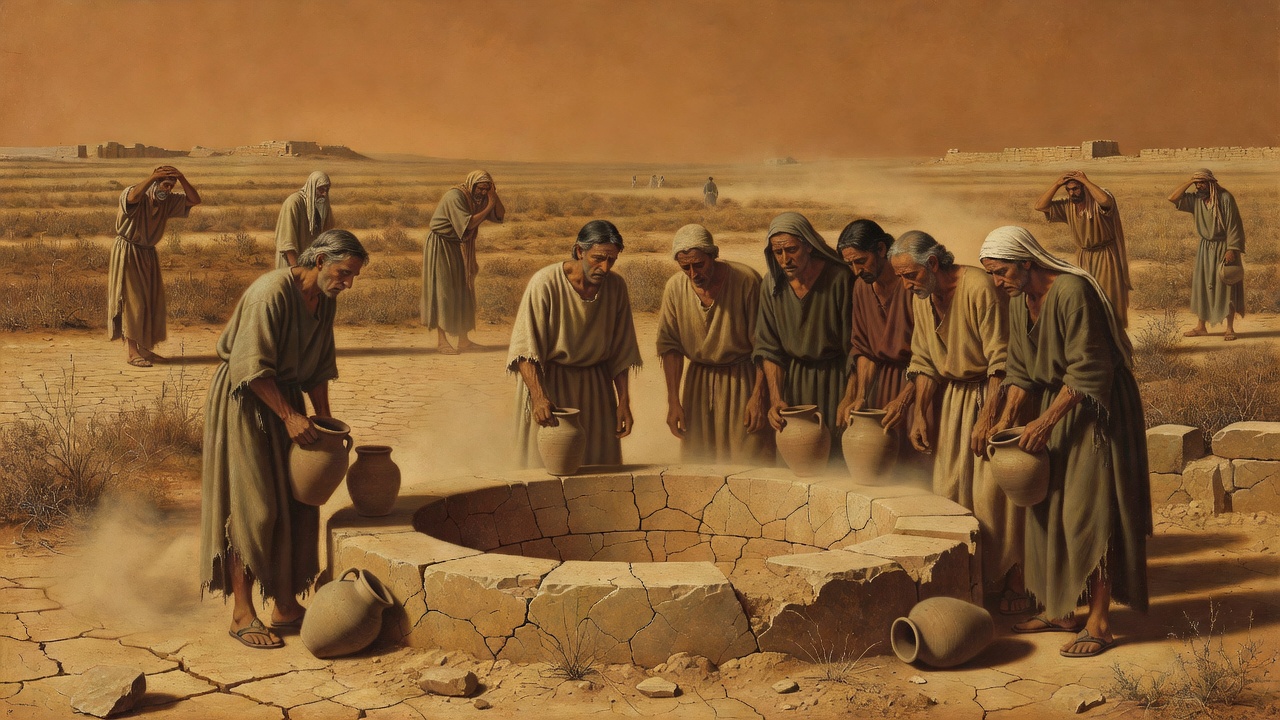
- El capítulo comienza con la descripción de una severa sequía en Judá, mostrando a siervos enviados por los nobles en busca de agua que regresan con vasijas vacías, mientras los campesinos se cubren la cabeza desesperados ante la tierra agrietada.Fuentes: el propio texto bíblico
- Jeremías lamenta la influencia de los falsos profetas en Jerusalén que aseguraban paz e inmunidad frente al desastre, aunque Dios afirma que no los envió y que la espada y el hambre acabarían con ellos.Fuentes: el propio texto bíblico · Jeremiah · Jerusalem
- En su ruego por la tierra afligida, Jeremías resalta que los ídolos extranjeros no pueden producir lluvia, afirmando que solo el Dios de Israel tiene el poder de enviar lluvias y guardar Su pacto.Fuentes: el propio texto bíblico
Notas escritas con ayuda de IA a partir de fuentes abiertas (Theographic Bible Metadata, CC BY-SA 4.0; Easton’s Bible Dictionary, dominio público) y revisadas antes de publicarse.
Lugares de este capítulo
- Jerusalem · 31.777, 35.234 · versículos 2, 16, 21
- Zion · Hoy: Jerusalem · 31.777, 35.234 · versículo 19
Solo aparecen lugares identificados con alta confianza (90 % o más según las fuentes académicas reunidas por OpenBible). Mapa de la época: DARE (Digital Atlas of the Roman Empire), CC BY 4.0; mapa actual: © colaboradores de OpenStreetMap; lugares: OpenBible.info (CC BY 4.0).
Créditos y licencia de esta traducción
Bibeli Luayãtaalá
The Holy Bible in the Boko language spoken in Benin and Nigeria
copyright © 2010 SIM International
Language: Boko
Translation by: SIM International
Boko Bibeli Luayãtaala
This translation, published by the SIM au Benin, was published in 2010.
If you are interested in obtaining a printed copy, please contact the SIM at ECWA/SIM H.Q., P.M.B. 2009, Jos, Plateau State, NIGERIA.
This translation text is made available to you under the
terms of the Creative Commons License: Attribution-Noncommercial-No Derivative Works.
( http://creativecommons.org/licenses/by-nc-nd/3.0/ )
In addition, you have permission to port the text to different file formats, as long as you
do not change any of the text or punctuation of the Bible.
You may share, copy, distribute, transmit, and extract portions
or quotations from this work, provided that you include the above copyright
information:
You must give Attribution to the work.
You do not sell this work for a profit.
You do not make any derivative works that change any of the actual words or punctuation of the Scriptures.
Permissions beyond the scope of this license may be
available if you contact
us with your request.
This translation is made available to you under the terms of the
Creative Commons Attribution-Noncommercial-No Derivatives license 4.0.
You may share and redistribute this Bible translation or extracts from it in any format, provided that:
You include the above copyright and source information.
You do not sell this work for a profit.
You do not change any of the words or punctuation of the Scriptures.
Pictures included with Scriptures and other documents on this site are licensed just for use with those Scriptures and documents.
For other uses, please contact the respective copyright owners.
2014-09-25
Fuente: http://ebible.org/bqcsim/ · eBible.org