Hageo 2
Bibeli Luayãtaalá · Toca un versículo para ver sus referencias cruzadas.
Kpɛ́ dafu gawi
1Mↄ soplade gↄↄ bao ń mɛ̀ndoode zĩ́ Dii yã'ò ãnabi Ageɛ à mɛ̀: 2Yã'o Yuda bùsu gbãade Zolobabɛliɛ ń sa'onkia Yesuao ń gbɛ̃́ kↄ̃napiↄ píi, ǹ ń la ǹ mɛ: 3Á démɛ kú tia a ma kpɛ́ dↄ̃ ń a gawi káauoi? A tia pↄ́ɛ bee dɛɛ́ kpelewai? Á ea guu a dɛɛ́ pↄe ũo yã̀? 4Ma Dii má ò Zolobabɛliɛ, sↄ̃dilɛ! Má ò sa'onkia Yesuaɛ, sↄ̃dilɛ! Má ò bùsu gbɛ̃́ kĩniↄnɛ píi, à sↄ̃dilɛ! Ma Dii mámɛ má ò. À zĩpi kɛ, asa má kúánↄ. Ma Dii Zĩgↄ̃de mámɛ má ò. 5Lɛ́ pↄ́ má gbɛ̃̀ɛ́ á bↄa Egipi gↄↄn we. Ma Nisĩna gi kúánↄɛ, ásu vĩakɛo. 6Ma Dii Zĩgↄ̃de ma mɛ̀, à gↄ̃̀ yↄↄ kɛ́ mà musu ń zĩ́lɛo lualua gɛ̃n do lↄ, ísia ń tↄↄlɛo píi. 7Ma Dii Zĩgↄ̃de ma mɛ̀, má buiↄ zĩazĩa, wi mↄ́ ń bui píi àizɛɛo, mí tó ma kpɛ́ pa ń gawio. 8Ma Dii Zĩgↄ̃de ma mɛ̀, ã́nusuá ma pↄ́ɛ, vuaá ma pↄ́ɛ. 9Ma Dii Zĩgↄ̃de ma mɛ̀, kpɛ́ɛ bee gawi gbɛzã zↄ̃ↄ aↄ dɛ a káaua. Ma Dii Zĩgↄ̃de ma mɛ̀, má aafia pisi guɛ beewa.
Dii a báaada Yudaↄgu
10Daliusi kpalablea wɛ̃̀ plaade guu, a mↄ kɛ̃okwide gↄↄ baasↄo mɛ̀ndosaide zĩ́, Dii yã́ ɛ̀a dɛ̀dɛ ãnabi Agewa à mɛ̀: 11Ma Dii Zĩgↄ̃de ma mɛ̀, à sa'onaↄ la: Ikoyã mɛ̀ kpelewa ni? 12Tó gbɛ̃́ nↄ̀ↄ pↄ́ gↄ̃̀ ma pↄ́ ũ kũa a ula lɛ́u, mɛ́ aà ulapi zↄ̃̀ pɛ̃ɛ ge do ge vɛ̃ɛ ge nísi ge blɛ pãlewa, pↄ́piↄ ì gↄ̃ ma pↄ́ ũ yã̀? Sa'onaↄ mɛ̀: Aawo! 13Ɔ̃ Age ɛ̀a ń lá à mɛ̀: Tó gbɛ̃́ pↄ́ kú ń ↄnaa pↄgɛwa gbãlɛao ↄnà pↄ́piwa, aaì gbãlɛ yã̀? Sa'onaↄ wèwà aa mɛ̀: Aaì gbãlɛɛ. 14Ɔ̃ Age mɛ̀: Ma Dii ma mɛ̀, màa á bui dɛmɛɛ. Yã́ pↄ́ i kɛ ń pↄ́ pↄ́ i ma gba weↄ píi gbãlɛaɛ. 15À làasookɛ maamaa à gwa za gbã, lá á dɛ yãa zadↄ̃ i ma kpɛ́ gbɛe dio. 16Tó gbɛ̃́ gɛ̀ pↄ́wɛna dã́i zaa bao, kwi ali e. Tó à gɛ̀ vɛ̃ɛ tↄ́i tùu blakwi, bao ali e. 17Má tò á buapↄ́ↄ ↄ̃̀ↄkpà ń gbↄ̃sio ń fukpaao ń lougbɛo, kási i suao. 18À làasookɛ à gwa za gbã, mↄ kɛ̃okwide gↄↄ baasↄo mɛ̀ndosaidezĩ. À làasookɛ à gwa yã́ pↄ́ lɛ́ kɛ za ma kpɛ́ ɛ̃daalɛgↄↄ e gbãwa. 19Pↄ́wɛna kú dↄ̃u tiaa? Vɛ̃ɛ ń kaadↄɛnao ń gbɛafuo ń kuo i nɛ'io e gbã. Za tia má báaadaágu sa.
Dii lɛgbɛ̃a Yuda bùsu gbãadeɛ
20Dii yã'ò Ageɛ lↄ mↄgↄↄ baasↄo mɛ̀ndosaidepi zĩ́ à mɛ̀: 21O Yuda bùsu gbãade Zolobabɛliɛ, má musu ń zĩ́lɛo lualua. 22Má kpalabaaↄ fuangba, mí buipãleↄ kpalaↄ midɛ. Má zĩkasↄ̃goↄ fuangba ń gbɛ̃́ pↄ́ ká a guuↄ, sↄ̃́ↄ ń sↄ̃́godepiↄ kwɛ́, aai kↄ̃ dɛdɛ ń fɛ̃ndao. 23Ma Dii Zĩgↄ̃de ma mɛ̀, gↄↄ bee má n sɛ, ma zↄ̀blena Zolobabɛli. Ma Dii mámɛ má ò. Má n kɛ lán ma tãana seelakɛbↄwa, asa ma n sɛɛ. Ma Dii Zĩgↄ̃de mámɛ má ò.
¿Sabías que…?
La Promesa de Gloria Futura
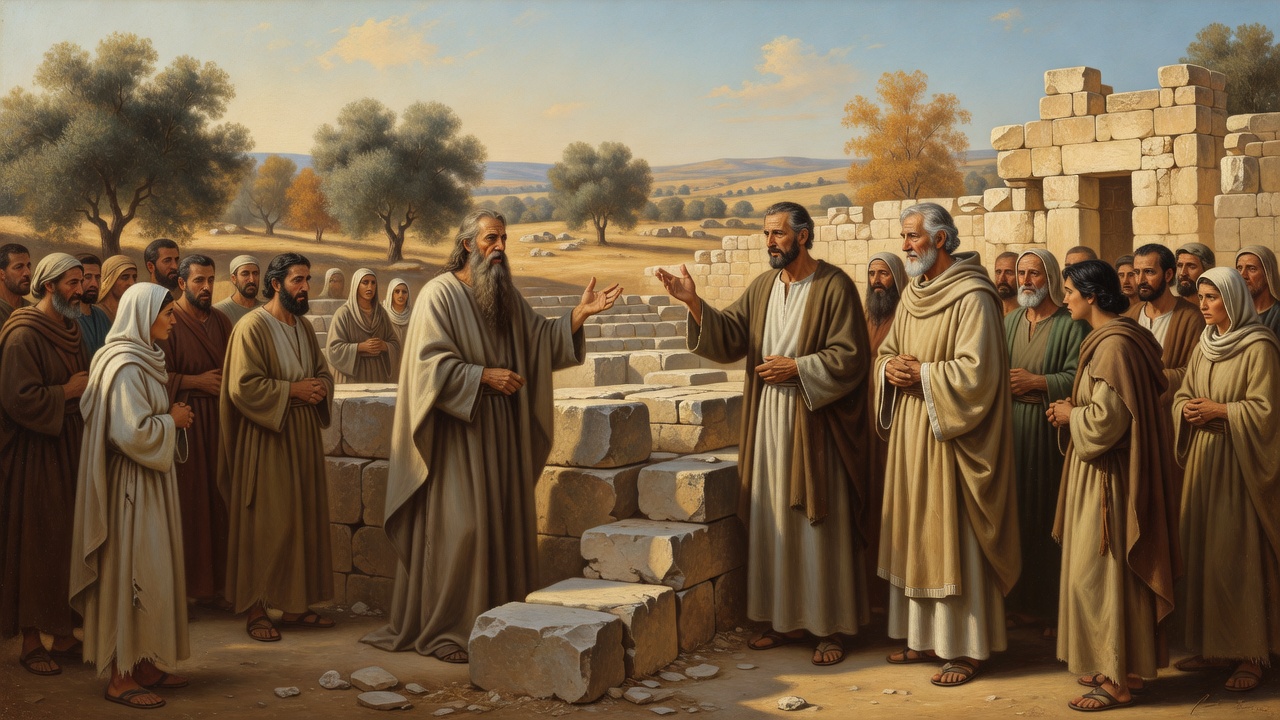
- Cuando se colocaron los cimientos del segundo templo tras el regreso de Babilonia, los ancianos de la comunidad aún recordaban la magnificencia del templo original destruido por Nabucodonosor. Ante el desánimo por la modesta nueva estructura, Hageo proclamó que la gloria futura de esa casa superaría su antiguo esplendor.Fuentes: el propio texto bíblico · Zerubbabel · Haggai
- Hageo consultó a los sacerdotes sobre normas rituales para ilustrar una enseñanza moral. Según los dictámenes sacerdotales, la santidad no se transfería por contacto indirecto, mientras que la impureza ceremonial —como la contraída al tocar un cadáver— se transmitía de inmediato, reflejando cómo su descuido previo había afectado sus ofrendas y cosechas.Fuentes: el propio texto bíblico
- La reconstrucción comunitaria estuvo encabezada por dos líderes clave: Zorobabel hijo de Salatiel, gobernador civil, y Josué hijo de Josadac, el sumo sacerdote. Al final del capítulo, Hageo se dirige a Zorobabel con la figura de un anillo de sellar, emblema de autoridad y elección divina.Fuentes: el propio texto bíblico · Zerubbabel · Joshua
Notas escritas con ayuda de IA a partir de fuentes abiertas (Theographic Bible Metadata, CC BY-SA 4.0; Easton’s Bible Dictionary, dominio público) y revisadas antes de publicarse.
Lugares de este capítulo
- Egypt · 30.129, 31.308 · versículo 5
Solo aparecen lugares identificados con alta confianza (90 % o más según las fuentes académicas reunidas por OpenBible). Mapa de la época: DARE (Digital Atlas of the Roman Empire), CC BY 4.0; mapa actual: © colaboradores de OpenStreetMap; lugares: OpenBible.info (CC BY 4.0).
Créditos y licencia de esta traducción
Bibeli Luayãtaalá
The Holy Bible in the Boko language spoken in Benin and Nigeria
copyright © 2010 SIM International
Language: Boko
Translation by: SIM International
Boko Bibeli Luayãtaala
This translation, published by the SIM au Benin, was published in 2010.
If you are interested in obtaining a printed copy, please contact the SIM at ECWA/SIM H.Q., P.M.B. 2009, Jos, Plateau State, NIGERIA.
This translation text is made available to you under the
terms of the Creative Commons License: Attribution-Noncommercial-No Derivative Works.
( http://creativecommons.org/licenses/by-nc-nd/3.0/ )
In addition, you have permission to port the text to different file formats, as long as you
do not change any of the text or punctuation of the Bible.
You may share, copy, distribute, transmit, and extract portions
or quotations from this work, provided that you include the above copyright
information:
You must give Attribution to the work.
You do not sell this work for a profit.
You do not make any derivative works that change any of the actual words or punctuation of the Scriptures.
Permissions beyond the scope of this license may be
available if you contact
us with your request.
This translation is made available to you under the terms of the
Creative Commons Attribution-Noncommercial-No Derivatives license 4.0.
You may share and redistribute this Bible translation or extracts from it in any format, provided that:
You include the above copyright and source information.
You do not sell this work for a profit.
You do not change any of the words or punctuation of the Scriptures.
Pictures included with Scriptures and other documents on this site are licensed just for use with those Scriptures and documents.
For other uses, please contact the respective copyright owners.
2014-09-25
Fuente: http://ebible.org/bqcsim/ · eBible.org