Habacuc 3
Bibeli Luayãtaalá · Toca un versículo para ver sus referencias cruzadas.
Abaku wabikɛa
1Ãnabi Abaku wabikɛa.
2Dii, ma n bao mà,
Dii, n yãkɛaↄ tò má n vĩa vĩ.
Ɛa yã́ bee taaↄ kɛ wá gↄↄ,
ní tó wà dↄ̃ wá gↄↄ.
Tó wá wɛgwaa dↄngu n pↄkũmagↄↄ.
3Lua a bↄ Temani,
Kuaadoade a bↄ Palana gbɛ̀sĩsĩ musu.
Aà gawi a kúlɛ luabɛa,
aà táasilɛa a dṹnia pa.
4Aà tɛkɛa aↄ dɛ lán ĩatɛ̃ bilɛawa,
gupua a pípi aà gbã̀tɛ̃ɛ ń gbã̀tɛ̃ɛo,
we aà gbãa ulɛau.
5Gagyã bɛ aà aɛ,
tɛ́lɛpiↄ bɛ aà iau.
6Tó à zɛ̀, dṹnia ì zãampapa,
tó à wɛtɛ̀i, buiↄ ì kɛ gã̀sĩ.
Gbɛ̀sĩsĩ ziↄ kwɛ̀,
sĩ̀sĩ pↄ́ kú za káauↄ gbòo.
Ì yãkɛ lá a kɛ̀ káaukaauwa.
7Ma Kusã zwã̀akpɛↄ è,
wàlɛ taasikɛu,
ma Madiã bùsu zwã̀akpɛↄ è,
gili gɛ̃̀ńgu we.
8Dii, n pↄ pà swaↄzi yã̀?
N za fɛ̃̀ swa'ↄnaↄzi nɛe?
Kɛ́ ń di n sↄ̃́ↄ kpɛ ń n zĩblesↄ̃goↄ,
n mɛ fɛ̃̀ ísiazi yã̀?
9N n sá bↄ̀ a bↄ̀ↄu,
n mɛ̀ wà mↄ́ ń kaↄ,
ↄ̃ n dṹnia pàapaa ń swaↄ.
10Gbɛ̀sĩsĩↄ n e, aalɛ kↄ̃dɛ,
í dàgua, àlɛ gɛ̃,
ísi kↄ̃fĩ dↄ,
a ikooaↄ lɛ́ fɛlɛ musu.
11Ĩatɛ̃ ń mↄvuao zɛ̀ gudoũ musumusu
n ka pↄ́ lɛ́ gɛ̃ fìoo tɛkɛa yã́i
ń n sↄ̃na pípia yã́o.
12Ńlɛ tavaavaa'o dṹniau ń pↄkũmao,
ńlɛ buiↄ gbɛ̃ ń kyã̀wãao.
13N bↄ n mↄ n gbɛ̃́ↄ boi,
n mↄ kía pↄ́ ń kpà suabai.
N gbɛ̃vãi mi wì,
n pↄ́ pìliwà à gↄ̃̀ láilai.
14Kɛ́ aà zĩgↄ̃ↄ sìwázi wá fãaai,
aalɛ pↄnakɛ yɛ̃̀ɛɛsaide pↄ́ ulɛaↄ blea yã́ musu,
ↄ̃ n ń dↄaana mi fↄ̃̀ ń azĩa sↄ̃nao.
15N ↄ̃zↄ̃̀ ísiawa ń n sↄ̃́ↄ,
n í zↄ̃ↄpi yà.
16Kɛ́ ma a baomà, sↄ̃ kɛ̃̀magu,
a kↄ̃fĩ ma lɛ́baa dèe, ma wá gà,
málɛ lualua ma zɛgbɛu.
Má mɛna màↄ gↄↄ pↄ́ wa yã́yia gbɛ̃́ pↄ́ lɛ̀lɛwáↄwa dã́.
17Baa tó kaadↄɛna i nɛsoe kɛo,
mɛ́ vɛ̃ɛliↄ i nɛ'io,
baa tó ku i bↄo,
mɛ́ buapↄ́ↄ i kɛo,
baa tó sãↄ ku kaau lↄo,
mɛ́ zuↄ làa kpàsau,
18ń beeo ma pↄ aↄ na Diiwaɛ,
má pↄnakɛ ń Lua ma Suabanao.
19Dii Lua mɛ́ ma gbãa ũ,
ì ma wá nakṹ lán tuewa,
ì to màↄ bɛ gulɛsĩↄwa.
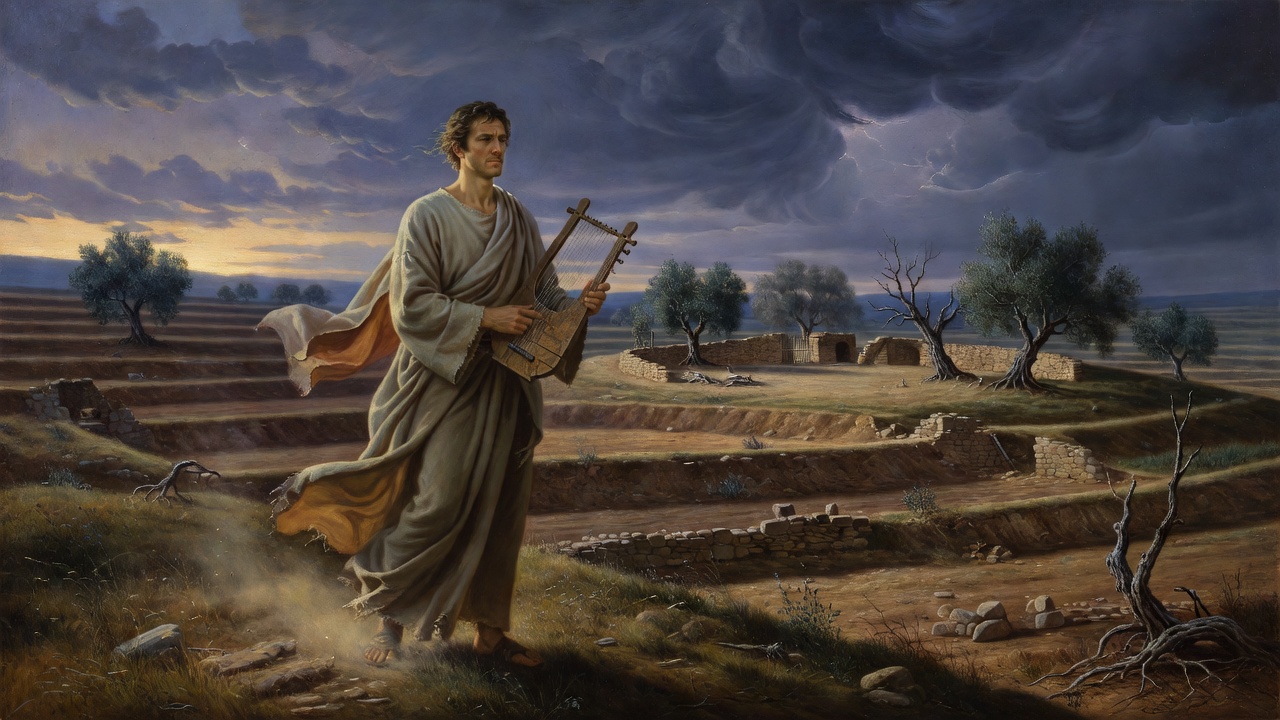
¿Sabías que…?
La oración de Habacuc y el cántico de fe
- El poema describe a Dios manifestándose desde el desierto meridional, mencionando a Temán en el sur de Idumea y al monte Parán en el límite desértico de la Tierra Prometida. Estas referencias geográficas evocan descripciones poéticas antiguas del Señor marchando en majestad desde el sur.Fuentes: Teman · Mount Paran · el propio texto bíblico
- Cusán y Madián son representadas temblando ante el avance divino. Los madianitas eran tribus árabes nómadas que habitaban en tiendas a través de los desiertos y pastizales del Sinaí y el norte de Arabia.Fuentes: Cushan · Midian · el propio texto bíblico
- El capítulo está estructurado como un salmo litúrgico, con términos musicales como 'Sigionot', 'Selah' y una dedicatoria final al director del coro para ser interpretado con instrumentos de cuerda.Fuentes: el propio texto bíblico
Notas escritas con ayuda de IA a partir de fuentes abiertas (Theographic Bible Metadata, CC BY-SA 4.0; Easton’s Bible Dictionary, dominio público) y revisadas antes de publicarse.
Lugares de este capítulo
- Midian · 28.495, 35.012 · versículo 7
Solo aparecen lugares identificados con alta confianza (90 % o más según las fuentes académicas reunidas por OpenBible). Mapa de la época: DARE (Digital Atlas of the Roman Empire), CC BY 4.0; mapa actual: © colaboradores de OpenStreetMap; lugares: OpenBible.info (CC BY 4.0).
Créditos y licencia de esta traducción
Bibeli Luayãtaalá
The Holy Bible in the Boko language spoken in Benin and Nigeria
copyright © 2010 SIM International
Language: Boko
Translation by: SIM International
Boko Bibeli Luayãtaala
This translation, published by the SIM au Benin, was published in 2010.
If you are interested in obtaining a printed copy, please contact the SIM at ECWA/SIM H.Q., P.M.B. 2009, Jos, Plateau State, NIGERIA.
This translation text is made available to you under the
terms of the Creative Commons License: Attribution-Noncommercial-No Derivative Works.
( http://creativecommons.org/licenses/by-nc-nd/3.0/ )
In addition, you have permission to port the text to different file formats, as long as you
do not change any of the text or punctuation of the Bible.
You may share, copy, distribute, transmit, and extract portions
or quotations from this work, provided that you include the above copyright
information:
You must give Attribution to the work.
You do not sell this work for a profit.
You do not make any derivative works that change any of the actual words or punctuation of the Scriptures.
Permissions beyond the scope of this license may be
available if you contact
us with your request.
This translation is made available to you under the terms of the
Creative Commons Attribution-Noncommercial-No Derivatives license 4.0.
You may share and redistribute this Bible translation or extracts from it in any format, provided that:
You include the above copyright and source information.
You do not sell this work for a profit.
You do not change any of the words or punctuation of the Scriptures.
Pictures included with Scriptures and other documents on this site are licensed just for use with those Scriptures and documents.
For other uses, please contact the respective copyright owners.
2014-09-25
Fuente: http://ebible.org/bqcsim/ · eBible.org