Ezequiel 46
Bibeli Luayãtaalá · Toca un versículo para ver sus referencias cruzadas.
Yã́ pↄ́ kí ali kɛ dikpɛgↄↄzĩↄ
1Dii Lua mɛ̀: Wàli ua plaade bↄlɛ pↄ́ a lɛ́ ɛlɛa gukpɛwa gba to taaɛ e gↄↄ soolo pↄ́ wì zĩkɛuↄ gɛ pao, wili wɛ̃ kã́mabogↄↄzĩ ń mↄ dafu dikpɛgↄↄzĩo. 2Kí ali bↄ ua sɛ̃́iauɛ, i gɛ̃ ń bↄlɛpi bilandaao, i zɛ bↄlɛpi gbapɛlɛↄ saɛ. Sa'onaↄ lí sa pↄ́ wì a pↄ́ kátɛu à tɛ́kũ oɛ̀ ń sáaukpasaↄ, ili kúlɛ bↄlɛpi bèewa, i gbasa bↄ. Wàli bↄlɛpi gbatao e oosi. 3Bùsudeↄ lí kúlɛ Diiɛ bↄlɛpi kpɛɛlɛ kã́mabogↄↄↄ ń mↄ dafu dikpɛgↄↄↄ. 4Kã́mabogↄↄzĩ kí lí mↄ́ ń sãnɛbↄlↄ sãasaiↄ mɛ̀n soolo ń sãsakao sãasaio mɛ̀ndo sa pↄ́ wì a pↄ́ kátɛu à tɛ́kũ obↄↄ ũ. 5Aàli pↄ́wɛnti kpá ń sãsakaoo koko do, sãnɛbↄlↄↄ sↄ̃ lá a yeiwaɛ. Pↄ́wɛnti koko do nísi aliↄ litili àaↄ̃ɛ. 6Mↄ dafu dikpɛgↄↄ aàli mↄ́ ń gáaenao ń sãnɛbↄlↄↄ mɛ̀n soolo ń sãsakaoo. A kee su àↄ sãa vĩo. 7Aàli pↄ́wɛnti kpá ń zupio koko do ń sãsakaoo koko do, sãnɛbↄlↄↄ sↄ̃ lá a yeiwaɛ. Pↄ́wɛnti koko do nísi aliↄ litili àaↄ̃ɛ. 8Kí lí gɛ̃, ili bↄ ń bↄlɛ bilandaa zɛ́ doũpio.
9Tó bùsudeↄ mↄ̀ kùlɛ Diiɛ dikpɛgↄↄzĩ, gbɛ̃́ pↄ́ gɛ̃̀ ń gugbãntoo oi bↄlɛo lí bↄ ń gɛↄmidↄkĩi oi bↄlɛo, gbɛ̃́ pↄ́ gɛ̃̀ ń gɛↄmidↄkĩi oi bↄlɛo lí bↄ ń gugbãntoo oi bↄlɛo. Asu ɛa bↄ ń bↄlɛ pↄ́ à gɛ̃̀uoo, sema aà bↄ ń a aɛ oi bↄlɛo. 10Kí líↄ kúńnↄ we. Tó gbɛ̃́ↄ lɛ́ gɛ̃, aàli gɛ̃. Tó aalɛ bↄlɛ, ili bↄ.
11Dikpɛgↄↄↄ ń kã́mabogↄↄↄ zĩ́ zu ge sãsakao miwa pↄ́wɛnti gba líↄ koko dodo, sãnɛbↄlↄↄ sↄ̃ lá wa yeiwaɛ. Pↄ́wɛn koko do nísi aliↄ litili àaↄ̃ɛ. 12Tó kí mↄ̀ ń gbao Diiɛ, sa pↄ́ wì a pↄ́ kátɛu à tɛ́kũ ge sáaukpasaↄn nò, wàli gukpɛ oi bↄlɛ gba wɛ̃ɛ̀, ili kpá lá ì kɛ kã́mabogↄↄzĩwa. Tó à bↄ̀, wi gbata aà kpɛ.
13Wàliↄ sa pↄ́ wì a pↄ́ kátɛu à tɛ́kũ o Diiwa ń sã wɛ̃dona sãasaio lá gu lɛ́ dↄ kↄↄ ń kↄↄo 14ń pↄ́wɛntio litili àaↄ̃ ń nísio litili do pↄ́wɛnti mↄ̀sɛkɛa yã́i. Wàliↄ pↄ́wɛntipi kpa Diiwa lá gu lɛ́ dↄ gↄↄpiiɛ. 15Wàliↄ sa pↄ́ wì a pↄ́ kátɛu à tɛ́kũ o ń sãnɛbↄlↄo kↄↄ ń kↄↄo lá gu lɛ́ dↄ ń pↄ́wɛntio ń nísio màa.
16Dii Lua mɛ̀: Tó kí a nɛ́ↄ do gbà a tↄↄlɛ saalo, aà nɛ́pi buiↄ mɛ́ aali a túbi sɛ́. 17Kási tó à a zↄ̀blenaↄ do gbà a tↄↄlɛ saalo, aliↄ dɛ zↄ̀blenapi pↄ́ ũɛ e gↄ̃a wɛ̃́ɛ ũ wɛ̃, i ɛa gↄ̃ kípi pↄ́ ũ. Aà nɛ́ↄ mɛ́ aali a túbi sɛ́ ńtɛ̃ɛ. 18Kí suli gbɛ̃e tↄↄlɛ síwào, mɛ́ asuli ń yáwào. Aà zĩa tↄↄlɛ ↄ̃ ali kpá a nɛ́ↄwa túbi ũ, kɛ́ ma gbɛ̃e su go a tↄↄlɛwao yã́i.
19Ɔ̃ gↄ̃pi ma sɛ gɛ̀manↄ sa'ona kpɛ́nɛ pↄ́ kú bↄlɛ saɛ lɛ́u, a lɛ́ ɛlɛa gugbãntoowa. À gu ↄ̀lↄmɛɛ kpɛ́pi bɛ'aɛ oi, 20ↄ̃ a òmɛɛ: Gupiu ↄ̃ sa'onaↄ lí tàae fĩabobↄↄ ń duun awakpabↄↄ fùukɛu, aali pↄ́wɛnti kàa kɛu, kɛ́ aasu gɛò ua sɛ̃́iau aa kã gbɛ̃́ↄwa aa ĩadamáo yã́i.
21Ɔ̃ à ɛ̀a ma sɛ sùmanↄ ua sɛ̃́iau, à bɛ̀bɛmanↄ uapi gola síiↄ̃ↄu. Má uanaeↄ è a golapiↄu. 22A gola ń golao uanapiↄ gbã̀a gã̀sĩsuu blablaɛ, a yàasa baakwikwi. Uana mɛ̀n síiↄ̃piↄ doũɛ. 23Wà gĩbò lìa uanapiↄzi mɛ́ wà kĩnaↄ pɛ̀lɛpɛlɛ lìai zĩ́lɛ. 24Ɔ̃ gↄ̃pi òmɛɛ: Blɛkɛkĩiↄn kɛ. La Dii ua zĩkɛnaↄ lí sa'onↄↄ fùukɛu gbɛ̃́ↄnɛ.
¿Sabías que…?
Culto, Deberes Reales y Cocinas del Templo
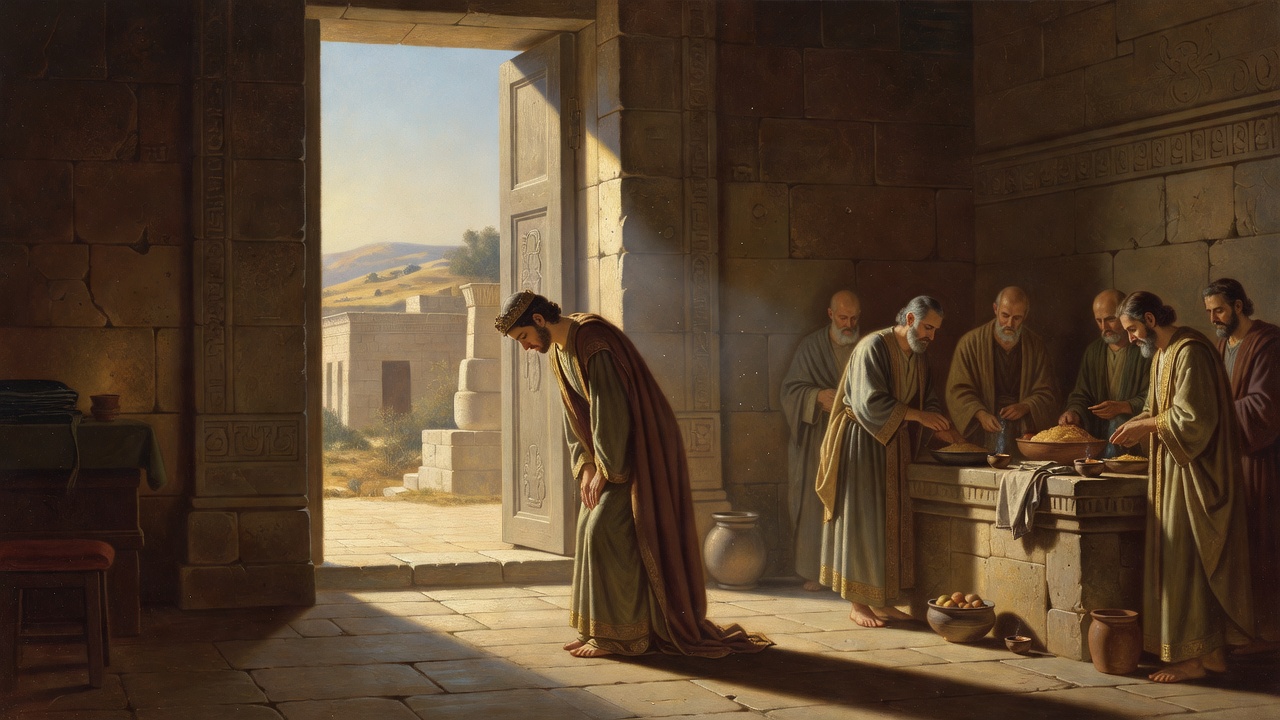
- La puerta oriental del atrio interior se mantenía cerrada durante los seis días de trabajo, pero se abría en el día de reposo y en el novilunio. El príncipe debía permanecer junto al poste de la puerta y adorar en el umbral mientras los sacerdotes presentaban sus ofrendas, tras lo cual la puerta permanecía abierta hasta la tarde.Fuentes: el propio texto bíblico
- Durante las fiestas señaladas, los fieles que entraban por la puerta norte debían salir por la del sur, y los que entraban por el sur debían salir por el norte. Asimismo, las leyes de propiedad prohibían que el príncipe despojara al pueblo de sus tierras, exigiéndole heredar únicamente de sus propias posesiones.Fuentes: el propio texto bíblico
- La visión describe áreas de cocina independientes: salas especiales en el extremo occidental para que los sacerdotes cocinaran las ofrendas por la culpa y el pecado, y cuatro atrios en las esquinas del atrio exterior donde los ministros del templo cocinaban los sacrificios del pueblo.Fuentes: el propio texto bíblico
Notas escritas con ayuda de IA a partir de fuentes abiertas (Theographic Bible Metadata, CC BY-SA 4.0; Easton’s Bible Dictionary, dominio público) y revisadas antes de publicarse.
Créditos y licencia de esta traducción
Bibeli Luayãtaalá
The Holy Bible in the Boko language spoken in Benin and Nigeria
copyright © 2010 SIM International
Language: Boko
Translation by: SIM International
Boko Bibeli Luayãtaala
This translation, published by the SIM au Benin, was published in 2010.
If you are interested in obtaining a printed copy, please contact the SIM at ECWA/SIM H.Q., P.M.B. 2009, Jos, Plateau State, NIGERIA.
This translation text is made available to you under the
terms of the Creative Commons License: Attribution-Noncommercial-No Derivative Works.
( http://creativecommons.org/licenses/by-nc-nd/3.0/ )
In addition, you have permission to port the text to different file formats, as long as you
do not change any of the text or punctuation of the Bible.
You may share, copy, distribute, transmit, and extract portions
or quotations from this work, provided that you include the above copyright
information:
You must give Attribution to the work.
You do not sell this work for a profit.
You do not make any derivative works that change any of the actual words or punctuation of the Scriptures.
Permissions beyond the scope of this license may be
available if you contact
us with your request.
This translation is made available to you under the terms of the
Creative Commons Attribution-Noncommercial-No Derivatives license 4.0.
You may share and redistribute this Bible translation or extracts from it in any format, provided that:
You include the above copyright and source information.
You do not sell this work for a profit.
You do not change any of the words or punctuation of the Scriptures.
Pictures included with Scriptures and other documents on this site are licensed just for use with those Scriptures and documents.
For other uses, please contact the respective copyright owners.
2014-09-25
Fuente: http://ebible.org/bqcsim/ · eBible.org