Hechos 19
Bibeli Luayãtaalá · Toca un versículo para ver sus referencias cruzadas.
Pↄlu kua Ɛfɛsɛ
1Gↄↄ pↄ́ Apoloo ku Kↄlɛni, Pↄlu Azi bùsu sĩ̀sĩↄ baa vĩ̀, ↄ̃ à kà Ɛfɛsɛ. À Yesudeeↄ lè we, 2ↄ̃ à ń lá à mɛ̀: Kɛ́ a Dii náaikɛ̀, aà Nisĩna dìɛ́a? Aa wèwà aa mɛ̀: Aawo, wi aà Nisĩna kua yãma seo. 3Ɔ̃ à ń lá à mɛ̀: Da'ilɛ kpele á kɛ̀i? Aa wèwà aa mɛ̀: Zãa pↄ́ɛ. 4Ɔ̃ Pↄlu ònɛ́: Zãa gbɛ̃́ↄ da'ilɛkɛ̀ an nↄ̀sɛlilɛa seela ũɛ. A ò gbɛ̃́ↄnɛ aa gbɛ̃́ pↄ́ a mↄ a kpɛ náaikɛ. Yesu àlɛ o. 5Kɛ́ aa yã́pi mà, aa da'ilɛkɛ̀ ń Dii Yesu tↄ́o. 6Kɛ́ Pↄlu ↄnàmá, Lua Nisĩna dìnɛ́, ↄ̃ aa yãebui'ò aa ãnabikɛkɛ̀. 7Gbɛ̃́piↄ píi kà lán gbɛ̃ↄn kuɛpla taawa.
8Pↄlu ìↄ gɛ́ lousisikpɛu e mↄ àaↄ̃. À yã'ònɛ́ vĩasai, àlɛ waasokɛ kpala pↄ́ bↄ̀ Lua kĩ́i yã́ musu, kɛ́ aa a yã́zɛ e. 9Ãma an gbɛ̃eↄ swã́gbãakɛ̀, aai Lua yã́ sio, ↄ̃ aa zɛ́pi bɛ̃̀ɛbò dasi guu. Ɔ̃ Pↄlu gbɛ̃́ pↄ́ Yesu náaikɛ̀ↄ sɛ̀lɛ aa bↄ̀ ń guu. Ɔ̃ ìↄ waasokɛ gbɛ̃́ↄnɛ Tilanu kyókpɛu lá gu lɛ́ dↄ. 10A kɛ̀ màa e wɛ̃̀ pla, ↄ̃ Azi bùsudeↄ Dii yãmà, Yudaↄ ń Gɛlɛkiↄ píi.
Seva nɛ́ↄ
11Lua Pↄlu gbà zɛ́ à dabudabu bↄnsaɛↄ kɛ̀. 12Beewa baa tó wà isimawaabↄↄ ge fùaↄ nà Pↄlu mɛwa wà gɛ nà gyãeↄwa, aaì gbã́gbãɛ, an tã́aↄ ì gɛ̃zɛa. 13Yuda tã́agona pↄ́ aaìↄ bɛbɛeↄ wɛ̀ɛlɛ tã́a gò ń Dii Yesu tↄ́o aa mɛ̀: Wá òɛ́ ń Yesu pↄ́ Pↄlu ì a yã́ waasokɛ tↄ́o, à go. 14Yudaↄ sa'onkia pↄ́ wì mɛ Seva nɛgↄ̃ɛ gbɛ̃ↄn soplaↄ mɛ́ ì kɛ màa. 15Ɔ̃ tã́a ònɛ́: Má Yesu dↄ̃ mɛ́ ma Pↄlu bao mà. Ápiↄ sↄ̃, dén á ũi? 16Ɔ̃ tã́adepi kùsimá à gbãamↄ̀nɛ́, à ń kwɛ́ píi à ń kɛkɛ'ĩa, ↄ̃ aa bàalɛ̀ bↄ̀lɛ uapiu puizi. 17Kɛ́ Ɛfɛsɛdeↄ yã́pi mà, Yudaↄ ń Gɛlɛkiↄ píi, vĩa ń kṹ, ↄ̃ Dii Yesu tↄbↄ̀ maamaa. 18Ɔ̃ gbɛ̃́ pↄ́ aa Yesu náaikɛ̀ↄ mↄ̀ dasi, aalɛ ń yãkɛaↄ o gupuau. 19Gbɛ̃kↄↄlɛkɛnaeↄ ń taalaↄ nàaa mↄ kàtɛu bíla wáa. Kɛ́ wà lápiↄ ↄ̃a dↄ̀dↄ, wa è à kà ã́nusu ↄwatɛ̃ ↄ̀aasↄsↄo lɛɛ blakwi (50.000). 20Beewa ↄ̃ Dii yã́ ìↄ kã́fĩ, ìↄ ↄta ń gbãao.
Zↄakaa Ɛfɛsɛ
21Yã́ bee gbɛa Pↄlu zɛ̀ò a nↄ̀sɛ guu à bↄlɛ ń Masedoni bùsuo ń Gɛlɛsi bùsuo, i gɛ́ Yelusalɛũ, à mɛ̀: Tó ma gɛ we, sema mà gɛ́ Lomadeↄ gwai. 22Ɔ̃ à a dↄnlɛde gbɛ̃ↄn plaeↄ Timↄtee ń Elasao zĩ̀ Masedoni. Aàpi sↄ̃ à gↄ̃̀ Azi bùsuu gĩa.
23Gↄↄ bee ↄ̃ yãkele fɛ̀lɛ maamaa Dii zɛ́ yã́ musu. 24Ãnusupinae ku wì mɛɛ̀ Demɛtiu, ì Aatɛmi tã́akpɛ taa pí ń ã́nusuo. Aà zĩkɛnaↄ ì ài zↄ̃ↄ e zĩpiwa. 25Ɔ̃ à ń kãaa ń gbɛ̃́ pↄ́ ì zĩ bee taa kɛↄ, a ònɛ́: Gbɛ̃́ↄ, á dↄ̃ kɛ́ ↄzĩɛ bee mɛ́ wá blekĩi ũ. 26Álɛ e mɛ́ álɛ ma lá Pↄlupi lɛ́ kɛ, à mɛ̀: Tã́a pↄ́ wà ń píↄá luaↄ no. Ɔ̃ à gbɛ̃́ dasiↄ mi lìaa, wà aà yã́zɛ è. I kɛ Ɛfɛsɛ la ado no, ń Azi bùsuo píiɛ. 27Yã́ bee a fↄ̃ músi'iwɛ̃ɛ. I kɛ wá ↄzĩ yãfũkũa ado no, a yã́ a to tã́a nↄɛzↄ̃ↄ Aatɛmi kpɛ́ gↄ̃ pↄe ũo, tã́a pↄ́ Azi bùsudeↄ ń dṹnia gbɛ̃́piio ì kúlɛɛ̀pi gawi a láaɛ.
28Kɛ́ aa yã́pi mà, an pↄ pà, ↄ̃ aa nà wiiwa aa mɛ̀: Ɛfɛsɛdeↄ Aatɛmi zↄ̃ↄ. 29Wɛ̃́lɛ lòo, gbɛ̃́ↄ bàalɛ̀ lɛ́ si kↄ̃kãaakɛkĩiu, ↄ̃ wà Masedoni bùsu gbɛ̃ↄn pla Gaiusi ń Alisaka pↄ́ aaì gɛ́ wɛ̃́lɛu ń Pↄluoↄ kũ̀ gɛ̀ńnↄ. 30Pↄlu ye gɛ̃ zã guu, ↄ̃ Yesudeↄ i weiɛ̀o. 31Azi bùsu gbɛ̃zↄ̃ↄeↄ dɛ aà gbɛ̃naↄ ũ, ↄ̃ aa gbɛ̃́ↄ zĩ̀ aa lɛdàwà asu gɛ̃ zãuo. 32Kↄ̃kãaa yà, wàlɛ wiilɛ, wàlɛ kↄ̃ yãmao, asa gbɛ̃́ daside dↄ̃ bↄ́yãi wà kã̀aaio. 33Yudaↄ ↄzↄ̃̀ Alɛsãndazi aà yã'o, ↄ̃ bíla guu gbɛ̃eↄ lɛ́ lɛdↄdↄwà. Alɛsãndapi ↄkɛ̀nɛ́ aa nílɛ, a ye Yudaↄ mi bↄ bíla wáa. 34Kɛ́ wà aà dↄ̃̀ Yuda ũ, ↄ̃ ampii aa wiilɛ̀ sãnusãnu mↄ̀ pla taawa aa mɛ̀: Ɛfɛsɛdeↄ Aatɛmi zↄ̃ↄ.
35Ɔ̃ wɛ̃́lɛ gbɛ̃zↄ̃ↄ ń zↄa zɛ̀ à mɛ̀: Ɛfɛsɛdeↄ, gbɛ̃́pii dↄ̃ kɛ́ á dɛ tã́a zↄ̃ↄ Aatɛmi kpɛ́ dↄ̃̀ana ũ ń luakimↄo pↄ́ kú weo. 36Lá gbɛ̃e a fↄ̃ bↄ bee kpɛo, à ázĩa kũ tɛɛɛ. Ásu yãe kɛ ń nↄnwãaoo. 37A mↄ́ ń gbɛ̃́ɛↄ la, aai ↄkã wá tã́akpɛ pↄewao, aai wá tã́a tↄbɛ̃ɛsio. 38Ayãmɛto tó Demɛtiu ń a zĩkɛnaↄ yãvĩ ń gbɛ̃eo, yã́kpalɛkɛgↄↄↄ kú ń yãkɛkɛnaↄ. Aa gɛ́ kↄ̃ gbɛa we. 39Tó á yãpãle vĩ lↄ, wa gↄ̃́gↄ̃ɛ́ kↄ̃kãaa pↄ́ gbãadeↄ gbɛ̀a guu. 40Asa wa fↄ̃ wá tàae e zↄa pↄ́ kɛ̀ gbãɛ bee musu. Wá yã́zɛde e o zↄapi musuo, asa a gbá vĩo. 41Yã́ bee oa gbɛa ↄ̃ à gbɛ̃́ↄ gbàɛ.
¿Sabías que…?
Pablo, el Camino y Artemisa en Éfeso
- Éfeso era la capital del Asia proconsular, la provincia romana que abarcaba la parte occidental de Asia Menor, y en tiempos romanos llevaba el título de primera y más grande metrópoli de Asia. La ciudad se distinguía por el templo de Artemisa, a quien los romanos llamaban Diana, construido fuera de las murallas y contado entre las siete maravillas del mundo antiguo. En el centro había una imagen antigua de la diosa, de la que se decía que había caído del cielo.Fuentes: Ephesus · Diana · Asia
- Demetrio, un platero de Éfeso, hacía santuarios de plata de Artemisa, modelos del templo o de la estatua de la diosa, que se vendían con facilidad a los visitantes llegados de toda Asia Menor. Hechos dice que ese oficio era la fuente de prosperidad de los artesanos y que Demetrio les advirtió del peligro para el negocio y para el honor del templo de Artemisa, la diosa que, según él, era adorada en toda la provincia de Asia y en el mundo entero.Fuentes: Demetrius · el propio texto bíblico
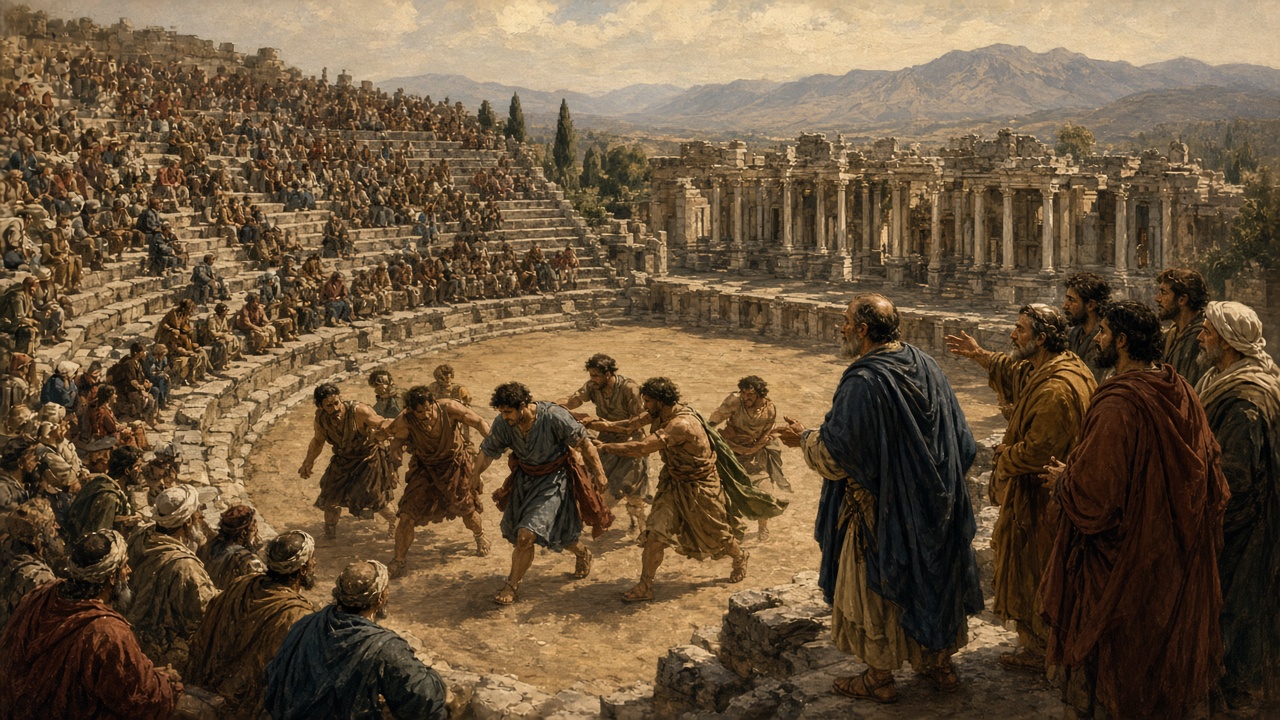
- La multitud se lanzó al teatro de Éfeso, que el Diccionario Bíblico de Easton (1897) describe como el más grande del mundo, a cielo abierto y capaz de albergar a 50.000 espectadores. Amigos de Pablo entre los jefes de Asia, ciudadanos ricos elegidos cada año para presidir los juegos y las fiestas religiosas de sus ciudades, le rogaron que no entrara. El secretario de la ciudad recordó entonces a la asamblea que Éfeso era guardiana del templo de la gran Artemisa y de su imagen, de la que se decía que había caído del cielo.Fuentes: Ephesus · Asia · el propio texto bíblico
Notas escritas con ayuda de IA a partir de fuentes abiertas (Theographic Bible Metadata, CC BY-SA 4.0; Easton’s Bible Dictionary, dominio público) y revisadas antes de publicarse.
Lugares de este capítulo
- Corinth · 37.906, 22.879 · versículo 1
- Ephesus · 37.939, 27.341 · versículos 1, 17, 23, 26, 35
- Asia · 38.400, 28.300 · versículos 10, 22, 26, 27, 31
- Achaia · 38.720, 22.540 · versículo 21
- Jerusalem · 31.777, 35.234 · versículo 21
- Macedonia · 41.600, 22.540 · versículos 21, 22, 29
- Rome · 41.892, 12.485 · versículos 21, 40
Solo aparecen lugares identificados con alta confianza (90 % o más según las fuentes académicas reunidas por OpenBible). Mapa de la época: DARE (Digital Atlas of the Roman Empire), CC BY 4.0; mapa actual: © colaboradores de OpenStreetMap; lugares: OpenBible.info (CC BY 4.0).
Créditos y licencia de esta traducción
Bibeli Luayãtaalá
The Holy Bible in the Boko language spoken in Benin and Nigeria
copyright © 2010 SIM International
Language: Boko
Translation by: SIM International
Boko Bibeli Luayãtaala
This translation, published by the SIM au Benin, was published in 2010.
If you are interested in obtaining a printed copy, please contact the SIM at ECWA/SIM H.Q., P.M.B. 2009, Jos, Plateau State, NIGERIA.
This translation text is made available to you under the
terms of the Creative Commons License: Attribution-Noncommercial-No Derivative Works.
( http://creativecommons.org/licenses/by-nc-nd/3.0/ )
In addition, you have permission to port the text to different file formats, as long as you
do not change any of the text or punctuation of the Bible.
You may share, copy, distribute, transmit, and extract portions
or quotations from this work, provided that you include the above copyright
information:
You must give Attribution to the work.
You do not sell this work for a profit.
You do not make any derivative works that change any of the actual words or punctuation of the Scriptures.
Permissions beyond the scope of this license may be
available if you contact
us with your request.
This translation is made available to you under the terms of the
Creative Commons Attribution-Noncommercial-No Derivatives license 4.0.
You may share and redistribute this Bible translation or extracts from it in any format, provided that:
You include the above copyright and source information.
You do not sell this work for a profit.
You do not change any of the words or punctuation of the Scriptures.
Pictures included with Scriptures and other documents on this site are licensed just for use with those Scriptures and documents.
For other uses, please contact the respective copyright owners.
2014-09-25
Fuente: http://ebible.org/bqcsim/ · eBible.org