2 Reyes 9
Bibeli Luayãtaalá · Toca un versículo para ver sus referencias cruzadas.
Yehu kpaa Isailiↄ kía ũ
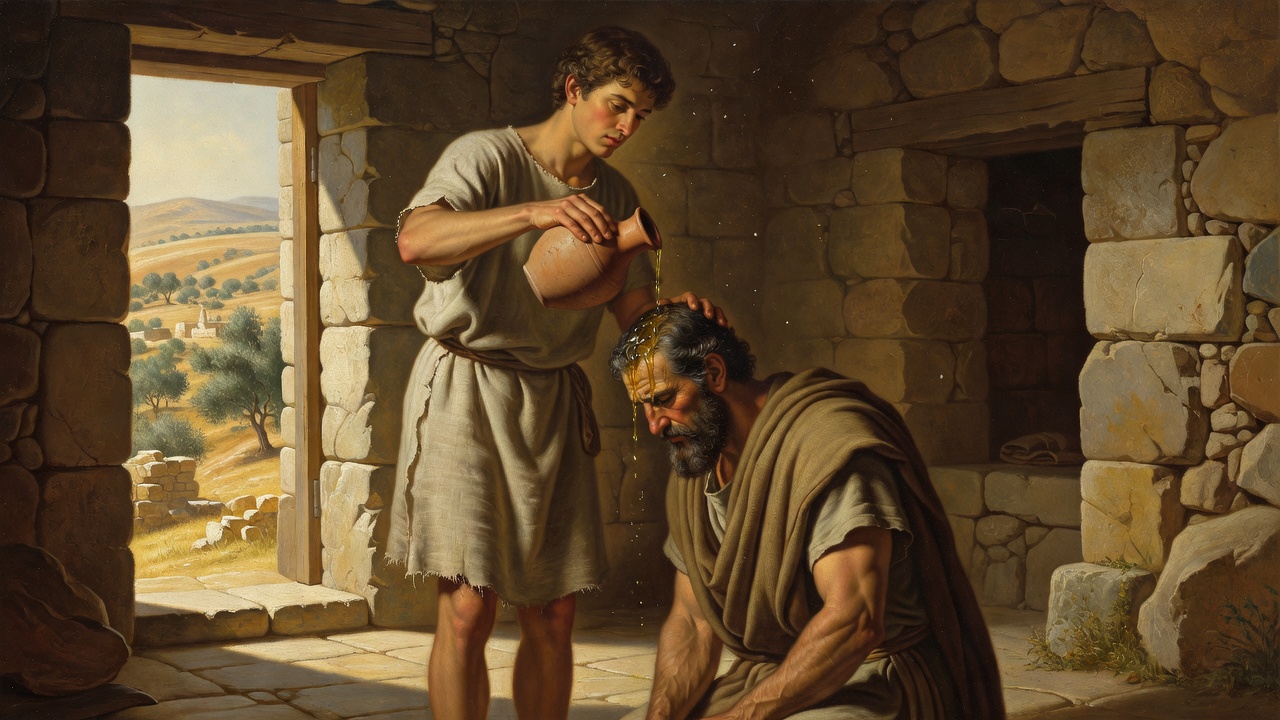
1Ãnabi Ɛlizi ãnabi gãli gbɛ̃e sìsi, ↄ̃ a òɛ̀: Ǹ n ula kãaa ǹ kṹ, nísi tùuɛ bee si gɛò Lamↄtu Galada. 2Tó n ka we, kpálɛkɛ Yosafa nɛ́ Yehu, Nimisi tↄũnazi, ní aà bↄ a gbɛ̃́ↄ guu, ní gɛ̃aànↄ kpɛ́u e kpɛa. 3Ní tùupi nísika aà miwa, ní oɛ̀ Dii mɛ̀ a aà kpà Isailiↄ kía ũɛ. Bee gbɛa ní zɛwɛ̃ ǹ bàalɛ ǹ su. Ńsu gɛ̃gɛ̃ weo. 4Ɔ̃ ãnabi ɛ̀waasopi gɛ̀ Lamↄtu Galada. 5Kɛ́ à kà we, à zĩgↄ̃ dↄaanaↄ è kálɛa, ↄ̃ à mɛ̀: Dↄaana, má yãvĩ mà onɛ. Ɔ̃ Yehu aà là à mɛ̀: Wá dé ńlɛ oi? A wèwà à mɛ̀: Ḿmɛ dↄaana. 6Kɛ́ Yehu fɛ̀lɛ gɛ̃̀ kpɛ́u, ↄ̃ ɛ̀waasopi nísikà aà miwa à mɛ̀: Dii Isailiↄ Lua mɛ̀ a n kpa a gbɛ̃́ Isailiↄ kía ũɛ. 7Ní Ahabu bɛdeↄ dɛdɛ, Dii i a zↄ̀blena ãnabiↄ tↄsinɛ́ ń a zↄ̀blena pↄ́ Zezabɛli ń dɛ́ↄ píi. 8Ní Ahabu bɛdepiↄ dɛdɛ zↄↄ ń wɛ̃́ɛↄ píi. An gↄ̃ɛe su gↄ̃ Isaili bùsuuo, 9Ahabu ua i gↄ̃ lán Nɛba nɛ́ Yeloboaũ uawa, lán Ahia nɛ́ Baasa uawa. 10Gbɛ̃ↄ Zezabɛli gɛ so Yezɛlɛɛ bĩ́i kpɛɛ, gbɛ̃e a aà vĩo. Ɔ̃ ãnabipi zɛwɛ̃̀, à tilɛ̀. 11Kɛ́ Yehu bↄ̀ gɛ̀ a dↄaana deeↄ kĩ́i, ↄ̃ aa aà là aa mɛ̀: Bↄ́yãi ĩ́andepi mↄ̀i n kĩ́ii? A wèmá à mɛ̀: Á gbɛ̃́pi dↄ̃, yãbↄlɛnaɛ. 12Ɔ̃ aa mɛ̀: Ɛgɛɛ! Owɛ̃ɛ. Ɔ̃ à mɛ̀: Yã́ pↄ́ a òmɛɛn kɛ: À mɛ̀ Dii mɛ̀ a ma kpa Isailiↄ kía ũɛ. 13Ɔ̃ an baade kɛ̀ kpakpa à a ulada sɛ kàlɛ aà zíɛ dɛdɛkĩiwa, ↄ̃ aa kuupɛ̀ aa mɛ̀: Yehu mɛ́ kí ũ.
14Ɔ̃ Yehu lɛkpàaĩ ń gbɛ̃́ↄ Yolaũzi. À mↄ lè kí Yolaũpi ń Isailiↄ píi lɛ́ gí ń Lamↄtu Galadaoɛ, ↄ̃ aalɛ zĩka ń Siliↄ kí Azaelio. 15Kɛ́ Siliↄ aà kɛ̀'ĩa, ↄ̃ à ɛ̀a tà Yezɛlɛɛ e à gbã́gbã. Ɔ̃ Yehu ò a gbɛ̃́piↄnɛ: Tó a zɛmanↄɛ, ásu to gbɛ̃e bↄ wɛ̃́lɛu à gɛ yã́pi baokpa Yezɛlɛɛo. 16Ɔ̃ Yehu gɛ̃̀ a sↄ̃́gou à gɛ̀ Yezɛlɛɛ. Yolaũ wúlɛa we, Yudaↄ kí Aazia ku we lↄ, à gɛ̀ wɛ́kpalɛiaàziɛ. 17Kɛ́ gudↄ̃ana pↄ́ kú Yezɛlɛɛ kalanga musu Yehu è ń a gbɛ̃́ↄ, aalɛ mↄ́, ↄ̃ à wiilɛ̀ à mɛ̀: Ma gbɛ̃́ↄ è, aalɛ mↄ́. Ɔ̃ Yolaũ mɛ̀: Sↄ̃de gbaɛ aà gɛ dańlɛ, aà ń la tó aafia aalɛ mↄ́. 18Ɔ̃ sↄ̃de bↄ̀ gɛ̀ Yehu lè à mɛ̀: Kí mɛ̀ aafia ńlɛ mↄ́a? Yehu wèwà à mɛ̀: N bàa ũma ń aafiaoi? Mↄ ǹyↄ̃ tɛmazi. Ɔ̃ gudↄ̃anapi mɛ̀: Zĩnapi ń lé, kási i ɛa sùo. 19Ɔ̃ kí sↄ̃de plaade gbàɛ lↄ. Kɛ́ à ń lé, à mɛ̀: Kí mɛ̀ aafia ńlɛ mↄ́a? Ɔ̃ Yehu wèwà à mɛ̀: N bàa ũma ń aafiaoi? Mↄ ǹyↄ̃ tɛmazi. 20Ɔ̃ gudↄ̃anapi mɛ̀: À ń lé, kási i ɛa sù sↄ̃o. Gbɛ̃́pi gofĩa dɛ lán Nimisi tↄũna Yehuwaɛ, ì gó baa lán ĩ́andewaɛ.
21Ɔ̃ kí Yolaũpi mɛ̀: Gó dↄmɛɛ sↄ̃́ↄnɛ! Kɛ́ wa dↄ̀ɛ̀, ↄ̃ aa bↄ̀ wɛ̃́lɛu ń Yudaↄ kí Aaziao, baade ń a sↄ̃́goo, aalɛ gɛ́ dai Yehulɛ. Ɔ̃ aa kpàaũ Yezɛlɛɛ gbɛ̃́ Nabↄti pↄ́ wa dɛ̀ yãa bua. 22Kɛ́ Yolaũ wɛsì Yehulɛ, ↄ̃ à aà là à mɛ̀: Yehu, aafia ńlɛ mↄ́a? A wèwà à mɛ̀: Lá n da Zezabɛli gbãsĩkɛa tã́aↄ yã́ musu ń aà pↄdaa gbɛ̃́ↄwao lìgua, aafia ku máɛ? 23Kɛ́ Yolaũ lìaa àlɛ bàalɛ, ↄ̃ à lɛzù Aaziazi à mɛ̀: Bↄnkpɛyãɛ Aazia! 24Ɔ̃ Yehu a sá kã̀ à Yolaũ pà a káafala zãnguo. Kapi gɛ̀ aà sↄ̃ kũ̀, ↄ̃ à kɛ̀ a sↄ̃́gou yↄ̀gɛɛ. 25Ɔ̃ Yehu ò a zĩgↄ̃ bade Bidekaaɛ: Ǹ aà gɛ sɛ zu Yezɛlɛɛ gbɛ̃́ Nabↄti bua we, asa yã́ dↄ̀magu. Kɛ́ wá kú sↄ̃́go guu sãnu yãa wá pla, wá tɛ́ aà mae Ahabuzi, ↄ̃ Dii àsi'ò aà yã́ musu à mɛ̀ 26a Nabↄti ń a nɛ́ↄ dɛa è. Bua la ↄ̃ á Nabↄti pↄ́ tↄsiuɛ̀. A yã́i tò ǹ aà gɛ sɛ vũaa bua we lá Dii òwa.
27Kɛ́ Yudaↄ kí Aazia è màa, ↄ̃ à pɛ̀lɛ Bɛtagã zɛ́u ń bao. Ɔ̃ Yehu pɛ̀lɛaàzi à mɛ̀: À aà dɛ sↄ̃ɛ. Ɔ̃ wà aà pà a sↄ̃́go guu gↄↄ pↄ́ àlɛ Guu sĩ̀sĩ kũ Ibleaũ saɛ. Ɔ̃ à ń kɛ̃́ à tà Mɛgido, we à gàu. 28Aà ìwaↄ aà gɛ sɛ dà sↄ̃́go guu aa tàò Yelusalɛũ, ↄ̃ aa aà mia kpàkↄ̃i ń a deziↄ Davidi wɛ̃́lɛu. 29Za Ahabu nɛ́ Yolaũ kpalablea wɛ̃̀ kuɛdode guu, ↄ̃ Aaziapi gↄ̃̀ Yudaↄ kía ũ.
Zezabɛli gaa
30Kɛ́ Yehu mↄ̀ Yezɛlɛɛ, Zezabɛli a baomà, ↄ̃ à kio kà à a mikã kɛ̀kɛ. Za bĩ́i kpɛdiakↄ̃a fɛnɛntiu ↄ̃ àlɛ zĩ́lɛ gwa. 31Kɛ́ Yehu gɛ̃̀ bĩ́ibↄlɛu, ↄ̃ Zezabɛli mɛ̀: N kɛ doũ ń Zimlio, n n dii dɛ̀. Aafia n mↄ laa? 32Kɛ́ Yehu wɛsɛ̀ musu, à fɛnɛnti gwà, ↄ̃ à mɛ̀: Démɛ zɛ̀manↄi? Démɛ kú wei? Kɛ́ kibɛ zĩkɛna gbɛ̃ↄn pla ge àaↄ̃ↄ mↄ̀ zĩ́lɛ gwà fɛnɛntiu, 33ↄ̃ Yehu ònɛ́: À ↄzↄ̃aàzi. Kɛ́ aa ↄzↄ̃̀aàzi, à lɛ̀lɛ, ↄ̃ Yehu lɛ́ aà tↄ̀ↄsↄmpa ń a sↄ̃́goo e aà au fã̀ gĩwa ń sↄ̃́ↄ. 34Kɛ́ Yehu gɛ̃̀ kibɛ, à pↄblè à imì, ↄ̃ à mɛ̀: Baa kɛ́ nↄɛpiá láaipↄɛ, wà aà vĩ, asa kíabuiɛ. 35Kɛ́ wà gɛ̀ aà sɛ́i wà vĩ, wi pↄe eo, sema aà miwa ń aà gbálaↄ ń aà ↄlaↄ bàasio. 36Ɔ̃ wà ɛ̀a gɛ ò Yehuɛ, ↄ̃ à mɛ̀: Yã́ pↄ́ Dii dà a zↄ̀blena Tisɛbɛ gbɛ̃́ Ɛliaɛ a òn we, à mɛ̀: Gbɛ̃ↄ Zezabɛli mɛ so Yezɛlɛɛ bĩ́i kpɛɛ. 37Zezabɛli gɛ a gↄ̃ fãaaa tↄↄlɛ lán pↄtuo gbↄ̃wa Yezɛlɛɛ bĩ́i kpɛɛ. Gbɛ̃e a e mɛ Zezabɛlin kɛo.
¿Sabías que…?
La unción de Jehú y la caída de la casa de Acab
- Ramot de Galaad era una ciudad fronteriza al este del Jordán donde los comandantes de Israel montaban guardia contra Hazael, rey de Siria (Aram), mientras el rey Joram se recuperaba en Jezreel. Fue en ese campamento militar donde un discípulo enviado por el profeta Eliseo ungió en secreto al comandante Jehú como rey.Fuentes: Ramoth-gilead · Jehu · el propio texto bíblico
- Jehú ordenó arrojar el cuerpo del rey Joram en la propiedad de Nabot de Jezreel. Esto cumplió el juicio profético contra la casa de Acab por la muerte de Nabot y la confiscación de su viña ancestral junto al palacio en Jezreel.Fuentes: Naboth · Jezreel · el propio texto bíblico
- Jezabel era hija de Et-baal, rey de los sidonios, antes de casarse con Acab. Incluso después de ordenar su muerte, Jehú reconoció su linaje real al mandar a sepultarla por ser hija de rey.Fuentes: Jezebel · el propio texto bíblico
Notas escritas con ayuda de IA a partir de fuentes abiertas (Theographic Bible Metadata, CC BY-SA 4.0; Easton’s Bible Dictionary, dominio público) y revisadas antes de publicarse.
Lugares de este capítulo
- Syria · Hoy: Aram · 33.511, 36.306 · versículos 14, 15
- Megiddo · Hoy: Tel Megiddo · 32.585, 35.184 · versículo 27
- City of David · 31.774, 35.236 · versículo 28
- Jerusalem · 31.777, 35.234 · versículo 28
Solo aparecen lugares identificados con alta confianza (90 % o más según las fuentes académicas reunidas por OpenBible). Mapa de la época: DARE (Digital Atlas of the Roman Empire), CC BY 4.0; mapa actual: © colaboradores de OpenStreetMap; lugares: OpenBible.info (CC BY 4.0).
Créditos y licencia de esta traducción
Bibeli Luayãtaalá
The Holy Bible in the Boko language spoken in Benin and Nigeria
copyright © 2010 SIM International
Language: Boko
Translation by: SIM International
Boko Bibeli Luayãtaala
This translation, published by the SIM au Benin, was published in 2010.
If you are interested in obtaining a printed copy, please contact the SIM at ECWA/SIM H.Q., P.M.B. 2009, Jos, Plateau State, NIGERIA.
This translation text is made available to you under the
terms of the Creative Commons License: Attribution-Noncommercial-No Derivative Works.
( http://creativecommons.org/licenses/by-nc-nd/3.0/ )
In addition, you have permission to port the text to different file formats, as long as you
do not change any of the text or punctuation of the Bible.
You may share, copy, distribute, transmit, and extract portions
or quotations from this work, provided that you include the above copyright
information:
You must give Attribution to the work.
You do not sell this work for a profit.
You do not make any derivative works that change any of the actual words or punctuation of the Scriptures.
Permissions beyond the scope of this license may be
available if you contact
us with your request.
This translation is made available to you under the terms of the
Creative Commons Attribution-Noncommercial-No Derivatives license 4.0.
You may share and redistribute this Bible translation or extracts from it in any format, provided that:
You include the above copyright and source information.
You do not sell this work for a profit.
You do not change any of the words or punctuation of the Scriptures.
Pictures included with Scriptures and other documents on this site are licensed just for use with those Scriptures and documents.
For other uses, please contact the respective copyright owners.
2014-09-25
Fuente: http://ebible.org/bqcsim/ · eBible.org