2 Crónicas 4
Bibeli Luayãtaalá · Toca un versículo para ver sus referencias cruzadas.
Lua kpɛ́ pↄ́ↄ
1Salomↄↄ sa'okĩi kɛ̀ ń mↄgotɛ̃o. A gbã̀a ń a yàasao gã̀sĩsuu baobao, a lɛsĩ kwi. 2À íkakĩi bò bòoloo. A lɛ́la e a lɛ́le gã̀sĩsuu kwiɛ, a lɛsĩ sↄo, a zↄ̃ↄ sↄ̃ baakwi. 3À gↄ̃inakɛ̀ íkakĩipiwa lán tùuↄwa, a lìa a lɛ́i zĩ́lɛ dↄ̀ↄ pla, gã̀sĩsuu dodo tùu mɛ̀n kwikwi. À íkakĩipi pì sãnu ń tùu gↄ̃inapioɛ. 4Íkakĩipi di zuswana mɛ̀n kuɛplaↄwa. Zù mɛ̀n àaↄ̃ↄ mi dↄ gugbãntoo oi, mɛ̀n àaↄ̃ↄ bɛ'aɛ oi, mɛ̀n àaↄ̃ↄ gɛↄmidↄkĩi oi, mɛ̀n àaↄ̃ↄ lↄ gukpɛ oi. Íkakĩipi di ń musu, ↄ̃ an pↄ̀ↄↄ dↄdↄ guo. 5Íkakĩipi gèele ↄtã doɛ, mɛ́ a swã́ dɛ lán ta swã́wa, lán tↄ̃́ↄngbelezĩwa. Galuba zↄ̃ↄ lɛ ↄ̀aa do ń basↄoo í ↄ̃ ta sapi ì sí.
6Ɔ̃ à dàa pì mɛ̀n kwi nↄ̀ↄpipibↄↄ ũ, a kàlɛ Lua kpɛ́ ↄplaa oi mɛ̀n sↄo, ↄzɛɛi mɛ̀n sↄo. Sa'onaↄ ì dàapiↄ idada sa pↄ́ wì a pↄ́ kátɛu à tɛ́kũ nↄ̀ↄwa. Sa'onapiↄ sↄ̃ aaì zu'o ń íkakĩipi íoɛ.
7À vua dau pì mɛ̀n kwi lá wà a kɛa dìlɛwa. A kàlɛ Lua kpɛ́u, mɛ̀n sↄo ↄplaa oi, mɛ̀n sↄo zɛɛi. 8À táabũnu kɛ̀ mɛ̀n kwi, a kàlɛ Lua kpɛ́u, mɛ̀n sↄo ↄplaa oi, mɛ̀n sↄo zɛɛi. À ta au'ɛlɛbↄↄ pì ń vuao mɛ̀n basↄo. 9À sa'onaↄ ua kpànɛ́ ń Lua kpɛ́ uadao ń a bↄlɛ gbaↄ, ↄ̃ à mↄgotɛ̃ kùlɛ gbapiↄwa. 10Ɔ̃ à íkakĩipi dìlɛ Lua kpɛ́ kpɛɛlɛ ↄplaa oi gɛↄmidↄkĩi oi ń gukpɛo zãnguo. 11À túfukabↄↄ ń pɛ́ɛluↄ ń ta au'ɛlɛbↄↄ pì lↄ.
Màa Hulaũ Lua kpɛ́ zĩ kɛ̀ kí Salomↄↄɛ, à a lɛkpàaĩ. Zĩ pↄ́ a kɛ̀piↄn kɛ:
12Mↄ̀pɛlɛↄ pla.
Fùa pↄ́ bↄ̀ lán lowa, a ku mↄ̀pɛlɛpiↄ musuↄ pla.
Mↄdaona pↄ́ à zãblèò fùapiↄwaↄ pla.
13Gↄ̃ina pↄ́ a dↄ̀dↄ mↄdaonapiↄwa lán gbɛafu bɛↄwaↄ ↄ̀aa pla. A kɛ̀ dↄ̀ↄ plapla, à zãblèò fùapiↄwa.
14Tadibↄↄ ń a taↄ.
15Íkakĩi do ń zuswana pↄ́ kú a zíɛↄ kuɛpla.
16Túfukabↄↄ ń pɛ́ɛluↄ ń saaↄ ń a pↄkeleↄ píi.
Pↄ́ pↄ́ Hulaũ pì kí Salomↄↄɛ Dii kpɛ́ pↄ́ ũↄ píi, a pì ń mↄgotɛ̃ pↄ́ wa yↄ̀ↄoɛ. 17Kí mɛ̀ wà kása ń Yuudɛ̃ dã̀na gĩ pↄ́ kú Suko ń Zalɛtão zãnguoo. 18Pↄ́ pↄ́ Salomↄↄ pì ń mↄgotɛ̃opiↄ, wi yↄ̃ kiloowa wà a gbia dↄ̃̀o, kɛ́ a dasi kɛ̀ zài yã́i.
19Salomↄↄ pↄ́ pↄ́ kú Lua kpɛ́ guuↄ pì lↄ, tulaletikatɛakĩi pↄ́ wa kɛ̀ ń vuao ń vua táabũnu pↄ́ wì Dii pɛ̃ɛ kálɛwàↄ 20ń dau pↄ́ wa pì ń vua tɛ̃ɛtɛ̃ɛoↄ ń a filia pↄ́ ìↄ naa luakukĩi aɛↄ lá wa dìlɛwa. 21Wà gↄ̃inakɛ̀ daupiↄwa lán kↄpɛkĩi fùaↄwa. Wà a filiaↄ ń a kpàoↄ pì ń vua tɛ̃ɛtɛ̃ɛoɛ. 22Vua filiadɛbↄↄ ń taↄ ń gↄ̃̀ↄnaↄ ń tàasoↄ ń kpɛa pↄ́ wì mɛ luakukĩi gbaↄ ń kpɛɛlɛ pↄ́ↄ.
¿Sabías que…?
Mobiliario para el Templo
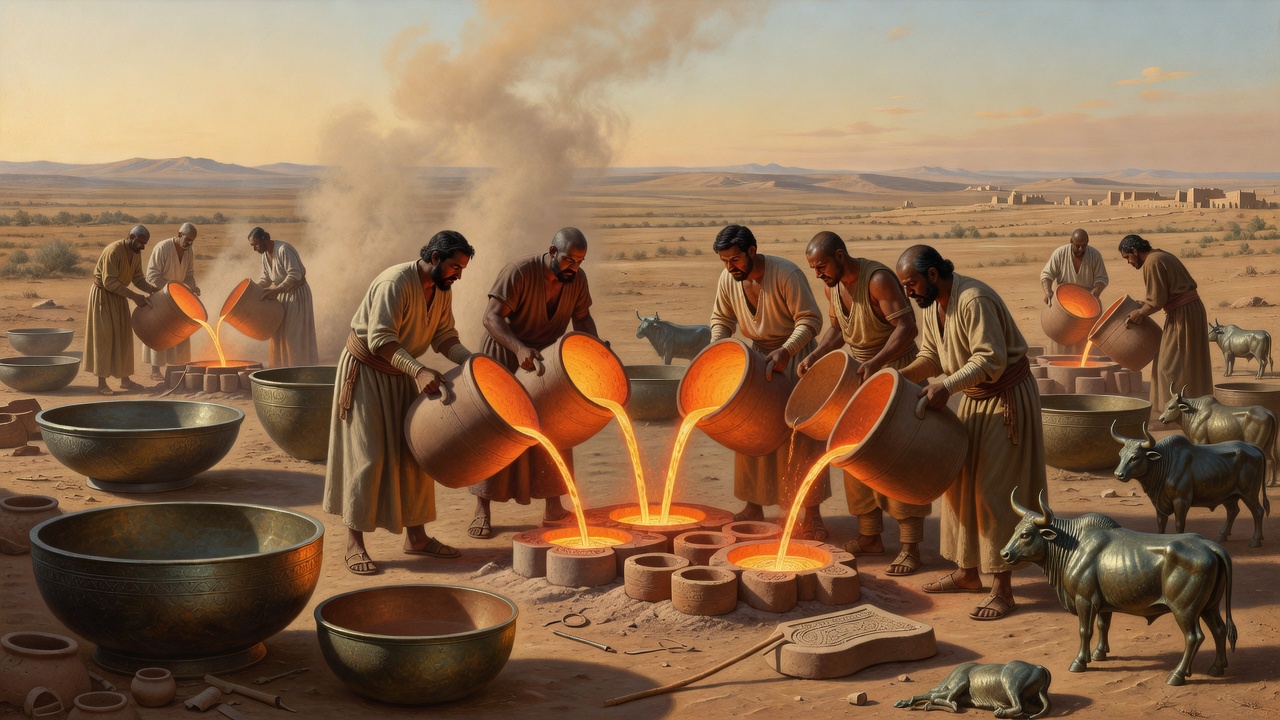
- Los grandes objetos de bronce para el templo, incluido el colosal depósito conocido como el Mar y los doce bueyes que lo sostenían, se fundieron en moldes de barro en la llanura del Jordán, entre Sucot y Sereda (también llamada Saretán). Esta compleja labor metalúrgica fue dirigida por el maestro artesano Hiram-abí.Fuentes: el propio texto bíblico · Hiram · Zeredah
- El gran Mar de metal fundido tenía un borde en forma de flor de lirio y almacenaba agua destinada exclusivamente para que los sacerdotes se lavaran antes de sus labores sagradas. Diez fuentes separadas se reservaban para lavar las piezas de los animales ofrecidos en holocausto.Fuentes: el propio texto bíblico
- En el interior del templo, Salomón dispuso diez candelabros y diez mesas de oro puro para los panes de la proposición, así como puertas de oro hacia el Lugar Santísimo y numerosos utensilios dorados, tales como tazones, incensarios y despabiladeras.Fuentes: el propio texto bíblico · Most Holy Place
Notas escritas con ayuda de IA a partir de fuentes abiertas (Theographic Bible Metadata, CC BY-SA 4.0; Easton’s Bible Dictionary, dominio público) y revisadas antes de publicarse.
Lugares de este capítulo
- Jordan · Hoy: Jordan River · 31.761, 35.558 · versículo 17
- Most Holy Place · Hoy: on Mount Moriah · 31.778, 35.236 · versículos 20, 22
Solo aparecen lugares identificados con alta confianza (90 % o más según las fuentes académicas reunidas por OpenBible). Mapa de la época: DARE (Digital Atlas of the Roman Empire), CC BY 4.0; mapa actual: © colaboradores de OpenStreetMap; lugares: OpenBible.info (CC BY 4.0).
Créditos y licencia de esta traducción
Bibeli Luayãtaalá
The Holy Bible in the Boko language spoken in Benin and Nigeria
copyright © 2010 SIM International
Language: Boko
Translation by: SIM International
Boko Bibeli Luayãtaala
This translation, published by the SIM au Benin, was published in 2010.
If you are interested in obtaining a printed copy, please contact the SIM at ECWA/SIM H.Q., P.M.B. 2009, Jos, Plateau State, NIGERIA.
This translation text is made available to you under the
terms of the Creative Commons License: Attribution-Noncommercial-No Derivative Works.
( http://creativecommons.org/licenses/by-nc-nd/3.0/ )
In addition, you have permission to port the text to different file formats, as long as you
do not change any of the text or punctuation of the Bible.
You may share, copy, distribute, transmit, and extract portions
or quotations from this work, provided that you include the above copyright
information:
You must give Attribution to the work.
You do not sell this work for a profit.
You do not make any derivative works that change any of the actual words or punctuation of the Scriptures.
Permissions beyond the scope of this license may be
available if you contact
us with your request.
This translation is made available to you under the terms of the
Creative Commons Attribution-Noncommercial-No Derivatives license 4.0.
You may share and redistribute this Bible translation or extracts from it in any format, provided that:
You include the above copyright and source information.
You do not sell this work for a profit.
You do not change any of the words or punctuation of the Scriptures.
Pictures included with Scriptures and other documents on this site are licensed just for use with those Scriptures and documents.
For other uses, please contact the respective copyright owners.
2014-09-25
Fuente: http://ebible.org/bqcsim/ · eBible.org