2 Crónicas 13
Bibeli Luayãtaalá · Toca un versículo para ver sus referencias cruzadas.
Yudaↄ kí Abia
1Yeloboaũ kpalablea wɛ̃̀ bao plasaide guu ↄ̃ Abia gↄ̃̀ Yudaↄ kía ũ, 2à kɛ̀ báawa Yelusalɛũ wɛ̃̀ àaↄ̃ɛ. Aà da tↄ́n Maaka, Gibɛa gbɛ̃́ Uliɛli tↄũnaɛ.
Abia ń Yeloboaũo aaìↄ zĩka ń kↄ̃oɛ. 3Abia gɛ̀ zĩlau ń zĩgↄ̃ na maaↄ gbɛ̃ↄn ↄ̀aasↄsↄo lɛɛ ↄ̀aa pla (400.000). Ɔ̃ Yeloboaũ bↄ̀ zĩ'ↄpòoaàzi ń gↄ̃sa gbãaↄ gbɛ̃ↄn ↄ̀aasↄsↄo lɛɛ ↄ̀aa síiↄ̃ (800.000). 4Ɔ̃ Abia dɛ̀dɛ Zemalaiũ gbɛ pↄ́ kú Ɛflaiũ bùsu gusĩsĩdeuwa à mɛ̀: Yeloboaũ ń Isailiↄ píi, à ma yãma. 5Á dↄ̃ kɛ́ Dii Isailiↄ Lua Davidi ń aà buiↄ kpà kpalau aa kible Isailiↄwa gↄↄpiio lé? Dii bàakuaaànↄ lɛ́ vĩo. 6Ń beeo Nɛba nɛ́ Yeloboaũ, Davidi nɛ́ Salomↄↄ ìwae bↄ̀ a diipi kpɛ. 7Gbɛ̃pã giaeↄ kã̀aaaàzi, aa gbãamↄ̀ Salomↄↄ nɛ́ Lↄbↄaũɛ gↄↄ pↄ́ a dɛ ɛ̀waasona ũ, a yã́ↄ yáasi dↄ̃o, aà gbãa i ka à gínɛ́o. 8Tia kɛ́wa ápiↄ sↄ̃ a zɛò à gi Davidi bui pↄ́ Dii kpà kpala pↄ́ a dìlɛuↄnɛ. Á zĩgↄ̃ↄ dasi maamaa, mɛ́ vua gáaena pↄ́ Yeloboaũ pìɛ́ dii ũↄ kúánↄ. 9A Dii gbàgbana Levii buiↄ ń Levii bui kĩniↄ yà, ↄ̃ a azĩa sa'onaↄ dìlɛ lá buipãleↄ ì kɛwa. Gbɛ̃́ pↄ́ mↄ̀ ń gáaenao ń sãsakaoↄ mɛ̀n sopla ↄ̃mɛ ì gↄ̃ pↄ́ pↄ́ dɛ Lua ũo gbàgbana ũ.
10Wápiↄ sↄ̃, Dii mɛ́ wá Lua ũ, wi pãkpaaàzio. Sa'ona pↄ́ aaì zĩkɛ Diiɛↄ mɛ́ Aalona buiↄ ũ, ↄ̃ Levii buiↄ ì dↄńlɛ. 11Aaìↄ sa pↄ́ wì a pↄ́ kátɛu à tɛ́kũ o Diiwa lá gu lɛ́ dↄ kↄↄ ń oosio, aaìↄ tulaletikaɛ̀ tɛ́a. Aaì pɛ̃ɛ kálɛ táabũnu gbãlɛsaiwa, aaì vua dau filiaↄ nana oosi ń oosio. Wámɛ wá Dii wá Lua yãdilɛaↄ kũa, ápiↄ sↄ̃ ↄ̃ a pãkpàaàzi. 12Lua kúwanↄ wá dↄaana ũ. Aà gbàgbanaↄ mɛ́ aa zĩkawii dↄwá ń kã̀aepɛao. Isailiↄ, ásu zĩka ń Dii á deziↄ Luaoo, asa a bↄánↄ nao.
13Yeloboaũ zĩgↄ̃ↄ gbàɛ aa lↄↄlɛ Yudaↄzi ń kpɛ. Aàpi ń a gbɛ̃́ↄ kú ń aɛ, mɛ́ lↄↄlɛnapiↄ kú ń kpɛ. 14Kɛ́ Yudaↄ lìli, ↄ̃ aa è wàlɛ sumá kpɛ ń aɛo píi, ↄ̃ aa wiilɛ̀ Diiwa. Sa'onaↄ lɛ́ kã̀aepɛ, 15ↄ̃ Abia ń Yuda zĩgↄ̃ↄ kúkuakɛ̀. Kɛ́ aa kúkuakɛ̀, ↄ̃ Lua tò aa Yeloboaũ ń Isaili zĩgↄ̃ↄ fù. 16Gↄↄ pↄ́ aalɛ bàalɛnɛ́, ↄ̃ Lua ń nánɛ́ ń ↄzĩ. 17Ɔ̃ Abia ń a gbɛ̃́ↄ Isailiↄ kɛ̀ kɛ́lɛkɛlɛ, an zĩgↄ̃ na maa pↄ́ gàgaↄ gbɛ̃ↄn ↄ̀aasↄsↄo lɛɛ ↄ̀aa pla ń basↄooɛ (500.000). 18Yudaↄ Isailiↄ bùsa gↄↄ bee, aa gbãamↄ̀nɛ́, kɛ́ aa sↄ̃kpàlɛ Dii ń deziↄ Luazi yã́i.
19Abia pɛ̀lɛ Yeloboaũ zĩgↄ̃ↄzi, ↄ̃ à ń wɛ̃́lɛeↄ sìmá, Bɛtɛli ń Yesanao ń Ɛfↄ̃nↄo ń zↄ̃ɛwia pↄ́ liaaiↄ. 20Yeloboaũ i dↄkↄ̃wa Abia gↄↄ lↄo, ↄ̃ Dii aà lɛ̀ a dɛ̀.
21Abia gbãa kã̀fĩ. Aà nↄↄ gɛ̃o mɛ̀ndosaiɛ, aà nɛgↄ̃ɛↄ bao ń plao, nɛnↄɛↄ sↄ̃ gɛ̃o ń mɛ̀ndoo. 22Abia yã́ kĩniↄ ku ãnabi Ido taalau, yã́ pↄ́ a kɛ̀ↄ ń yã́ pↄ́ a òↄ píi. 23Abia gà, ↄ̃ wà aà vĩ̀ Davidi wɛ̃́lɛu, ↄ̃ aà nɛ́ Asa zↄ̃̀lɛ aà gbɛu. Aà gↄↄ bùsu ku kílikiliɛ e wɛ̃̀ kwi.
¿Sabías que…?
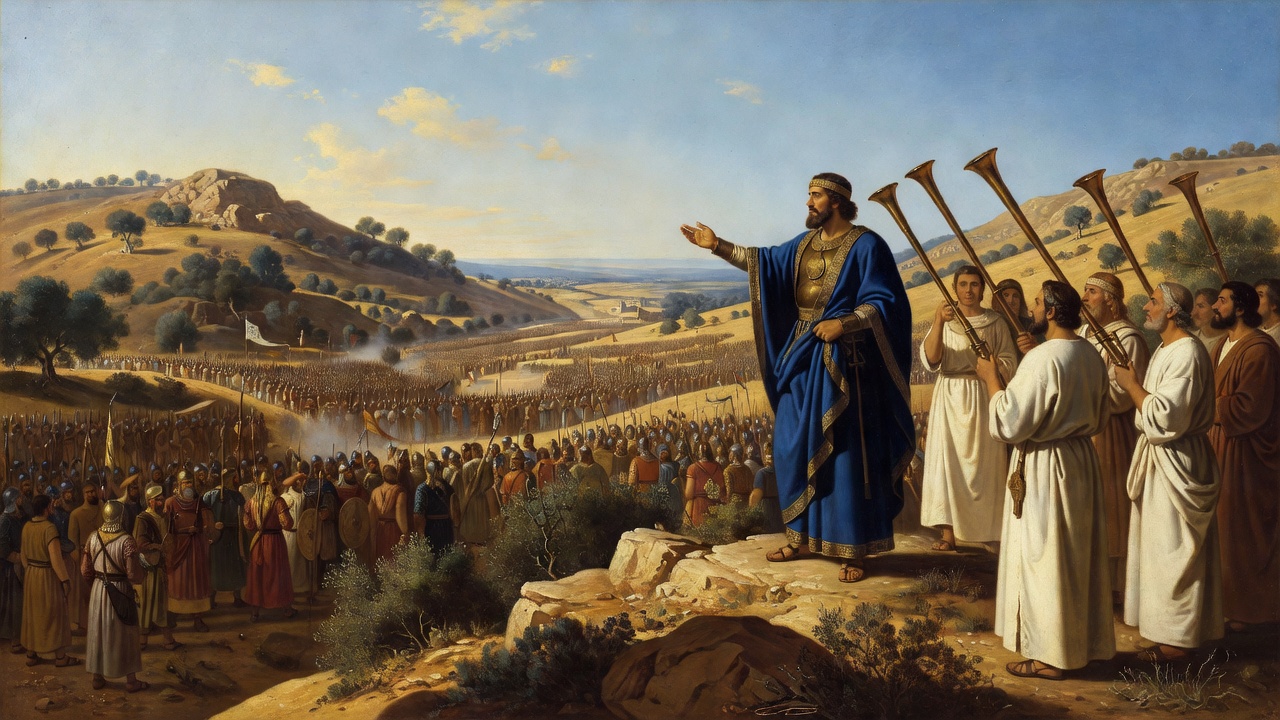
La victoria de Abías sobre Jeroboam
- Antes de la batalla, el rey Abías de Judá se situó en el monte Zemaraim, en la región montañosa de Efraín, para hablar a Jeroboam y a Israel, defendiendo la dinastía davídica mediante un pacto perpetuo de sal.Fuentes: el propio texto bíblico · Mount Zemaraim · Abijah
- Abías contrastó las prácticas religiosas de ambos reinos, señalando que Judá conservaba el sacerdocio aarónico y los rituales regulares del templo, mientras que Jeroboam había expulsado a los levitas y consagrado sacerdotes para los becerros de oro.Fuentes: el propio texto bíblico · Aaron
- Aunque Jeroboam tendió una emboscada por la retaguardia del ejército de Judá, Judá prevaleció tras clamar a Dios y hacer sonar las trompetas sagradas, tomando posteriormente ciudades como Betel, Jesaná y Efrón.Fuentes: el propio texto bíblico · Bethel (of Palestine) · Jeshanah
Notas escritas con ayuda de IA a partir de fuentes abiertas (Theographic Bible Metadata, CC BY-SA 4.0; Easton’s Bible Dictionary, dominio público) y revisadas antes de publicarse.
Lugares de este capítulo
- Jerusalem · 31.777, 35.234 · versículo 2
- Jeshanah · Hoy: Burj el Isaneh · 31.999, 35.260 · versículo 19
Solo aparecen lugares identificados con alta confianza (90 % o más según las fuentes académicas reunidas por OpenBible). Mapa de la época: DARE (Digital Atlas of the Roman Empire), CC BY 4.0; mapa actual: © colaboradores de OpenStreetMap; lugares: OpenBible.info (CC BY 4.0).
Créditos y licencia de esta traducción
Bibeli Luayãtaalá
The Holy Bible in the Boko language spoken in Benin and Nigeria
copyright © 2010 SIM International
Language: Boko
Translation by: SIM International
Boko Bibeli Luayãtaala
This translation, published by the SIM au Benin, was published in 2010.
If you are interested in obtaining a printed copy, please contact the SIM at ECWA/SIM H.Q., P.M.B. 2009, Jos, Plateau State, NIGERIA.
This translation text is made available to you under the
terms of the Creative Commons License: Attribution-Noncommercial-No Derivative Works.
( http://creativecommons.org/licenses/by-nc-nd/3.0/ )
In addition, you have permission to port the text to different file formats, as long as you
do not change any of the text or punctuation of the Bible.
You may share, copy, distribute, transmit, and extract portions
or quotations from this work, provided that you include the above copyright
information:
You must give Attribution to the work.
You do not sell this work for a profit.
You do not make any derivative works that change any of the actual words or punctuation of the Scriptures.
Permissions beyond the scope of this license may be
available if you contact
us with your request.
This translation is made available to you under the terms of the
Creative Commons Attribution-Noncommercial-No Derivatives license 4.0.
You may share and redistribute this Bible translation or extracts from it in any format, provided that:
You include the above copyright and source information.
You do not sell this work for a profit.
You do not change any of the words or punctuation of the Scriptures.
Pictures included with Scriptures and other documents on this site are licensed just for use with those Scriptures and documents.
For other uses, please contact the respective copyright owners.
2014-09-25
Fuente: http://ebible.org/bqcsim/ · eBible.org