1 Samuel 12
Bibeli Luayãtaalá · Toca un versículo para ver sus referencias cruzadas.
Samuɛli migoa kpalai
1Samuɛli ò Isailiↄnɛ píi: Ma yã́ pↄ́ á òmɛɛ mà píi, ma kía kpàɛ́. 2Aàpi mɛ́ a dↄaaɛ́ sa. Mapi sↄ̃ ma zikũ̀, ma mikã puakũ̀ mɛ́ ma nɛ́ↄ kúánↄ. Ma dↄaaɛ́ za ma ɛ̀waasogↄↄ e ń a gbão. 3Má kɛ́! À kɛ ma seeladeↄ ũ Dii ń kía pↄ́ a kpào aɛ. Ma zu ge zàa'ĩna sì á gbɛ̃ewae? Ma á gbɛ̃e blèe? Ma á gbɛ̃e wɛtã̀e? Gbagusaɛ ma wɛ́ blè ma bↄ á gbɛ̃e kpɛe? Tó má kɛ̀ màa, má a fĩaboɛ. 4Ɔ̃ aa wèwà aa mɛ̀: Ni wá bleo, ni wá wɛtão, ni pↄe sí wá gbɛ̃ewao. 5Samuɛli ònɛ́ lↄ: Dii ń kía pↄ́ a kpào mɛ́ á seeladeↄ ũ gbã, kɛ́ i tàae'eao. Aa mɛ̀: Dii mɛ́ wá seelade ũ. 6Ɔ̃ Samuɛli ònɛ́: Dii mɛ́ Mↄizi ń Aalonao dìlɛ, ↄ̃ aa bↄ̀ ń á deziↄ Egipi. 7À kɛ kílikili Dii aɛ, mí yãmaa pↄ́ a kɛ̀ɛ́ ń á deziↄ siuɛ́. 8Yakↄbuↄ gɛa Egipi gbɛa á deziↄ wiilɛ̀ Diiwa, ↄ̃ à Mↄizi ń Aalonao dìlɛ, aa ń bↄ́lɛ Egipi, ↄ̃ aa ń kálɛ bùsuɛ beeu. 9Kɛ́ Dii an Lua yã́ sã̀ńgu yã́i, ↄ̃ à ń kpá Azoo zĩgↄ̃ↄ gbɛ̃zↄ̃ↄ Siselawa ń Filitɛ̃ↄ ń Mↄabuↄ kíao, aalɛ zĩkańnↄ. 10Ɔ̃ aa wiilɛ̀ Diiwa aa mɛ̀: Wa duunakɛ̀, wa pãkpànzi, wa zↄblè Baaliↄnɛ ń Asetaatiↄ. Wá bↄ wá ibɛɛↄ ↄzĩ sa, wíↄ zↄblenɛ. 11Ɔ̃ Dii Gedeↄ̃ↄ dìlɛ ń Balakuo ń Zɛfɛteo ń Sãusↄ̃ↄo aa á bↄ́ á ibɛɛpiↄ ↄzĩ gupiiu, ↄ̃ a gↄ̃ kálɛa dↄdↄa.
12Kɛ́ á è Amↄniↄ kí Naasa lɛ́ mↄ́ lɛ́lɛiwá, baa kɛ́ Dii á Lua mɛ́ á kía ũ, á òmɛɛ: Aawo! Kía mɛ́ a ikokɛwá fá! 13Tia kɛ́wa kía pↄ́ á gbɛ̀a á sɛ̀ ↄ̃ Dii dìlɛɛ́n kɛ. 14Tó á Dii vĩa vĩ mɛ́ álɛ zↄbleɛ̀, tó álɛ aà yãma mɛ́ i bↄ aà yã́ kpɛo, tó ápiↄ ń gbɛ̃́ pↄ́ lɛ́ kiblewáo tɛ Dii á Luazi, áↄ aafiaɛ. 15Tó i Dii yãma sↄ̃o, mɛ́ a bↄ aà yã́ kpɛ, a ↄtↄ̃wáɛ lá a kɛ̀ á deziↄnɛwa. 16À mɛnafↄ̃, í yãzↄ̃ↄ pↄ́ Dii a kɛɛ́ e. 17Saɛ wá kuwà lao lò? Má Dii sísi, i to lou vĩ à ma, íↄ dↄ̃ kɛ́ á kíagbɛaa kɛ̀ Diiɛ ĩ́i maamaaɛ.
18Ɔ̃ Samuɛli Dii sìsi, ↄ̃ Dii tò lou vĩ̀ à mà zĩbeezĩ. Ɔ̃ gbɛ̃́pii vĩakɛ̀ Diiɛ ń Samuɛlio maamaa. 19Ɔ̃ aa òɛ̀: Wabikɛwɛ̃ɛ Dii n Luawa, kɛ́ wápiↄ n zↄ̀blenaↄ wásu gagao yã́i. Wa yãvãi kã̀fĩ wá duunaaɛ, asa wa kía gbɛ̀aɛ.
20Samuɛli ònɛ́: Ásu to vĩa á kũo. A vãipi kɛ̀ píiɛ, ãma ásu kɛ̃ Diiwao. Àↄ zↄbleɛ̀ ń nↄ̀sɛmɛndoo. 21Ásu kɛ̃wà à tɛ tã́aↄzio. Aa ài vĩo, aa fↄ̃ gbɛ̃́ bↄo, asa pↄpãↄnɛ. 22Dii a a gbɛ̃́ↄ vũaao a tↄ́ zↄ̃ↄ yã́i, asa aà á kɛa a gbɛ̃́ↄ ũ kàaàguɛ. 23Mapi sↄ̃, Dii su to mà duunakɛɛ mà wabikɛaɛ́ tóo. Aawo, má zɛ́ maa pↄ́ dɛ à sɛ ↄlↄɛ́. 24À vĩakɛ Diiɛ, àↄ zↄbleɛ̀ ń náaio ń nↄ̀sɛmɛndoo. À làasookɛ yãzↄ̃ↄ pↄ́ a kɛ̀ɛ́ↄwa. 25Tó a gi tɛ vãiwa, ápiↄ ń á kíao, wa á kaalɛ ápiiɛ.
¿Sabías que…?
El discurso de despedida de Samuel y la señal de la lluvia
- Antes de transferir formalmente el liderazgo al rey Saúl, Samuel desafió públicamente a toda la nación a testificar si alguna vez había tomado un buey, recibido soborno u oprimido a alguien durante su gestión. La asamblea confirmó su completa integridad.Fuentes: el propio texto bíblico
- Samuel recordó a los israelitas su historia, señalando que cada vez que se apartaban de la idolatría, Dios levantaba libertadores como Jerobaal (otro nombre de Gedeón), Jefté y el propio Samuel para librarlos de sus opresores.Fuentes: el propio texto bíblico · Gideon · Jephthah
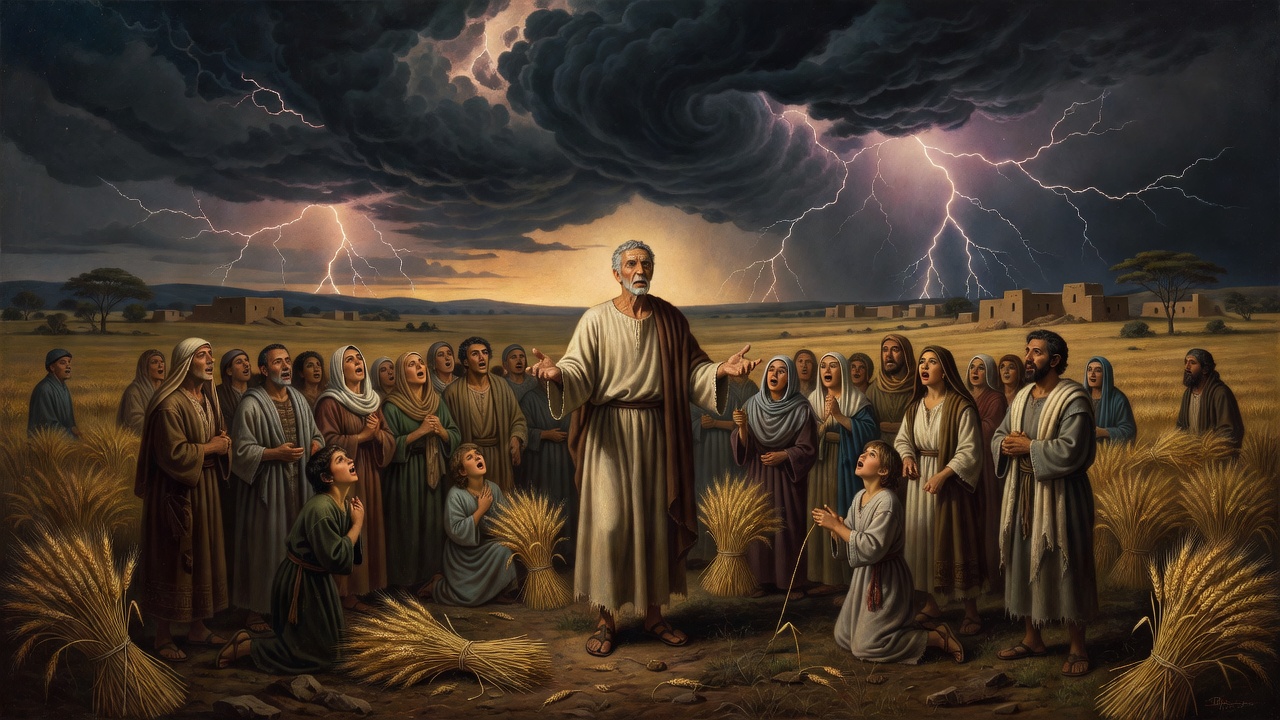
- Para mostrar la gravedad de haber exigido un rey terrenal, Samuel clamó a Dios para que enviara truenos y lluvia durante la cosecha de trigo, una época habitualmente seca en la región. La tormenta repentina llevó al pueblo a temer a Dios y a rogar la intercesión de Samuel.Fuentes: el propio texto bíblico
Notas escritas con ayuda de IA a partir de fuentes abiertas (Theographic Bible Metadata, CC BY-SA 4.0; Easton’s Bible Dictionary, dominio público) y revisadas antes de publicarse.
Lugares de este capítulo
- Egypt · 30.129, 31.308 · versículos 6, 8
- Hazor · Hoy: Tel Hazor · 33.018, 35.569 · versículo 9
- Moab · Hoy: Moab 1 · 31.181, 35.701 · versículo 9
- Ammon · 31.955, 35.934 · versículo 12
Solo aparecen lugares identificados con alta confianza (90 % o más según las fuentes académicas reunidas por OpenBible). Mapa de la época: DARE (Digital Atlas of the Roman Empire), CC BY 4.0; mapa actual: © colaboradores de OpenStreetMap; lugares: OpenBible.info (CC BY 4.0).
Créditos y licencia de esta traducción
Bibeli Luayãtaalá
The Holy Bible in the Boko language spoken in Benin and Nigeria
copyright © 2010 SIM International
Language: Boko
Translation by: SIM International
Boko Bibeli Luayãtaala
This translation, published by the SIM au Benin, was published in 2010.
If you are interested in obtaining a printed copy, please contact the SIM at ECWA/SIM H.Q., P.M.B. 2009, Jos, Plateau State, NIGERIA.
This translation text is made available to you under the
terms of the Creative Commons License: Attribution-Noncommercial-No Derivative Works.
( http://creativecommons.org/licenses/by-nc-nd/3.0/ )
In addition, you have permission to port the text to different file formats, as long as you
do not change any of the text or punctuation of the Bible.
You may share, copy, distribute, transmit, and extract portions
or quotations from this work, provided that you include the above copyright
information:
You must give Attribution to the work.
You do not sell this work for a profit.
You do not make any derivative works that change any of the actual words or punctuation of the Scriptures.
Permissions beyond the scope of this license may be
available if you contact
us with your request.
This translation is made available to you under the terms of the
Creative Commons Attribution-Noncommercial-No Derivatives license 4.0.
You may share and redistribute this Bible translation or extracts from it in any format, provided that:
You include the above copyright and source information.
You do not sell this work for a profit.
You do not change any of the words or punctuation of the Scriptures.
Pictures included with Scriptures and other documents on this site are licensed just for use with those Scriptures and documents.
For other uses, please contact the respective copyright owners.
2014-09-25
Fuente: http://ebible.org/bqcsim/ · eBible.org