Salmos 127
I tnalù dwata · Toca un versículo para ver sus referencias cruzadas.
Salmo 127
Galwà di tabeng Dwata, landè gukel i nimò dad to
Ani satu lingag dad to salu di Bong Gumnè i Amuito Dwata, mdà di ku Solomon.
1Ku là tmabeng Dwata di kafdak i gumnè,
malmo i flayam i dad to fdak dun du landè gukelan.
Na ku là tmabeng Dwata di kunung i banwe,
malmo flayam i dad to là gkudang munung dun.
2Na balù i ktékyu too flafus na i kléétyu milè di butang, du fgal gamu meye i klidùyu,
landè gukelan galwà di tabeng i Amuito Dwata,
du kenen sa i mlé klidù i dad to kandon, na i fye kakudangla.
3Balù dad ngà, i Amuito Dwata i mlé dun di dad to;
na too glut kafye i dad ngà blén di gito.
4Hae, i dad ngà blén di satu to di falami to fa kenen,
gambet i dad fanà nebe satu to makuf di kasfati,
5nun kafye di to too dee,
du laan gfisan di ksiten i dad dmuen kenen balù déén di gususayla.
¿Sabías que…?
La bendición divina y la familia
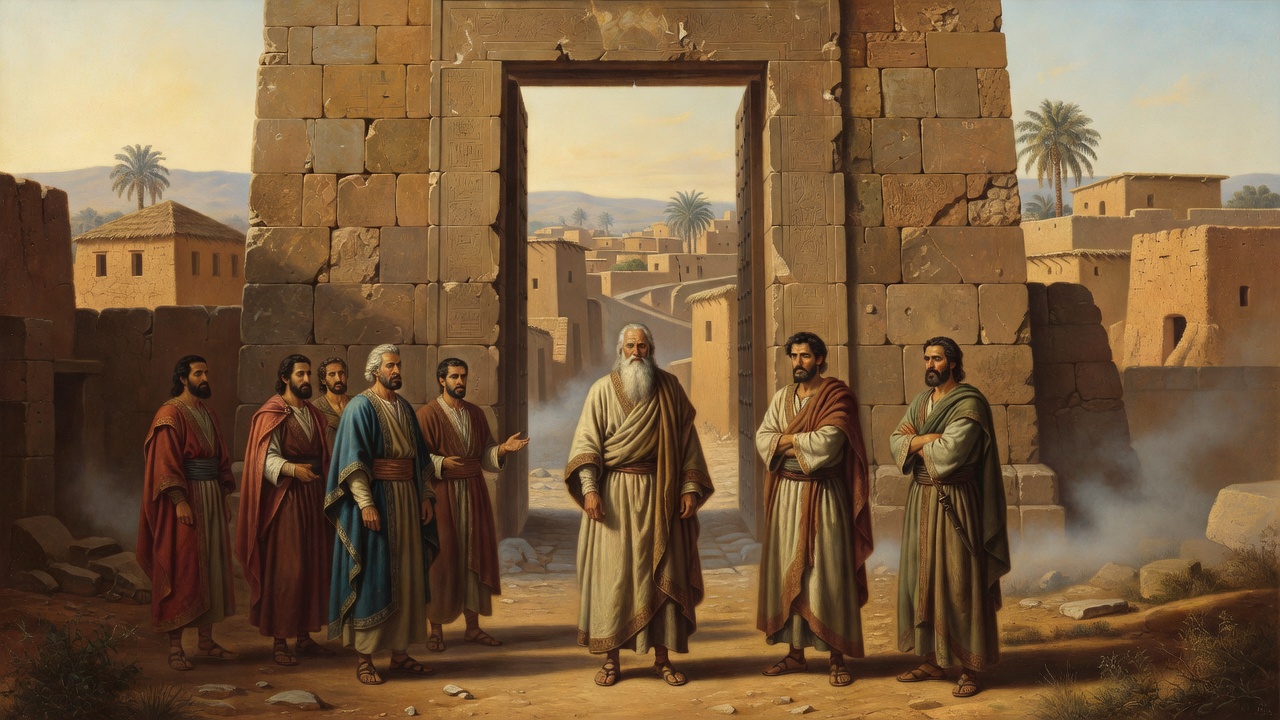
- El encabezado identifica el Salmo 127 como un Cántico de las subidas atribuido a Salomón. Los primeros versículos enfatizan que los esfuerzos humanos, como edificar una casa, guardar una ciudad o trabajar largas jornadas por el pan, son vanos sin la intervención y bendición del Señor.Fuentes: el propio texto bíblico
- El salmo compara a los hijos tenidos en la juventud con flechas en manos de un guerrero, presentándolos como una herencia y recompensa del Señor. Contar con un hogar lleno de ellos brinda respaldo y honor al confrontar a los adversarios en la puerta de la ciudad.Fuentes: el propio texto bíblico
Notas escritas con ayuda de IA a partir de fuentes abiertas (Theographic Bible Metadata, CC BY-SA 4.0; Easton’s Bible Dictionary, dominio público) y revisadas antes de publicarse.
Lugares de este capítulo
- Jerusalem · 31.777, 35.234 · versículo 1
Solo aparecen lugares identificados con alta confianza (90 % o más según las fuentes académicas reunidas por OpenBible). Mapa de la época: DARE (Digital Atlas of the Roman Empire), CC BY 4.0; mapa actual: © colaboradores de OpenStreetMap; lugares: OpenBible.info (CC BY 4.0).
Créditos y licencia de esta traducción
I tnalù dwata
New Testament in Blaan, Sarangani
copyright © 1998 Wycliffe Bible Translators, Inc.
Language: Sarangani Blaan (Blaan, Sarangani)
Translation by: Wycliffe Bible Translators
Contributor: Wycliffe Bible Translators, Inc.
Copyright Information
© 1998, Wycliffe Bible Translators, Inc. All rights reserved.
This translation text is made available to you under the
terms of the Creative Commons License: Attribution-Noncommercial-No Derivative Works.
( http://creativecommons.org/licenses/by-nc-nd/3.0/ )
In addition, you have permission to port the text to different file formats, as long as you
do not change any of the text or punctuation of the Bible.
You may share, copy, distribute, transmit, and extract portions
or quotations from this work, provided that you include the above copyright
information:
You must give Attribution to the work.
You do not sell this work for a profit.
You do not make any derivative works that change any of the actual words or punctuation of the Scriptures.
Permissions beyond the scope of this license may be
available if you contact
us with your request.
The New Testament
in Blaan, Sarangani
© 1998, Wycliffe Bible Translators, Inc. All rights reserved.
This translation is made available to you under the terms of the
Creative Commons Attribution-Noncommercial-No Derivatives license 4.0.
You may share and redistribute this Bible translation or extracts from it in any format, provided that:
You include the above copyright and source information.
You do not sell this work for a profit.
You do not change any of the words or punctuation of the Scriptures.
Pictures included with Scriptures and other documents on this site are licensed just for use with those Scriptures and documents.
For other uses, please contact the respective copyright owners.
2015-03-17
Fuente: http://ebible.org/bps/ · eBible.org