Hebreos 3
I tnalù dwata · Toca un versículo para ver sus referencias cruzadas.
I kdatah Dyisas di ku Mosis
1Na taman dad flanekgu di kafaglut, du gamu tanalék Dwata i mnè di safédan di langit di fulé duh, tooyu fandam Dyisas, du kenen sa dek Dwata salu di tah tanà ani, du fye mbaling kenen mdatah baito di kafaglutito. 2Too mimen Dyisas Dwata di kdee fimoan kenen gambet i kimen Mosis di kifatan i dad to Dwata. 3Kabay di fandam Dwata mdatah fa Dyisas di ku Mosis salngad i kdatah to mimò i gumnè di gumnè i nimoan. 4Hae, gadeito ku nun gumnè, nun to mimò dun, na i mimò i kdee dunan Dwata.
5Na Mosis, too kenen mimen Dwata di kifatan i dad ton, du salig Dwata. Én nimoan tulenan di dad to i kaglut i man Dwata di kenen. 6Kabay Dyisas Krayst ise alò salig Dwata, bay Tingaan. Na too kenen mimen Dwata di kifatan i dad to Dwata, na gito i dad ton ku fadlug ito di kafaglutito di ku Dyisas, na ku là ito myà tmulen gablà di fatanito di kasfuléan.
I kafaftud Dwata i dad ton
7Na taman too ito mimen i fngewe i Mtiu Tulus fsulatan, manan,
“E gamu, toogu fanlinge i man Dwata di gamu di duh ani,
8na nangyu fgal i uluyu,
salngad di mgimò i dad gutambulyu di knangla Dwata
klola tmilew kenen di knèla di banwe gulandè to.”
9Du gman Dwata manan,
“Klo fat falò fali balù tateen dad gutambulyu dee too fye mgimògu di dale,
knean tnilewla agu, du neyela ku tan kaftahàgu i nawagu di landè ksaligla deg.
10Taman, too agu flabè dale,
na mangu, ‘Ale i dad to fasyat i nawala,
là ale mayè mimen i dad knayègu.’
11Taman du too agu flabè nun fakanggu, mangu,
‘I dad to ani, là ale sa gfusuk di banwe gufaftudgu dale.’ ”
12Taman dad flanekgu, too gamu fafye, du fye landè di gamu nun sasè fandam i là mayè mimen Dwata i gamgebe gamu di ktagakyu Dwata i too mto. 13Kabay ani, du fye landè di gamu mafgaw i salà na mbaling mgal ulu, i balingyu nimò, satgal gamu nawa klit i duh di nun gdè bangyu mlinge i talù Dwata. 14Du ku tooito smalig di Dwata gambet i tnanin ksaligito di kenen, kel di gusen i kneito di tah tanà, nun alelito di kdee nfun Krayst Dyisas. 15Lêmangu nulit i man i Mtiu Tulus, manan,
“E gamu, tooyu fanlinge i man Dwata di gamu di duh ani,
na nangyu fgal i uluyu
salngad di mgimò i dad to gutambulyu di knangla Dwata.”
16Simto kè i dad to balù tamlinge ale i talù Dwata, bay knean, too mnang nawala dun? Gadeito i dad to ani dad bel Israél di kebe Mosis dale lamwà di banwe Idyif. 17Na simto kè i fanlabè Dwata klo fat falò fali? Dunan lêman i dad bel Israél. Na du too ale gamsalà fanlayam ale Dwata, na di kfatila gilè i lawehla di tanà ditù di banwe gulandè to. 18Na simto kè i dad to i gman Dwata di fakangan i là ale gfusuk di banwe gufaftudan dale? Dad to bel Israél sa lêman i là mimen Dwata. 19Taman i gugamlabatito là ale gfusuk di banwe gufaftud Dwata dale, du là ale mayè faglut na smalig di kenen.
¿Sabías que…?
Mayor gloria que Moisés
- Hebreos pide a sus lectores que fijen la atención en Jesús, el apóstol y sumo sacerdote que confiesan. Fue fiel a quien lo designó, así como Moisés fue fiel en toda la casa de Dios, pero Jesús es considerado digno de mayor gloria que Moisés, como el constructor de una casa tiene más honra que la casa misma. Moisés fue fiel como siervo; Cristo es fiel como Hijo sobre la casa de Dios.Fuentes: el propio texto bíblico
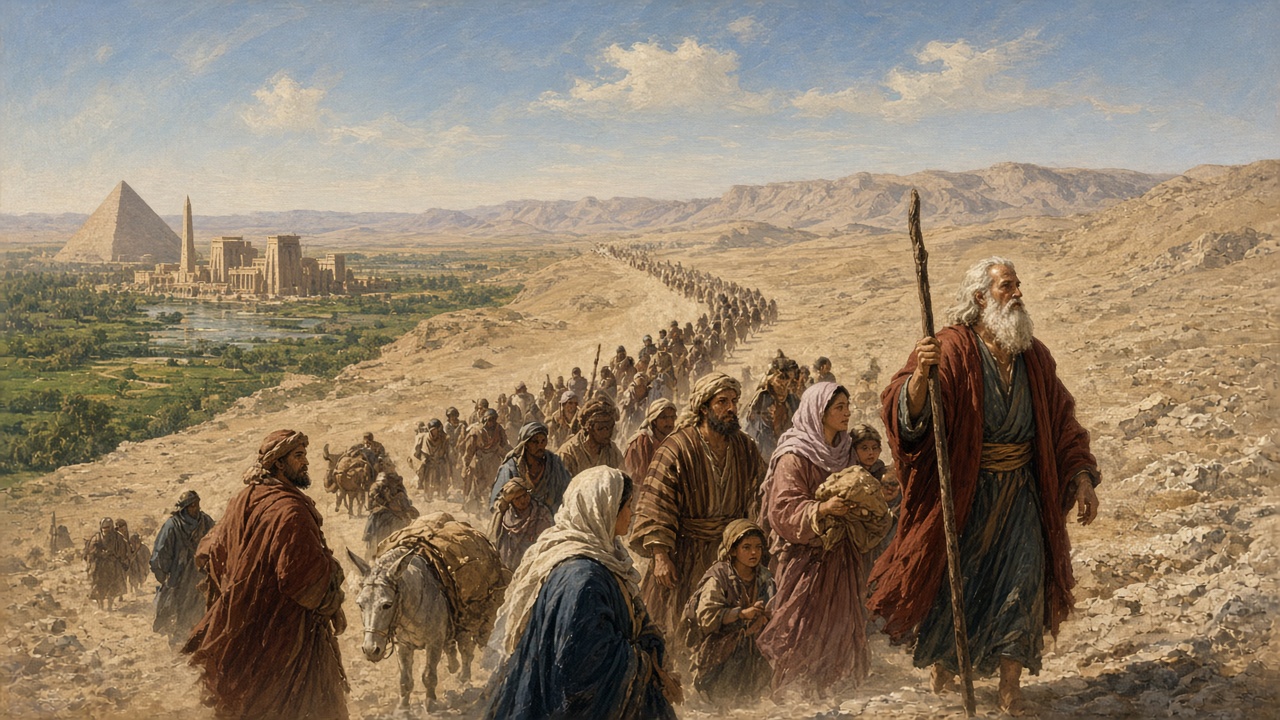
- La advertencia se vuelve hacia el pueblo que Moisés sacó de Egipto. Durante cuarenta años en el desierto pusieron a Dios a prueba; Dios estuvo enojado con aquella generación y juró que nunca entrarían en su descanso, y sus cuerpos cayeron en el desierto. El capítulo dice que la incredulidad les impidió entrar.Fuentes: el propio texto bíblico
- Egipto, la tierra que dejaron con Moisés, es la tierra del Nilo y de las pirámides. El diccionario bíblico de Easton (1897) explica el nombre Moisés como sacado, o lo vincula con la palabra egipcia mesu, que significa hijo.Fuentes: el propio texto bíblico · Egypt · Moses
Notas escritas con ayuda de IA a partir de fuentes abiertas (Theographic Bible Metadata, CC BY-SA 4.0; Easton’s Bible Dictionary, dominio público) y revisadas antes de publicarse.
Lugares de este capítulo
- Egypt · 30.129, 31.308 · versículo 16
Solo aparecen lugares identificados con alta confianza (90 % o más según las fuentes académicas reunidas por OpenBible). Mapa de la época: DARE (Digital Atlas of the Roman Empire), CC BY 4.0; mapa actual: © colaboradores de OpenStreetMap; lugares: OpenBible.info (CC BY 4.0).
Créditos y licencia de esta traducción
I tnalù dwata
New Testament in Blaan, Sarangani
copyright © 1998 Wycliffe Bible Translators, Inc.
Language: Sarangani Blaan (Blaan, Sarangani)
Translation by: Wycliffe Bible Translators
Contributor: Wycliffe Bible Translators, Inc.
Copyright Information
© 1998, Wycliffe Bible Translators, Inc. All rights reserved.
This translation text is made available to you under the
terms of the Creative Commons License: Attribution-Noncommercial-No Derivative Works.
( http://creativecommons.org/licenses/by-nc-nd/3.0/ )
In addition, you have permission to port the text to different file formats, as long as you
do not change any of the text or punctuation of the Bible.
You may share, copy, distribute, transmit, and extract portions
or quotations from this work, provided that you include the above copyright
information:
You must give Attribution to the work.
You do not sell this work for a profit.
You do not make any derivative works that change any of the actual words or punctuation of the Scriptures.
Permissions beyond the scope of this license may be
available if you contact
us with your request.
The New Testament
in Blaan, Sarangani
© 1998, Wycliffe Bible Translators, Inc. All rights reserved.
This translation is made available to you under the terms of the
Creative Commons Attribution-Noncommercial-No Derivatives license 4.0.
You may share and redistribute this Bible translation or extracts from it in any format, provided that:
You include the above copyright and source information.
You do not sell this work for a profit.
You do not change any of the words or punctuation of the Scriptures.
Pictures included with Scriptures and other documents on this site are licensed just for use with those Scriptures and documents.
For other uses, please contact the respective copyright owners.
2015-03-17
Fuente: http://ebible.org/bps/ · eBible.org