Génesis 2
I tnalù dwata · Toca un versículo para ver sus referencias cruzadas.
1Ani gine i kfagu Dwata di kgimoan i langit, i klamang banwe na i dad kdee i fkahan di mgimoan ani.
2Na di kakel i gfitun duh, tatlag Dwata mimò, du tafnge i kdee mgimoan. 3Taman nun kafye gmanan gablà di gfitun duh, manan, “Nimògu duh ani too mabtas.” Gmanan ani, du i duh ani tatlag di kdee nimoan.
4Én sa i santulen gablà di kgimò Dwata i langit na i banwe.
Adam na Iba
Di kimò Dwata i Amu, i langit na banwe, 5landè fa fule tmabò di tanà, du là fa fulen Dwata i Amu, na landè fa to mimò di tanà. 6Kabay balù landè ulen, tanun yéél tambul di lam i tanà du fye fafê i klamang tanà. 7Kafnge én, mwè Dwata i Amu tanà, du nimoan to mdà di tanà ani. Kafnge én, nyufan i ilung i to ani, na gasil lamnawa, na tamto.
8Kafnge én, tanun tukay banwe i gunun dad kayu, i nimò Dwata i Amu, gsen di gusut i duh dnagit Idén. Na ditù gufnean i to tanimoan. 9Na falnok Dwata i Amu, dee bung kayu déén. Too fye baweh dad kayu ani na i dad bungela too fye knaan. Na di gutngà i dad fule, tafule Dwata lwe kayu, satu kayu én, mlé nawa landè sen, na i satu, mlé gnadè gablà ku tan i fye na tan i sasè.
10Na nun satu yéél di Idén ani, maloh na myéél i dad fule déén. Mdà di Idén, yéél ani dee syatan, du masatngà di fat, na mbaling fat yéél. 11I tnanin yéél dnagit Fison, na maloh salu di klamang banwe Habila. 12Dini di banwe ani gumite i too glut blawen, na i fye bun litak di kayu, na dad batu mabtas. 13Dagit i galwe yéél dunan Gihon, na maloh di klamang banwe dnagit Kus. 14Na i gatlu yéél, dunan Tigris, maloh salu di gsen di gusut i duh di banwe dnagit Asirya. Na Yufratis i dagit i gfat yéél.
15Na dini di tukay banwe gunun kayu nimò Dwata, dnagit Idén, gufnean i to tamgimoan, du fye mimò kenen di tanà na mifat i dad fule déén. 16Na flalò Dwata i Amu i to ani, manan, “Fakay ge kmaan i bunge kdee dad kayu di gumneam ani, 17bay nang ge kmaan i bunge i kayu mlé gnadé gablà ku tan i fye na tan i sasè. Du ku kmaan ge i bungen, too ge mati.”
18Na lêman talù Dwata i Amu, manan, “Là sa fye ku i to aloan satu mnè. Taman mimò agu i demen salngad kenen, du fye nun tmabeng kenen.”
19Kafnge én, nebe Dwata i Amu di to tamgimoan i kdee dad lmanaf, i kdee dad anuk di bnas, na i kdee dad tamgimoan mdà di tanà, du fimoan kenen dagitla. Na balù tan i dagitan i kat satu dad mto ani, én i dagitan. 20Na i to ani i mimò dagit i kdee bung lmanaf, na dad anuk di bnas.
Kabay landè di dale blà kenen du nimò demen. 21Taman fkudang Dwata i Amu, i to ani, na too fye kakudangan laan falus tamwan, na klon kudang nwè Dwata i satu lohokan. Na kafngen sansuléan i ungad di gumwean i lohok to ani. 22Na mdà di lohokan ani, nimò Dwata i Amu satu libun, na neben i libun ani di lagi. 23Na man i lagi,
“Kenen tagablà demegu, du i tulanan fdu di deg tulan,
na i ungadan fdu di deg ungad,
dnagitgu kenen libun,
du mgimò mdà di lagi.”
24Na ani i duen i lagi tmagak i maan na yéan, na mbaling satu di yaanan, na i lwe ani mgimò satu.
25Balù flaweh i lagi na libun ani, là ale sa myà.
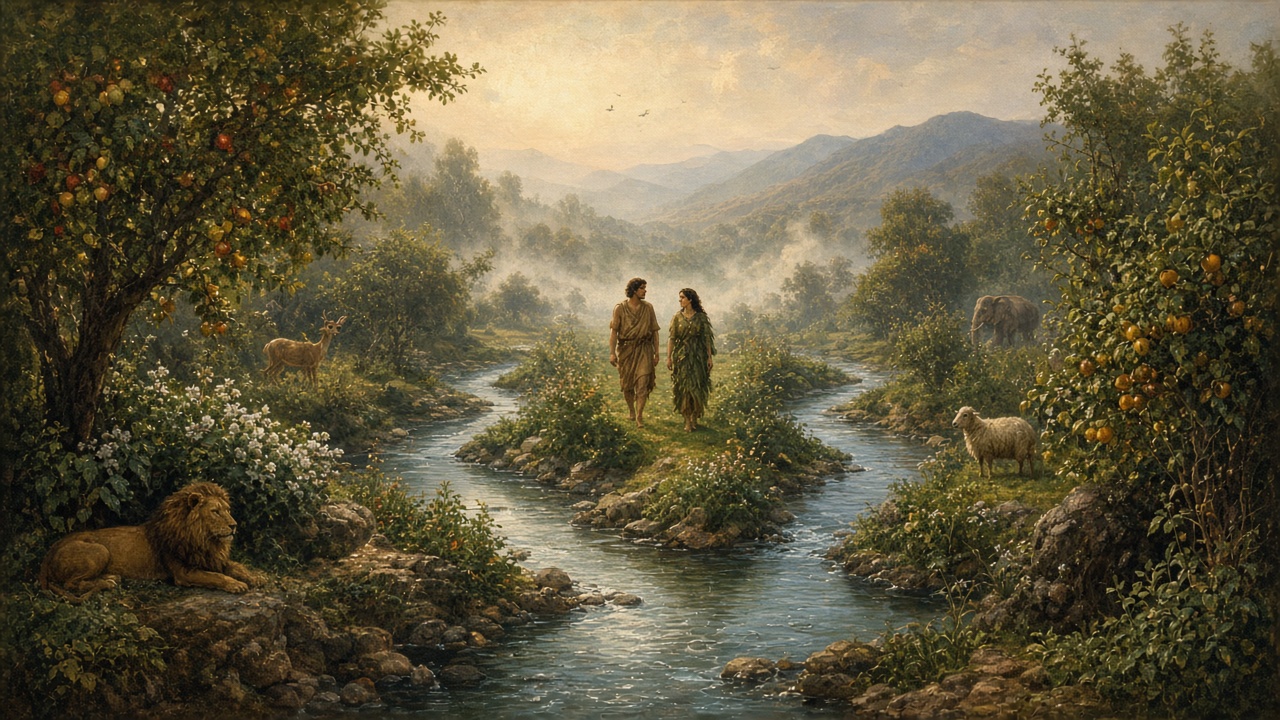
¿Sabías que…?
Adán, el Edén y los cuatro ríos
- Adán, que significa “rojo”, es una palabra babilónica y el nombre común del ser humano, con el mismo sentido en hebreo y en asirio. Se le dio al primer hombre. Fue formado del polvo de la tierra —de ahí el nombre— y Dios sopló en sus narices el aliento de vida.Fuentes: Adam · el propio texto bíblico
- Un río salía del Edén y se dividía en cuatro brazos: el Pisón, el Gihón, el Hidekel y el Éufrates. Algunos identifican el Pisón con el Fasis o el Halis; otros, con el Indo, el Ganges u otros ríos más. El Gihón ha sido identificado con el Nilo, y otros lo consideran el Oxo, el Araxes o el Ganges. El Hidekel es el Tigris, llamado por los acadios el río de Idikla; Gesenius entendió el nombre como “el Tigris rápido”.Fuentes: el propio texto bíblico · Pison · Gihon · Hiddekel
- El sitio del Edén, el jardín en el que vivieron los primeros padres, se ha discutido más que casi cualquier otra cuestión geográfica. Se ha situado en Armenia, en la región al oeste del mar Caspio, en Media, cerca de Damasco, en Palestina, en el sur de Arabia y en Babilonia. El Easton's Bible Dictionary (1897) lo busca a lo largo del Tigris y del Éufrates del Asia occidental, en la tierra de Sinar, o Babilonia.Fuentes: Eden
Notas escritas con ayuda de IA a partir de fuentes abiertas (Theographic Bible Metadata, CC BY-SA 4.0; Easton’s Bible Dictionary, dominio público) y revisadas antes de publicarse.
Lugares de este capítulo
- Assyria · 36.359, 43.153 · versículo 14
- Euphrates · Hoy: Euphrates River · 31.004, 47.442 · versículo 14
- Tigris · Hoy: Tigris River · 31.004, 47.442 · versículo 14
Solo aparecen lugares identificados con alta confianza (90 % o más según las fuentes académicas reunidas por OpenBible). Mapa de la época: DARE (Digital Atlas of the Roman Empire), CC BY 4.0; mapa actual: © colaboradores de OpenStreetMap; lugares: OpenBible.info (CC BY 4.0).
Créditos y licencia de esta traducción
I tnalù dwata
New Testament in Blaan, Sarangani
copyright © 1998 Wycliffe Bible Translators, Inc.
Language: Sarangani Blaan (Blaan, Sarangani)
Translation by: Wycliffe Bible Translators
Contributor: Wycliffe Bible Translators, Inc.
Copyright Information
© 1998, Wycliffe Bible Translators, Inc. All rights reserved.
This translation text is made available to you under the
terms of the Creative Commons License: Attribution-Noncommercial-No Derivative Works.
( http://creativecommons.org/licenses/by-nc-nd/3.0/ )
In addition, you have permission to port the text to different file formats, as long as you
do not change any of the text or punctuation of the Bible.
You may share, copy, distribute, transmit, and extract portions
or quotations from this work, provided that you include the above copyright
information:
You must give Attribution to the work.
You do not sell this work for a profit.
You do not make any derivative works that change any of the actual words or punctuation of the Scriptures.
Permissions beyond the scope of this license may be
available if you contact
us with your request.
The New Testament
in Blaan, Sarangani
© 1998, Wycliffe Bible Translators, Inc. All rights reserved.
This translation is made available to you under the terms of the
Creative Commons Attribution-Noncommercial-No Derivatives license 4.0.
You may share and redistribute this Bible translation or extracts from it in any format, provided that:
You include the above copyright and source information.
You do not sell this work for a profit.
You do not change any of the words or punctuation of the Scriptures.
Pictures included with Scriptures and other documents on this site are licensed just for use with those Scriptures and documents.
For other uses, please contact the respective copyright owners.
2015-03-17
Fuente: http://ebible.org/bps/ · eBible.org